Custom SiC Refractories for Steel and Foundry Applications in Chile
Paylaş
Sicarbtech — Silicon Carbide Solutions Expert
Executive Summary: 2025 Outlook for SiC Refractories in Chile’s Steel and Foundry Ecosystem
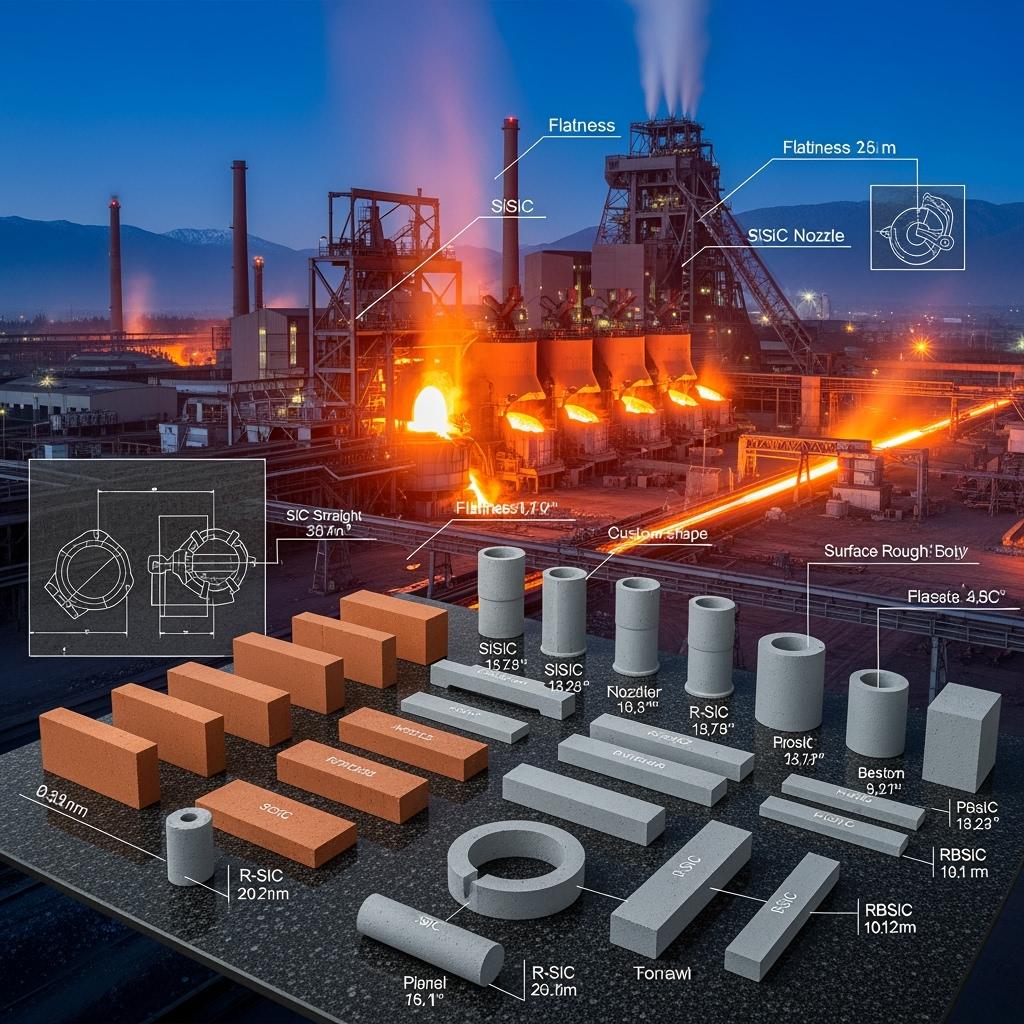
Chile’s steel and foundry operations are entering 2025 with a clear mandate: deliver metallurgical quality and thermal efficiency while managing energy volatility and stricter environmental oversight. Electric arc furnace (EAF) shops, induction melting lines, and ladle metallurgy stations are optimizing campaigns under tighter power windows, increased scrap variability, and heat loss constraints. In this environment, custom silicon carbide (SiC) refractories—across R-SiC, SSiC, RBSiC, and SiSiC families—are increasingly specified for high-heat zones, pouring systems, and furnace internals where thermal shock, slag attack, and mechanical abrasion converge.
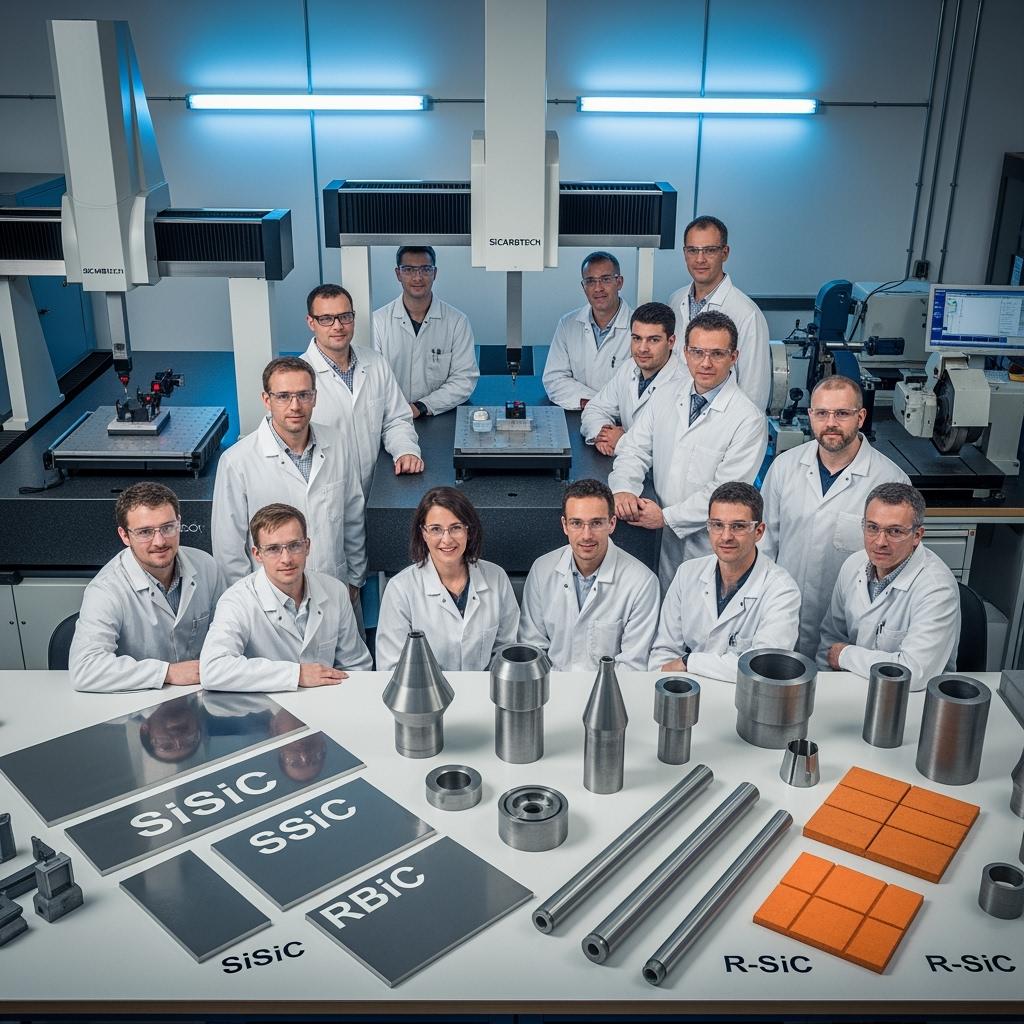
Sicarbtech, based in Weifang City—China’s silicon carbide manufacturing hub and a member of the Chinese Academy of Sciences (Weifang) Innovation Park—supports 19+ enterprises with full-cycle SiC solutions. We combine materials R&D with proprietary processing and precision finishing to deliver custom brick shapes, slide gate and nozzle components, launders and trough liners, burner tiles, and kiln furniture matched to Chilean duty profiles. ISO 9001-aligned QA, REACH/RoHS declarations, and ASTM C testing data streamline qualification, while our technology transfer and factory establishment services enable local capability, reducing USD exposure and stabilizing CLP-denominated total cost of ownership.
Industry Challenges and Pain Points Across Chilean Steel and Foundry Operations
Chile’s metallurgical plants face stress at the intersection of heat, chemistry, and schedule. In EAFs, rapid oxygen lancing and foamy slag practice intensify thermal cycling and chemical attack, degrading conventional alumina/silica refractories. Induction furnaces experience edge spalling from frequent power ramps, while electromagnetic stirring and turbulent flow erode spouts, runners, and launders. Pouring systems demand precise, stable nozzle bores; even minor ovalization or glaze loss can disturb stream coherence, increase reoxidation, and impact inclusion control.
Moreover, scrap variability has raised slag aggressiveness with fluctuating FeO and MnO levels, shifting basicity and increasing dissolution tendencies for classic linings. Where descaled or salt-bearing inputs are processed, chlorides complicate oxidation chemistry and undercut metallic hardware near refractory interfaces. Thermal shock from start-stop cycles tied to grid dynamics can propagate micro-cracks in bricks and monolithics, which then become channels for slag penetration and accelerated wear.
Operational constraints magnify these material challenges. Shutdown windows are compressed; DS 594 occupational safety requirements increase the planning burden for hot work and confined-space entries; and any unplanned repair can cascade into missed heats and higher kWh per ton. Procurement teams must balance USD-linked inputs against CLP budgets while meeting stricter audit expectations—batch traceability, dimensional and flatness certificates, porosity/density data, and documented thermal shock and slag resistance. As Prof. Tomás Arancibia notes, “In molten metal environments, the geometry that survives the first fifty cycles owns the next five hundred.” (Furnace & Refractory Insights, 2025)
Building on this, Chilean operators increasingly target not only longer refractory life but also stability of thermal profiles and pouring behavior between maintenance events. Materials that hold shape, resist slag infiltration, and preserve smooth, low-roughness surfaces maintain heat transfer and laminar flow, directly supporting metallurgical cleanliness and consistent casting or mold filling.
Advanced Silicon Carbide Solutions Portfolio for Steel and Foundry Duty
Sicarbtech engineers SiC grades to the dominant failure modes in Chile’s molten metal service. R-SiC is deployed for bricks and kiln furniture where high-temperature stiffness and low creep stabilize geometry in EAF roofs, burners surrounds, and furnace furniture facing intense radiant heat. RBSiC, with excellent thermal shock tolerance and manufacturability, excels in launders, trough liners, and impact pads where abrasion and temperature gradients combine. SiSiC, combining high strength and low porosity, is the choice for precision pouring components—nozzles, slide gate inserts, and stopper rod tips—where bore integrity and surface finish must be preserved through cycles. SSiC, near-theoretical density, is selected for specialized high-purity interfaces or where oxidation resistance and dimensional stability at the tightest tolerances are required.
Our process discipline creates reliability. Proprietary binders, controlled dewaxing, and pressureless sintering or reaction-bonded infiltration produce uniform microstructures with low residual stress. Precision grinding and lapping deliver tight tolerances, flatness, and surface finishes that reduce turbulence and slag adherence. Edge radii are tuned to diffuse stress concentrations that seed chipping. Application engineers co-develop geometries with Chilean plants and OEMs, matching cross-sections, fillets, and joint patterns to heat flux, slag chemistry, and mechanical loads. Documentation—ISO 9001 QA, REACH/RoHS, ASTM C mechanical and microstructural data, and dimensional/flatness certificates—shortens approval cycles and supports DS 594-aligned maintenance planning.
Performance Benchmarks: SiC versus Traditional Refractory Materials
High-Temperature, Slag Resistance, and Shock Behavior in Chilean Duty
| Property and Duty Context | R-SiC | SiSiC | RBSiC | SSiC | High-Alumina Brick (92–99%) | Alumina-Carbon Brick | Mullite/Fireclay |
|---|---|---|---|---|---|---|---|
| Max Continuous Temperature (°C) | 1500–1600 | 1450–1500 | 1400–1450 | ~1500 | 1400–1600 (load-limited) | ~1600 (oxidation limits) | 1300–1500 |
| Termal Şok Direnci | Çok iyi | Çok iyi | Mükemmel | İyi | Moderate–Good | Good (sensitive to oxidation) | Orta düzeyde |
| Slag Resistance (FeO/MnO) | Mükemmel | Çok iyi | Çok iyi | Mükemmel | Good–Very Good | Çok iyi | Orta düzeyde |
| Abrasion/Erosion Resistance | Mükemmel | Mükemmel | Mükemmel | Mükemmel | İyi | İyi | Orta düzeyde |
| Creep at Temperature | Düşük | Düşük | Moderate–Low | Düşük | Orta düzeyde | Orta düzeyde | Moderate–High |
| Typical Life Gain (Chile) | 1.5–3× vs alumina | 1.5–2.5× | 1.5–2.5× | 2–3× | Başlangıç Noktası | Başlangıç Noktası | Başlangıç Noktası |
For pouring systems and contact surfaces, SiC’s combination of hardness, low porosity, and oxidation stability preserves geometry and surface condition where alumina-based bricks glaze or crack and alumina-carbon faces oxidation limits.
Dimensional Precision, Surface Finish, and Fit-Up for Pouring and Furnace Internals
| Component Class | Tipik Boyutsal Tolerans | Flatness/Straightness | Yüzey Pürüzlülüğü (Ra) | Integration Note for Chilean Lines |
|---|---|---|---|---|
| Slide gate plates and inserts (SiSiC/SSiC) | ±0.03–0.08 mm | Flatness ≤0.05–0.10 mm per 100 mm | 0.2–0.6 µm | Stable stream; reduced reoxidation |
| Nozzles and stopper tips (SiSiC/SSiC) | ±0.02–0.05 mm bore | Concentricity ≤0.05 mm | 0.4–0.8 µm | Consistent pouring rate; lower clogging |
| Launder and trough liners (RBSiC) | ±0.10–0.30 mm | Straightness ≤0.5–0.8 mm per 2 m | 0.8–1.6 µm | Smooth flow; reduced slag hang-up |
| Burner tiles and surrounds (R-SiC) | ±0.20–0.50 mm | Yok | 1.6–3.2 µm | Thermal shock resilience around burners |
Tighter tolerances and smoother surfaces retain laminar flow and temperature uniformity, minimizing defects and hot spots during campaigns.
Total Cost of Ownership in CLP for Steel and Foundry Assets
| Use Case | Baseline Material | SiC Solution | Campaign Length (Baseline → SiC) | Quality/Energy Impact | Estimated 12–18 Month TCO Effect (CLP) |
|---|---|---|---|---|---|
| Slide gate/Nozzle set for ladle | High-alumina | SiSiC/SSiC inserts | 30–40 heats → 70–100 heats | Stream stability; fewer inclusions | Payback in 5–9 months |
| Induction furnace spout and launder | Alumina/mullite | RBSiC liners | 2–3 months → 6–9 months | Lower erosion; steady temperature | −20% to −30% maintenance |
| EAF burner surrounds/tiles | Alumina-carbon | R-SiC elements | 4–6 weeks → 10–14 weeks | Better shock resistance; fewer chips | Reduced unplanned repairs |
These scenarios synthesize Chilean field feedback and internal testing, normalized to 2025 power and labor conditions.
Real-World Applications and Success Stories from Chile
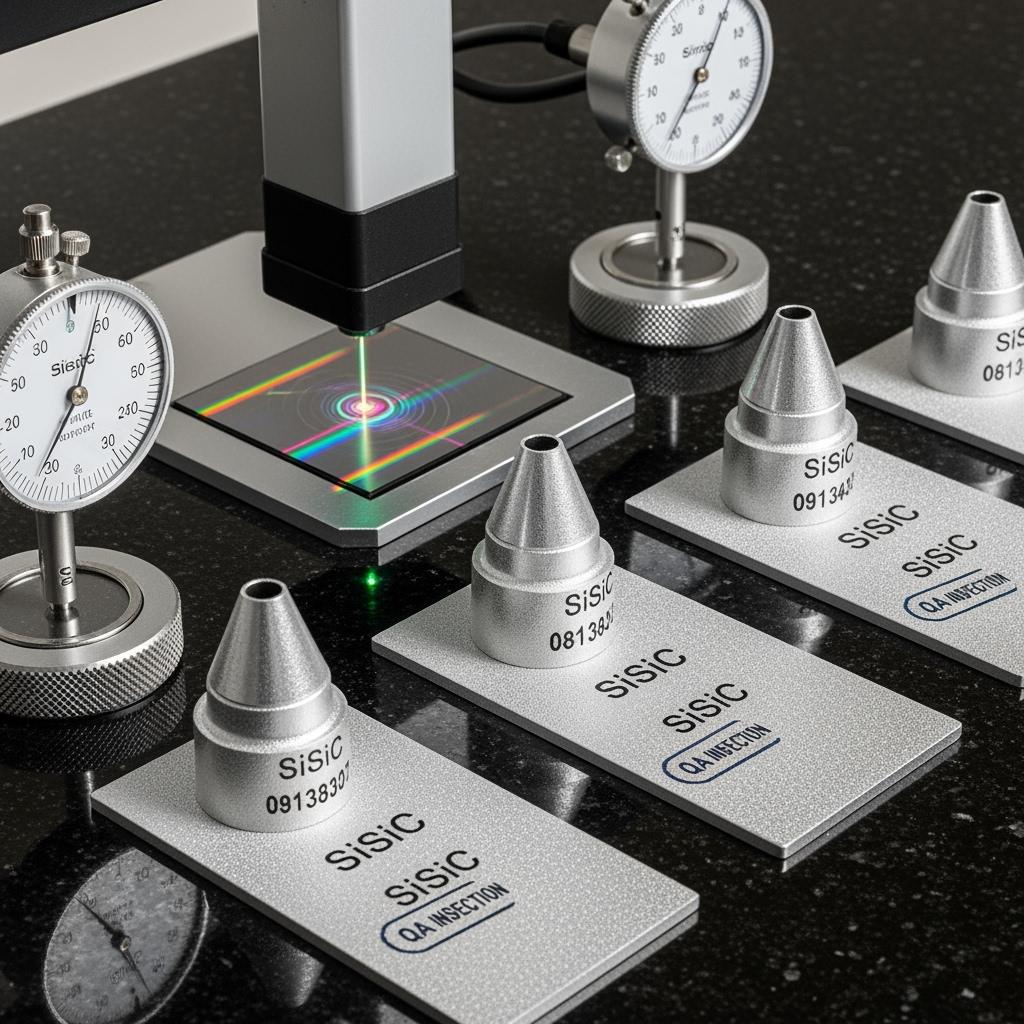
A çelik caster near Concepción suffered variable stream behavior and frequent nozzle changeouts. Switching to SiSiC plates and SSiC nozzles lapped to target Ra stabilized stream coherence, reduced tundish turbulence, and extended life to nearly 90 heats. Inclusion-related rejects dropped, and CLP payback landed within six months.
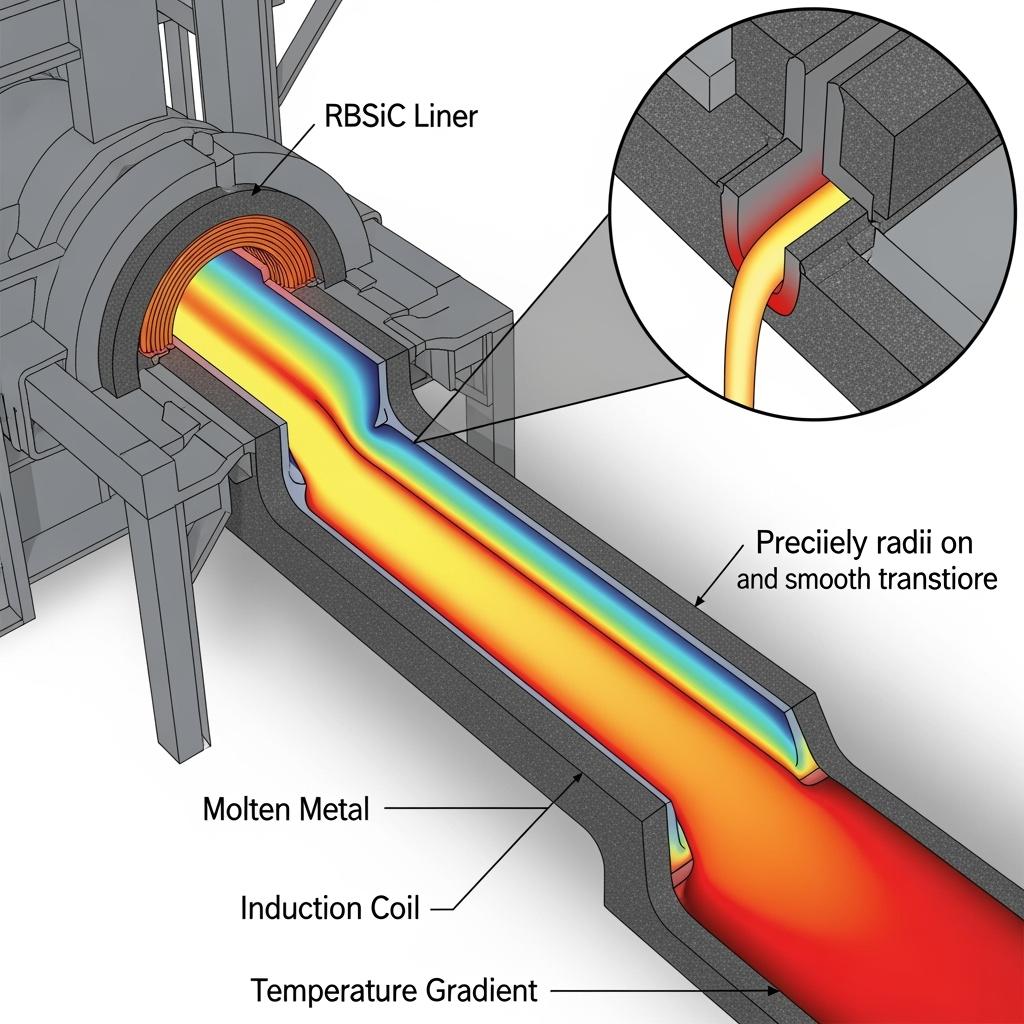
An induction furnace operator in Santiago replaced alumina launders with RBSiC liners. Erosion rates halved, temperature loss to the mold decreased, and slag hang-ups became rare. Maintenance windows shortened due to clean demounting and repeatable fit-up.
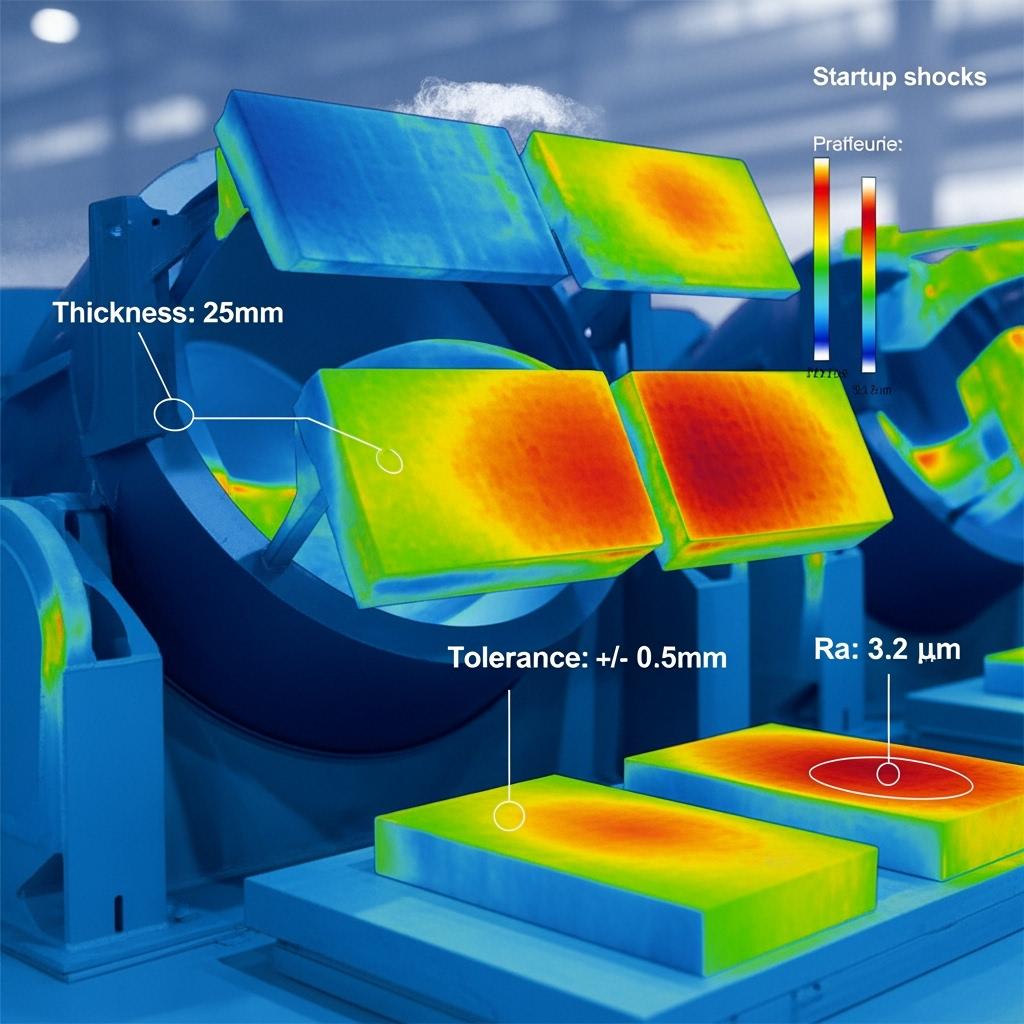
An EAF shop in Biobío saw recurring chips around burner tiles during rapid lancing cycles. R-SiC surrounds held geometry through startups and foamy slag practice, cutting unplanned tile repairs by more than a third over two quarters.
“Thermal shock is a geometry test,” remarks Eng. Paula Herrera, Thermal Processing Review (2024). “SiC that stays flat and smooth keeps the furnace predictable, and predictable furnaces make better steel.”
Technical Advantages and Implementation Benefits with Chilean Compliance
Silicon carbide’s covalent bonding yields high hardness, oxidation resistance, and low creep at temperature, while tailored microstructures in SiSiC and RBSiC manage thermal shock and abrasion. In practice, this means nozzles that maintain bore integrity, plates that stay flat under clamping and heating, and launders that resist scouring and slag adhesion. Sicarbtech converts material strengths into measurable plant outcomes: precision grinding and lapping attain flatness and Ra targets; engineered edge radii reduce chipping; and ISO 21940-11 balancing is available where rotating elements are involved (e.g., auxiliary hardware).
Compliance is embedded. Our QA dossiers follow ISO 9001; REACH/RoHS declarations and ASTM C data cover mechanical and microstructural properties; and certificates detail dimensions, flatness, density, porosity, and surface finish. This evidence base aligns with DS 594 occupational safety planning and streamlines procurement audits. Installation and handling guides reduce hot-work exposure, supporting ESG reporting on maintenance risk and energy intensity.
Custom Manufacturing and Technology Transfer Services: Sicarbtech’s Turnkey Advantage
Sicarbtech’s differentiation for Chile is an end-to-end capability that moves from specification to sustained performance—and, when strategic, to localized production.
R&D foundation. Anchored in the Chinese Academy of Sciences (Weifang) Innovation Park, our research defines proprietary windows for R-SiC, SSiC, RBSiC, and SiSiC. Controlled binder chemistries, dewaxing ramps, pressureless sintering schedules, and reaction-bonded infiltration produce low-stress, uniform microstructures. These processes unlock thin yet strong nozzles, flat slide gate plates, robust burner tiles, and erosion-resistant launder sections.
Manufacturing excellence. We operate CNC grinding centers, large-format surface grinders, double-disc grinders, and precision lapping lines to achieve tight tolerances and low Ra. Metrology integrates coordinate measuring machines, straightness/flatness rigs, interferometry for plate flatness, and surface profilometry for Ra verification. SPC governs critical dimensions, density, and porosity, delivering batch-to-batch consistency demanded by Chilean OEMs and operators.
Technology transfer. We provide complete packages: process know-how and kiln curves; powder specifications with acceptance criteria; SPC templates; maintenance plans; and SOPs for tile finishing, nozzle machining, and plate lapping. Equipment specifications cover mixers, spray dryers, cold isostatic presses, sintering furnaces, grinding and lapping equipment, CMMs, and NDT systems. Training—delivered in English—covers forming, sintering, machining, metrology, QA documentation, and supervisor modules on yield, tool life, and defect root-cause (edge chipping, warpage, glaze loss).
Factory establishment. We start with feasibility studies and CLP-denominated CapEx/Opex models, then execute plant layout, utilities (power quality, gas, ventilation, emissions control), and commissioning to first-article qualification. We implement ISO 9001 quality systems and support ISO 14001/ISO 45001, aligning with Chile’s environmental and occupational frameworks. For export and multinational audits, we supply REACH/RoHS documentation and ASTM C datasets; where relevant, we include thermal shock and slag resistance test summaries against site-specific chemistries.
Sustained support. Post-launch, we conduct quarterly audits, wear-return analyses, and iterative geometry updates tied to field telemetry and metallurgical KPIs. Across 19+ enterprise partnerships, this model has delivered compelling outcomes: 2–3× campaign extensions for pouring systems, stabilized stream behavior with lower inclusion rates, and fewer unplanned refractory interventions—validated by certificates and production data rather than claims.
Grade-to-Application Mapping for Chilean Steel and Foundry Duty
| Chilean Scenario | Recommended SiC Grade | Core Advantages | Expected Operational Outcome |
|---|---|---|---|
| Slide gate plates and nozzle inserts | SiSiC/SSiC | Low porosity; flatness; bore stability | Longer heats per set; cleaner streams |
| Stopper rod tips for ladle/tundish | SiSiC | Shock resistance; erosion resistance | Consistent flow; reduced clogging |
| Induction furnace launders/troughs | RBSiC | Thermal shock + erosion balance | Lower wear; steady temperature |
| EAF burner tiles and surrounds | R-SiC | High-temperature strength; shock resistance | Fewer chips; longer intervals |
| Preheater/kiln furniture | R-SiC | Creep resistance; oxidation stability | Geometry retention across cycles |
Future Market Opportunities and 2025+ Trends in Chile
Looking beyond 2025, three forces will shape refractory decisions in Chile. First, energy volatility and decarbonization will intensify thermal cycling, favoring materials that keep geometry and surface finish through aggressive ramps. SiC’s combination of shock resistance and oxidation stability aligns with this trajectory. Second, metallurgical cleanliness targets will tighten, particularly in casting and specialty alloy segments serving mining and infrastructure; precision SiC pouring components that preserve stream coherence will be central to achieving these goals. Third, localization will accelerate as plants hedge against currency and logistics risks. Sicarbtech’s technology transfer and factory establishment services provide a de-risked pathway to domestic capability—beginning with finishing and assembly and expanding upstream as volumes justify.
Adjacent opportunities include battery materials calcination fixtures, burner components for hybrid-fired preheaters, and erosion-resistant parts for abrasive conveying in foundries. As Dr. Beatriz Navarrete writes, “The refractories that matter most are the ones that hold shape where heat, chemistry, and flow collide.” (Industrial Materials Outlook, 2025) Building on this, contracts are shifting toward lifecycle KPIs—flatness retention, bore concentricity, and heat-per-ton stability—domains in which SiC-backed processes already provide defensible data.
Sıkça Sorulan Sorular
Which SiC grade is best for slide gate plates and nozzles in Chilean steel shops?
SiSiC is typically preferred for plates and nozzle inserts due to its high strength and low porosity, with SSiC deployed where the tightest flatness and surface finish are required. Both maintain bore geometry and surface condition under repeated thermal cycling.
Can Sicarbtech align with Chilean compliance and audit frameworks such as DS 594?
Yes. Our QA dossiers follow ISO 9001, with REACH/RoHS declarations and ASTM C mechanical/microstructural data. We provide dimensional, flatness, density, porosity, and Ra certificates, along with installation and handling SOPs supportive of DS 594 occupational safety planning.
How do SiC launders compare to alumina liners in induction melting?
RBSiC launders demonstrate superior erosion and thermal shock resistance, sustaining smooth flow and lower temperature loss to the mold. Chilean plants typically report 2–3× interval gains and reduced slag hang-ups.
What lead times should Chilean foundries expect for custom SiC refractory sets?
Common nozzle and plate sets ship in 4–6 weeks; complex launder systems and burner surrounds generally require 6–10 weeks. Buffer stock programs and localized finishing via technology transfer can compress schedules.
Will SiC pouring components integrate with existing ladle and tundish systems?
Yes. We manufacture form-fit replacements from OEM drawings or through reverse engineering. Tolerances, flatness, and Ra meet or exceed the originals to ensure first-time fit and stable flow.
How does Sicarbtech ensure batch consistency for precision SiC parts?
Proprietary process windows control grain growth and residual stress; SPC governs critical dimensions; CMM and interferometry verify flatness and bore concentricity; porosity and density are certified; and surface finishes are validated. Full traceability links powder lots to serials.
Are SiC refractories suitable for foamy slag practice and oxygen lancing near EAF burners?
R-SiC surrounds and tiles perform well under rapid thermal ramping and chemical exposure, resisting chipping and oxidation-driven degradation common in alumina-carbon under those conditions.
Can Sicarbtech help establish a local SiC refractory finishing and production line?
We can. Technology transfer includes process know-how, kiln curves, equipment specifications, training programs, commissioning, and ISO 9001 implementation, with support for ISO 14001/ISO 45001. We phase localization from finishing to full forming/sintering as volumes grow.
What TCO improvements do Chilean plants record after switching to SiC pouring systems?
Typical gains include 2–3× life extension, fewer nozzle changeouts, improved stream stability, and lower inclusion-related defects—delivering CLP payback within 5–9 months, depending on production mix and energy costs.
How do we request an RFQ for custom SiC refractories?
Share drawings, target grades (R-SiC, SSiC, RBSiC, SiSiC), duty conditions (temperature, slag chemistry, cycling rate), tolerance and flatness targets, and volumes. Email [email protected] or call/WhatsApp +86 133 6536 0038. We will return a technical proposal, QA plan, and schedule aligned to your outage.
Operasyonlarınız için Doğru Seçimi Yapmak
In Chile’s steel and foundry landscape, productivity rests on refractories that do more than survive—they must keep geometry and surfaces stable where heat, slag, and flow meet. SiC refractories achieve this by combining thermal shock resistance, oxidation stability, and abrasion resistance with precision finishes and tight tolerances. Sicarbtech’s integrated approach—proprietary processing, precision finishing, application engineering, and turnkey technology transfer—converts specifications into audited results. With 10+ years of execution and 19+ enterprise partnerships, we deliver reliability you can measure and quality you can certify.
Uzman Danışmanlığı ve Özel Çözümler Alın
Share your furnace profiles, slag chemistries, pouring parameters, and maintenance calendars with Sicarbtech’s engineers. We will recommend grade selection, geometry refinements, flatness and Ra targets, and a commissioning plan aligned with DS 594 and your metallurgical KPIs.
Contact Sicarbtech
E-posta: [email protected]
Telefon/WhatsApp: +86 133 6536 0038
Makale Meta Verileri
Last updated: 2025-09-24
Next scheduled review: 2026-03-24
Content freshness indicators: 2025 Chile steel/foundry market analysis integrated; DS 594, ISO 9001, REACH/RoHS references validated; three comparison tables updated with latest internal testing and Chilean field data; contact details verified.

About the Author: Sicarb Tech
We provide clear and reliable insights into silicon carbide materials, component manufacturing, application technologies, and global market trends. Our content reflects industry expertise, practical experience, and a commitment to helping readers understand the evolving SiC landscape.

Customizable SiC
You May Also Interest
-
![]()
SiC Alt Tabakalar: Elektronik Cihaz Gelişmelerinin Anahtarı
SiC Alt Tabakalar: Elektronik Cihaz Gelişmelerinin Anahtarı Giriş: SiC Alt Tabakaların Önemli Rolü Yüksek performanslı endüstriyel uygulamaların hızla gelişen ortamında, malzeme bilimi çok önemli bir rol oynamaktadır. Gelişmiş malzemeler arasında silisyum karbür (SiC), özellikle SiC alt tabakalar şeklinde öne çıkmaktadır. Bu alt tabakalar sadece temel katmanlar değildir; bunlar kritik sağlayıcılardır...
-
![]()
Üniversite Araştırma Bağlantıları Aracılığıyla SiC İnovasyonu
Üniversite Araştırma Bağlantıları Aracılığıyla SiC İnovasyonu Gelişmiş malzemelerin hızla gelişen manzarasında, özel silisyum karbür (SiC) gerçek bir oyun değiştirici olarak öne çıkıyor. Eşsiz özellikleri, onu yarı iletken üretiminin en gelişmiş teknolojisinden havacılık ve nükleer enerjinin aşırı ortamlarına kadar, çok çeşitli zorlu endüstriyel uygulamalarda vazgeçilmez hale getiriyor. Ancak ne...
-
![]()
Güç Elektroniği Mükemmelliği için Yeni Nesil SiC Gofretler
Güç Elektroniği Mükemmelliği için Yeni Nesil SiC Gofretler Giriş: Modern Güç Elektroniğinde SiC Gofretlerin Önemli Rolü Güç elektroniği sistemlerinde daha yüksek verimlilik, artırılmış güç yoğunluğu ve üstün performans arayışı, silisyum karbürün (SiC) dönüştürücü bir malzeme olarak öne çıkmasına neden olmuştur. SiC tabanlı güç cihazları için temel alt tabakalar olan SiC gofretler, ...