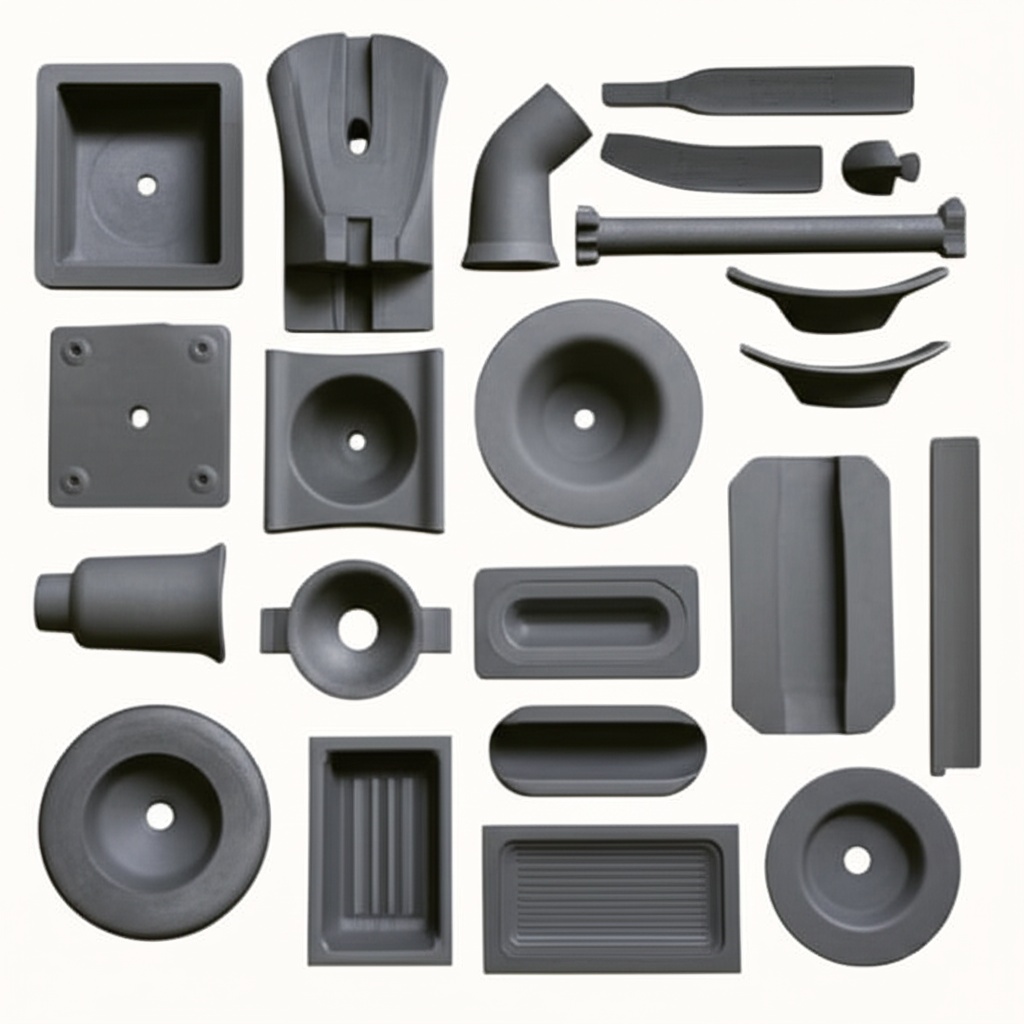
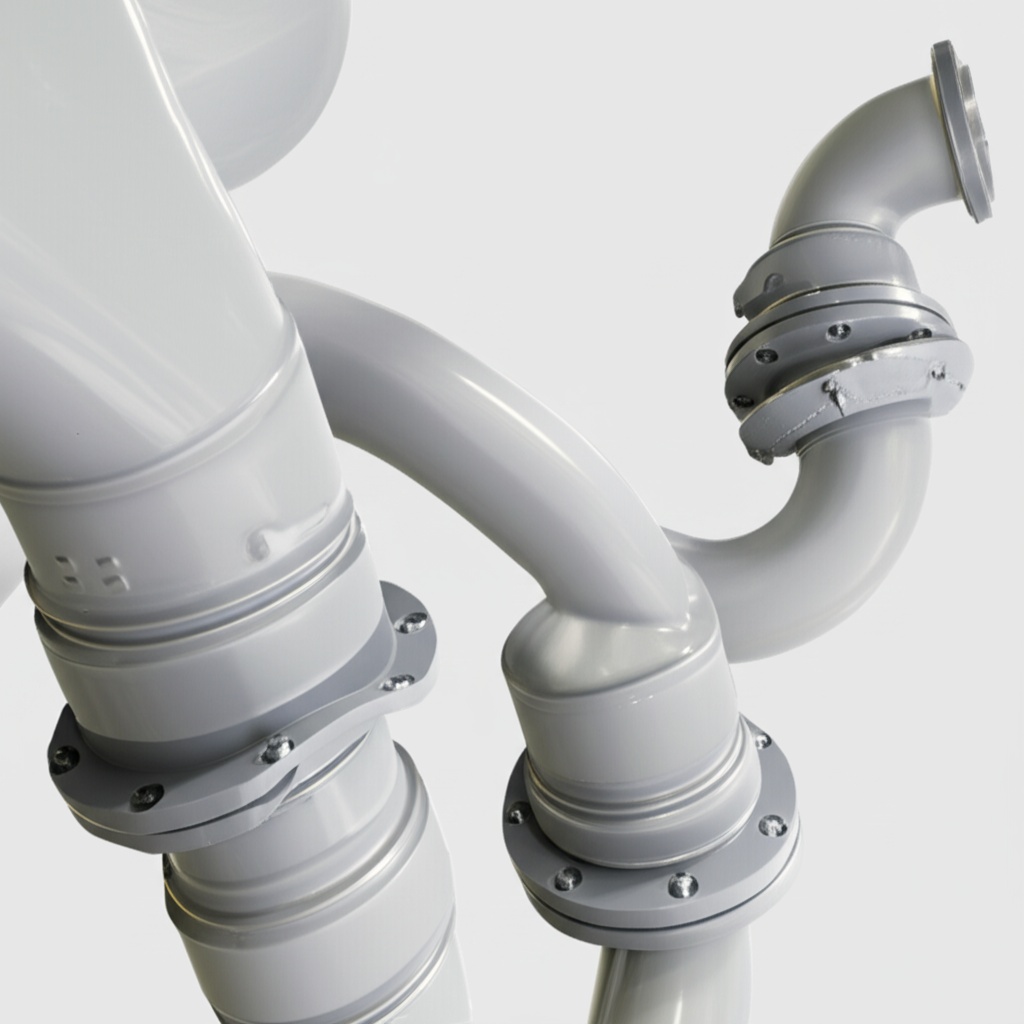
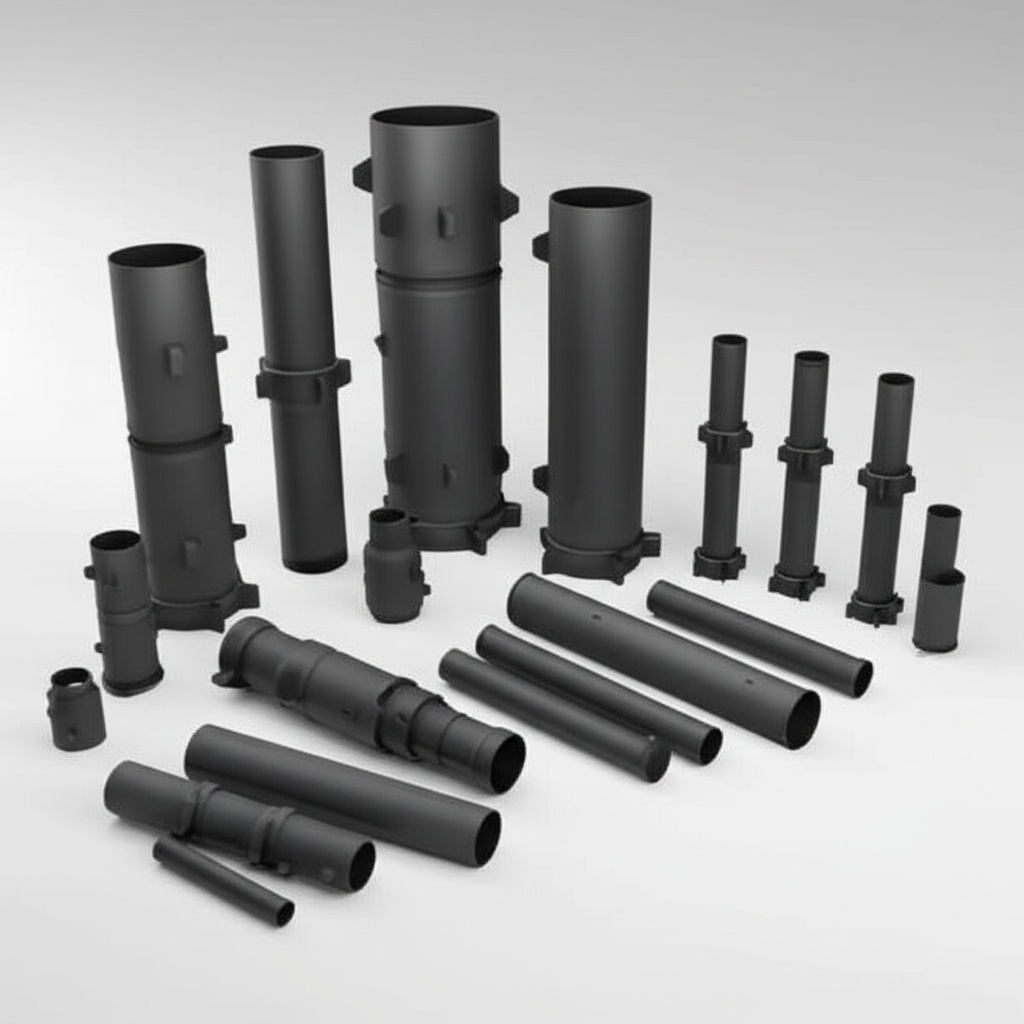
Streamline Operations with SiC Processing Equipment
Share
Streamline Operations with SiC Processing Equipment
Introduction – What are Custom Silicon Carbide Products and Why Are They Essential in High-Performance Industrial Applications?
In the realm of advanced materials, silicon carbide (SiC) stands out for its exceptional properties, making it indispensable across a multitude of high-performance industrial applications. Custom silicon carbide products, components engineered to precise specifications, are at the forefront of technological innovation. These products are not off-the-shelf items; they are meticulously designed and manufactured to meet unique operational demands where standard materials falter. From semiconductor manufacturing to aerospace engineering, the unique combination of thermal conductivity, hardness, wear resistance, and chemical inertness offered by SiC is unparalleled.
The importance of custom SiC products stems from their ability to operate reliably under extreme conditions. Think of environments characterized by soaring temperatures, corrosive chemicals, high pressures, or intense mechanical stress. In such scenarios, materials like metals or conventional ceramics often degrade rapidly, leading to premature component failure, operational downtime, and increased maintenance costs. Silicon carbide, however, thrives in these harsh conditions. The development and production of these high-performance SiC components are critically dependent on specialized SiC processing equipment. This equipment, ranging from synthesis reactors and crystal growth furnaces to precision machining and finishing tools, is what transforms raw SiC materials into sophisticated, application-specific parts. As industries push the boundaries of performance and efficiency, the demand for custom SiC products, and by extension, advanced SiC processing equipment, continues to surge. These tailored solutions enable engineers to design systems that are more robust, last longer, and operate with greater efficiency, driving innovation and providing a competitive edge. Explore our range of custom silicon carbide solutions to understand how they can revolutionize your applications.
Main Applications – Explore How SiC is Used Across Industries Such as Semiconductors, Aerospace, High-Temperature Furnaces, and More
The versatility of silicon carbide, harnessed through sophisticated SiC processing equipment, allows its application across a diverse range of demanding industries. The ability to customize SiC components means that processing equipment must be equally adaptable, capable of producing parts with specific geometries, purities, and material characteristics tailored to each sector’s unique challenges.
- Semiconductors: The semiconductor industry relies heavily on SiC for manufacturing components like wafer handling systems, susceptors for MOCVD/CVD reactors, and etch chamber components. SiC processing equipment is crucial for producing these parts with ultra-high purity and exceptional thermal stability, ensuring minimal contamination and precise temperature control during wafer processing. This leads to higher yields and better device performance.
- Aerospace and Defense: In aerospace, SiC’s lightweight nature, high strength-to-weight ratio, and superior thermal shock resistance make it ideal for rocket nozzles, turbine components, armor, and high-performance braking systems. Specialized SiC processing equipment is used to fabricate these complex shapes with tight tolerances, ensuring reliability in mission-critical applications.
- High-Temperature Furnaces: SiC is a primary material for heating elements, kiln furniture (beams, rollers, plates, setters), and thermocouple protection tubes in industrial furnaces operating at temperatures exceeding 1600°C. Equipment used to process SiC for these applications must handle large-scale production while maintaining material integrity for long service life in extreme thermal cycling conditions.
- Power Electronics: SiC-based power devices (MOSFETs, diodes) are revolutionizing power conversion due to their higher efficiency, switching frequency, and operating temperatures compared to silicon. The SiC processing equipment used for growing SiC single crystals and fabricating these devices is highly specialized, demanding stringent control over defects and electrical properties.
- Automotive: Beyond power electronics for electric vehicles (EVs), SiC is used in diesel particulate filters (DPFs), brake discs, and wear-resistant components in engines. The equipment processing SiC for automotive parts needs to be robust and capable of mass production while meeting stringent automotive quality standards.
- Renewable Energy: In solar and wind energy systems, SiC components enhance the efficiency and durability of inverters and power management systems. Custom SiC parts manufactured using advanced processing techniques contribute to more reliable and cost-effective renewable energy generation.
- Metallurgy: The metallurgical industry utilizes SiC for crucibles, linings, and components in molten metal handling due to its excellent resistance to corrosion and thermal shock. Equipment processing SiC for these applications focuses on creating robust and durable parts.
- Chemical Processing: For handling corrosive chemicals at high temperatures, SiC is used in seals, pump components, heat exchangers, and reactor linings. SiC processing equipment ensures these components have superior chemical inertness and dimensional stability.
- LED Manufacturing: SiC substrates are used for growing GaN layers for high-brightness LEDs. The processing equipment for SiC substrates must deliver exceptional surface quality and crystallographic perfection.
The common thread across these diverse applications is the need for high-quality, reliable SiC components, which can only be achieved through state-of-the-art SiC processing equipment and deep material expertise.
Why Choose Custom Silicon Carbide? – Discuss the Benefits of Customization, Including Thermal Resistance, Wear Resistance, and Chemical Inertness
While standard SiC components are available, opting for custom silicon carbide products, manufactured using specialized SiC processing equipment, offers a strategic advantage for businesses seeking optimal performance and longevity in their critical applications. Customization allows for the precise tailoring of material properties and component geometry to meet specific operational challenges, leading to enhanced efficiency, reduced downtime, and innovation. The key benefits driving the choice for custom SiC include:
- Optimized Thermal Management:
Custom SiC parts can be designed to maximize thermal conductivity or provide tailored thermal insulation, crucial for applications like heat sinks, furnace components, or semiconductor processing chambers. SiC processing equipment allows for the creation of complex geometries, such as internal cooling channels or specific surface area enhancements, that are not possible with standard parts. This precise control over thermal properties ensures components operate within desired temperature ranges, improving system reliability and energy efficiency. - Superior Wear and Abrasion Resistance:
For applications involving abrasive slurries, high-speed moving parts, or erosive environments (e.g., nozzles, seals, bearings, cyclone liners), custom SiC components offer exceptional wear resistance. The hardness of SiC, second only to diamond, means extended service life and reduced replacement frequency. Advanced SiC processing equipment can produce parts with specific surface finishes and microstructures that further enhance their resistance to wear and friction. - Unmatched Chemical Inertness and Corrosion Resistance:
Silicon carbide is highly resistant to a wide range of acids, alkalis, and molten metals, even at elevated temperatures. Customization allows for the selection of the optimal SiC grade (e.g., reaction-bonded, sintered) and the design of components that minimize potential points of chemical attack. This is vital in chemical processing, oil and gas, and metallurgical industries where equipment is constantly exposed to corrosive media. - Tailored Electrical Properties:
SiC can be engineered as a semiconductor, an electrical insulator, or a conductor. Custom SiC components, enabled by precise control during their synthesis and processing, allow for the exact electrical properties required for applications like power electronics, sensors, or heating elements. This level of specificity is rarely achievable with off-the-shelf solutions. - Complex Geometries and Precision Engineering:
Modern SiC processing equipment, including advanced CNC machining, grinding, and additive manufacturing techniques, enables the production of highly complex shapes and intricate designs with tight tolerances. This allows engineers to design SiC components that are perfectly integrated into larger systems, optimizing space, flow dynamics, or structural integrity. - Improved System Performance and Efficiency:
By addressing the specific demands of an application, custom SiC parts contribute to overall system improvements. This could mean higher operating temperatures, faster processing speeds, reduced energy consumption, or longer maintenance intervals. - Cost-Effectiveness in the Long Run:
While the initial investment in custom SiC components might be higher than for standard parts, the extended lifespan, reduced maintenance, and improved operational efficiency often result in a lower total cost of ownership.
Choosing custom silicon carbide is an investment in performance, reliability, and innovation. It empowers industries to push operational boundaries and achieve results not possible with conventional materials or standard components. The key lies in partnering with a supplier who possesses not only the material expertise but also the advanced SiC processing equipment and engineering capabilities to deliver truly tailored solutions.
Recommended SiC Grades and Compositions – Introduce Common Types Like Reaction-Bonded, Sintered, and Nitride-Bonded SiC, and Their Respective Properties
The effectiveness of a silicon carbide component is significantly influenced by its grade and composition. Different manufacturing processes, facilitated by specialized SiC processing equipment, yield various types of SiC, each with a unique set of properties. Understanding these distinctions is crucial for selecting the right material for a specific application and for designing the appropriate processing equipment to produce it. Here are some common SiC grades:
| SiC Grade | Key Manufacturing Process Element | Primary Properties | Typical Applications | Considerations for Processing Equipment |
|---|---|---|---|---|
| Reaction-Bonded SiC (RBSiC or SiSiC) | Infiltration of molten silicon into a porous SiC/carbon preform. | Excellent wear and oxidation resistance, good thermal shock resistance, high thermal conductivity, relatively easy to form complex shapes, cost-effective for larger components. Contains free silicon (typically 8-15%). | Kiln furniture, nozzles, wear liners, mechanical seals, heat exchangers, semiconductor wafer handling. | Equipment must manage high temperatures for silicon infiltration, precise atmosphere control to prevent unwanted reactions, and tooling for preform shaping. |
| Sintered SiC (SSiC) | Pressureless sintering of fine SiC powder with non-oxide sintering aids (e.g., boron, carbon) at very high temperatures (2000-2200°C). | Very high purity (no free silicon), superior strength at high temperatures, excellent chemical and corrosion resistance, high hardness and wear resistance. Can be Direct Sintered (DSSiC) or Liquid Phase Sintered (LPSiC). | Bearings, seals, chemical pump components, heat exchanger tubes, semiconductor components (furnace tubes, boats), armor. | Requires ultra-high temperature furnaces, controlled inert atmospheres, high-purity raw material handling, and advanced powder processing equipment. Precision grinding often needed post-sintering. |
| Nitride-Bonded SiC (NBSiC) | SiC grains bonded by a silicon nitride (Si3N4) phase, formed by nitriding silicon mixed with SiC. | Good thermal shock resistance, good mechanical strength, high abrasion resistance, good resistance to molten metals. More economical than SSiC for certain applications. | Kiln furniture, thermocouple sheaths, furnace linings, cyclone liners, molten metal contact parts. | Equipment needs to facilitate controlled nitridation reactions at high temperatures, manage nitrogen gas atmospheres, and handle SiC/silicon powder mixtures. |
| Recrystallized SiC (RSiC) | SiC grains sublime and re-condense at very high temperatures (around 2500°C), forming a self-bonded structure. | High purity, excellent thermal shock resistance, good strength at extreme temperatures, high porosity variant available for filters. | High-temperature kiln furniture (especially for fast firing cycles), radiant tubes, setters, crucibles, diesel particulate filters. | Demands extremely high-temperature furnaces with precise control, often vacuum or inert atmosphere, and specialized forming techniques for the initial green body. |
| Chemical Vapor Deposited SiC (CVD-SiC) | Deposition of SiC from precursor gases onto a substrate. | Ultra-high purity (99.999%+), theoretically dense, exceptional corrosion and erosion resistance, excellent surface finish. Can be produced as coatings or bulk material. | Semiconductor process chamber components, optical components (mirrors), protective coatings, nuclear applications. | Complex CVD reactors with precise control over gas flow, temperature, and pressure. Requires sophisticated precursor delivery systems and exhaust gas management. |
| Silicon Carbide Matrix Composites (SiC-CMC) | SiC fibers or particles embedded in a SiC matrix. | Enhanced fracture toughness, non-brittle failure characteristics, excellent high-temperature performance. | Aerospace components (turbine shrouds, exhaust components), high-performance brakes. | Multi-stage processing equipment involving fiber lay-up, matrix infiltration (e.g., CVI, LPI, PIP), and high-temperature treatment. |
The choice of SiC grade directly impacts the design, capabilities, and cost of the SiC processing equipment required for its manufacture. For instance, producing SSiC requires more sophisticated furnaces and atmosphere controls than RBSiC. Similarly, CVD-SiC production involves highly specialized reactor technology. As a leading entity in the silicon carbide sector, Sicarb Tech possesses extensive knowledge across these various grades and the intricate processing technologies they demand, stemming from our deep involvement in China’s SiC manufacturing hub.
Design Considerations for SiC Products – Offer Insights on Designing for Manufacturability, Geometry Limits, Wall Thickness, and Stress Points
Designing components with silicon carbide requires a different approach than with metals or plastics due to its inherent hardness and brittleness. Effective design for manufacturability (DfM) is crucial when working with SiC to ensure parts can be produced reliably, economically, and to specification using available SiC processing equipment. Ignoring these considerations can lead to complex machining, high rejection rates, and compromised component integrity.
Key design considerations include:
- Simplicity of Geometry:
- While advanced SiC processing equipment can produce complex shapes, simpler geometries are generally easier and less costly to manufacture.
- Avoid sharp internal corners and edges; incorporate generous radii (e.g., minimum 1-2mm, larger if possible) to reduce stress concentrations and simplify machining or molding.
- Minimize undercuts and features that require specialized tooling or multi-axis machining.
- Wall Thickness and Uniformity:
- Maintain uniform wall thicknesses wherever possible to prevent distortion or cracking during sintering or firing processes. Rapid changes in thickness can lead to differential shrinkage and stress.
- Specify minimum wall thicknesses appropriate for the SiC grade and component size. Thin walls can be fragile and difficult to handle or machine. Typical minimums might range from 2-5mm, depending on the overall size and manufacturing process (e.g., slip casting, pressing).
- Tolerance for Brittleness:
- SiC is a brittle material with low fracture toughness. Designs should aim to minimize tensile stresses and avoid impact loads.
- Incorporate features that allow for slight misalignment during assembly if SiC parts interface with other materials, as SiC will not deform to accommodate.
- Consider designing with compressive loads in mind, as SiC is very strong in compression.
- Machining Allowances:
- If tight tolerances are required, the near-net shape forming process (e.g., pressing, slip casting) will need to be followed by diamond grinding or lapping.
- Design parts with sufficient material allowance for these post-sintering machining operations. This is especially important for critical mating surfaces or features requiring high precision.
- Understand the limitations of SiC machining; deep holes, small internal features, and complex 3D contours can be challenging and expensive.
- Feature Size and Aspect Ratios:
- Small, delicate features or high aspect ratio features (e.g., long, thin pins or fins) can be difficult to form and are prone to damage during handling or processing.
- Discuss achievable feature sizes with your SiC manufacturer, as this depends on the specific SiC grade and the capabilities of their SiC processing equipment.
- Joining and Assembly:
- If the SiC component needs to be joined to other parts (SiC or other materials), consider the joining method (e.g., brazing, shrink-fitting, mechanical fastening) during the design phase.
- Design features that facilitate reliable joining, such as flat surfaces for brazing or appropriate geometries for mechanical interlocking.
- Shrinkage:
- SiC parts undergo significant shrinkage (typically 15-25%) during drying and sintering. This must be accurately accounted for in the initial “green” state design and tooling.
- The specific shrinkage rate depends on the SiC powder characteristics, forming method, and sintering cycle. This is a critical parameter that experienced SiC producers manage with their processing equipment and process controls.
Collaborating closely with an experienced SiC product manufacturer early in the design phase is highly recommended. They can provide valuable insights into how the capabilities of their SiC processing equipment and material expertise can optimize your design for performance, cost, and manufacturability. This collaborative approach ensures that the final SiC component meets all functional requirements while being practical to produce.
Tolerance, Surface Finish & Dimensional Accuracy – Explain Achievable Tolerances, Surface Finish Options, and Precision Capabilities
Achieving precise dimensional accuracy, tight tolerances, and specific surface finishes are critical aspects in the manufacturing of custom silicon carbide components, particularly for high-performance applications in semiconductors, optics, and precision machinery. The capabilities of the SiC processing equipment, combined with the chosen SiC grade and post-processing techniques, determine the final achievable precision.
Dimensional Tolerances:
The achievable dimensional tolerances for SiC parts depend on several factors:
- As-Sintered Tolerances: Components directly from the sintering furnace (without subsequent machining) typically have looser tolerances. For many SiC grades like RBSiC or some SSiC, as-sintered tolerances might be in the range of ±0.5% to ±1% of the dimension, or a minimum of ±0.1mm to ±0.5mm, whichever is greater. This is due to predictable but still variable shrinkage during firing.
- Machined Tolerances: For applications requiring higher precision, SiC components are typically machined after sintering using diamond grinding, lapping, or polishing. With such processes, much tighter tolerances can be achieved:
- Grinding: Can typically achieve tolerances in the range of ±0.01mm to ±0.05mm (±10 to ±50 microns).
- Lapping/Polishing: Can achieve even tighter tolerances, often down to ±0.001mm to ±0.005mm (±1 to ±5 microns) for flatness, parallelism, and dimensional accuracy on specific features.
- Complexity and Size: Larger and more complex parts are generally more challenging to hold to very tight tolerances compared to smaller, simpler geometries.
Surface Finish:
The surface finish (roughness) of SiC components is crucial for applications like seals, bearings, mirrors, or semiconductor wafer handling parts. Different SiC processing equipment and techniques yield varying surface finishes:
- As-Sintered Finish: The surface finish of as-sintered parts can vary significantly depending on the SiC grade and forming method. It might range from a relatively coarse Ra of 1.6 µm to >6 µm.
- Ground Finish: Diamond grinding can improve the surface finish considerably, typically achieving Ra values between 0.2 µm and 0.8 µm. The specific finish depends on the grit size of the diamond wheel and grinding parameters.
- Lapped/Polished Finish: For applications demanding ultra-smooth surfaces (e.g., optical mirrors, high-performance seals), lapping and polishing processes are employed. These can achieve exceptionally smooth surfaces with Ra values often below 0.05 µm, and even down to angstrom-level smoothness for specialized optical applications (e.g., Ra < 0.01 µm or < 1 nm).
Achievable Precision Capabilities:
Modern SiC processing equipment, particularly CNC diamond grinding machines, lapping machines, and advanced metrology systems, enable remarkable precision capabilities:
- Flatness: For lapped surfaces, flatness can often be controlled to within a few light bands (e.g., < 1 µm over a 100mm diameter).
- Parallelism: Similar to flatness, parallelism between two surfaces can be achieved to a few microns.
- Roundness/Cylindricity: For cylindrical parts, roundness can be controlled to within a few microns.
- Angularity and Perpendicularity: Precise angular relationships between surfaces can be maintained with advanced machining setups.
Table: Typical Achievable Precision for Machined SiC Components
| Parameter | Typical Grinding | Typical Lapping/Polishing | Influencing Factors |
|---|---|---|---|
| Dimensional Tolerance | ±0.01mm to ±0.05mm | ±0.001mm to ±0.005mm | Part size, complexity, SiC grade |
| Surface Roughness (Ra) | 0.2 µm to 0.8 µm | <0.01 µm to 0.05 µm | Diamond grit, process parameters, material |
| Flatness (per 100mm) | ~5-10 µm | <1 µm | Machining process, equipment capability |
| Parallelism (per 100mm) | ~5-10 µm | <2 µm | Machining process, fixturing |
It’s essential for designers and procurement managers to specify only the necessary level of tolerance and surface finish, as achieving higher precision invariably increases manufacturing time and cost. Discussing these requirements with your SiC supplier is critical to ensure that their SiC processing equipment and quality control systems can meet the application’s demands effectively and economically. Companies like Sicarb Tech, with their focus on customized production and access to advanced technologies, are well-equipped to address stringent precision requirements.
Post-Processing Needs – Discuss Common Steps Such as Grinding, Lapping, Sealing, or Coating to Enhance Performance and Durability
Once silicon carbide components are formed and sintered using primary SiC processing equipment, they often require additional post-processing steps to meet final dimensional specifications, enhance surface characteristics, or impart specialized functionalities. These secondary operations are critical for optimizing the performance and durability of SiC parts in demanding industrial environments.
Common post-processing needs for SiC products include:
- Precision Grinding:
- Purpose: To achieve tight dimensional tolerances, specific geometries, and improved surface finishes that cannot be attained through sintering alone.
- Process: Utilizes diamond grinding wheels on specialized CNC grinding machines. Due to SiC’s extreme hardness, diamond is the only abrasive capable of effectively machining it.
- Equipment: High-precision surface grinders, cylindrical grinders, ID/OD grinders, and multi-axis CNC machining centers adapted for ceramics.
- Outcome: Dimensions accurate to microns, improved parallelism, flatness, and roundness.
- Lapping and Polishing:
- Purpose: To achieve ultra-smooth surface finishes (low Ra values), high levels of flatness, and superior optical qualities. Essential for seals, bearings, optical components, and semiconductor substrates.
- Process: Involves abrading the SiC surface with fine diamond slurries on a lapping plate or polishing pad. Progressively finer abrasives are used to achieve the desired finish.
- Equipment: Lapping machines (single-sided or double-sided), polishing machines, often with capabilities for interferometric feedback to monitor surface quality.
- Outcome: Mirror-like finishes, Ra values in the nanometer range, exceptional flatness.
- Cleaning and Surface Treatment:
- Purpose: To remove any contaminants, machining residues, or loose particles from the SiC surface, especially critical for high-purity applications like semiconductor processing.
- Process: May involve ultrasonic cleaning in deionized water or specific solvents, acid etching (in controlled conditions), or plasma cleaning.
- Equipment: Ultrasonic cleaning baths, wet benches for chemical etching, plasma reactors.
- Outcome: Ultra-clean surfaces ready for use or further coating.
- Sealing (for Porous Grades):
- Purpose: Some SiC grades (e.g., certain RSiC or less dense SSiC) can have inherent porosity. Sealing is done to make them impermeable to gases or liquids, or to improve oxidation resistance.
- Process: Impregnation with glass-based sealants, polymeric resins, or application of a thin CVD coating (e.g., SiO2 or SiC itself).
- Equipment: Vacuum impregnation systems, coating deposition chambers (CVD reactors).
- Outcome: Gas-tight components, enhanced chemical resistance.
- Coating:
- Purpose: To further enhance surface properties such as wear resistance, corrosion resistance, electrical conductivity/insulation, or biocompatibility.
- Process: Techniques like Physical Vapor Deposition (PVD), Chemical Vapor Deposition (CVD), or plasma spray can be used to apply various coatings (e.g., TiN, DLC, o

About the Author: Sicarb Tech
We provide clear and reliable insights into silicon carbide materials, component manufacturing, application technologies, and global market trends. Our content reflects industry expertise, practical experience, and a commitment to helping readers understand the evolving SiC landscape.

Customizable SiC
You May Also Interest
-
![]()
SiC Academic Research Insights for Industry Use
SiC Academic Research Insights for Industry Use In the relentless pursuit of performance and efficiency across demanding industrial sectors, silicon carbide (SiC) has emerged as a cornerstone material. Its exceptional properties—ranging from unparalleled hardness and wear resistance to superior thermal conductivity and chemical inertness—make it indispensable for high-stakes applications. This blog post delves into the…
-
![]()
Precision SiC Rings for Reliable Mechanical Seals
Precision SiC Rings for Reliable Mechanical Seals In the demanding world of industrial applications, the reliability of every component is paramount. Mechanical seals play a critical role in preventing leakage, containing pressure, and excluding contaminants in rotating equipment. At the heart of these seals, the choice of material for seal faces is crucial for performance…
-
![]()
Key SiC Exporters in Asia for International Trade
Key SiC Exporters in Asia for International Trade In the rapidly evolving landscape of advanced materials, silicon carbide (SiC) stands out as a material of unparalleled performance. Its exceptional properties make it indispensable across a spectrum of demanding industrial applications. For businesses seeking reliable and high-quality silicon carbide products, understanding the key players and regions…