Silicon Carbide: Revolutionizing Efficiency and Reliability in Solar Energy Systems
Share
The global push towards renewable energy sources has placed solar power at the forefront of sustainable energy solutions. As solar technology rapidly evolves, the demand for materials that can withstand extreme conditions, enhance efficiency, and ensure long-term reliability is paramount. Custom silicon carbide (SiC) products are emerging as critical enablers in this transition, offering unparalleled properties that address the demanding requirements of high-performance solar energy applications, from the intricate processes of photovoltaic (PV) cell manufacturing to the robust operation of power generation systems.
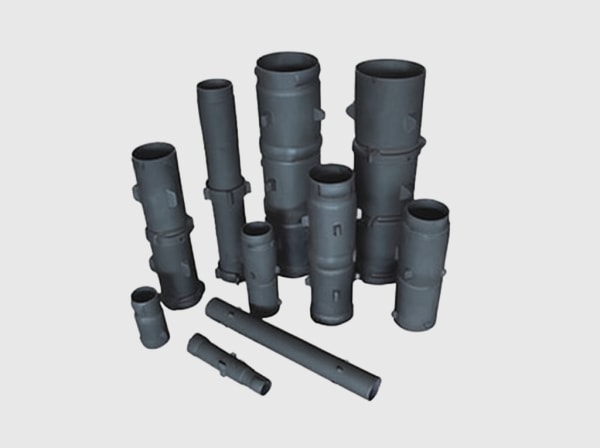
Silicon carbide, a compound of silicon and carbon, is a synthetic crystalline material renowned for its exceptional hardness, high thermal conductivity, excellent resistance to wear and corrosion, and superior performance at elevated temperatures. In the context of solar energy, these characteristics translate into components that can significantly improve the efficiency of solar power conversion, extend the operational lifetime of solar installations, and reduce the overall cost of solar energy production. Custom SiC products are specifically engineered components, tailored to precise geometries, material compositions, and surface finishes to meet the unique challenges posed by various solar technologies. This includes everything from ultra-pure SiC components for semiconductor manufacturing equipment used in producing solar cells, to robust structural elements in Concentrated Solar Power (CSP) systems, and highly efficient power electronic devices within solar inverters.
The importance of custom SiC in the solar industry stems from its ability to push the boundaries of current material limitations. For instance, traditional materials used in solar manufacturing equipment might suffer from wear, thermal instability, or chemical reactions, leading to lower yields and increased downtime. SiC components, on theother hand, offer dimensional stability and chemical inertness even under aggressive processing conditions. Similarly, in power electronics, SiC-based devices can operate at higher voltages, temperatures, and switching frequencies compared to conventional silicon-based devices, leading to smaller, lighter, and more efficient solar inverters. As the solar industry strives for higher conversion efficiencies, greater power densities, and reduced levelized costs of energy (LCOE), the adoption of advanced materials like custom silicon carbide is not just beneficial, but increasingly essential. This is where the expertise of specialized suppliers becomes crucial. Companies like Sicarb Tech, leveraging the rich silicon carbide manufacturing ecosystem of Weifang City – the hub of China’s SiC customizable parts factories – play a pivotal role in providing these mission-critical components. With Weifang accounting for over 80% of China’s SiC output, SicSino, backed by the formidable scientific and technological capabilities of the Chinese Academy of Sciences through the CChinese Academy of Sciences (Weifang) Innovation Park, is at the forefront of delivering high-quality, cost-competitive custom SiC solutions for the global solar market.
Illuminating Applications: How Custom SiC Components Drive Solar Energy Advancements
The versatility and exceptional properties of silicon carbide have led to its adoption in a wide array of applications across the solar energy value chain. Custom SiC components are not just incremental improvements; they are enabling breakthroughs in efficiency, durability, and cost-effectiveness. From the foundational stages of solar cell production to the final conversion of sunlight into grid-ready electricity, SiC is making a tangible impact.
Photovoltaic (PV) Cell Manufacturing Equipment: The production of high-efficiency solar cells involves numerous complex steps, many of which occur under high temperatures, corrosive chemical environments, and require extreme precision. Custom SiC components are indispensable in this domain:
- Wafer Handling and Processing: SiC wafer carriers, chucks, and edge grippers are used in diffusion furnaces, ion implantation systems, and etching processes. Their high thermal conductivity ensures uniform temperature distribution, crucial for consistent wafer processing. Their stiffness and low particle generation minimize wafer contamination and breakage, leading to higher manufacturing yields.
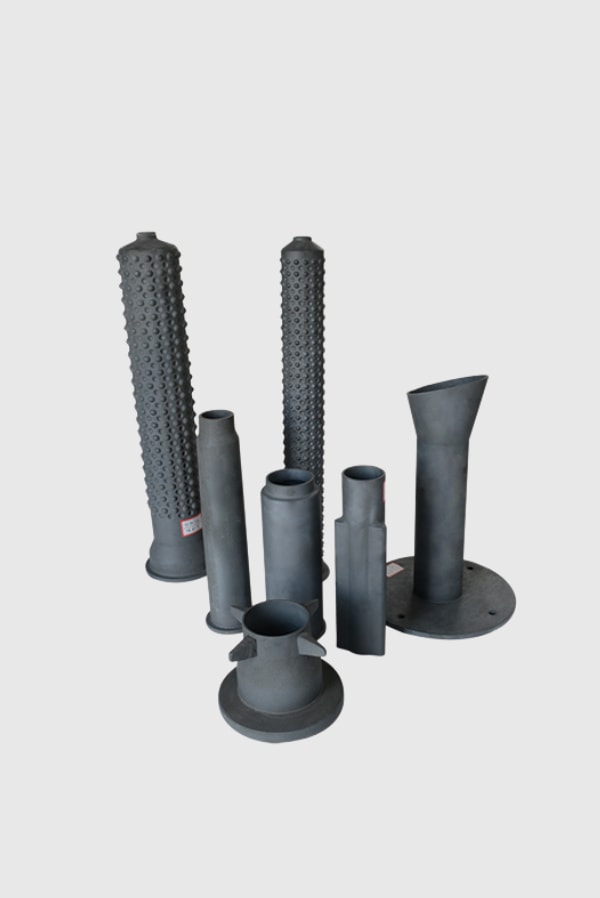
- Chemical Vapor Deposition (CVD) and Plasma Etch Chambers: Liners, showerheads, and injector tubes made from high-purity SiC offer excellent resistance to the aggressive chemicals and high temperatures involved in thin-film deposition and etching processes. This extends chamber component lifetime and reduces maintenance downtime.
- Rapid Thermal Processing (RTP) Systems: SiC susceptors and support pins are ideal for RTP due to their ability to heat and cool rapidly and uniformly, essential for precise annealing of solar cell wafers.
Solar Inverters and Power Electronics: Solar inverters are the heart of a PV system, converting the direct current (DC) generated by solar panels into alternating current (AC) for use in homes, businesses, or the grid. SiC-based power electronic devices (MOSFETs, Schottky diodes) are revolutionizing inverter technology:
- Higher Efficiency: SiC devices have significantly lower switching losses and on-state resistance compared to traditional silicon (Si) devices. This translates to higher inverter efficiencies, meaning more of the solar energy captured is delivered as usable AC power.
- Increased Power Density: SiC devices can operate at higher temperatures and frequencies. This allows for smaller and lighter heat sinks and passive components (inductors, capacitors), leading to more compact and power-dense inverter designs. This is particularly beneficial for residential and commercial rooftop installations where space and weight are constraints.
- Enhanced Reliability: The superior thermal stability and robustness of SiC contribute to longer inverter lifetimes and improved reliability, even in harsh environmental conditions often encountered by solar installations.
Concentrated Solar Power (CSP) Systems: CSP technology uses mirrors or lenses to concentrate sunlight onto a small area, where the concentrated light is converted to heat. This heat then drives a turbine to produce electricity. SiC components are finding critical applications in CSP due to their exceptional high-temperature capabilities and thermal shock resistance:
- Solar Receivers: Central receivers in CSP towers, which absorb concentrated sunlight, can experience extremely high temperatures (often exceeding 700°C, and in some advanced designs, over 1000°C) and rapid thermal cycling. SiC tubes, panels, and volumetric absorbers offer excellent thermal conductivity, high emissivity, and resistance to thermal shock and oxidation, making them ideal for these demanding conditions. This leads to higher operating temperatures and improved thermodynamic efficiency of the power cycle.
- Heat Exchangers and Thermal Storage: SiC’s high thermal conductivity and chemical inertness make it suitable for heat exchangers used in transferring heat from the solar receiver to a working fluid or a thermal energy storage medium. This is crucial for efficient energy transfer and storage, enabling power generation even when the sun isn’t shining.
- Molten Salt Handling: In some CSP systems, molten salts are used as heat transfer fluids and storage media. SiC components exhibit excellent corrosion resistance against these aggressive salts at high temperatures.
Advanced Solar Research and Development Tools: Beyond mainstream applications, custom SiC components are also vital in research and development settings for next-generation solar technologies. This includes specialized crucibles for crystal growth, substrates for experimental thin-film solar cells, and components for high-flux solar simulators. The ability to procure custom-designed SiC parts allows researchers to build and test novel solar concepts with materials that can withstand the experimental rigors.
The breadth of these applications underscores the transformative potential of silicon carbide in the solar industry. As the quest for more efficient, reliable, and cost-effective solar energy continues, the role of custom SiC components, supplied by knowledgeable and capable manufacturers like Sicarb Tech, will only grow in significance. Their deep understanding of SiC material science and manufacturing processes, cultivated within China’s premier SiC hub, ensures that solar innovators have access to the advanced ceramic solutions they need.
The Custom Advantage: Why Tailored Silicon Carbide Boosts Solar Performance and Longevity
While standard silicon carbide components offer inherent benefits, the ability to customize SiC products to the specific demands of solar energy applications unlocks a new level of performance, efficiency, and longevity. Generic, off-the-shelf parts may not fully address the unique operational stresses, geometric constraints, or purity requirements of specialized solar equipment and systems. Customization allows engineers and procurement managers to optimize for specific outcomes, leading to significant advantages across the solar value chain.
The key benefits of choosing custom silicon carbide for solar applications include:
- Exceptional Thermal Management: Solar energy systems, from PV cell manufacturing furnaces to CSP receivers and power electronics, involve significant thermal loads.
- Custom Geometries for Optimal Heat Dissipation: SiC’s high thermal conductivity is a major asset. Customization allows for the design of components with intricate cooling channels, optimized fin structures, or specific form factors that maximize heat dissipation. For instance, custom SiC heat sinks in solar inverters can be designed to fit compact spaces while efficiently removing heat from power modules, enabling higher power densities and improved reliability. In CSP, receiver tubes can be tailored for optimal flow and heat absorption.
- Tailored Thermal Expansion Matching: When SiC components are integrated with other materials, differences in thermal expansion can cause stress and failure. Custom SiC formulations can sometimes be adjusted, or designs can incorporate features to accommodate thermal expansion mismatches, ensuring system integrity during thermal cycling.
- Enhanced Efficiency in Power Conversion and Manufacturing:
- Optimized Electrical Properties for Power Electronics: For SiC-based MOSFETs and diodes in solar inverters, the material quality, doping profiles, and device architecture are critical. Custom fabrication processes for SiC wafers and chips allow for the optimization of these parameters, leading to lower on-state resistance, faster switching speeds, and reduced energy losses, directly boosting inverter efficiency.
- Precision Components for Higher Manufacturing Yields: In PV manufacturing, the precision of SiC components like wafer chucks, showerheads in CVD systems, or guides and rollers is crucial. Custom-machined SiC parts with tight tolerances ensure uniform processing, reduce particle generation, and minimize damage to delicate solar wafers, leading to higher yields of high-quality solar cells.
- Superior Wear Resistance and Durability in Demanding Environments:
- Extended Component Lifespan in Abrasive Conditions: Solar manufacturing processes can involve abrasive slurries or moving parts. Custom SiC components, known for their extreme hardness (second only to diamond among common industrial materials), offer outstanding wear resistance. This means longer operational life for parts like SiC nozzles, bearings, or seals, reducing maintenance frequency and equipment downtime.
- Resilience in Harsh Chemical and Atmospheric Conditions: Solar installations can be exposed to moisture, salinity (in coastal areas), and industrial pollutants. CSP systems may involve corrosive molten salts. Custom SiC grades can be selected or developed for maximum resistance to specific chemical environments and oxidation at high temperatures, ensuring the longevity and reliability of the components. For instance, high-purity, dense SiC grades are preferred for corrosion resistance.
- Chemical Stability and Purity for Contamination-Sensitive Processes:
- Minimized Contamination in PV Cell Production: The efficiency of solar cells is highly sensitive to impurities. Custom SiC components used in semiconductor fabrication equipment can be manufactured to extremely high purity levels (e.g., using Chemical Vapor Deposition SiC or high-purity sintered SiC). This minimizes the leaching of contaminants into the processing environment, safeguarding solar cell performance.
- Inertness in High-Temperature Reactions: In CSP systems or high-temperature research applications, SiC’s chemical inertness prevents unwanted reactions with working fluids or the atmosphere, maintaining system integrity and process purity.
- Design Flexibility for Innovative Solar Solutions:
- Complex Geometries for Optimized Functionality: Advanced manufacturing techniques for SiC, such as complex near-net-shape forming followed by precision machining, allow for the creation of intricate component designs. This enables engineers to develop innovative solar solutions that might not be possible with traditional materials or standard SiC shapes. For example, integrated SiC cooling structures or complex-shaped receivers for CSP.
- Lightweighting Opportunities: While SiC is denser than some ceramics, its high strength and stiffness allow for the design of thinner-walled components that can still meet structural requirements. This can lead to weight savings in certain applications, which is beneficial for large solar arrays or mobile/portable solar systems.
Partnering with a supplier like Sicarb Tech amplifies these advantages. SicSino’s position within Weifang, a city synonymous with SiC manufacturing excellence, and its strong ties to the Chinese Academy of Sciences, provide access to a deep reservoir of material science knowledge and advanced production technologies. This allows them to offer truly customized SiC solutions, from material selection and design optimization to precision manufacturing and quality assurance, ensuring that solar industry clients receive components perfectly tailored to their high-performance needs. Their expertise helps translate the theoretical benefits of custom SiC into tangible improvements in solar energy system performance, reliability, and economic viability.
Choosing Your Champion: Recommended SiC Grades and Compositions for Solar Applications
The effectiveness of silicon carbide in solar energy applications is not just about using SiC, but about using the right type of SiC. Different manufacturing processes result in various SiC grades with distinct properties, making them suitable for specific roles within the diverse solar technology landscape. Understanding these grades and their characteristics is crucial for engineers and procurement managers aiming to optimize performance and cost.
Here’s a look at some commonly recommended SiC grades for solar applications and their respective attributes:
| SiC Grade | Key Manufacturing Process | Key Properties | Typical Solar Applications |
|---|---|---|---|
| Reaction-Bonded SiC (RBSC) | Infiltration of molten silicon into a porous SiC/carbon preform. Also known as Siliconized Silicon Carbide (SiSiC). | Good mechanical strength, excellent thermal shock resistance, high thermal conductivity, relatively easier to form complex shapes, good wear resistance. Contains some free silicon (typically 8-15%). | PV Manufacturing: Furnace furniture (beams, rollers, supports), wafer boats, setters, thermocouple protection tubes. CSP: Heat exchanger components, structural parts not requiring highest purity. |
| Sintered SiC (SSiC) | Sintering of pure SiC powder at high temperatures (often >2000°C) without sintering aids (direct sintered) or with non-oxide sintering aids (liquid phase sintered). | Very high strength and hardness, excellent corrosion and wear resistance, high thermal conductivity, good high-temperature strength, high purity (especially direct sintered). | PV Manufacturing: High-purity components for etch and CVD chambers (liners, showerheads, susceptors), precision chucks. Power Electronics: High-quality substrates for SiC devices. CSP: Advanced receiver components, high-purity molten salt handling. |
| Nitride-Bonded SiC (NBSC) | SiC grains bonded by a silicon nitride (Si₃N₄) matrix. | Good thermal shock resistance, good mechanical strength, good refractory properties, relatively lower cost than SSiC. | PV Manufacturing: Kiln furniture, saggers, plates, and supports where extreme purity is not the primary concern but thermal stability and cost are. |
| Chemical Vapor Deposited SiC (CVD-SiC) | Chemical vapor deposition process, building SiC atom by atom. | Extremely high purity (>99.999%), theoretically dense, excellent corrosion resistance, superior surface finish achievable, can coat complex graphite shapes. | PV Manufacturing: Ultra-high purity components for semiconductor processing (susceptors, chamber parts, rings), optics for extreme UV. Solar Research: High-purity crucibles, reference materials. |
| Recrystallized SiC (RSiC) | SiC grains are bonded to each other through a sublimation-condensation process at very high temperatures. | High porosity (typically 10-20%), excellent thermal shock resistance, good high-temperature strength, permeable. | PV Manufacturing: Porous burner nozzles, radiant tubes, kiln furniture where gas permeability can be an advantage or high thermal shock is paramount. |
Considerations for Selecting the Right SiC Grade for Solar Applications:
- Operating Temperature: SSiC and CVD-SiC generally offer the best performance at extreme temperatures. RBSC is also very capable but the free silicon phase melts above 1410°C, which can be a limitation in some ultra-high temperature processes.
- Purity Requirements: For semiconductor processing in PV manufacturing, CVD-SiC and high-purity SSiC are preferred to avoid contamination. For less sensitive applications like general furnace furniture, RBSC or NBSC might be sufficient and more cost-effective.
- Thermal Shock Resistance: RBSC and RSiC are particularly known for their excellent thermal shock resistance due to their microstructure and thermal conductivity. This is vital for components undergoing rapid temperature changes, such as in RTP systems or some CSP receiver designs.
- Mechanical Stress: SSiC offers the highest mechanical strength and hardness, making it suitable for components subjected to high loads or abrasive wear. RBSC also provides good mechanical properties.
- Chemical Environment: SSiC and CVD-SiC exhibit superior corrosion resistance against a wide range of chemicals, including those used in etching and cleaning processes in PV manufacturing, or molten salts in CSP.
- Complexity of Shape and Size: RBSC is often considered easier to form into large and complex shapes compared to SSiC, which can be more challenging and costly to sinter into intricate geometries without defects. However, advancements in forming technologies are continually improving the capabilities for all SiC grades.
- Cost: There is a general cost hierarchy, with RBSC and NBSC often being more economical options for less demanding applications. SSiC, and particularly CVD-SiC, are premium materials due to their complex manufacturing processes and superior properties, typically reserved for applications where their specific advantages are critical.
Sicarb Tech, with its deep-rooted presence in Weifang’s SiC industry and its collaboration with the Chinese Academy of Sciences, possesses comprehensive expertise across these various SiC grades. They can guide clients through the material selection process, helping to identify the optimal SiC composition and manufacturing route that balances performance requirements with budgetary considerations for their specific solar energy applications. Whether it’s reaction-bonded components for robust furnace structures or high-purity sintered SiC for critical semiconductor processing tools, SicSino’s capability to provide a wide array of tailored SiC products makes them a valuable partner for companies looking to harness the full potential of silicon carbide in the solar sector. Their access to a broad spectrum of process technologies means they can offer a truly customized material solution, not just a product from a limited catalogue.
Solar-Centric Design: Engineering Considerations for Custom Silicon Carbide Products
Designing effective custom silicon carbide components for solar energy applications goes beyond simply selecting the right SiC grade. It requires a holistic approach that considers the specific operational environment, mechanical and thermal stresses, electrical requirements (if any), and the manufacturability of the final product. Thoughtful design, undertaken in collaboration with experienced SiC manufacturers, is critical to unlocking the full potential of these advanced ceramics and ensuring optimal performance, longevity, and cost-effectiveness in solar systems.
Key engineering considerations when designing custom SiC products for the solar industry include:
- Thermal Management and Dissipation:
- Optimizing Geometry for Heat Transfer: The high thermal conductivity of SiC is a prime advantage. Designs should maximize surface area for heat exchange where needed (e.g., fins on heat sinks for solar inverters) or ensure uniform heat distribution (e.g., in susceptors for PV wafer processing). For CSP receivers, the geometry of SiC tubes or panels must allow for efficient absorption of concentrated solar flux and transfer of heat to the working fluid.
- Thermal Cycling and Shock: Many solar applications involve significant temperature fluctuations. Components must be designed to withstand thermal gradients and cyclic loading without cracking or failure. This involves considerations like avoiding sharp corners (which act as stress concentrators), allowing for controlled expansion and contraction, and selecting SiC grades with excellent thermal shock resistance (like RBSC or RSiC).
- Interface with Other Materials: When SiC components are part of an assembly, their thermal expansion characteristics relative to adjoining materials must be managed. Design features like flexible joints, graded material interfaces (where feasible), or mechanical allowances can prevent stress buildup.
- Mechanical Integrity and Structural Support:
- Stress Distribution: While SiC is very strong in compression, it is a brittle material and more susceptible to tensile and impact stresses. Designs should aim to distribute mechanical loads evenly and minimize stress concentrations. Finite Element Analysis (FEA) is often employed to predict stress patterns and optimize component geometry for robustness.
- Wall Thickness and Aspect Ratios: There are practical limits to how thin SiC walls can be or how extreme aspect ratios can be achieved, depending on the SiC grade and manufacturing process. Designs should be realistic, considering the inherent brittleness and manufacturing capabilities. Thicker sections might be needed in high-stress areas, but overly thick sections can increase material cost and thermal mass.
- Joining and Assembly: If SiC components need to be joined to other SiC parts or different materials, the joining method (e.g., brazing, diffusion bonding, mechanical fastening) significantly impacts the design. The joint itself can be a point of weakness if not designed and executed properly. For instance, designing features for mechanical interlocks or ensuring surfaces are prepared for effective brazing is crucial.
- Electrical Properties and Insulation (for Power Electronics and High Voltage Applications):
- Dielectric Strength and Resistivity: For SiC components used in solar inverters or as insulators in high-voltage equipment, their dielectric strength and electrical resistivity are critical. The design must ensure sufficient clearance and creepage distances to prevent electrical breakdown. The purity of the SiC material can also influence its electrical properties.
- Semiconductor Device Design: In SiC power devices (MOSFETs, diodes), the design of the epitaxial layers, doping profiles, gate structures, and termination regions is highly complex and dictates the device’s performance characteristics like breakdown voltage, on-state resistance, and switching speed. This is a specialized field of micro-fabrication design.
- Manufacturability and Cost-Effectiveness:
- Complexity vs. Cost: Highly complex SiC components with intricate details and very tight tolerances are generally more expensive and challenging to manufacture. Designers should strive for the simplest geometry that meets functional requirements. Early consultation with SiC manufacturers like Sicarb Tech is vital to understand design-for-manufacturability (DFM) principles for SiC.
- Near-Net-Shape Forming: Techniques that produce SiC preforms close to the final desired shape (e.g., slip casting, injection molding, isopressing before sintering or reaction bonding) can significantly reduce the amount of expensive and time-consuming diamond grinding required for final shaping. Designs should consider the capabilities and limitations of these forming methods.
- Tolerancing: Specifying overly tight tolerances where they are not functionally necessary can dramatically increase manufacturing costs. Tolerances should be defined based on actual functional needs.
- Surface Characteristics and Purity:
- Surface Roughness: The required surface finish depends on the application. For example, SiC mirrors in CSP systems or wafer chucks in PV manufacturing require highly polished, smooth surfaces. Other applications like furnace furniture may tolerate rougher surfaces.
- Purity Levels: For applications in semiconductor manufacturing, extreme purity is essential to prevent contamination. The design and manufacturing process must ensure that the chosen SiC grade and subsequent handling maintain the required purity.
Precision and Endurance: Tolerance, Surface Finish, and Post-Processing for SiC Solar Components
Achieving the desired performance and longevity from custom silicon carbide components in solar energy applications hinges significantly on manufacturing precision, appropriate surface characteristics, and effective post-processing treatments. The stringent demands of solar technologies—whether it’s the sub-micron accuracy needed in photovoltaic cell manufacturing equipment or the specific surface emissivity required for concentrated solar power receivers—necessitate careful control over these aspects. These finishing stages are often as critical as the initial material selection and component design.
Achievable Tolerances and Dimensional Accuracy: Silicon carbide is an extremely hard material, which makes it challenging to machine. However, with advanced diamond grinding, lapping, and polishing techniques, very tight dimensional tolerances and high levels of precision can be achieved.
- Typical Tolerances: For general-purpose RBSC or SSiC components like furnace furniture, tolerances might be in the range of ±0.1 mm to ±0.5 mm, or even a percentage of the dimension (e.g., ±0.5%).
- High-Precision Applications: For critical components in PV manufacturing, such as SiC wafer chucks, alignment pins, or parts for lithography systems, much tighter tolerances are achievable, often in the range of ±0.005 mm (5 microns) to ±0.025 mm (25 microns). Flatness and parallelism for large SiC plates or chucks can also be controlled to within microns.
- Factors Influencing Tolerances: The achievable tolerance depends on the SiC grade (SSiC typically allows for finer finishes and tighter tolerances than some coarser-grained RBSC), the size and complexity of the component, and the specific machining processes employed. Cost generally increases significantly with tighter tolerance requirements.
Surface Finish Options: The required surface finish for SiC solar components varies widely by application:
- As-Fired or As-Sintered Surfaces: For some applications like kiln furniture or certain structural elements, the surface finish resulting directly from the firing or sintering process may be adequate. This is the most cost-effective option. Surface roughness (Ra) can be in the range of 1 μm to 10 μm or higher depending on the SiC grade and forming method.
- Ground Surfaces: Diamond grinding is commonly used to achieve better dimensional accuracy and smoother surfaces than as-fired. Ground surfaces can typically achieve Ra values from 0.4 μm to 1.6 μm. This is often sufficient for many mechanical components and heat transfer surfaces.
- Lapped and Polished Surfaces: For applications requiring very smooth, low-friction, or optically reflective surfaces, lapping and polishing are employed.
- Lapping: Can achieve Ra values in the range of 0.1 μm to 0.4 μm.
- Polishing: Can produce super-smooth surfaces with Ra values below 0.05 μm (50 nanometers), and even down to angstrom levels for optical applications (though less common in bulk solar components, it’s critical for SiC mirrors or substrates for sensitive devices). This is vital for SiC chucks to prevent wafer damage, or for SiC mirrors in specific solar concentrator designs.
- Surface Purity: For PV manufacturing, the surface must not only be smooth but also exceptionally clean and free from contaminants. Specialized cleaning processes are often required after machining.
Common Post-Processing Needs and Techniques: Beyond basic shaping and surface finishing, some SiC solar components may require additional post-processing steps to enhance their performance, durability, or functionality:
- Edge Chamfering and Radiusing: To reduce the risk of chipping on the brittle edges of SiC components and to improve handling safety, edges are often chamfered or radiused.
- Drilling and Threading: While challenging, holes can be drilled in SiC using diamond tools or ultrasonic machining. Internal threads are generally not directly machined into SiC; instead, metallic inserts or other fastening methods are typically used. However, some specialized techniques can create threaded features.
- Cleaning and Etching: For high-purity applications, especially in semiconductor processing for PV cells, SiC components undergo rigorous cleaning procedures, which may include specialized chemical etches to remove any surface contamination or subsurface damage introduced during machining.
- Annealing: In some cases, post-machining annealing might be performed to relieve internal stresses induced during grinding, though this is less common for SiC compared to some other ceramics due to its high thermal stability.
- Sealing (for porous grades): Porous SiC grades like RSiC, if used in applications requiring gas tightness, might need a sealing layer, often a dense SiC coating (e.g., CVD-SiC) or a specialized glaze if temperature limits allow.
- Coatings:
- Protective Coatings: While SiC itself is highly resistant, specialized coatings (e.g., alumina, zirconia, or even CVD-SiC on a different SiC substrate) can be applied to further enhance resistance to specific corrosive agents or to modify surface properties like emissivity for CSP receivers.
- Functional Coatings: For example, anti-reflective coatings for SiC optics or conductive coatings if a specific surface conductivity is needed.
- Joining and Assembly: As mentioned in design, if components need to be assembled, post-processing might involve surface preparation for brazing, diffusion bonding, or preparing surfaces for mechanical assembly with other parts.
The choice and execution of these precision machining and post-processing steps are critical. Sicarb Tech, backed by the extensive manufacturing infrastructure of Weifang and the technical prowess of the Chinese Academy of Sciences, offers comprehensive capabilities in this domain. Their domestic top-tier professional team specializes in the customized production of silicon carbide products, understanding the nuances of machining this hard ceramic to tight tolerances and achieving specific surface finishes. They can advise on the most appropriate and cost-effective finishing and post-processing techniques to ensure that the custom SiC components meet the exacting demands of advanced solar energy systems, from ultra-smooth wafer handling parts to robust, high-emissivity CSP components. This integrated approach, from material to finished product, guarantees higher quality and reliability for critical solar applications.
Table: Typical Surface Roughness (Ra) for SiC Finishing Processes
| Finishing Process | Typical Ra Value Range (μm) | Common Solar Applications |
|---|---|---|
| As-Fired / As-Sintered | 1.0−10.0+ | Basic furnace furniture, non-critical structural parts. |
| Diamond Grinding | 0.4−1.6 | Most mechanical components, heat sinks, thermocouple tubes, surfaces requiring good contact. |
| Lapping | 0.1−0.4 | Sealing surfaces, components requiring lower friction, pre-polishing step. |
| Polishing | <0.05 (can be much lower) | Wafer chucks, mirrors for CSP, optical windows, bearings, high-purity semiconductor parts. |
Navigating the Solar Frontier: Common Challenges with SiC and How to Overcome Them with Expert Partners
While silicon carbide offers a multitude of advantages for solar energy applications, its adoption is not without challenges. Understanding these potential hurdles and knowing how to navigate them, often through collaboration with experienced SiC suppliers, is key to successfully integrating SiC components into solar systems and manufacturing processes. Addressing these challenges proactively can lead to optimized performance, better cost control, and accelerated innovation in the solar sector.
Common Challenges Associated with Silicon Carbide:
- Material Brittleness and Fracture Toughness:
- Challenge: SiC is a hard but brittle ceramic material. This means it has low fracture toughness compared to metals, making it susceptible to catastrophic failure from impact, high tensile stress, or stress concentrations at sharp corners or flaws.
- Mitigation:
- Design Optimization: Employing design principles that minimize tensile stresses and avoid sharp internal corners (using fillets and radii). Finite Element Analysis (FEA) can help identify high-stress regions.
- Careful Handling: Implementing proper handling protocols during manufacturing, assembly, and maintenance to prevent chipping or impact damage.
- Material Grade Selection: Some SiC grades (e.g., certain toughened composites, though less common, or those with specific microstructures) might offer slightly improved toughness. However, design is the primary mitigation.
- Proof Testing: For critical components, proof testing under loads exceeding expected service conditions can help weed out parts with critical flaws.
- Complex Machining and Fabrication:
- Challenge: Due to its extreme hardness, machining SiC to tight tolerances and complex geometries is difficult, time-consuming, and typically requires specialized diamond tooling and advanced machining techniques (e.g., grinding, lapping, EDM for some types). This can lead to higher initial component costs.
- Mitigation:
- Design for Manufacturability (DFM): Simplifying designs where possible, specifying tolerances only as tight as functionally necessary, and considering near-net-shape forming techniques to reduce machining.
- Expert Suppliers: Partnering with experienced SiC manufacturers like Sicarb Tech who possess advanced machining capabilities, optimized processes, and a deep understanding of SiC behavior during fabrication. SicSino’s expertise, rooted in the Weifang SiC cluster and backed by Chinese Academy of Sciences, allows them to tackle complex machining tasks efficiently.
- Advanced Forming Techniques: Utilizing methods like slip casting, injection molding, or hot pressing to create complex shapes closer to the final dimensions before final machining.
- Initial Investment Cost:
- Challenge: Custom SiC components can have a higher upfront cost compared to components made from conventional materials like metals, alumina, or quartz, due to raw material costs and complex processing/machining.
- Mitigation:
- Total Cost of Ownership (TCO) Analysis: Evaluating the TCO, which includes factors like extended component lifetime, reduced maintenance, improved system efficiency, and higher yields in manufacturing. The superior durability and performance of SiC often lead to lower TCO over the system’s lifespan, justifying the initial investment.
- Strategic Sourcing: Working with suppliers who have optimized their production processes and supply chains. The Weifang region, with its concentration of over 40 SiC enterprises, offers a competitive manufacturing environment. Sicarb Tech leverages this ecosystem to provide cost-competitive solutions without compromising quality.
- Volume Production: Costs can decrease with larger production volumes.
- Thermal Shock Sensitivity (Relative to Metals):
- Challenge: While some SiC grades (like RBSC and RSiC) have excellent thermal shock resistance for ceramics, they are generally more susceptible than most metals. Rapid, uneven temperature changes can induce internal stresses leading to cracks.
- Mitigation:
- Material Selection: Choosing grades like RBSC or porous RSiC specifically known for superior thermal shock resistance where this is a primary concern (e.g., RTP components, some CSP receiver elements).
- Design for Thermal Management: Designing components to minimize thermal gradients, allow for uniform heating/cooling, and avoid features that concentrate thermal stress.
- Controlled Process Conditions: Implementing operational procedures that manage heating and cooling rates to stay within the material’s limits.
- Joining SiC to Other Materials:
- Challenge: Efficiently and reliably joining SiC to itself or to other materials (especially metals) can be difficult due to differences in thermal expansion coefficients, chemical compatibility, and the inert nature of SiC surfaces.
- Mitigation:
- Specialized Joining Techniques: Utilizing advanced joining methods such as active metal brazing, diffusion bonding, or specialized adhesives and mechanical clamping designs.
- Graded Interlayers: In some advanced applications, functionally graded materials can be used as interlayers to transition properties between SiC and another material, reducing stress at the joint.
- Expertise in Joining: Collaborating with suppliers who have demonstrated experience and capabilities in robust SiC joining technologies.
- Integration with Existing Systems and Processes:
- Challenge: Retrofitting SiC components into existing solar manufacturing lines or energy systems designed for other materials may require modifications to equipment or processes.
- Mitigation:
- Custom Design and Engineering Support: Working closely with SiC suppliers to custom-design components that can be integrated with minimal disruption. Suppliers like SicSino offer extensive customizing support, including material, process, and design technologies.
- Pilot Testing: Conducting pilot tests or simulations to validate the performance and integration of SiC components before full-scale deployment.
The Role of Expert Partners like Sicarb Tech: Overcoming these challenges is significantly easier when partnering with a knowledgeable and capable SiC supplier. Sicarb Tech is uniquely positioned to help clients navigate these complexities.
- Technical Expertise: Backed by the Chinese Academy of Sciences, SicSino offers unparalleled material science knowledge and process engineering capabilities. Their team can provide guidance on material selection, design optimization for manufacturability and performance, and predict potential failure modes.
- Weifang SiC Cluster Advantage: Situated in Weifang, the heart of China’s SiC industry, SicSino has access to a mature supply chain, a skilled workforce, and a collaborative environment that fosters innovation and cost-efficiency. This accounts for over 80% of China’s SiC output, ensuring reliable supply.
- Customization Capabilities: SicSino specializes in custom SiC products. They possess a wide array of technologies – material, process, design, measurement & evaluation – enabling them to meet diverse and complex customization needs for the solar industry.
- Problem-Solving Approach: They work collaboratively with clients to understand their specific application challenges and develop tailored solutions, rather than just supplying standard parts.
- Commitment to Quality: Their association with Chinese Academy of Sciences and a national-level innovation platform ensures a focus on high-quality, reliable components.
By addressing these challenges proactively and leveraging the expertise of suppliers like SicSino, the solar industry can more effectively harness the transformative benefits of silicon carbide, paving the way for more efficient, durable, and cost-effective solar energy solutions.
Frequently Asked Questions (FAQ) about Silicon Carbide in Solar Energy Applications
Engineers, procurement managers, and technical buyers often have specific questions when considering silicon carbide for their solar energy projects. Here are some common queries with concise, practical answers:
1. What are the primary advantages of using SiC in solar panel manufacturing equipment compared to traditional materials like quartz or alumina?
Silicon carbide offers several key advantages over materials like quartz or alumina in demanding solar panel manufacturing processes:
- Higher Thermal Conductivity: SiC (especially grades like RBSC and SSiC) has significantly better thermal conductivity (e.g., 120−200 W/mK for SSiC, vs. 1.4 W/mK for quartz and 30 W/mK for alumina). This leads to more uniform temperature distribution in furnaces and on wafer chucks, improving process consistency and wafer quality.
- Superior Mechanical Strength and Stiffness at High Temperatures: SiC maintains its strength and stiffness at elevated temperatures where quartz can sag or deform, and alumina might have limitations. This allows for more robust and dimensionally stable furnace furniture (beams, rollers), wafer carriers, and structural components, leading to longer life and less particle generation.
- Excellent Wear Resistance: In applications involving moving parts or contact with wafers (e.g., handling systems, edge guides), SiC’s extreme hardness provides much better wear resistance than quartz or alumina, reducing particulate contamination and extending component lifetime.
- Chemical Inertness: SiC exhibits superior resistance to many corrosive chemicals and process gases used in etching, CVD, and cleaning steps, leading to longer component life and reduced contamination compared to quartz, which can be etched by certain chemistries.
- Thermal Shock Resistance: Certain SiC grades (RBSC, RSiC) offer excellent thermal shock resistance, outperforming alumina in rapid heating/cooling cycles, crucial for processes like Rapid Thermal Processing (RTP).
While SiC may have a higher initial cost, these performance benefits often translate into higher yields, reduced downtime, longer component life, and thus a lower overall cost of ownership in high-volume solar cell manufacturing. Sicarb Tech can help analyze the specific application to determine if SiC offers the best value proposition.
2. How does SiC contribute to improving the efficiency and power density of solar inverters?
Silicon carbide is a game-changer for solar inverter technology primarily through its use in power semiconductor devices (MOSFETs and Schottky diodes). SiC-based devices offer:
- Lower Switching Losses: SiC devices can switch on and off much faster and with less energy loss per switching event compared to traditional silicon (Si) IGBTs or MOSFETs. This is due to SiC’s higher critical electric field and electron mobility. Reduced switching losses directly translate to higher inverter efficiency.
- Lower Conduction Losses: SiC MOSFETs can have significantly lower on-state resistance (RDS(on)) for a given voltage rating, leading to lower energy losses when current is flowing through them.
- Higher Operating Temperatures: SiC devices can reliably operate at much higher junction temperatures (typically >200∘C) than Si devices (around 150−175∘C). This allows for smaller heat sinks or even air-cooling in some cases, reducing the overall size, weight, and cost of the inverter.
- Higher Operating Frequencies: The lower switching losses enable SiC-based inverters to operate at higher switching frequencies. This allows for the use of smaller (and lighter/cheaper) passive components like inductors and capacitors, further increasing power density (more power output per unit volume/weight).
- Higher Breakdown Voltage: SiC has a much higher breakdown electric field strength than silicon (about 10 times higher). This means SiC devices can block higher voltages with thinner drift regions, which also contributes to lower on-state resistance and faster switching. This is particularly advantageous for higher voltage solar arrays (e.g., 1500V systems).
Collectively, these benefits lead to solar inverters that are more efficient (often >99% peak efficiency), more compact, lighter, and more reliable, ultimately reducing the balance-of-system (BOS) costs and improving the energy yield of a solar PV installation.
3. What factors influence the cost and lead time for custom silicon carbide components for solar applications, and how can Sicarb Tech help manage these?
Several factors impact the cost and lead time of custom SiC components:
Cost Drivers:
- SiC Grade: High-purity grades like CVD-SiC or SSiC are generally more expensive than RBSC or NBSC due to raw material purity and more complex manufacturing processes.
- Component Size and Complexity: Larger and more intricate parts require more raw material, longer processing times (e.g., sintering cycles), and more extensive machining, all adding to cost.
- Tolerances and Surface Finish: Tighter dimensional tolerances and finer surface finishes (e.g., polishing) require more precise and lengthy machining operations, significantly increasing cost.
- Order Volume: Larger production volumes typically allow for economies of scale, potentially reducing the per-unit cost. Small, one-off custom orders will have higher per-unit costs due to setup and engineering efforts.
- Raw Material Purity and Quality: Higher purity SiC powders are more expensive.
- Post-Processing Requirements: Additional steps like specialized coatings, complex joining, or rigorous cleaning protocols add to the cost.
Lead Time Considerations:
- Raw Material Availability: While generally good, specific high-purity powders might have longer procurement times.
- Manufacturing Process: Each SiC grade has a characteristic production cycle. Sintering, for example, can take many days for large components. Reaction bonding also has its own time requirements.
- Machining Complexity: The amount of diamond grinding and other machining needed heavily influences lead time.
- Current Plant Capacity and Order Backlog: Supplier workload affects how quickly a new order can be scheduled.
- Quality Assurance and Testing: Thorough inspection and testing, especially for critical components, add to the overall lead time.
- Prototyping and Iteration: For new custom designs, an initial prototyping phase may be necessary, adding to the overall project timeline.
How Sicarb Tech Helps Manage Cost and Lead Time: Sicarb Tech leverages its unique position and capabilities to optimize both cost and lead time for its clients:
- Expert Material and Design Consultation: By assisting clients in selecting the most appropriate yet cost-effective SiC grade and optimizing designs for manufacturability (DFM), SicSino helps avoid unnecessary costs associated with over-engineering or difficult-to-produce features. Their integrated process from materials to products allows for holistic optimization.
- Weifang SiC Cluster Advantage: Being located in Weifang, the hub of China’s SiC industry (over 40 enterprises, >80% national output), SicSino benefits from a competitive local supply chain for raw materials and ancillary services, potentially reducing procurement costs and times.
- Advanced In-House Technology and Expertise: SicSino’s access to technologies from the Chinese Academy of Sciences and their domestic top-tier professional team enable efficient production processes and problem-solving, which can shorten manufacturing cycles. They support numerous local enterprises with their technologies.
- Streamlined Customization Process: SicSino has well-defined steps from inquiry to delivery, aiming to process custom orders efficiently while ensuring all technical requirements are met.
- Transparent Communication: Providing realistic cost estimates and lead time projections upfront, and maintaining communication throughout the production process, helps clients manage their project timelines and budgets effectively.
- Focus on Long-Term Partnerships: SicSino aims to build lasting relationships, which often involves working collaboratively to find the most economical solutions for ongoing needs without sacrificing quality or performance.
By engaging with SicSino early in the design phase, clients can benefit from their expertise to achieve a balance between performance, cost, and timely delivery for their custom SiC components for solar applications. Furthermore, for clients looking to establish their own production, SicSino offers technology transfer for professional SiC production, including turnkey project services.
Conclusion: Powering a Brighter, More Efficient Solar Future with Custom Silicon Carbide
The relentless pursuit of more efficient, durable, and cost-effective solar energy solutions is central to our global transition towards a sustainable future. In this endeavor, advanced materials play an indispensable role, and custom silicon carbide has unequivocally established itself as a cornerstone technology. From enhancing the precision and yield of photovoltaic cell manufacturing to revolutionizing the performance of solar inverters and enabling robust operation in demanding Concentrated Solar Power systems, SiC components deliver a compelling combination of thermal, mechanical, electrical, and chemical properties unmatched by conventional materials.
The true value of silicon carbide in the solar industry is most effectively unlocked through customization. Tailoring SiC grades, designs, and finishes to the specific nuances of each application allows engineers and technical buyers to harness the material’s full potential, leading to tangible improvements in system efficiency, operational lifetime, and overall economic viability. Whether it’s achieving micron-level precision for semiconductor processing tools, ensuring optimal thermal management in high-power electronics, or guaranteeing material integrity in corrosive high-temperature environments, custom SiC solutions are pivotal.
Navigating the complexities of SiC material selection, design, and manufacturing requires a knowledgeable and capable partner. Sicarb Tech, strategically positioned in Weifang City, the epicenter of China’s silicon carbide production, and backed by the formidable scientific resources of the Chinese Academy of Sciences, stands ready to meet this need. Their comprehensive expertise, spanning material science, advanced process technologies, precision machining, and rigorous quality assurance, empowers solar industry leaders to integrate superior SiC components into their most demanding applications. SicSino’s commitment extends beyond mere supply; they offer collaborative design support and even technology transfer for establishing specialized SiC production facilities, underscoring their dedication to advancing the entire SiC ecosystem.
As the solar industry continues its exponential growth and pushes the boundaries of innovation, the demand for high-performance, custom-engineered silicon carbide components will only escalate. By partnering with expert suppliers like Sicarb Tech, businesses can confidently integrate these advanced ceramic solutions, driving the development of next-generation solar technologies and contributing to a brighter, more sustainable, and energy-efficient world. The journey to harnessing the sun’s power more effectively is paved with innovation, and custom silicon carbide is a critical material lighting the way.

About the Author: Sicarb Tech
We provide clear and reliable insights into silicon carbide materials, component manufacturing, application technologies, and global market trends. Our content reflects industry expertise, practical experience, and a commitment to helping readers understand the evolving SiC landscape.
Customizable SiC
You May Also Interest
-
![]()
Mastering Precision: A Deep Dive into Silicon Carbide Forming Machines for High-Performance Industrial Applications
Silicon carbide (SiC) stands as a cornerstone material in modern high-performance industrial applications. Its exceptional properties, including superior thermal conductivity, high-temperature resistance, outstanding wear resistance, and chemical inertness, make it indispensable across sectors like semiconductors, aerospace, energy, and heavy manufacturing. However, harnessing these properties effectively hinges on the ability to shape SiC into precise, complex…
-
![]()
SiC Cutting Tools: Consumable Efficiency at Its Best
SiC Cutting Tools: Consumable Efficiency at Its Best In the demanding world of advanced manufacturing and industrial processes, where precision, durability, and performance are paramount, the choice of materials for critical components can make all the difference. For applications requiring extreme wear resistance, high-temperature stability, and chemical inertness, silicon carbide (SiC) cutting tools stand out…
-
![]()
Mastering Precision: A Deep Dive into Silicon Carbide Shaping Machine Technology
In the realm of high-performance industrial applications, custom silicon carbide (SiC) components stand out for their exceptional properties. From semiconductor manufacturing to aerospace engineering, the demand for SiC parts with intricate designs and exacting tolerances is ever-increasing. Meeting these demands hinges not only on the material itself but critically on the technology used to shape…