Silicon Carbide Ceramics: The Superior Material Driving Innovation in Demanding Industries
Share
In the ever-evolving landscape of industrial materials, silicon carbide ceramics (SiC ceramics) have emerged as a cornerstone for applications demanding exceptional performance under extreme conditions. From the ultra-pure environments of semiconductor manufacturing to the scorching heat of industrial furnaces and the rigorous demands of aerospace engineering, custom silicon carbide components are proving indispensable. Their unique combination of properties, including outstanding thermal resistance, superior wear resistance, and remarkable chemical inertness, makes them the material of choice for engineers, procurement managers, and technical buyers seeking to push the boundaries of innovation and efficiency.
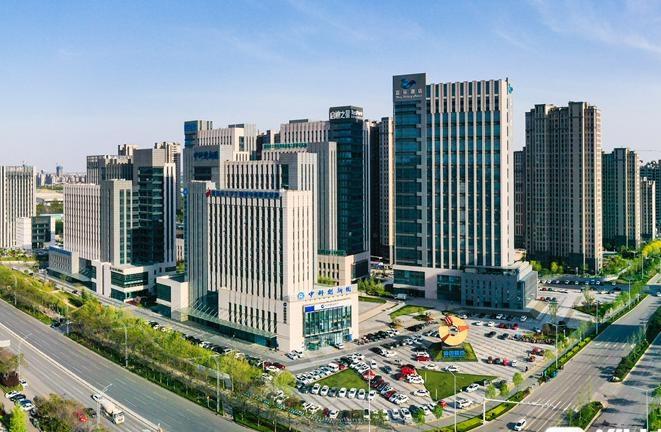
The journey of silicon carbide from a laboratory curiosity to a critical industrial material has been marked by significant advancements in manufacturing and material science. Today, industries require not just off-the-shelf SiC products, but custom silicon carbide products meticulously designed and engineered to meet highly specific operational challenges. This is where the expertise of specialized manufacturers becomes paramount. Based in Weifang City, the recognized hub of China’s silicon carbide customizable parts manufacturing, Sicarb Tech stands at the forefront of this technological wave. Since 2015, SicSino has been instrumental in introducing and implementing advanced silicon carbide production technology, significantly contributing to the large-scale production capabilities and technological prowess of the local industry. As an entity belonging to the Chinese Academy of Sciences (Weifang) Innovation Park and backed by the formidable scientific and technological capabilities of the Chinese Academy of Sciences , SicSino is more than just a supplier; we are a partner in innovation, offering unparalleled quality and supply assurance for technical ceramics.
This blog post will delve into the multifaceted world of silicon carbide ceramics, exploring their types, advantages, diverse applications, and critical considerations for designing and sourcing custom SiC components. We aim to provide a comprehensive guide for B2B buyers, OEMs, and distributors looking to leverage the exceptional capabilities of this advanced ceramic material.
Understanding the Spectrum: Grades of Silicon Carbide Ceramics and Their Properties
Silicon carbide ceramics are not a one-size-fits-all solution. Different manufacturing processes yield various grades of SiC, each possessing a unique set of properties tailored for specific applications. Understanding these distinctions is crucial for selecting the optimal material for your needs. The primary grades include Reaction-Bonded Silicon Carbide (RBSiC or SiSiC), Sintered Silicon Carbide (SSiC), and Recrystallized Silicon Carbide (RSiC).
Reaction-Bonded Silicon Carbide (RBSiC), also known as Silicon-Infiltrated Silicon Carbide (SiSiC), is produced by infiltrating a porous carbon or silicon carbide preform with molten silicon. The silicon reacts with the carbon to form additional SiC, which bonds the initial SiC particles. This process results in a dense material with minimal porosity and often contains some residual free silicon.
Key characteristics of RBSiC/SiSiC:
- Excellent wear and abrasion resistance.
- Good thermal shock resistance.
- High thermal conductivity.
- Good mechanical strength at moderate temperatures (up to 1350text°C).
- Relatively lower manufacturing cost compared to SSiC.
- Can be formed into complex shapes.
Sintered Silicon Carbide (SSiC) is produced by sintering fine SiC powder at very high temperatures (typically above 2000text°C), often with the aid of non-oxide sintering additives like boron and carbon. This process results in a single-phase SiC material with very high purity and density.
Key characteristics of SSiC:
- Superior high-temperature strength and creep resistance (operable up to 1600text°C or higher).
- Excellent corrosion and chemical resistance against a wide range of acids and alkalis.
- High hardness and wear resistance.
- Good thermal shock resistance.
- Higher manufacturing cost due to the high sintering temperatures and purity requirements.
Recrystallized Silicon Carbide (RSiC) is manufactured by firing high-purity alpha-SiC grains at very high temperatures (around 2500text°C). During this process, the finer SiC particles vaporize and condense on the coarser grains, forming strong bonds between them without the need for secondary bonding phases. This results in a porous structure.
Key characteristics of RSiC:
- Exceptional thermal shock resistance due to its porous nature.
- Very high operating temperatures (up to 1650text°C).
- Good chemical stability.
- Lower mechanical strength compared to RBSiC and SSiC at room temperature, but retains strength well at high temperatures.
- Often used for kiln furniture and high-temperature supports.
The following table provides a comparative overview of these common SiC grades:
| Property | Reaction-Bonded SiC (RBSiC/SiSiC) | Sintered SiC (SSiC) | Recrystallized SiC (RSiC) |
|---|---|---|---|
| Primary Composition | SiC + Free Silicon (textSi) | Pure SiC (typically >98%) | Pure SiC (typically >99%) |
| Density | 3.02−3.15textg/cm3 | 3.10−3.20textg/cm3 | 2.5−2.7textg/cm3 |
| Porosity | Very Low (<1%) | Very Low (<1%) | Moderate (10-15%) |
| Max. Use Temperature | sim1350text°C | sim1600−1800text°C | sim1650text°C |
| Thermal Conductivity | High (40−100textW/mK) | Moderate to High (80−120textW/mK) | Moderate (15−25textW/mK) |
| Flexural Strength | High (250−400textMPa) | Very High (400−550textMPa) | Moderate (40−60textMPa) |
| Hardness (Knoop) | sim2500−2900 | sim2500−2800 | Lower due to porosity |
| Thermal Shock Resist. | Good | Excellent | Exceptional |
| Chemical Resistance | Good (attacked by strong alkalis) | Excellent | Very Good |
| Relative Cost | Moderate | High | Moderate |
This table serves as a general guideline. Specific properties can be tailored through our customizing support to meet precise application requirements.
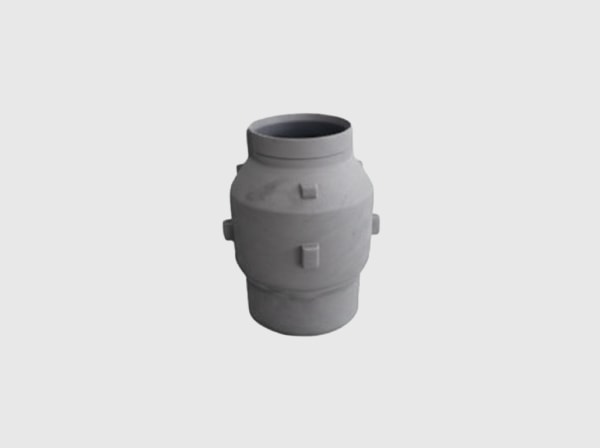
The Unmatched Advantages of Custom Silicon Carbide Ceramics
While standard ceramic components have their place, the increasing complexity and demanding nature of modern industrial processes necessitate custom silicon carbide solutions. Opting for custom-designed SiC parts offers a plethora of advantages that can significantly enhance operational efficiency, longevity, and overall system performance. The inherent properties of silicon carbide, when tailored to specific needs, provide a compelling case for customization.
Key Benefits of Customization:
- Optimized Thermal Performance: Customization allows for the design of SiC components with specific thermal conductivity or insulation properties. This includes tailoring for exceptional thermal shock resistance, critical in applications with rapid temperature cycling, such as kiln furniture or semiconductor rapid thermal processing units. The geometry can also be optimized for efficient heat dissipation or retention.
- Enhanced Wear and Abrasion Resistance: For applications involving abrasive slurries, high-speed moving parts, or erosive environments (e.g., nozzles, pump components, cyclone liners), custom SiC parts offer unparalleled wear resistant ceramics. The grade of SiC, surface finish, and component design can be specifically chosen to maximize service life and reduce downtime.
- Superior Chemical Inertness and Corrosion Resistance: Silicon carbide is inherently resistant to a wide range of acids, alkalis, and molten metals. Customization allows for the selection of the purest grades of SiC (like SSiC) for environments where chemical attack is a major concern, such as chemical processing equipment or components for handling corrosive fluids. This ensures chemical resistant ceramics that maintain their integrity even in harsh chemical environments.
- Precision Engineering for Complex Geometries: Many advanced applications require components with intricate designs, tight tolerances, and complex internal features. Custom ceramic fabrication of SiC allows for the production of near-net-shape parts, minimizing machining and enabling designs that would be impossible with other materials. Sicarb Tech’s expertise in various forming techniques ensures that even the most complex designs can be realized.
- Improved System Integration and Efficiency: Custom-fit SiC components integrate seamlessly into existing or new systems, reducing assembly challenges and improving overall operational efficiency. This tailored approach ensures that every component performs its intended function optimally, contributing to the system’s overall reliability and productivity.
- Cost-Effectiveness in the Long Run: While the initial investment in custom SiC parts might be higher than standard components, the extended service life, reduced maintenance requirements, and improved process yields often result in a lower total cost of ownership. The durability of high-performance ceramics translates into fewer replacements and less unscheduled downtime.
At Sicarb Tech, we understand that customization is more than just altering dimensions. It involves a deep dive into your application, understanding the operational stresses, thermal loads, chemical environment, and desired performance outcomes. Our engineering team works closely with clients, leveraging our advanced material, process, design, and evaluation technologies to develop bespoke industrial ceramic components that deliver tangible benefits. We assist local enterprises in achieving technological advancements, and this same expertise is extended to our global clientele seeking high-quality, cost-competitive customized SiC components.
Silicon Carbide Ceramics in Action: Key Industrial Applications
The exceptional properties of silicon carbide ceramics have led to their adoption across a wide array of demanding industrial sectors. Their ability to withstand extreme temperatures, corrosive environments, and severe wear makes them indispensable for improving process efficiency, enhancing product quality, and extending the lifespan of critical equipment. From semiconductor processing components to robust high-temperature furnace parts, SiC is a versatile problem-solver.
Here’s a look at some key industrial applications where custom SiC components are making a significant impact:
- Semiconductor Manufacturing:
- Applications: Wafer chucks, focus rings, edge rings, showerheads for CVD/etching processes, CMP retainer rings, and susceptors for MOCVD/epitaxy.
- SiC Advantages: High purity (especially SSiC), excellent thermal conductivity for uniform wafer temperature, dimensional stability, resistance to plasma erosion, and low particle generation. Custom designs ensure precise alignment and optimal gas flow dynamics.
- Keywords: Semiconductor SiC parts, plasma etch components, wafer handling SiC.
- High-Temperature Furnaces and Kilns:
- Applications: Beams, rollers, burner nozzles, thermocouple protection tubes, setters, plates, and other kiln furniture.
- SiC Advantages: Exceptional strength at high temperatures, excellent thermal shock resistance (especially RSiC and RBSiC), resistance to oxidation and creep, and high thermal conductivity for uniform heating. Custom SiC kiln furniture allows for optimized loading and energy efficiency.
- Keywords: Industrial furnace ceramics, SiC burner nozzles, thermal processing components.
- Aerospace and Defense:
- Applications: Rocket nozzles, components for hypersonic vehicles, armor plating, mirrors for optical systems, and heat exchangers.
- SiC Advantages: Lightweight yet high stiffness, excellent thermal stability at extreme temperatures, high thermal shock resistance, and good wear resistance. Custom aerospace ceramic components are critical for performance in harsh environments.
- Keywords: Aerospace SiC, lightweight ceramic armor, high-temperature aerospace materials.
- Energy Sector:
- Applications: Components for heat exchangers in power plants, solar power tower receivers, parts for nuclear reactors, and fuel nozzles for gas turbines.
- SiC Advantages: High-temperature stability, good thermal conductivity, corrosion resistance, and wear resistance. Custom designs improve energy conversion efficiency and component reliability.
- Keywords: Energy industry ceramics, SiC heat exchanger tubes, power generation components.
- Chemical Processing:
- Applications: Mechanical seal faces, pump shafts and bearings, valve components, nozzles, and linings for pipes and vessels handling corrosive and abrasive media.
- SiC Advantages: Outstanding chemical resistance (especially SSiC), high hardness, and wear resistance. Custom chemical resistant ceramics ensure longevity in aggressive chemical environments.
- Keywords: SiC mechanical seals, corrosion resistant ceramics, chemical pump parts.
- Industrial Manufacturing (General):
- Applications: Wear liners for mining and material handling equipment, sandblasting nozzles, welding jigs and fixtures, and precision metrology components.
- SiC Advantages: Extreme hardness and abrasion resistance, high stiffness, and thermal stability. Custom wear resistant ceramics significantly extend the life of machinery operating in abrasive conditions.
- Keywords: Industrial wear parts, precision SiC components, custom ceramic fabrication.
The following table links common applications to suitable SiC grades, though customization often allows for optimization beyond these general pairings:
| Industry | Application Examples | Common SiC Grades Used | Key SiC Benefits Exploited |
|---|---|---|---|
| Semiconductor | Wafer chucks, edge rings, showerheads | SSiC, CVD-SiC | High purity, thermal conductivity, plasma resistance |
| High-Temp. Proc. | Kiln furniture (beams, plates), burner nozzles | RBSiC, RSiC, SSiC | High-temp. strength, thermal shock resistance |
| Aerospace | Rocket nozzles, mirrors, leading edges | SSiC, C/SiC composites | Lightweight, high stiffness, thermal stability |
| Energy | Heat exchanger tubes, solar receivers, turbine components | SSiC, RBSiC | High-temp. stability, thermal conductivity |
| Chemical | Mechanical seals, pump parts, valve components, nozzles | SSiC, RBSiC | Chemical inertness, wear resistance |
| Mining/Industrial | Wear liners, nozzles, grinding media | RBSiC, SSiC | Extreme hardness, abrasion resistance |
Sicarb Tech has a proven track record in supplying high-quality, custom SiC components to these and other demanding industries. Our extensive product examples showcase our capability to produce intricate and robust parts. Situated in Weifang City, the heart of China’s SiC manufacturing, and benefiting from the technological support of the Chinese Academy of Sciences, we are uniquely positioned to offer both standard and highly customized advanced ceramics solutions. We are not just manufacturers; we are problem-solvers, dedicated to helping our B2B clients, including wholesale silicon carbide buyers and OEM SiC components procurers, achieve superior performance and reliability.
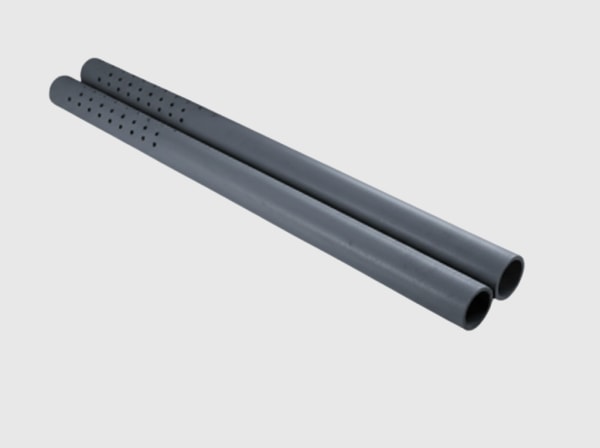
Designing for Success: Critical Considerations for Silicon Carbide Ceramic Components
The successful implementation of silicon carbide ceramics in any application hinges on careful design and manufacturing considerations. While SiC offers remarkable properties, its inherent nature as a ceramic—strong in compression but more brittle than metals—requires a thoughtful approach to component design to maximize its benefits and ensure longevity. Working with an experienced supplier like Sicarb Tech, who offers comprehensive customizing support, can make all the difference.
Here are key design and manufacturing factors to consider for custom SiC components:
Design for Manufacturability (DfM):
- Simplicity: While complex geometries are possible, simpler designs often lead to lower costs and faster production times. Avoid unnecessarily intricate features if they don’t add functional value.
- Near-Net Shape: Aim for designs that are as close to the final shape as possible to minimize extensive and costly machining. This is particularly important for hard materials like SiC. Various forming methods (pressing, slip casting, extrusion, injection molding) have different capabilities for achieving near-net shapes.
- Uniform Wall Thickness: Strive for uniform wall thicknesses to prevent stress concentrations during sintering and in operation, especially under thermal cycling. Abrupt changes in thickness can lead to cracking.
- Radii and Fillets: Incorporate generous radii and fillets at corners and transitions instead of sharp edges. Sharp internal corners are stress concentrators and can be points of failure.
- Avoidance of Stress Raisers: Features like small holes in highly stressed areas, sharp notches, or deep, narrow slots should be carefully evaluated and minimized if possible.
Geometry Limits and Constraints:
- Size Limitations: Manufacturing processes have limitations on the maximum and minimum size of components that can be produced. Discuss these limits with your supplier early in the design phase.
- Aspect Ratios: Very long, thin parts or parts with high aspect ratios can be challenging to manufacture and handle without breakage.
- Feature Resolution: The minimum size of features (holes, slots, ribs) that can be reliably produced depends on the manufacturing method and the SiC grade.
Tolerances and Surface Finish:
- Achievable Tolerances: As-sintered tolerances for SiC ceramics are typically wider than for machined metals. Tighter tolerances usually require post-sintering grinding or lapping, which adds to the cost. Specify only the level of precision that is functionally necessary. Typical as-sintered tolerances might be pm0.5 to pm2 of the dimension, while machined tolerances can be much tighter (e.g., down to microns).
- Surface Finish: The as-sintered surface finish of SiC varies by grade and manufacturing method. For applications requiring very smooth surfaces (e.g., seal faces, mirrors), lapping and polishing are necessary. Surface finishes (R_a) can range from several micrometers for as-sintered parts down to a few nanometers for highly polished surfaces.
- Dimensional Accuracy: Consistent dimensional accuracy is crucial for interchangeability and proper assembly. This is ensured through precise tooling, controlled manufacturing processes, and rigorous quality control.
Stress Points and Load Considerations:
- Understand the type of loads the component will experience (tensile, compressive, bending, torsional, impact, thermal stress).
- SiC performs best under compressive loads. Design components to minimize tensile stresses wherever possible.
- Finite Element Analysis (FEA) can be invaluable for identifying high-stress regions and optimizing the design to distribute loads more evenly.
Material Selection within SiC Grades:
- As discussed earlier, the choice between RBSiC, SSiC, RSiC, or other specialized grades depends heavily on the specific operating conditions (temperature, chemical environment, mechanical loads).
- Sometimes, a composite approach or a specific surface treatment might be beneficial.
Sicarb Tech collaborates closely with clients from the initial design phase through to production and post-processing. Our engineering team, leveraging the vast scientific resources of the Chinese Academy of Sciences, provides expert guidance on SiC material selection, design optimization for manufacturability, and achieving the required precision ceramic machining and surface finishes. Our commitment is to provide not just components, but robust engineering solutions that enhance the performance and reliability of your systems. We understand the intricacies of SiC manufacturing and work to mitigate potential challenges, ensuring a smooth path from design to delivery of your custom silicon carbide products.
Enhancing Performance and Durability: The Role of Post-Processing for SiC Ceramics
While the inherent properties of silicon carbide ceramics are impressive, many high-performance applications demand further enhancements that can only be achieved through meticulous post-processing steps. These secondary operations are crucial for meeting tight dimensional tolerances, achieving specific surface characteristics, improving mechanical integrity, or adding functional surface layers. Sicarb Tech possesses the integrated process capabilities, from materials to finished products, including a comprehensive suite of post-processing technologies to refine custom SiC components to exacting standards.
Common and critical post-processing needs for silicon carbide ceramics include:
- Grinding:
- Purpose: To achieve precise dimensional accuracy and tight tolerances that cannot be met by as-sintered parts. Grinding is also used to create flat, parallel, or cylindrical surfaces and to shape complex contours.
- Process: Due to SiC’s extreme hardness (second only to diamond and boron carbide), diamond grinding wheels are exclusively used. Various grinding techniques like surface grinding, cylindrical grinding, and centerless grinding are employed.
- Benefits: Improves fit and assembly, ensures interchangeability of parts, and can create specific geometric features.
- Considerations: Grinding is a subtractive process that can be time-consuming and add to the cost. It can also introduce micro-cracks if not done correctly, potentially affecting the component’s strength.
- Lapping and Polishing:
- Purpose: To achieve ultra-smooth surface finishes (R_a values often in the nanometer range) and high degrees of flatness or sphericity. This is critical for applications like mechanical seals, bearings, optical mirrors, and semiconductor wafer chucks.
- Process: Involves using fine diamond slurries or pastes on a lapping plate. Polishing may use progressively finer abrasives to achieve a mirror-like finish.
- Benefits: Reduces friction, improves sealing performance, enhances reflectivity (for optical parts), and minimizes wear in dynamic applications.
- Keywords: Precision SiC polishing, SiC lapping services, ultra-smooth ceramic surfaces.
- Sealing:
- Purpose: Some grades of SiC, particularly those with inherent porosity like RSiC or certain types of RBSiC if not fully dense, may require sealing to reduce permeability for gas or liquid-tight applications.
- Process: This can involve impregnating the pores with glass, resin, or other ceramic materials. For high-purity applications, the choice of sealant is critical.
- Benefits: Improves chemical resistance by closing off open porosity, makes components impermeable, and can sometimes enhance strength.
- Coating:
- Purpose: To add specific functionalities to the SiC surface that the bulk material may not possess, or to further enhance existing properties.
- Process: Various coating techniques can be applied, including Chemical Vapor Deposition (CVD), Physical Vapor Deposition (PVD), or plasma spraying. Coatings might include other ceramics (e.g., diamond-like carbon – DLC, AlN), metals, or specialized functional layers. For instance, CVD SiC coatings on graphite are common in semiconductor applications for purity and erosion resistance.
- Benefits: Can improve wear resistance, reduce friction (e.g., DLC coatings), enhance corrosion resistance against specific chemicals, provide electrical insulation or conductivity, or act as a diffusion barrier.
- Keywords: SiC coating services, CVD SiC coating, functional ceramic coatings.
- Edge Chamfering/Radiusing:
- Purpose: To remove sharp edges which can be prone to chipping in brittle materials like SiC. Chamfered or radiused edges improve handling safety and the component’s resistance to impact damage.
- Process: Often done using diamond tools or specialized grinding techniques.
- Benefits: Increases durability and robustness of the component, reduces the risk of crack initiation.
The choice and extent of post-processing depend heavily on the application’s specific requirements and cost considerations. Sicarb Tech, with its domestic top-tier professional team and advanced technological capabilities supported by the Chinese Academy of Sciences, offers comprehensive consultation on these post-processing needs. We ensure that every silicon carbide component leaving our facility meets the highest standards of quality, performance, and durability, tailored precisely to your specifications. Our ability to manage the entire process from material to product, including complex post-processing, makes us a reliable partner for OEM SiC components and wholesale silicon carbide needs.
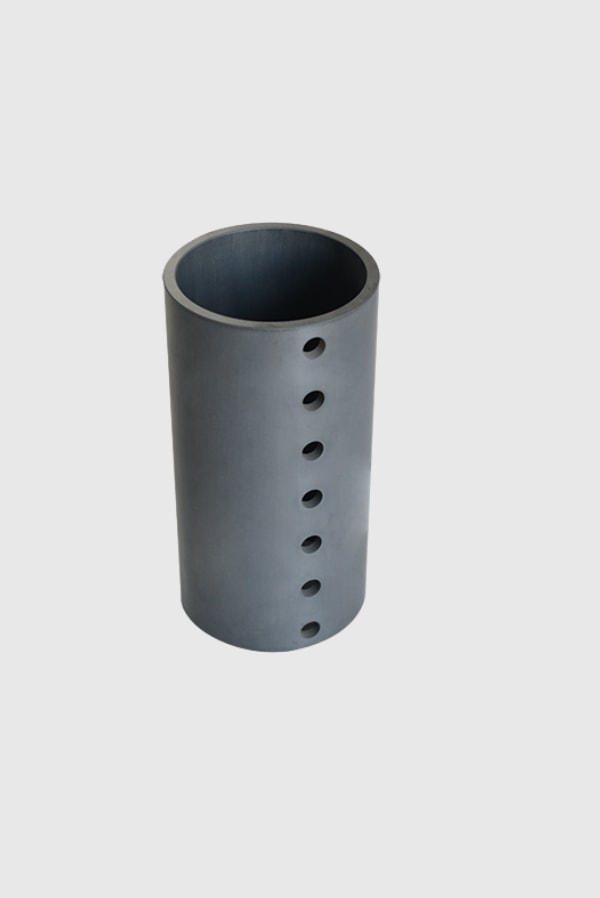
Navigating the Supplier Landscape: Choosing the Right Partner for Your Silicon Carbide Needs
Selecting the right supplier for your custom silicon carbide ceramics is a critical decision that can significantly impact the quality, performance, and cost-effectiveness of your final products. The ideal partner is more than just a manufacturer; they are a collaborator who understands your technical challenges and can provide expert guidance throughout the design, material selection, and production process. When evaluating potential technical ceramic suppliers, especially for high-performance ceramics like SiC, several key factors should be considered.
Key Criteria for Evaluating a Silicon Carbide Supplier:
- Technical Expertise and Engineering Support:
- Does the supplier have a deep understanding of SiC material science, including the nuances of different grades (RBSiC, SSiC, RSiC, etc.) and their suitability for various applications?
- Can they provide design assistance, including DfM (Design for Manufacturability) reviews and FEA (Finite Element Analysis) if needed?
- Look for suppliers with experienced engineers and material scientists on staff.Sicarb Tech, for instance, leverages the robust scientific and technological capabilities of the Chinese Academy of Sciences and possesses a domestic top-tier professional team specializing in customized SiC production. Our customizing support is a testament to this expertise.
- Material Options and Quality Control:
- Does the supplier offer a range of SiC grades to truly match your application needs?
- What are their raw material sourcing and quality control procedures? Purity and consistency of raw materials are crucial for high-quality SiC.
- Do they have robust quality management systems in place (e.g., ISO certification)? What are their testing and inspection capabilities (dimensional, material properties, NDT)? SicSino’s integrated process from materials to products, including design, measurement, and evaluation technologies, ensures reliable quality.
- Manufacturing Capabilities and Technology:
- What forming (pressing, casting, injection molding, extrusion), sintering, and machining (grinding, lapping, polishing) technologies do they possess?
- Can they handle complex geometries and achieve the required tolerances and surface finishes?
- Do they invest in modern main equipment and process innovation?
- Customization Capabilities:
- How flexible are they in accommodating custom designs and unique requirements?
- What is their process for collaborating on custom projects, from inquiry to delivery? (See SicSino’s Steps from Inquiry to Delivery for an example of a structured approach).
- Can they produce prototypes and manage both small and large volume orders?
- Track Record and Experience:
- How long have they been in the SiC manufacturing business?
- Can they provide case studies or references for similar applications or industries? (View SicSino’s cases).
- What is their reputation in the market for reliability and quality?
- Location and Supply Chain Management:
- Where are their manufacturing facilities located? The Weifang City region, where SicSino is based, is the hub of China’s SiC customizable parts manufacturing, accounting for over 80% of the nation’s total SiC output. This concentration offers advantages in terms of supply chain robustness and specialized labor.
- What are their lead times and on-time delivery performance?
- How do they manage their supply chain to ensure consistency and mitigate risks?
- Cost-Effectiveness and Transparency:
- While cost is important, it shouldn’t be the sole factor. Evaluate the total value proposition, including quality, service, and technical support.
- Is their pricing transparent? Do they provide detailed quotations? SicSino is committed to offering higher-quality, cost-competitive customized SiC components in China.
- Communication and Support:
- How responsive and communicative is their team?
- Do they offer after-sales support?
Why Sicarb Tech is Your Trusted Partner:
Sicarb Tech excels across these criteria. Our unique position within the Chinese Academy of Sciences (Weifang) Innovation Park provides us with unparalleled access to cutting-edge research, technology, and a vast talent pool. We have been instrumental in advancing SiC production technology in Weifang since 2015, supporting over 10 local enterprises with our technologies. This deep involvement in the industry’s core allows us to offer:
- More reliable quality and supply assurance within China.
- A domestic top-tier professional team specializing in customized SiC production.
- A wide array of technologies from materials to products.
- Higher-quality, cost-competitive customized silicon carbide components.
Furthermore, for businesses looking to establish their own SiC production capabilities, SicSino offers technology transfer for professional silicon carbide production, including turnkey project services. This comprehensive support underscores our commitment to the global SiC industry.
Choosing the right supplier is an investment in your product’s success. We encourage you to contact us to discuss your specific needs and learn more about us and how our expertise can benefit your projects.
Addressing Common Challenges in Working with Silicon Carbide Ceramics
While silicon carbide ceramics offer a multitude of advantages for demanding applications, like all advanced materials, they come with certain inherent characteristics and manufacturing complexities that users and designers should be aware of. Understanding these common challenges and how to mitigate them is key to successfully implementing custom SiC components. Partnering with an experienced supplier like Sicarb Tech, who has in-depth knowledge of SiC manufacturing and material behavior, can help navigate these potential hurdles effectively.
Common Challenges and Mitigation Strategies:
- Brittleness and Fracture Toughness:
- Challenge: Like most ceramics, SiC is a brittle material, meaning it has low fracture toughness compared to metals. It can fracture without significant plastic deformation when subjected to high stress concentrations or impact loads.
- Mitigation:
- Design Considerations: Avoid sharp corners and stress raisers; use fillets and radii. Design for compressive loads where possible.
- Material Selection: Some SiC grades (e.g., certain composites or specially toughened grades) may offer slightly improved fracture toughness.
- Handling and Assembly: Implement careful handling procedures during assembly and maintenance to prevent accidental chipping or cracking.
- Protective Housings: In some cases, designing a metallic or other protective housing around the SiC component can shield it from direct impact.
- Machining Complexity and Cost:
- Challenge: The extreme hardness of SiC makes it difficult and time-consuming to machine. This typically requires specialized diamond tooling and advanced machining techniques, which can significantly add to the cost of the final component, especially if tight tolerances or complex features are needed after sintering.
- Mitigation:
- Near-Net Shape Manufacturing: Utilize forming processes (e.g., pressing, slip casting, injection molding) that produce parts as close to the final dimensions as possible, minimizing the need for extensive post-sinter machining. Sicarb Tech excels in optimizing designs for near-net shape production.
- Specify Tolerances Wisely: Only specify tight tolerances where absolutely necessary for the function of the part.
- Design for Machining: If machining is unavoidable, design features that are easier to machine (e.g., accessible surfaces, simpler geometries).
- Thermal Shock Sensitivity (Relative to Metals):
- Challenge: While SiC generally has good to excellent thermal shock resistance for a ceramic (especially RSiC and SSiC), rapid and extreme temperature changes can still induce stresses that lead to cracking, particularly in complex shapes or parts with non-uniform cross-sections.
- Mitigation:
- Material Grade Selection: Choose grades like RSiC or optimized SSiC for applications with severe thermal cycling.
- Design Optimization: Ensure uniform wall thicknesses and avoid sharp thermal gradients across the component through careful design.
- Controlled Heating/Cooling Rates: In some processes, controlling the rate of temperature change can reduce thermal stresses.
- Joining SiC to Other Materials:
- Challenge: Joining SiC to metals or other ceramics can be difficult due to differences in coefficients of thermal expansion (CTE), which can lead to high stresses and joint failure upon temperature changes.
- Mitigation:
- Brazing/Soldering: Specialized active brazing alloys and techniques can create strong joints between SiC and metals.
- Diffusion Bonding: A solid-state joining process that can be effective but requires precise control.
- Mechanical Fastening: Designing mechanical interlocks or using compliant intermediate layers can accommodate CTE mismatches.
- Graded Materials: In some advanced scenarios, functionally graded materials can provide a transition in properties between SiC and another material. Sicarb Tech can advise on appropriate joining strategies based on the application.
- Cost of Raw Materials and Processing:
- Challenge: High-purity SiC powders and the energy-intensive processes required for sintering (especially for SSiC) can make SiC components more expensive than traditional materials or lower-grade ceramics.
- Mitigation:
- Application-Specific Grade Selection: Choose the most cost-effective SiC grade that meets the performance requirements. Not all applications need the highest-purity SSiC.
- Optimize Design for Material Usage: Minimize material waste through efficient design.
- Volume Production: Costs per part generally decrease with larger production volumes.
- Work with Experienced Suppliers: Companies like Sicarb Tech, located in China’s SiC hub (Weifang City), benefit from economies of scale and optimized supply chains, allowing them to offer cost-competitive customized silicon carbide components.
By proactively addressing these challenges through smart design, appropriate material selection, and collaboration with knowledgeable suppliers, the full potential of silicon carbide ceramics can be realized. Sicarb Tech’s comprehensive technological expertise, from material science to final product evaluation, ensures that our clients receive robust and reliable advanced ceramics solutions.
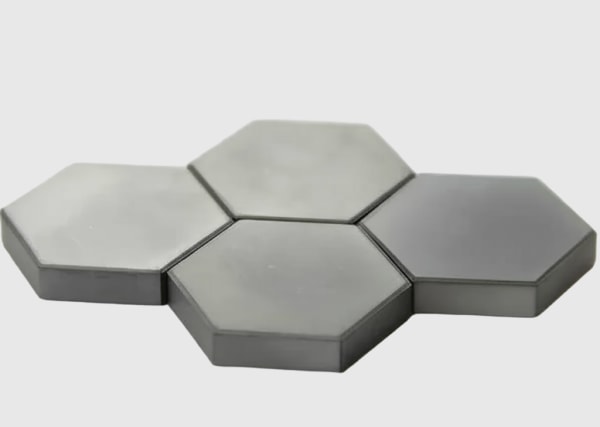
Frequently Asked Questions (FAQ) about Silicon Carbide Ceramics
Navigating the world of advanced ceramics can bring up many questions, especially for those considering silicon carbide (SiC) ceramics for their specific applications. Here, we address some common queries to provide clarity for engineers, procurement managers, and technical buyers.
1. What makes silicon carbide ceramics superior to other materials like alumina or zirconia in certain applications?
Silicon carbide ceramics offer a unique combination of properties that make them superior in specific demanding environments where other ceramics or metals might falter. Key differentiators include:
- Higher Operating Temperatures: SiC, particularly Sintered SiC (SSiC) and Recrystallized SiC (RSiC), can maintain its strength and integrity at much higher temperatures (often 1400text°C, up to 1650text°C or more) than most alumina ($\<1700 \\text{°C}$ but often limited by creep) and zirconia (phase stability issues above 200−300text°C for Y-TZP without special doping, though fully stabilized zirconia can go higher but with different properties).
- Superior Thermal Shock Resistance: Many SiC grades, especially RSiC and well-formulated RBSiC/SSiC, exhibit excellent thermal shock resistance due to a combination of high thermal conductivity and relatively low thermal expansion. This allows them to withstand rapid temperature changes better than many alumina or zirconia grades.
- Higher Thermal Conductivity: SiC generally has significantly higher thermal conductivity (40−120+textW/mK) compared to alumina (20−30textW/mK) and zirconia (2−3textW/mK). This is crucial for applications requiring rapid heat dissipation or uniform temperature distribution, such as heat exchangers or semiconductor wafer chucks.
- Exceptional Hardness and Wear Resistance: While alumina and zirconia are hard, SiC (especially SSiC and RBSiC) is one of the hardest commercially available ceramics, leading to superior abrasion and wear resistance in applications like nozzles, seals, and grinding components.
- Good Chemical Resistance: SSiC, in particular, offers outstanding resistance to a wide range of corrosive chemicals, including strong acids and alkalis, often outperforming alumina and zirconia in aggressive chemical environments.
However, the choice is always application-dependent. Alumina might be more cost-effective for general-purpose wear or electrical insulation at lower temperatures, and zirconia offers higher fracture toughness at room temperature.Sicarb Tech can help you evaluate these trade-offs for your custom SiC components.
2. How does the customization process work when ordering custom silicon carbide components from a supplier like Sicarb Tech?
The customization process for custom silicon carbide products is a collaborative effort to ensure the final component precisely meets your application’s needs. At Sicarb Tech, our approach typically involves the following steps, reflecting our comprehensive customizing support:
- Initial Inquiry & Requirement Gathering: You provide us with your specifications, drawings (if available), operating conditions (temperature, pressure, chemical environment, mechanical loads), desired performance, and quantity.
- Technical Consultation & Design Review: Our engineering team reviews your requirements. We may discuss material grade selection (RBSiC, SSiC, RSiC, etc.), design feasibility, potential optimizations for manufacturability (DfM), and clarification of critical tolerances.
- Quotation & Proposal: Based on the finalized design, material, quantity, and any post-processing needs, we provide a detailed quotation including price and estimated lead time.
- Order Confirmation & Prototyping (if required): Once the order is confirmed, we may proceed with creating prototypes for complex parts or new designs. This allows for testing and validation before full-scale production.
- Manufacturing: This involves powder preparation, forming (e.g., pressing, slip casting, extrusion), green machining (if applicable), sintering, and any specified post-sintering processes like grinding, lapping, or coating.
- Quality Control & Inspection: Rigorous quality checks are performed throughout the manufacturing process and on the final products. This includes dimensional checks, material property verification (if agreed), and visual inspection.
- Packaging & Delivery: Components are carefully packaged to prevent damage during transit and shipped according to the agreed terms.
- After-Sales Support: We remain available for any technical support or follow-up discussions.
Our goal is to make this process seamless and ensure you receive industrial ceramic components of the highest quality. Being based in Weifang, the hub of China’s SiC customizable parts factories, and backed by the Chinese Academy of Sciences, we offer reliable quality and supply assurance.
3. What are the primary cost drivers for custom silicon carbide ceramics, and how can I manage them?
Several factors influence the cost of custom silicon carbide ceramics. Understanding these can help in making informed decisions to manage expenses without compromising essential performance:
- SiC Grade: Sintered SiC (SSiC) is generally more expensive than Reaction-Bonded SiC (RBSiC) or Recrystallized SiC (RSiC) due to higher purity raw materials and more energy-intensive processing (higher sintering temperatures). Choose the most cost-effective grade that meets all performance criteria.
- Complexity of Design: More intricate shapes, very thin walls, or complex internal features increase tooling costs and manufacturing difficulty, thus raising the price. Simplify designs where possible without sacrificing function.
- Tolerances and Surface Finish: Tighter dimensional tolerances and finer surface finishes usually require extensive grinding, lapping, and polishing, which are costly due to SiC’s hardness. Specify only the level of precision and finish that is functionally necessary.
- Size of the Component: Larger components consume more material and may require larger, more specialized processing equipment.
- Order Quantity: Smaller production runs or one-off prototypes typically have higher per-unit costs due to setup and tooling amortization. Costs generally decrease with larger volumes.
- Raw Material Purity: Higher purity SiC powders, especially for semiconductor applications, are more expensive.
- Post-Processing: Additional steps like coatings, specialized joining preparations, or extensive testing add to the cost.
To manage costs:
- Consult with your supplier early: Discuss your budget and critical performance needs. Experienced suppliers like Sicarb Tech can often suggest design modifications or material choices that reduce cost while maintaining performance.
- Optimize for near-net-shape manufacturing: This minimizes costly machining.
- Review tolerance requirements critically.
- Consider the total cost of ownership: A more durable, higher-performing SiC part, even if initially more expensive, might save money in the long run through reduced downtime and longer life.
Sicarb Tech is committed to providing cost-competitive customized silicon carbide components by leveraging our technological expertise, efficient manufacturing processes, and strategic location in China’s SiC industry hub. We can also assist you in establishing a specialized factory through our technology transfer services, ensuring a more effective investment and guaranteed input-output ratio for your own production. For any further questions, please contact us.
Conclusion: Embracing the Future with Custom Silicon Carbide Ceramics
The journey through the world of silicon carbide ceramics reveals a material of extraordinary capability, poised to meet the ever-increasing demands of modern industry. From its exceptional thermal resilience and wear resistance to its chemical inertness and suitability for complex, custom designs, SiC is more than just a material—it’s an enabler of innovation. For engineers and procurement professionals in sectors like semiconductors, aerospace, energy, and high-temperature processing, leveraging custom silicon carbide products is no longer a niche option but a strategic imperative for achieving superior performance, longevity, and operational efficiency.
The key to unlocking the full potential of SiC lies in choosing the right material grade, optimizing component design, and, crucially, partnering with a knowledgeable and capable supplier.Sicarb Tech, with its deep roots in Weifang City – the heart of China’s silicon carbide industry – and its powerful backing by the Chinese Academy of Sciences, embodies such a partner. Our commitment extends beyond mere manufacturing; we provide comprehensive customizing support, from initial design consultation to meticulous post-processing, ensuring that every SiC component delivers on its promise.
Whether you are seeking OEM SiC components, require wholesale silicon carbide solutions, or are exploring advanced ceramics solutions for a groundbreaking application, the path to success is paved with precision, expertise, and collaboration. We have witnessed and contributed to the technological advancements in SiC production, and our domestic top-tier professional team is dedicated to providing higher-quality, cost-competitive customized silicon carbide parts. For those looking to integrate SiC manufacturing into their own operations, our technology transfer and turnkey project services offer a reliable route to establishing a state-of-the-art facility.
As industries continue to push the envelope, the demand for materials that can perform under the most challenging conditions will only grow. Silicon carbide ceramics stand ready to meet this demand, and Sicarb Tech is your trusted ally in harnessing the power of this remarkable material. We invite you to explore our product examples and contact us to discuss how we can contribute to your next high-performance project. Sources and related content

About the Author: Sicarb Tech
We provide clear and reliable insights into silicon carbide materials, component manufacturing, application technologies, and global market trends. Our content reflects industry expertise, practical experience, and a commitment to helping readers understand the evolving SiC landscape.
Customizable SiC
You May Also Interest
-
![]()
SiC vs Steel at High Temps: Which Performs Best?
SiC vs Steel at High Temps: Which Performs Best? In the demanding world of industrial manufacturing, material selection is paramount, especially when operating at extreme temperatures. Engineers, procurement managers, and technical buyers across various sectors constantly seek materials that offer superior performance, durability, and cost-effectiveness. While steel has been a longstanding workhorse, the advent of…
-
![]()
Sintered Silicon Carbide: The Apex of Performance in Extreme Industrial Environments
In the relentless pursuit of materials that can withstand the harshest industrial conditions, Sintered Silicon Carbide (S-SiC) emerges as a true champion. For engineers, procurement managers, and technical buyers in sectors ranging from semiconductor manufacturing to aerospace and high-temperature processing, understanding the capabilities of S-SiC is crucial for optimizing performance, enhancing durability, and achieving operational…
-
![]()
Unlocking Material Benefits with Silicon Carbide
Unlocking Material Benefits with Silicon Carbide In today’s rapidly advancing industrial landscape, the demand for materials that can withstand extreme conditions and deliver superior performance is paramount. Among the leading contenders, silicon carbide (SiC) stands out as a true game-changer. Renowned for its exceptional properties, custom silicon carbide products are transforming industries ranging from semiconductors…