Unlocking Peak Performance: A Deep Dive into Custom SiC Material
Share
In the relentless pursuit of efficiency, durability, and performance across demanding industrial landscapes, material science plays a pivotal role. Among the advanced ceramics, Silicon Carbide (SiC) material stands out as a true champion, offering an exceptional combination of properties that make it indispensable in high-performance applications. From the heart of semiconductor fabrication to the extreme environments of aerospace and high-temperature furnaces, custom SiC components are enabling technological advancements and operational excellence.
This blog post delves into the world of custom silicon carbide, exploring its fundamental characteristics, diverse applications, and the critical considerations for engineers and procurement managers. We will also shed light on how Sicarb Tech, a leader in custom SiC solutions, leverages its expertise and strategic position within China’s SiC manufacturing hub to deliver unparalleled quality and innovation.
Understanding SiC Material: The Backbone of High-Performance Industries
What exactly is SiC material, and why has it become a cornerstone for industries demanding the utmost in material performance? Silicon Carbide is a synthetically produced crystalline compound of silicon and carbon. Its strong covalent bonding, akin to that of diamond, endows it with a remarkable suite of properties: exceptional hardness, high thermal conductivity, excellent wear and corrosion resistance, and stability at extreme temperatures.
The importance of SiC in industrial applications cannot be overstated. In an era where operational limits are constantly being pushed, standard materials often fall short. SiC material steps in to fill this gap, offering reliability where others fail. Whether it’s resisting abrasive slurries in chemical processing, maintaining structural integrity in 1500°C furnace environments, or providing the ultra-flat, stable surfaces required for semiconductor wafer processing, SiC delivers.
The demand for custom silicon carbide products is driven by the need for components tailored to specific operational challenges. Off-the-shelf solutions may not always provide the optimal fit or performance, leading to compromises in efficiency or lifespan. Customization allows engineers to harness the full potential of SiC by designing parts that meet precise dimensional, thermal, and mechanical requirements. Sicarb Tech, situated in Weifang City – the hub of China’s silicon carbide customizable parts manufacturing – has been instrumental in advancing SiC production technology since 2015. Our deep understanding of technical ceramics and their application ensures that our clients receive components perfectly attuned to their needs. Learn more about us and our commitment to excellence.
Diverse Applications: Where SiC Material Makes a Difference
The versatility of SiC material allows it to penetrate a wide array of industries, each benefiting from its unique property set. Procurement managers and technical buyers are increasingly sourcing advanced SiC ceramics for applications where performance and longevity are non-negotiable.
Here’s a look at some key sectors where SiC material is making a significant impact:
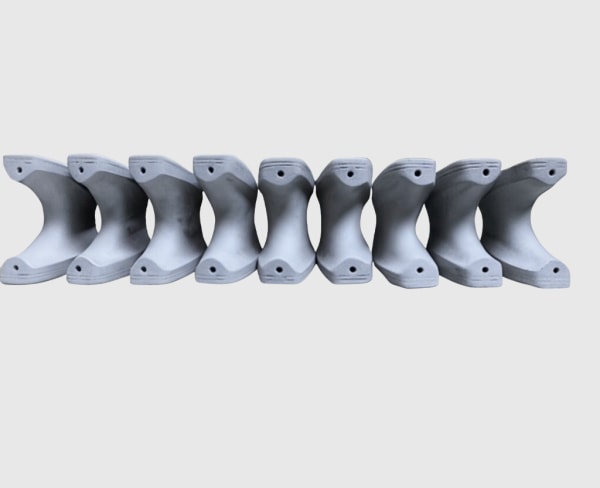
- Semiconductor Manufacturing: The semiconductor industry relies heavily on SiC for components like wafer chucks, focus rings, edge rings, and CMP (Chemical Mechanical Planarization) retainer rings. SiC’s high thermal conductivity ensures uniform temperature control during processing, its stiffness provides dimensional stability, and its wear resistance prolongs component life in abrasive and corrosive environments. The purity and precision offered by custom SiC components are vital for maximizing chip yields.
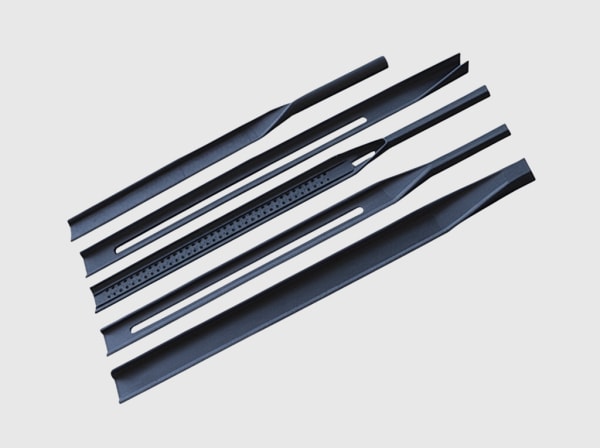
- High-Temperature Processing & Furnaces: For industrial furnaces, kilns, and heat treatment equipment, SiC is the material of choice for heating elements, burner nozzles, thermocouple protection tubes, beams, rollers, and kiln furniture. Its ability to withstand extreme temperatures (often exceeding 1400°C) without significant degradation, coupled with its excellent thermal shock resistance, makes it ideal for these demanding applications. High-temperature SiC parts ensure energy efficiency and operational reliability.
- Aerospace and Defense: In aerospace, materials must perform under extreme conditions of temperature, stress, and corrosive atmospheres. SiC and SiC-matrix composites are used in rocket nozzles, turbine components, mirrors for space telescopes, and armor. Its lightweight nature combined with high strength and thermal stability contribute to improved performance and fuel efficiency.
- Energy Sector: The energy sector, including power generation and renewable energy, utilizes SiC for components in heat exchangers, reformers, and even in advanced nuclear fuel concepts. Its resistance to harsh chemical environments and high temperatures is crucial for improving the efficiency and durability of energy systems.
- Industrial Manufacturing and Wear Parts: Across various manufacturing processes, SiC wear resistance is a game-changer. It’s used for mechanical seals, pump components (shafts, bearings, impellers), valve trims, cyclone liners, and nozzles that handle abrasive slurries or high-velocity particles. This leads to reduced downtime, lower maintenance costs, and improved productivity.
- Chemical Processing: The chemical inertness of SiC makes it highly resistant to acids, alkalis, and other corrosive chemicals, even at elevated temperatures. This property is invaluable for components used in chemical reactors, pipes, and analytical equipment.
- Automotive: While still evolving, SiC is making inroads into the automotive sector, particularly in power electronics for electric vehicles (EVs) due to its superior thermal management and efficiency. It’s also explored for brake discs and engine components.
The breadth of these applications underscores the critical role of industrial SiC suppliers who can provide not just the material, but also the engineering expertise to develop custom solutions. SicSino has a proven track record of delivering high-quality SiC material components across these demanding sectors. Explore some of our successful cases to see our capabilities in action.
The Unmatched Advantages of Custom SiC Material Solutions
While the inherent properties of silicon carbide are impressive on their own, the ability to customize SiC components unlocks a new level of performance and efficiency tailored to specific industrial needs. Opting for custom SiC material solutions over standard parts provides a multitude of benefits for engineers, procurement managers, and OEMs.
Key Advantages of Customization:
- Optimized Thermal Performance:
- Tailored Thermal Conductivity: Different applications have varying needs for heat dissipation or retention. Custom SiC formulations and designs can optimize thermal conductivity. For example, components requiring rapid heat dissipation in semiconductor processing can be designed for maximum thermal transfer, while parts needing to insulate can be engineered accordingly.
- Superior Thermal Shock Resistance: Custom geometries and material grades can be selected to enhance resistance to rapid temperature changes, preventing cracking and failure in applications like furnace components or rocket nozzles.
- Enhanced Wear and Abrasion Resistance:
- Application-Specific Hardness: While SiC is inherently very hard, the manufacturing process and specific grade can influence its final hardness and microstructure. Customization allows for the selection of the most appropriate SiC type (e.g., Sintered SiC for extreme wear) and surface finish to combat specific wear mechanisms, be it erosion, abrasion, or sliding wear.
- Extended Component Lifespan: By tailoring the SiC component to the exact wear conditions it will face, its operational life can be significantly extended, leading to reduced maintenance frequency and lower overall cost of ownership. SiC wear resistance is a key driver for its adoption in pump components, nozzles, and seals.
- Superior Chemical Inertness and Corrosion Resistance:
- Resistance to Specific Corrosive Agents: Custom SiC parts can be designed using grades that offer the best resistance to the particular chemicals, acids, or alkalis present in the operating environment. This is crucial in chemical processing, oil and gas, and even some semiconductor etching processes.
- Purity Control: For applications demanding high purity, such as in the semiconductor or pharmaceutical industries, custom SiC manufacturing can ensure minimal contamination and leaching.
- Precision Engineering and Complex Geometries:
- Perfect Fit and Function: Customization allows for the creation of SiC components with complex shapes, tight tolerances, and specific surface finishes that integrate seamlessly into existing equipment or new designs. This ensures optimal performance and avoids issues related to poor fit or assembly.
- Integration of Features: Features like cooling channels, mounting holes, or specific profiles can be incorporated directly into the SiC component design, reducing the need for additional parts or assembly steps.
- Improved Electrical Properties (Where Applicable):
- While often used for its insulating properties or as a semiconductor, the electrical resistivity of SiC can be tailored to some extent through doping and manufacturing processes for specialized applications like heating elements or specific sensor technologies.
- Cost-Effectiveness in the Long Run:
- Although the initial investment for custom SiC parts might be higher than for standard materials, the extended lifespan, reduced downtime, lower maintenance requirements, and improved process efficiency often result in a significantly lower total cost of ownership.
Sicarb Tech specializes in providing this level of customizing support. We work closely with our clients, from initial design consultation to final product delivery, ensuring that every SiC component is perfectly aligned with its intended application. Our expertise in various SiC grades and manufacturing techniques allows us to recommend and produce the optimal solution for your unique challenges.
The table below summarizes the key benefits linked to SiC’s intrinsic properties:
| SiC Property | Benefit of Customization | Industrial Impact |
|---|---|---|
| High Thermal Conductivity | Optimized heat dissipation or retention for specific tasks | Improved process control (semiconductors), energy efficiency (furnaces) |
| Extreme Hardness | Tailored wear surfaces for maximum resistance to abrasion | Longer component life, reduced maintenance (pumps, nozzles, seals) |
| Chemical Inertness | Enhanced resistance to specific corrosive media | Increased reliability in harsh chemical environments (chemical processing) |
| High-Temperature Stability | Designs that maintain integrity under extreme thermal loads | Operational safety and efficiency in furnaces, aerospace applications |
| High Stiffness | Precision dimensions and stability for intricate parts | Enhanced accuracy in metrology, optical systems, and semiconductor equipment |
| Low Thermal Expansion | Dimensional stability across temperature fluctuations | Reliable performance in precision instruments and high-temperature applications |
By choosing custom SiC material solutions, businesses can move beyond the limitations of standard components and achieve new levels of performance and reliability in their critical operations.
Navigating SiC Material Grades: From RBSiC to Sintered SiC
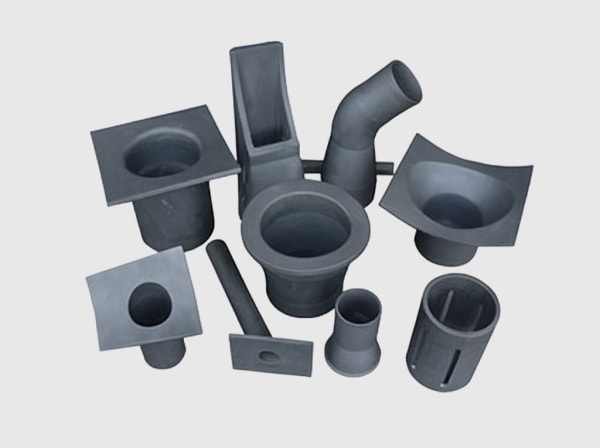
Silicon Carbide is not a monolithic material; it encompasses a family of materials, each produced through different manufacturing routes, resulting in varying microstructures and property profiles. Understanding these grades is crucial for selecting the optimal SiC material for a specific application. Procurement professionals and engineers should be familiar with the common types to make informed decisions.
Sicarb Tech offers a comprehensive range of SiC grades, ensuring that we can meet diverse and demanding application requirements. Here are some of the most prominent SiC grades:
- Reaction-Bonded Silicon Carbide (RBSiC or SiSiC):
- Manufacturing: RBSiC is produced by infiltrating a porous carbon or SiC preform with molten silicon. The silicon reacts with the carbon (or fine SiC) to form additional SiC, which bonds the initial SiC particles. The resulting material typically contains some residual free silicon (usually 8-15%).
- Properties: Good mechanical strength, excellent wear and oxidation resistance, high thermal conductivity, and exceptional thermal shock resistance. The presence of free silicon limits its use in certain highly corrosive chemical environments and at temperatures above approximately 1350°C (where silicon melts).
- Applications: Kiln furniture (beams, rollers, plates), burner nozzles, thermocouple protection tubes, mechanical seals, pump components, wear liners. RBSiC is often chosen for its ability to produce large, complex shapes with relatively tight tolerances at a competitive cost.
- SicSino Offering: We provide high-quality RBSiC components, leveraging our expertise in process control to ensure consistent material properties and dimensional accuracy.
- Sintered Silicon Carbide (SSiC):
- Manufacturing: SSiC is produced by sintering fine, high-purity SiC powder at very high temperatures (typically >2000°C) with the aid of non-oxide sintering additives (like boron and carbon). This process results in a dense, single-phase SiC material with no free silicon.
- Properties: Superior hardness, excellent wear resistance (often better than RBSiC in severe abrasive conditions), high strength at elevated temperatures (up to 1600°C or higher), outstanding corrosion resistance against a wide range of chemicals (including strong acids and alkalis), and good thermal conductivity.
- Applications: Demanding wear parts (bearings, seals in aggressive media, nozzles for highly abrasive fluids), chemical processing equipment, semiconductor processing components (chucks, rings), armor, heat exchanger tubes. SSiC is the go-to material for the most extreme wear and corrosive environments.
- SicSino Offering: Our SSiC products are manufactured to the highest standards, ensuring maximum density and purity for critical applications.
- Nitride-Bonded Silicon Carbide (NBSiC):
- Manufacturing: NBSiC is made by bonding SiC grains with a silicon nitride (Si₃N₄) ceramic phase. This is typically achieved by nitriding a mixture of SiC and silicon powders.
- Properties: Good thermal shock resistance, good mechanical strength, and excellent resistance to molten non-ferrous metals (like aluminum and zinc). It is generally more porous than RBSiC or SSiC.
- Applications: Primarily used in non-ferrous metal contact applications such as thermocouple sheaths, heater tubes, and components for aluminum foundries. Also used for kiln furniture and refractories where extreme thermal cycling is present.
- SicSino Offering: We can produce custom NBSiC components tailored for metallurgical applications and high-temperature furnace environments.
- Recrystallized Silicon Carbide (RSiC / Oxide-Bonded SiC):
- Manufacturing: RSiC is produced by firing packed SiC grains at very high temperatures, causing the grains to bond directly to each other through a process of evaporation and condensation at the contact points. Sometimes a small amount of oxide binder is used. It is typically more porous.
- Properties: Excellent thermal shock resistance, high hot strength, and stability at very high temperatures (up to 1650°C or higher). Its open porosity can be a disadvantage in some applications but beneficial in others (e.g., catalyst carriers).
- Applications: Kiln furniture (plates, setters, posts), heating element supports, high-temperature burner components. Often chosen for its stability and strength at the highest operating temperatures.
- SicSino Offering: Our RSiC products provide reliable performance in extreme temperature applications, contributing to the efficiency and longevity of industrial heating processes.
- Chemically Vapor Deposited Silicon Carbide (CVD-SiC):
- Manufacturing: Produced by a chemical vapor deposition process, resulting in an ultra-high purity (often >99.999%) and theoretically dense SiC coating or solid part.
- Properties: Exceptional purity, excellent surface finish, superior corrosion and erosion resistance.
- Applications: Semiconductor process chamber components, optical mirrors, protective coatings on other materials. It’s generally more expensive and used for highly specialized, critical applications.
- SicSino Expertise: While primarily focused on sintered and reaction-bonded grades, SicSino has the network and knowledge to facilitate CVD-SiC solutions through our partners when ultra-high purity is paramount.
The choice of SiC grade depends heavily on the specific requirements of the application, including operating temperature, chemical environment, wear conditions, mechanical stress, and cost considerations.
Comparison of Common SiC Grades:
| Property | Reaction-Bonded SiC (RBSiC/SiSiC) | Sintered SiC (SSiC) | Nitride-Bonded SiC (NBSiC) | Recrystallized SiC (RSiC) |
|---|---|---|---|---|
| Typical Density | 3.02 – 3.10 g/cm³ | >3.10 g/cm³ | 2.5 – 2.7 g/cm³ | 2.3 – 2.6 g/cm³ |
| Max. Use Temperature | ~1350°C (due to free Si) | >1600°C | ~1400°C – 1550°C | >1650°C |
| Flexural Strength | High (250-550 MPa) | Very High (400-600 MPa) | Moderate (50-150 MPa) | Moderate (30-100 MPa) |
| Thermal Conductivity | High (80-150 W/mK) | High (80-120 W/mK) | Moderate (10-20 W/mK) | Moderate (15-25 W/mK) |
| Wear Resistance | Very Good | Excellent | Good | Fair to Good |
| Corrosion Resistance | Good (limited by free Si) | Excellent (best against acids/alkalis) | Good | Good |
| Thermal Shock Resist. | Excellent | Good | Very Good | Excellent |
| Cost | Moderate | Higher | Moderate | Moderate to High |
| Complexity of Shapes | Excellent | Good (machining can be challenging) | Good | Fair |
At Sicarb Tech, our technical team provides expert guidance to help you select the most suitable SiC material grade for your application, ensuring optimal performance and value. We leverage our deep understanding of technical ceramics and their manufacturing nuances to deliver solutions that precisely meet your specifications. You can explore a variety of our product examples to see the range of grades and forms we offer.
Critical Properties Defining SiC Material Excellence
The widespread adoption of SiC material in demanding industrial applications stems from its exceptional combination of physical, thermal, mechanical, and chemical properties. Engineers and technical buyers select SiC when conventional materials like metals, plastics, or other ceramics cannot withstand the operational rigors. Understanding these critical properties is key to appreciating SiC’s value and designing effective components.
Thermal Properties:
- High Thermal Conductivity: Silicon carbide exhibits excellent thermal conductivity, ranging from approximately 80 to over 200 W/mK depending on the grade, purity, and temperature. This is significantly higher than most other ceramics and many metals.
- Impact: Allows for rapid and uniform heat dissipation, crucial for components like heat sinks, heat exchangers, and semiconductor wafer chucks requiring precise temperature control. Conversely, in some applications like heating elements, it ensures efficient heat generation and transfer.
- Low Thermal Expansion: SiC has a low coefficient of thermal expansion (CTE), typically around 4.0−4.5times10−6/circC.
- Impact: Results in excellent dimensional stability across a wide range of temperatures. This is critical for precision components in optical systems, metrology equipment, and applications experiencing thermal cycling, as it minimizes stress and distortion.
- Excellent Thermal Shock Resistance: The combination of high thermal conductivity, low CTE, and high strength gives SiC superior resistance to thermal shock (the ability to withstand rapid temperature changes without cracking or failing).
- Impact: Makes SiC ideal for applications like kiln furniture, burner nozzles, and rocket components that experience abrupt heating and cooling cycles.
- High-Temperature Stability: SiC maintains its mechanical properties and structural integrity at very high temperatures (up to 1650°C or even higher for some grades like SSiC and RSiC). It does not melt at atmospheric pressure but rather sublimes at temperatures above 2700°C.
- Impact: Enables its use in high-temperature furnaces, gas turbines, and other environments where most materials would degrade or melt.
Mechanical Properties:
- Extreme Hardness: SiC is one of the hardest commercially available materials, ranking just below diamond and boron carbide on the Mohs scale (around 9-9.5) or Knoop hardness (around 2500-2800 kg/mm²).
- Impact: Provides exceptional resistance to abrasion, erosion, and wear. This is vital for components like mechanical seals, pump impellers, nozzles handling abrasive slurries, and cutting tool inserts. SiC wear resistance is a primary reason for its selection.
- High Young’s Modulus (Stiffness): SiC is a very stiff material, with a Young’s modulus typically around 400-450 GPa.
- Impact: Ensures high dimensional stability under load, preventing deformation. This is important for precision structures, mirrors, and components requiring high rigidity.
- Good Flexural Strength: SiC possesses good flexural strength, especially at elevated temperatures where many metals weaken. Sintered SiC, for example, can maintain high strength up to 1600°C.
- Impact: Allows SiC components to withstand significant mechanical loads and stresses, even in harsh thermal environments.
- Low Fracture Toughness (Brittleness): Like most ceramics, SiC is a brittle material, meaning it has low fracture toughness and is susceptible to catastrophic failure if subjected to impact or tensile stresses exceeding its limit.
- Impact: Requires careful design considerations to avoid stress concentrations and impact loads. Proper engineering and selection of the right SiC grade can mitigate these concerns.
Chemical Properties:
- Excellent Chemical Inertness and Corrosion Resistance: SiC is highly resistant to a wide range of corrosive agents, including strong acids (e.g., HF, H₂SO₄, HNO₃), bases, molten salts, and oxidizing atmospheres, even at high temperatures. Sintered SiC (SSiC) offers the broadest corrosion resistance due to its lack of free silicon or secondary binder phases.
- Impact: Ideal for components in chemical reactors, pumps handling corrosive fluids, and flue gas desulfurization systems. This resistance contributes to longer service life and reduced contamination.
- Oxidation Resistance: SiC forms a protective silicon dioxide (SiO₂) layer when exposed to oxygen at elevated temperatures (typically above 800°C). This passive layer inhibits further oxidation, allowing SiC to be used in oxidizing atmospheres up to around 1650°C.
- Impact: Enhances its durability in high-temperature air or oxygen-rich environments.
Electrical Properties:
- Semiconductor: Silicon carbide is intrinsically a wide-bandgap semiconductor. Its electrical properties can be tailored through doping.
- Impact: This allows its use in high-power, high-frequency, and high-temperature electronic devices like MOSFETs, Schottky diodes, and LEDs. For most mechanical and structural applications, it is treated as an electrical insulator at lower temperatures or can be specifically formulated for electrical conductivity (e.g., SiC heating elements).
- High Dielectric Strength: In its insulating form, SiC has good dielectric strength.
The following table highlights key property ranges for common SiC grades:
| Property | Unit | RBSiC (SiSiC) | SSiC |
|---|---|---|---|
| Density | g/cm³ | 3.02 – 3.10 | >3.10 |
| Hardness (Knoop) | kg/mm² | ~2500 | ~2800 |
| Flexural Strength (RT) | MPa | 250 – 550 | 400 – 600 |
| Young’s Modulus | GPa | ~390 | ~410 |
| Thermal Conductivity (RT) | W/mK | 80 – 150 | 80 – 120 |
| Coeff. of Thermal Expansion | 10−6/circC (20−1000circC) | 4.0 – 4.5 | 4.0 – 4.5 |
| Max. Use Temperature | circC | ~1350 | >1600 |
| Electrical Resistivity (RT) | Omegacdotcm | 1 – 104 | 105−106 |
Understanding these critical properties defining SiC material excellence is fundamental for engineers and designers. At Sicarb Tech, we leverage these characteristics to develop custom SiC components that provide superior performance and reliability in the most challenging industrial environments. Our team is ready to discuss your specific application and how SiC can address your material needs.
From Raw Material to Precision Component: The SiC Manufacturing Journey
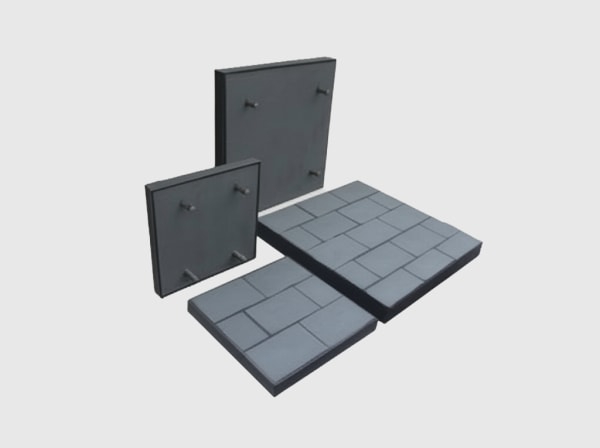
The transformation of raw silicon carbide powder into high-precision, functional components is a sophisticated process involving several key stages. Understanding this journey is beneficial for procurement managers and engineers when specifying custom SiC products and engaging with suppliers. Sicarb Tech employs state-of-the-art manufacturing techniques, honed by years of experience in the Weifang SiC hub, to deliver components that meet the most stringent requirements.
The general manufacturing pathway for SiC components includes:
- Raw Material Preparation:
- High-purity SiC powder is the starting point. The particle size, distribution, and purity of this powder are critical for the final properties of the SiC component.
- For Sintered SiC (SSiC), specific sintering aids (e.g., boron and carbon) are added and intimately mixed with the SiC powder.
- For Reaction-Bonded SiC (RBSiC), SiC powder is mixed with carbonaceous binders or a carbon precursor.
- Forming / Shaping (Green Body Formation):
- The prepared SiC powder mixture is then formed into the desired shape (the “green body”). Several methods can be used, depending on the complexity, size, and quantity of the parts:
- Pressing: Uniaxial pressing or Cold Isostatic Pressing (CIP) are common for simpler shapes and high-volume production.
- Slip Casting: Suitable for complex hollow shapes. A SiC slurry is poured into a porous mold, which absorbs the liquid, leaving a solid layer.
- Extrusion: Used for producing long, uniform cross-section parts like tubes and rods.
- Injection Molding (Ceramic Injection Molding – CIM): Ideal for small, highly complex parts in large quantities. The SiC powder is mixed with a thermoplastic binder, injected into a mold, and then the binder is removed.
- Additive Manufacturing (3D Printing): Emerging technologies like binder jetting or vat photopolymerization are being adapted for SiC, allowing for rapid prototyping and highly complex geometries.
- SicSino Capability: We offer a range of forming techniques to accommodate diverse component designs, ensuring the most cost-effective and technically sound approach for your customizing support needs.
- The prepared SiC powder mixture is then formed into the desired shape (the “green body”). Several methods can be used, depending on the complexity, size, and quantity of the parts:
- Binder Removal (Debinding – for some processes):
- If organic binders were used in the forming stage (e.g., in injection molding or some pressing operations), the green bodies are carefully heated in a controlled atmosphere to burn out these binders before the high-temperature sintering or reaction bonding stage.
- Sintering / Reaction Bonding (Densification):
- This is the critical high-temperature step where the green body is transformed into a dense, strong ceramic:
- For SSiC: Green bodies are heated to very high temperatures (2000-2200°C) in an inert atmosphere or vacuum. The SiC particles bond together and densify through solid-state diffusion.
- For RBSiC (SiSiC): The porous preform (SiC + Carbon) is infiltrated with molten silicon at temperatures around 1450-1700°C. The silicon reacts with the carbon to form new SiC, which bonds the existing SiC grains. Excess silicon fills the remaining pores.
- SicSino Expertise: Our precise control over furnace atmospheres, temperature profiles, and cycle times during this stage is crucial for achieving the desired microstructure and properties of the final SiC component. Our advanced main equipment reflects this capability.
- This is the critical high-temperature step where the green body is transformed into a dense, strong ceramic:
- Machining / Finishing (Hard Machining):
- Due to its extreme hardness, fully sintered or bonded SiC can only be effectively machined using diamond grinding, lapping, polishing, Electrical Discharge Machining (EDM) for some conductive grades, or laser machining.
- “Green machining” (machining the component before full densification) is sometimes performed to reduce the amount of hard machining needed, but this is not always feasible for achieving tight tolerances.
- Tolerances & Surface Finish:
- Achievable tolerances depend on the SiC grade, part size, complexity, and machining process. Standard tolerances might be ±0.5% of the dimension, but much tighter tolerances (e.g., ±0.005 mm or better) can be achieved with precision grinding and lapping.
- Surface finishes can range from a standard as-fired surface to highly polished mirror finishes (Ra < 0.02 µm) for applications like optical mirrors or semiconductor components.
- SicSino Precision: We possess advanced grinding and finishing capabilities to meet precise dimensional accuracy and surface finish requirements specified by our clients.
- Post-Processing (Optional):
- Depending on the application, additional post-processing steps may be required:
- Cleaning: To remove any contaminants from machining.
- Sealing: For some porous grades, sealing might be applied to reduce permeability.
- Coating: Applying specialized coatings (e.g., CVD-SiC for ultra-purity, or other functional coatings) to enhance specific properties.
- Annealing: To relieve internal stresses.
- Depending on the application, additional post-processing steps may be required:
- Quality Control and Inspection:
- Throughout the manufacturing process, and especially for the final product, rigorous quality control is essential. This includes:
- Dimensional checks (CMM, laser scanning).
- Material property testing (density, hardness, strength).
- Non-destructive testing (NDT) like ultrasonic inspection or X-ray for detecting internal flaws.
- Surface roughness measurements.
- SicSino Commitment: Our comprehensive quality assurance system ensures that every custom SiC component meets or exceeds customer specifications.
- Throughout the manufacturing process, and especially for the final product, rigorous quality control is essential. This includes:
Design Considerations for SiC Products:
When designing components to be made from SiC, engineers should consider its ceramic nature:
- Avoid Sharp Corners and Stress Concentrators: Generous radii should be used to reduce stress points.
- Wall Thickness: Uniform wall thickness is preferred to avoid issues during drying and sintering. Minimum wall thickness depends on the manufacturing process and part size.
- Brittleness: Design for compressive loads where possible and minimize tensile or impact loads.
- Machinability: While complex shapes are possible, minimizing the amount of hard machining can help control costs. Design for manufacturability.
The journey from SiC powder to a precision component is intricate. Sicarb Tech guides clients through this process, offering design assistance and leveraging our extensive manufacturing expertise to produce high-quality, reliable SiC material parts. Take a look at our diverse product examples to see the types of complex and precision components we regularly manufacture.
Partnering for Success: Why SicSino is Your Premier SiC Material Specialist
Choosing the right supplier for custom silicon carbide components is a critical decision that can significantly impact the performance, reliability, and cost-effectiveness of your projects. The ideal partner not only supplies high-quality material but also offers technical expertise, robust manufacturing capabilities, and reliable service. Sicarb Tech embodies these qualities, positioning us as a premier specialist in the advanced SiC ceramics market.
Why Partner with SicSino?
- Strategic Location in China’s SiC Hub:
- SicSino is based in Weifang City, recognized as the heart of China’s silicon carbide customizable parts manufacturing. This region hosts over 40 SiC production enterprises, accounting for more than 80% of the nation’s total SiC output.
- Advantage: Our proximity to and deep integration within this ecosystem provide us with unparalleled access to raw materials, specialized equipment, and a skilled workforce. We have witnessed and contributed to the growth of this industry hub since 2015, implementing advanced SiC production technology and fostering large-scale production capabilities among local enterprises.
- Backed by the Chinese Academy of Sciences :
- Sicarb Tech is part of the Chinese Academy of Sciences (Weifang) Innovation Park, an entrepreneurial park that collaborates closely with the National Technology Transfer Center of the Chinese Academy of Sciences. This national-level platform integrates innovation, technology transfer, and scientific services.
- Advantage: This affiliation provides us with robust scientific and technological capabilities, access to a vast talent pool, and a direct line to cutting-edge research. It ensures our processes are based on sound scientific principles and that we remain at the forefront of SiC technology. Learn more about us and our prestigious backing.
- Comprehensive Technological Expertise:
- SicSino possesses a domestic top-tier professional team specializing in the customized production of SiC material products. We command a wide array of technologies, encompassing material science, process engineering, component design, and meticulous measurement & evaluation.
- Advantage: Our integrated process, from raw materials to finished products, allows us to meet diverse and complex customization needs. We have supported over 10 local enterprises with our technologies, demonstrating our capacity for innovation and effective technology transfer. Our customizing support is tailored to your specific requirements.
- Guaranteed Quality and Supply Chain Reliability:
- Our strong technical foundation and strategic position within China’s SiC industry enable us to offer higher-quality, cost-competitive custom SiC components. We have robust quality management systems in place at every stage of production.
- Advantage: Clients can rely on SicSino for consistent product quality and a stable supply chain, minimizing risks and ensuring project timelines are met. Our numerous successful cases testify to our reliability.
- Turnkey Solutions for Factory Establishment:
- Beyond component supply, SicSino is committed to global collaboration. If you aim to establish your own specialized SiC products manufacturing plant, we offer comprehensive technology transfer services.
- Advantage: This turnkey project support includes factory design, procurement of specialized main equipment, installation and commissioning, and trial production. This unique offering empowers clients to build their own capabilities with assured technology transformation and a favorable input-output ratio.
Cost Drivers and Lead Time Considerations for Custom SiC Products:
Understanding the factors that influence pricing and delivery times is crucial for procurement professionals.
- Material Grade: Higher purity and specialized grades like SSiC are generally more expensive than RBSiC due to raw material costs and processing complexity.
- Component Complexity and Size: Intricate designs, large parts, or those requiring significant machining will incur higher costs and potentially longer lead times.
- Tolerances and Surface Finish: Tighter tolerances and finer surface finishes require more precise and time-consuming machining operations, adding to the cost.
- Order Volume: Larger production runs often benefit from economies of scale, potentially reducing the per-unit cost. Small, custom orders may have higher setup costs.
- Tooling Requirements: Complex shapes might require custom molds or tooling, which can be an upfront investment.
- Testing and Certification: Special testing or certification requirements will also impact cost and lead time.
Typical Lead Times:
Lead times for custom SiC components can vary significantly, from a few weeks for simpler items or prototypes to several months for highly complex parts or large orders requiring new tooling. SicSino works transparently with clients to establish realistic lead times based on project specifics.
Evaluating a Vendor’s Capabilities:
When selecting an industrial SiC supplier, consider the following:
| Evaluation Criterion | SicSino Strength |
|---|---|
| Technical Expertise | Backed by Chinese Academy of Sciences, domestic top-tier team, wide array of SiC technologies. |
| Material Options | Comprehensive range of SiC grades (RBSiC, SSiC, NBSiC, etc.) to suit diverse applications. |
| Manufacturing Capability | Advanced forming, sintering, and precision machining equipment; proven experience in Weifang SiC hub. |
| Quality Certifications | Robust internal quality management systems; commitment to meeting international standards. |
| Customization Support | Full support from design to delivery; ability to handle complex geometries and tight tolerances. |
| Track Record & Case Studies | Proven success with numerous clients and diverse applications, as seen in our cases. |
| Communication & Service | Responsive customer service and clear communication throughout the project lifecycle. Ready to Contact Us. |
| Cost & Lead Time | Competitive pricing due to strategic advantages; transparent and realistic project timelines. |
Partnering with Sicarb Tech means engaging with a leader in the field, one that combines the innovative spirit of the Chinese Academy of Sciences with the manufacturing prowess of China’s foremost SiC production center. We are not just a supplier; we are your strategic partner for achieving excellence with custom SiC material solutions.
Frequently Asked Questions (FAQ) about SiC Material
To further assist engineers, procurement managers, and technical buyers, here are answers to some common questions regarding SiC material and its applications.
- What are the primary advantages of using Silicon Carbide over other materials like Alumina or Tungsten Carbide? Silicon Carbide offers a unique combination of properties that often surpass other traditional and advanced materials in specific contexts:
- Versus Alumina (Al_2O_3): SiC generally exhibits significantly higher thermal conductivity (critical for heat dissipation), superior thermal shock resistance, greater hardness and wear resistance, and better strength at high temperatures. Alumina might be chosen for its lower cost in less demanding applications or where electrical insulation is paramount and SiC’s semiconducting nature (depending on grade) is a concern.
- Versus Tungsten Carbide (WC-Co): SiC is much lighter (lower density), has better high-temperature stability and oxidation resistance (WC-Co typically limited below 600-800°C in air), and often superior corrosion resistance against certain chemicals. Tungsten carbide, however, has higher fracture toughness, making it more resistant to chipping and impact in some wear applications. The choice often depends on the specific temperature, chemical environment, and type of wear involved. Custom SiC components can be tailored to offer competitive wear life with added benefits in harsh environments.
- How does the manufacturing complexity of SiC components affect their cost and lead time? The manufacturing of advanced SiC ceramics is inherently more complex and energy-intensive than for many metals or plastics. Key factors include:
- Raw Material Purity & Processing: High-purity SiC powders and specialized additives are required.
- Forming Techniques: While methods like pressing are efficient for simple shapes, complex geometries may require slip casting, injection molding, or even 3D printing, each with its own tooling and processing time implications.
- High Sintering Temperatures: Densification of SiC (especially SSiC) requires very high temperatures (often >2000°C) and controlled atmospheres, demanding specialized furnaces and longer cycles.
- Extreme Hardness & Machining: Post-sintering machining is challenging and slow due to SiC’s hardness, requiring diamond tooling and advanced grinding/lapping techniques. Intricate features or tight tolerances significantly increase machining time and cost.
- Impact on Cost & Lead Time: Consequently, simpler shapes with looser tolerances will generally be less expensive and have shorter lead times. Highly complex parts, large components, or those requiring ultra-precision finishes will command premium pricing and longer delivery schedules. At Sicarb Tech, we optimize our manufacturing processes and leverage our expertise in the Weifang SiC hub to offer competitive pricing and realistic lead times for even the most demanding custom SiC products. We encourage discussions about design for manufacturability early in the process. You can initiate a project discussion by contacting us.
- What are the typical failure modes for SiC components, and how can they be mitigated through design and material selection? Like other ceramics, SiC material is strong in compression but relatively weak in tension and has low fracture toughness, making it brittle. Typical failure modes include:
- Brittle Fracture: This can occur due to mechanical overload (impact, high tensile stress), thermal shock (if design/grade is inappropriate), or propagation of existing microscopic flaws.
- Slow Crack Growth: Under sustained stress, particularly in certain environments, pre-existing flaws can slowly grow until they reach a critical size, leading to failure.
- Wear: While highly wear-resistant, SiC can still wear down over time through abrasion, erosion, or chemical attack in very aggressive environments if the grade is not optimally chosen.
- Oxidation/Corrosion: Although generally excellent, specific chemical environments or extremely high temperatures beyond the material’s limits can lead to degradation (e.g., free silicon in RBSiC melting or reacting).
- Design for Ceramic Properties:
- Minimize tensile stresses; utilize compressive loads where possible.
- Avoid sharp corners and stress concentrations; use generous fillets and radii.
- Ensure uniform cross-sections to prevent differential stresses during thermal cycling.
- Consider mounting and assembly methods carefully to avoid point loads.
- Appropriate Material Grade Selection:
- For severe thermal shock, select grades like RBSiC or RSiC known for this property.
- For extreme wear or corrosion, Sintered SiC (SSiC) is often the best choice due to its density and purity.
- Ensure the chosen grade’s temperature limits and chemical compatibility match the application.
- Quality Manufacturing: Partner with a reputable supplier like SicSino that ensures high-quality raw materials, controlled processing to minimize internal flaws, and precise machining.
- Surface Finish: A good surface finish can reduce stress raisers and improve strength.
- Proof Testing: For critical applications, proof testing of components can help weed out parts with significant flaws. Sicarb Tech provides extensive customizing support, including design advice, to help clients mitigate potential failure modes and maximize the lifetime and reliability of their SiC components.
Conclusion: Embracing SiC Material for Industrial Advancement
The journey through the world of custom silicon carbide material reveals a substance of exceptional capability, uniquely positioned to meet the escalating demands of modern industry. Its remarkable blend of thermal resilience, mechanical strength, wear resistance, and chemical inertness makes it an indispensable choice for engineers and procurement managers striving for enhanced performance, extended component life, and operational efficiency in challenging environments.
From the precision-driven semiconductor sector to the rugged terrains of aerospace and high-temperature industrial processes, advanced SiC ceramics are not just components; they are enablers of innovation and reliability. The ability to tailor SiC parts to exact specifications through careful grade selection, design optimization, and advanced manufacturing techniques further amplifies their value proposition, ensuring that each component delivers optimal functionality.
Sicarb Tech stands at the forefront of this technological wave. Rooted in the vibrant SiC manufacturing hub of Weifang and powered by the scientific prowess of the Chinese Academy of Sciences, we offer more than just custom SiC products. We provide a partnership built on expertise, quality, and a commitment to solving your most complex material challenges. Whether you require intricately designed components, high-volume production, or even technological support to establish your own SiC manufacturing capabilities, SicSino is your trusted ally.
By choosing custom silicon carbide and partnering with a knowledgeable supplier like SicSino, industries can unlock new levels of productivity, reduce long-term operational costs, and push the boundaries of what’s possible in their respective fields. We invite you to explore our capabilities further and contact us to discuss how SiC material can elevate your next project.

About the Author: Sicarb Tech
We provide clear and reliable insights into silicon carbide materials, component manufacturing, application technologies, and global market trends. Our content reflects industry expertise, practical experience, and a commitment to helping readers understand the evolving SiC landscape.

Customizable SiC
You May Also Interest
-
![]()
SiC vs Fused Alumina: Abrasive Options Compared
SiC vs Fused Alumina: Abrasive Options Compared In the demanding world of industrial materials, selecting the right abrasive is paramount for achieving optimal performance, longevity, and cost-efficiency. Two prominent contenders often considered are Silicon Carbide (SiC) and Fused Alumina. While both offer distinct advantages, understanding their fundamental differences and specific application suitability is crucial for…
-
![]()
Silicon Carbide Powder: The Foundation for High-Performance Industrial Solutions
In the demanding landscape of modern industry, the quest for materials that can withstand extreme conditions while delivering unparalleled performance is perpetual. Among the frontrunners in this pursuit is silicon carbide (SiC), a remarkable ceramic material renowned for its exceptional hardness, thermal conductivity, and resistance to wear and chemical attack. The journey to harnessing these…
-
![]()
SiC vs CVD Diamond for Extreme Wear Parts
SiC vs CVD Diamond for Extreme Wear Parts: Choosing the Optimal Material In demanding industrial environments where components face extreme conditions, material selection is paramount. Engineers, procurement managers, and technical buyers are constantly seeking advanced materials that offer superior wear resistance, thermal stability, and chemical inertness. For applications requiring exceptional durability, two leading contenders often…