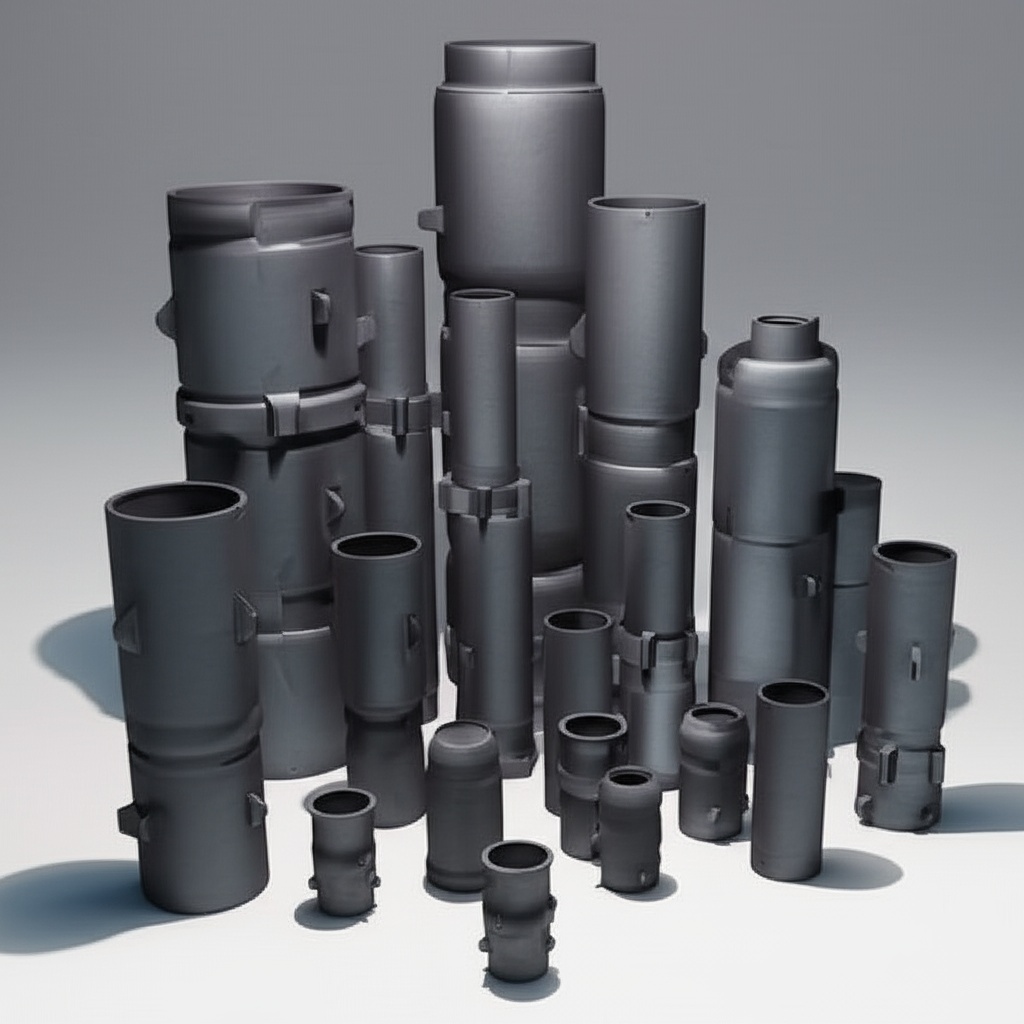
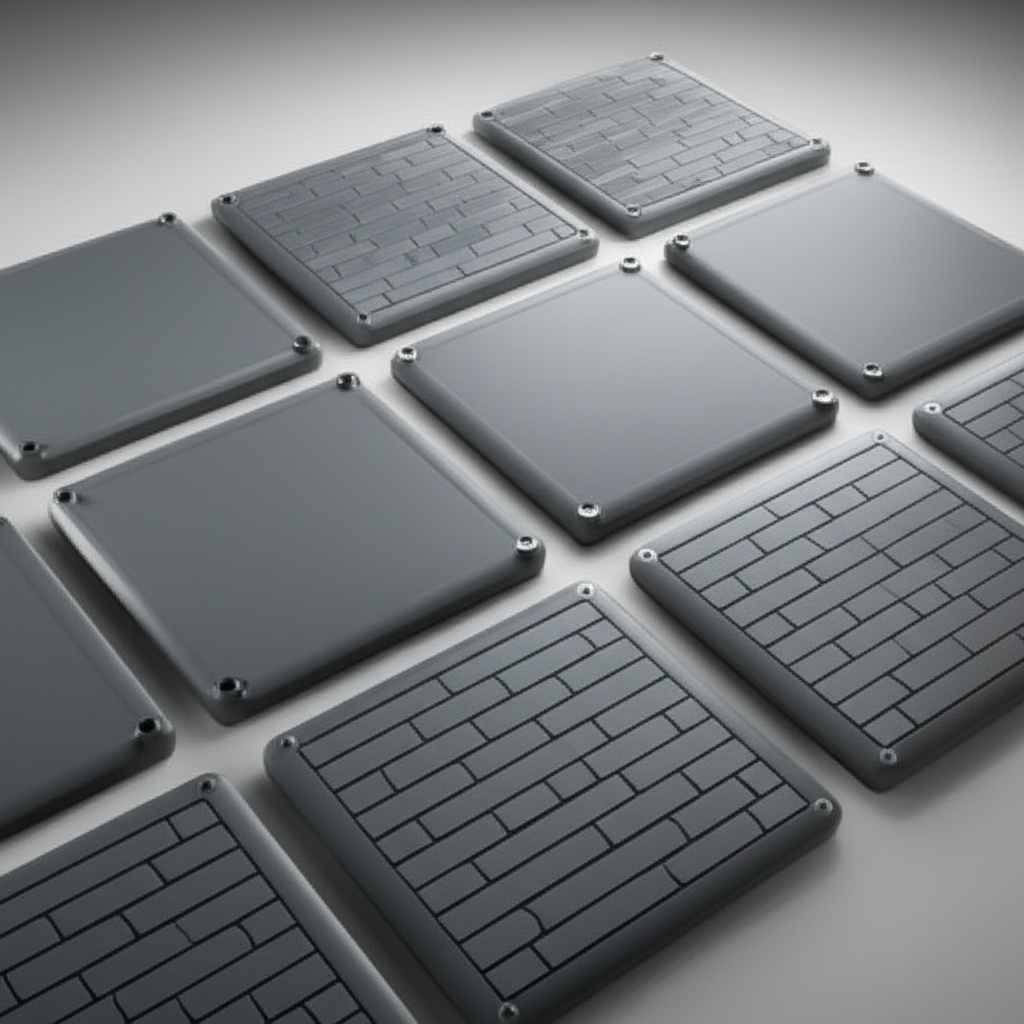
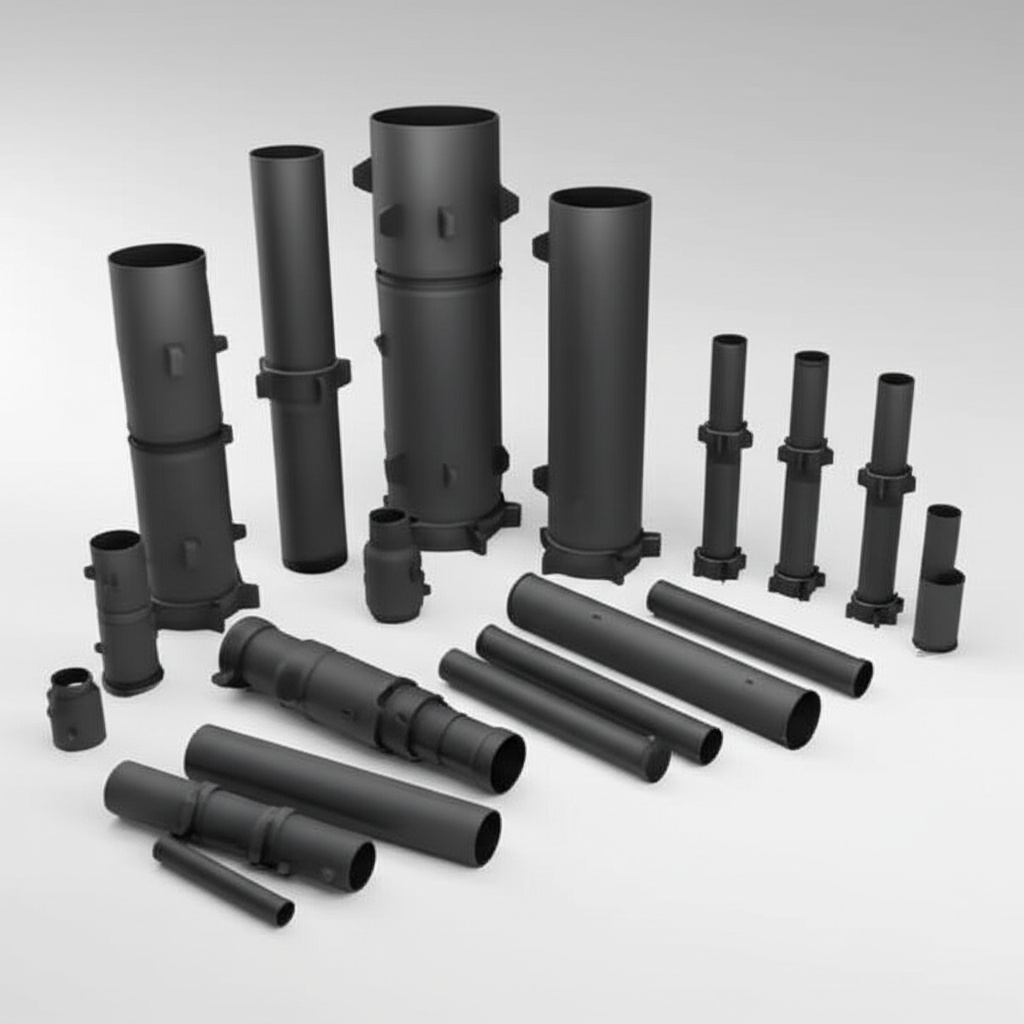
SiC Material Science Advances & Discoveries
Share
SiC Material Science Advances & Discoveries
In the rapidly evolving landscape of advanced materials, Silicon Carbide (SiC) stands out as a true game-changer. Renowned for its exceptional properties, SiC is at the forefront of innovation, driving progress across a multitude of high-performance industrial applications. This blog post delves into the latest advancements and discoveries in SiC material science, offering a comprehensive guide for engineers, procurement managers, and technical buyers seeking custom silicon carbide solutions.
1. What are Custom Silicon Carbide Products?
Custom silicon carbide products are engineered components meticulously designed and fabricated to meet specific, demanding requirements in industrial environments. Unlike off-the-shelf parts, custom SiC solutions leverage the unique properties of silicon carbide to deliver unparalleled performance in extreme conditions. These technical ceramics offer superior thermal, mechanical, and chemical stability, making them indispensable for critical applications where conventional materials fall short. The ability to tailor geometry, surface finish, and material composition allows for optimal integration and efficiency in complex systems.
2. Main Applications Across Key Industries
The versatility of SiC makes it a preferred material across a broad spectrum of industries, enabling breakthroughs and enhancing operational efficiency. Its unique combination of properties makes it ideal for a diverse range of high-performance components:
- Semiconductor Manufacturing: SiC is crucial for fabricating high-power, high-frequency devices like MOSFETs and diodes, enabling smaller, more efficient power converters. Its thermal conductivity and stability are vital for SiC components in semiconductor equipment like susceptors, wafer carriers, and process chambers, where precise temperature control and purity are paramount.
- Automotive Companies: In electric vehicles (EVs), SiC power modules are revolutionizing inverters, on-board chargers, and DC-DC converters, significantly improving efficiency, extending range, and reducing component size and weight. Its robust nature is also beneficial for brake components and wear parts.
- Aerospace Companies: For aerospace applications, SiC’s high strength-to-weight ratio, extreme temperature resistance, and radiation hardness make it ideal for lightweight structural components, engine parts, rocket nozzles, and sensors operating in harsh environments.
- Power Electronics Manufacturers: Beyond automotive, SiC enables the development of highly efficient power converters for grid infrastructure, industrial motor drives, and consumer electronics, leading to substantial energy savings and reduced heat generation.
- Renewable Energy Companies: SiC technology enhances the efficiency and reliability of inverters for solar power systems and wind turbines, optimizing energy conversion and contributing to a more sustainable energy future.
- Metallurgical Companies: SiC is used in high-temperature furnace components, crucibles, and refractory linings due to its excellent thermal shock resistance and inertness to molten metals, ensuring longer service life and purity in metal processing.
- Defense Contractors: Its superior hardness and strength are leveraged in lightweight armor, high-performance optical components, and missile radomes, offering enhanced protection and operational capabilities.
- Chemical Processing Companies: SiC’s exceptional chemical inertness and corrosion resistance make it suitable for pump seals, valve components, and heat exchangers in aggressive chemical environments, minimizing downtime and maintenance.
- LED Manufacturers: SiC substrates are vital for growing GaN-based LEDs, contributing to the development of brighter, more efficient, and longer-lasting LED lighting solutions.
- Industrial Equipment Manufacturers: From high-temperature bearings and seals to nozzles and wear plates, custom SiC components improve the durability and performance of machinery operating under severe conditions.
- Telecommunications Companies: SiC is used in high-frequency power amplifiers and RF devices for 5G infrastructure, enabling faster data transmission and more robust communication networks.
- Oil and Gas Companies: In downhole drilling tools and components exposed to abrasive slurries and corrosive fluids, SiC parts offer extended lifespan and improved reliability.
- Medical Device Manufacturers: Biocompatible SiC is explored for surgical instruments and implants requiring high wear resistance and inertness.
- Rail Transportation Companies: SiC power modules enhance the efficiency of traction systems in trains, leading to energy savings and improved reliability.
- Nuclear Energy Companies: Its radiation resistance and high-temperature stability make SiC a candidate for fuel cladding and structural components in advanced nuclear reactors.
3. Why Choose Custom Silicon Carbide?
The decision to opt for custom silicon carbide products stems from the inherent advantages they offer over conventional materials, particularly when performance under extreme conditions is paramount. The benefits extend beyond mere material properties, encompassing significant operational and economic advantages:
- Superior Thermal Resistance: SiC retains its mechanical strength and structural integrity at temperatures exceeding 1,500°C, far beyond the limits of most metals and other ceramics. This makes it ideal for high-temperature industrial applications like furnace components and heat exchangers.
- Exceptional Wear Resistance: With a hardness approaching that of diamond, SiC offers unparalleled resistance to abrasion and erosion. This property is crucial for applications involving friction, such as bearings, seals, and nozzles, significantly extending component lifespan.
- Outstanding Chemical Inertness: SiC is remarkably resistant to corrosion from a wide range of acids, bases, and molten salts, making it invaluable in chemical processing and semiconductor manufacturing where aggressive media are present.
- High Thermal Conductivity: Despite its high-temperature resistance, SiC boasts excellent thermal conductivity, efficiently dissipating heat. This is critical for power electronics and heat sinks, where thermal management is key to performance and longevity.
- High Strength and Stiffness: SiC components exhibit impressive mechanical strength and stiffness, allowing for thinner cross-sections and lighter designs without compromising structural integrity.
- Reduced Downtime and Maintenance: The extended lifespan and reliability of SiC components translate directly into less frequent replacements and maintenance, leading to significant cost savings and improved operational efficiency for industrial buyers.
- Tailored Performance: Customization allows for optimization of part geometry, surface finish, and material composition to perfectly match the specific application requirements, ensuring peak performance and system integration.
4. Recommended SiC Grades and Compositions
Silicon carbide is not a monolithic material; it exists in various grades and compositions, each offering a unique balance of properties tailored for specific applications. Understanding these distinctions is crucial for technical procurement professionals and engineers to select the optimal material for their custom SiC product needs. Below is a table outlining common SiC grades:
| SiC Grade/Type | Key Characteristics | Typical Applications |
|---|---|---|
| Reaction-Bonded SiC (RBSiC) | High strength, excellent wear resistance, good thermal conductivity, near-net shape capability, cost-effective for larger parts. Contains free silicon. | Furnace components, mechanical seals, wear plates, nozzles, pump parts, automotive brake discs. |
| Sintered Alpha SiC (SSiC) | Extremely high purity, superior corrosion and oxidation resistance, excellent high-temperature strength, low porosity. | Semiconductor wafer carriers, susceptors, high-performance mechanical seals, pump impellers, rocket nozzles. |
| Nitride-Bonded SiC (NBSiC) | Good strength and creep resistance at high temperatures, good thermal shock resistance. Lower cost than SSiC. | Kiln furniture, refractory elements, blast furnace components, specialized crucibles. |
| Chemically Vapor Deposited SiC (CVD SiC) | Extremely high purity, theoretical density, superior surface finish, very high strength, isotropic properties. | Optical components, X-ray mirrors, semiconductor susceptor coatings, high-precision structural parts. |
| Siliconized SiC (Si-SiC) | Similar to RBSiC, but with a higher silicon content providing enhanced density and impermeability for certain applications. | Mechanical seals, valve components, ballistic armor. |
5. Design Considerations for SiC Products
Designing custom silicon carbide components requires a thorough understanding of the material’s unique properties and manufacturing limitations. Early consideration of these factors during the design phase can significantly reduce production costs and lead times, while ensuring optimal performance and manufacturability for OEMs and industrial buyers. Key design considerations include:
- Geometry Limits: SiC is a hard and brittle material, making complex geometries and very thin walls challenging to produce. Designs should favor simple shapes, generous radii, and avoid sharp corners or sudden changes in cross-section to minimize stress concentrations.
- Wall Thickness Uniformity: Maintaining consistent wall thickness throughout the design helps in achieving uniform densification during sintering and reduces internal stresses, preventing warpage or cracking during processing.
- Stress Points and Load Distribution: Identify potential stress concentration points and design for even load distribution. Consider material properties like flexural strength and fracture toughness. Finite Element Analysis (FEA) is highly recommended for complex designs.
- Tolerances and Machinability: While SiC can be machined to tight tolerances, extensive post-sintering grinding is costly. Design features that can be achieved with near-net shape forming methods wherever possible.
- Joining and Assembly: Plan for how SiC components will be joined to other materials or SiC parts. Brazing, adhesive bonding, and mechanical fastening are common methods, each with specific design implications.
- Surface Finish Requirements: Specify surface finish requirements based on functional needs (e.g., sealing, wear surfaces). Excessive surface finish requirements can significantly increase manufacturing cost and time.
- Thermal Expansion: Account for the thermal expansion coefficient of SiC, especially when integrating with dissimilar materials that have different expansion rates, to prevent thermal stress-induced failures.
6. Tolerance, Surface Finish & Dimensional Accuracy
Achieving precise tolerances and desired surface finishes in custom silicon carbide products is a critical aspect of their performance, particularly for technical components requiring tight fits or specific surface interactions. The level of precision achievable depends on the manufacturing process and subsequent finishing operations.
- Achievable Tolerances: While SiC can be machined to very tight tolerances, it’s inherently a hard material. As-fired tolerances for complex shapes might be in the range of ±0.5% to ±1%, with a minimum of ±0.1 mm to ±0.2 mm. For precision parts, post-sintering grinding and lapping can achieve much tighter tolerances, often down to ±0.005 mm or even tighter for critical dimensions. Specifying tighter tolerances than necessary will increase manufacturing costs.
- Surface Finish Options: Surface roughness (Ra) can vary widely depending on the manufacturing method and finishing steps.
- As-fired/As-formed: Surfaces typically have a relatively rough finish (Ra 3.2 µm to 12.5 µm), suitable for many structural and refractory applications.
- Ground: Grinding provides a smoother finish (Ra 0.8 µm to 3.2 µm), suitable for components requiring better sealing or reduced friction.
- Lapped/Polished: For applications demanding extremely smooth surfaces, such as mechanical seals, optical components, or semiconductor equipment, lapping and polishing can achieve finishes down to Ra < 0.1 µm.
- Dimensional Accuracy: Consistent dimensional accuracy is paramount for proper assembly and function. Manufacturers employ advanced metrology techniques to ensure parts meet specifications. It’s crucial for buyers to communicate their exact dimensional requirements and critical features clearly.
7. Post-Processing Needs
Even after initial fabrication, custom silicon carbide products often undergo various post-processing steps to enhance their performance, durability, and functionality. These processes are vital for optimizing SiC components for specific industrial applications:
- Grinding: Precision grinding is commonly used to achieve tight dimensional tolerances and improved surface finishes, especially for critical mating surfaces or features that cannot be achieved with near-net shape forming. Diamond abrasives are typically employed due to SiC’s extreme hardness.
- Lapping and Polishing: For components requiring extremely smooth surfaces, such as mechanical seals, optical mirrors, or semiconductor parts, lapping and polishing are essential. These processes minimize friction, improve sealing capabilities, and enhance optical properties.
- Sealing: While some SiC grades like SSiC are inherently dense and impermeable, others, like RBSiC, might have some residual porosity. Sealing with glass, polymer, or metallic infiltrates can improve impermeability for vacuum applications or corrosive environments.
- Coating: Applying specialized coatings can further enhance SiC’s surface properties. Examples include:
- CVD SiC coatings: For ultra-high purity and smoothness in semiconductor applications.
- Oxide coatings: To improve oxidation resistance at extremely high temperatures.
- Abrasion-resistant coatings: For even greater wear protection in highly abrasive environments.
- Heat Treatment: In some cases, specific heat treatments might be applied to relieve internal stresses or modify certain material properties, although SiC’s thermal stability generally makes extensive heat treatment less critical than for metals.
- Inspection and Quality Control: Rigorous post-processing inspection, including non-destructive testing (NDT) methods like ultrasonic inspection and X-ray analysis, ensures the integrity and quality of the final SiC product.
8. Common Challenges and How to Overcome Them
While silicon carbide offers unparalleled advantages, working with this advanced material also presents unique challenges. Awareness of these issues and strategies to overcome them is crucial for successful custom SiC product development and procurement.
- Brittleness: Like most technical ceramics, SiC is inherently brittle, meaning it can fracture under tensile stress or impact.
- Mitigation: Design with generous radii, avoid sharp corners, and minimize stress concentrations. Use compressive loading whenever possible. Careful handling during manufacturing and assembly is paramount.
- Machining Complexity: SiC’s extreme hardness makes it difficult and costly to machine. Conventional machining methods are ineffective.
- Mitigation: Design parts for near-net shape forming processes (e.g., pressing, slip casting). Limit features that require extensive post-sintering diamond grinding. Partner with suppliers possessing advanced SiC machining capabilities.
- Thermal Shock Sensitivity: While SiC has good thermal shock resistance, rapid and extreme temperature changes can still induce stress and potential failure, especially for certain grades or complex geometries.
- Mitigation: Design to minimize thermal gradients. Select SiC grades with superior thermal shock resistance (e.g., RBSiC). Implement controlled heating/cooling ramps in operational environments.
- Cost: Custom SiC products generally have a higher initial cost compared to conventional materials due to complex manufacturing processes and raw material expenses.
- Mitigation: Focus on the total cost of ownership, considering the extended lifespan, reduced downtime, and improved performance that SiC offers. Optimize design for manufacturability to reduce machining costs.
- Supplier Expertise: Manufacturing high-quality custom SiC parts requires specialized knowledge and equipment.
- Mitigation: Partner with an experienced and reputable SiC manufacturer who can provide technical guidance from design to delivery.
Speaking of expert suppliers, it’s important to know that the hub of China’s silicon carbide customizable parts manufacturing is situated in Weifang City, China. This region has been home to over 40 silicon carbide production enterprises of various sizes, collectively accounting for more than 80% of the nation’s total silicon carbide output.
We, Sicarb Tech, have been introducing and implementing silicon carbide production technology since 2015, assisting local enterprises in achieving large-scale production and technological advancements in product processes. We have been a witness to the emergence and ongoing development of the local silicon carbide industry.
Sicarb Tech capitalizes on the robust scientific, technological capabilities and talent pool of the Chinese Academy of Sciences . Backed by the Chinese Academy of Sciences National Technology Transfer Center, it serves as a bridge, facilitating the integration and collaboration of crucial elements in the transfer and commercialization of scientific and technological achievements. Moreover, it has established a comprehensive service ecosystem that spans the entire spectrum of the technology transfer and transformation process, ensuring more reliable quality and supply assurance within China.
We possess a domestic top-tier professional team specializing in customized production of silicon carbide products. Under our support, 392+ local enterprises have benefited from our technologies. We possess a wide array of technologies, such as material, process, design, measurement & evaluation technologies, along with the integrated process from materials to products. This enables us to meet diverse customization needs. We can offer you higher-quality, cost-competitive customized silicon carbide components in China.
We are also committed to assisting you in establishing a specialized factory. If you need to build a professional silicon carbide products manufacturing plant in your country, Sicarb Tech can provide you with the technology transfer for professional silicon carbide production, along with a full-range of services (turnkey project) including factory design, procurement of specialized equipment, installation and commissioning, and trial production. This enables you to own a professional silicon carbide products manufacturing plant while ensuring a more effective investment, reliable technology transformation, and guaranteed input-output ratio. For more information on our capabilities and to discuss your specific needs, please contact us.
9. How to Choose the Right SiC Supplier
Selecting the right custom silicon carbide product supplier is a strategic decision for procurement managers and technical buyers. A capable supplier acts as a true partner, contributing significantly to the success of your project. Here are key factors to consider:
- Technical Capabilities and Expertise:
- Material Science Knowledge: Does the supplier possess deep understanding of various SiC grades and their properties?
- Design Support: Can they offer engineering assistance for design optimization and manufacturability?
- Manufacturing Processes: Do they utilize advanced techniques like hot pressing, sintering, or reaction bonding, and precision machining?
- Quality Control: What certifications (e.g., ISO 9001) and inspection protocols do they have in place?
- Material Options and Customization:
- Broad Portfolio: Do they offer a wide range of SiC grades (RBSiC, SSiC, CVD SiC, etc.) to match your specific application?
- Customization Prowess: Are they experienced in producing complex geometries and tight tolerances?
- Industry Experience:
- Relevant Track Record: Have they successfully supplied to your specific industry (e.g., semiconductor, aerospace, power electronics)? Ask for case studies or references.
- Scalability and Production Capacity:
- Volume Capabilities: Can they meet your current and future volume requirements, from prototypes to mass production?
- Cost-Effectiveness vs. Price:
- Value Proposition: Look beyond just the upfront price; consider the total cost of ownership, including reliability, lifespan, and performance gains.
- Lead Times and Delivery:
- Reliability: Do they have a proven track record of on-time delivery? How do they manage unexpected delays?
- Communication and Responsiveness:
- Support: How quickly do they respond to inquiries and provide technical support? A good supplier will be transparent and proactive.
- R&D and Innovation:
- Future-Proofing: Are they investing in R&D to develop new materials or processes, ensuring they remain at the forefront of SiC technology?
10. Cost Drivers and Lead Time Considerations
Understanding the factors that influence the cost and lead time of custom silicon carbide products is essential for effective budgeting and project planning. These factors can vary significantly based on the complexity and specifications of the component.
Cost Drivers:
- Material Grade and Purity: Higher purity SiC grades (e.g., SSiC, CVD SiC) and specialized compositions are generally more expensive due to their raw material costs and more demanding processing requirements.
- Part Complexity and Geometry: Intricate designs with thin walls, tight radii, or complex internal features require more advanced manufacturing techniques and extensive machining, significantly increasing cost.
- Dimensional Tolerances and Surface Finish: Achieving tighter tolerances and smoother surface finishes (e.g., lapping, polishing) necessitates additional, precise post-processing steps, adding to the overall cost.
- Volume: Like most manufactured goods, higher production volumes typically benefit from economies of scale, leading to a lower per-unit cost. Prototype and low-volume orders will have higher unit costs.
- Manufacturing Process: The chosen manufacturing method (e.g., reaction bonding, sintering, CVD) has different cost implications based on equipment, energy consumption, and labor intensity.
- Inspection and Testing: Rigorous quality control, including advanced non-destructive testing, adds to the production cost but ensures product reliability.
- Tooling Costs: For new designs, tooling costs (molds, dies) can be a significant upfront investment, amortized over the production run.
Lead Time Considerations:
- Design Complexity: More complex designs require longer engineering and simulation phases.
- Tooling Production: If new tooling is required, this can add several weeks to the initial lead time.
- Material Availability: Lead times for specialized SiC raw materials can influence overall production schedules.
- Manufacturing Process Cycle: SiC production involves high-temperature firing and often long sintering cycles, which contribute to the overall lead time.
- Post-Processing: Extensive grinding, lapping, or coating steps can significantly extend the lead time.
- Production Queue: A supplier’s current production load will impact how quickly your order can be fulfilled.
- Shipping and Logistics: International shipping and customs can add considerable time.
To get an accurate quote and lead time estimate for your specific project, it is always best to directly consult with an expert SiC manufacturer. Provide detailed specifications, 3D models, and application requirements for the most precise assessment.
11. Frequently Asked Questions (FAQ)
Here are some common questions about custom silicon carbide products, providing quick and concise answers for technical buyers and engineers.
- Q1: What is the primary advantage of SiC over traditional ceramics or metals for high-temperature applications?
- A1: SiC offers an unmatched combination of extreme thermal stability (withstanding temperatures up to 1,800°C without significant degradation), superior strength retention at high temperatures, excellent thermal shock resistance, and high thermal conductivity, making it ideal for environments where other materials would deform, melt, or fail.
- Q2: Can silicon carbide be easily machined?
- A2: No, silicon carbide is extremely hard, ranking just below diamond. This makes conventional machining very difficult and costly. Custom SiC components are typically formed to near-net shape during their initial manufacturing process, and then precisely finished using diamond grinding, lapping, or polishing for critical tolerances.
- Q3: What are the key factors affecting the cost of a custom SiC component?
- A3: The primary cost drivers include the specific SiC grade (purity and properties), the complexity of the part’s geometry, the required dimensional tolerances and surface finish, and the production volume. More complex designs and tighter specifications generally lead to higher costs dueating more intricate manufacturing and post-processing. For a detailed quote, reach out to a specialized SiC supplier.
- Q4: Is custom SiC a good choice for abrasive environments?
- A4: Absolu

About the Author: Sicarb Tech
We provide clear and reliable insights into silicon carbide materials, component manufacturing, application technologies, and global market trends. Our content reflects industry expertise, practical experience, and a commitment to helping readers understand the evolving SiC landscape.

Customizable SiC
You May Also Interest
-
![]()
The Automotive Revolution Fueled by Custom Silicon Carbide
The automotive industry is undergoing its most significant transformation in a century. Electrification, autonomous driving, and the relentless pursuit of higher efficiency and performance are reshaping vehicle design and engineering. At the heart of this revolution lies a remarkable material: Silicon Carbide (SiC). This advanced technical ceramic, known for its exceptional properties, is rapidly becoming…
-
![]()
SiC for Next-Generation Semiconductor Devices
SiC for Next-Generation Semiconductor Devices In the relentless pursuit of innovation across high-tech industries, material science plays a pivotal role. For next-generation semiconductor devices, and demanding applications in aerospace, energy, and industrial manufacturing, the spotlight is increasingly on advanced materials that can withstand extreme conditions while delivering superior performance. Among these, custom silicon carbide (SiC)…
-
![]()
Silicon Carbide: Powering the Next Generation of Semiconductor Innovation
The semiconductor industry is the bedrock of modern technology, fueling advancements from artificial intelligence and high-performance computing to electric vehicles and renewable energy systems. As semiconductor devices become smaller, faster, and more powerful, the demands placed on the materials used in their fabrication escalate significantly. In this relentless pursuit of performance and efficiency, custom silicon…