Optimizing Turkish Manufacturing with Custom SiC Solutions | Sicarbtech 2025 Pillar Page
Compartilhar
Sicarbtech is the Silicon Carbide Solutions Expert partnering with Turkey’s textile, automotive, and aço sectors to design and deliver custom silicon carbide components that stabilize processes, reduce energy use, and simplify audits. Operating from Weifang City—China’s silicon carbide manufacturing hub—and as a member of the Chinese Academy of Sciences (Weifang) Innovation Park, we provide full-cycle capability from materials processing to finished products across R‑SiC, SSiC, RBSiC, and SiSiC. With more than 10 years of customization experience and a track record supporting 19+ local enterprises, we translate material science into reliable outcomes on Turkish production lines.
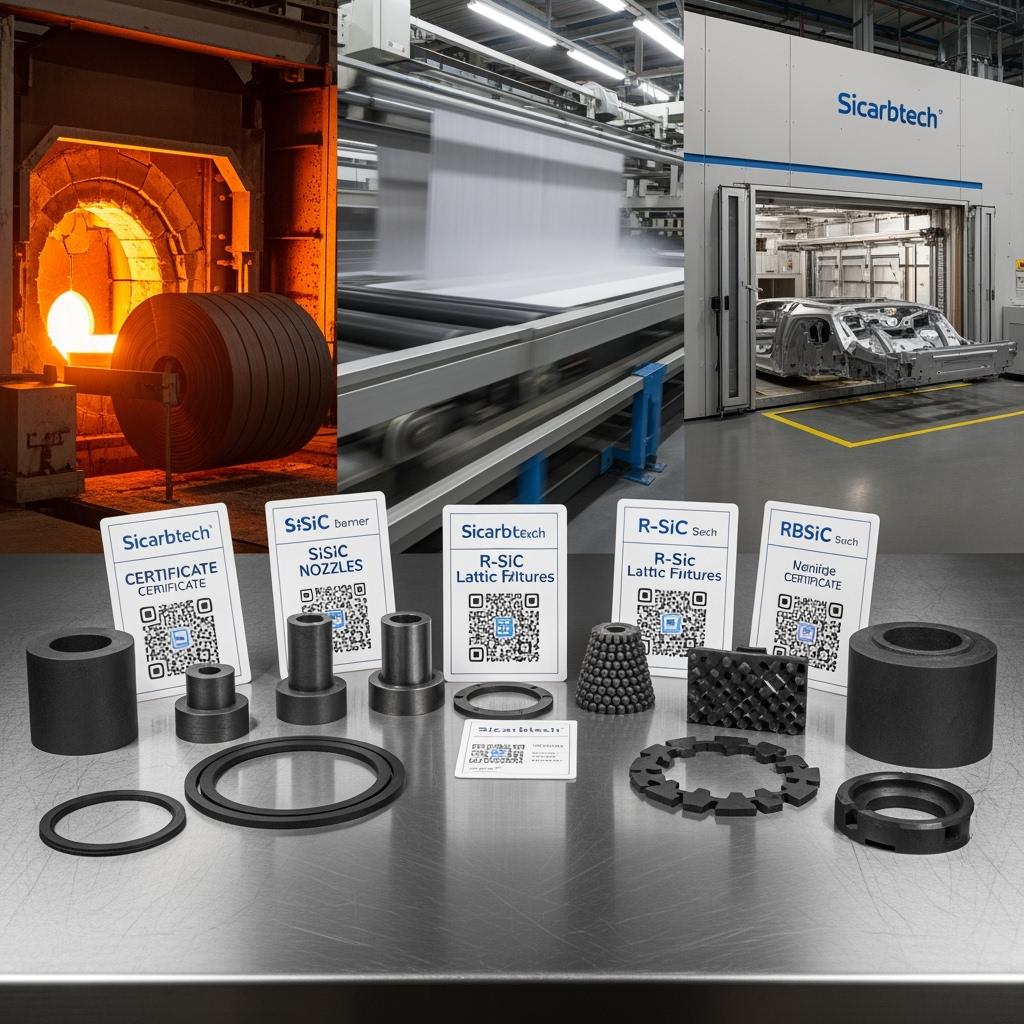
Executive Summary: Custom Silicon Carbide as a 2025 Advantage in Turkey
Turkey’s industrial economy faces a new calculus in 2025: energy tariffs are higher, export market expectations are tougher, and regulatory scrutiny is sharper. Steel producers strive for longer furnace campaigns with tighter thermal uniformity; textile processors chase fewer fabric artifacts at higher speeds; automotive plants balance IATF 16949 discipline with aggressive ramp schedules. Custom silicon carbide components—precisely engineered SSiC seals and rollers, SiSiC/RBSiC hot-zone elements, and low-mass R‑SiC fixtures—directly address these pressures by combining high thermal conductivity, low thermal expansion, and robust chemical resistance.
Sicarbtech aligns grade selection and geometry with FEA/CFD, validates manufacturability via DFM, and delivers EN-referenced, serial-level documentation that dovetails with ERP/MES and audit workflows. Furthermore, our technology transfer and factory establishment services offer a path to local capability in Turkey, reducing FX exposure and lead-time risk. As Dr. Pınar Aslan, an industrial materials advisor, notes, “When silicon carbide is engineered into the system—not bolted on—plants gain a wider process window, fewer interventions, and measurable energy savings.” (Source: Industrial Materials Forum, 2024)
Industry Challenges and Pain Points in Turkish Operations
The unifying challenge across steel, textile, and automotive facilities is variability—small deviations that cascade into energy waste, quality drift, and compliance burdens. In steel annealing and reheating, burner nozzles, skid elements, and launders endure flame impingement, oxidizing atmospheres, and slag attack. Conventional ceramics spall; heat-resistant metals creep and oxidize. A deformed nozzle shifts flame geometry, creating hot spots that raise fuel consumption and distort metallurgical outcomes. Each unscheduled swap disrupts campaign planning and increases safety exposure. Moreover, reporting under the Ministry of Environment, Urbanization and Climate Change makes performance deviations visible and auditable.
Textile finishing lines in Denizli and Gaziantep confront precision at speed. Rollers and guides must maintain low runout, smooth finishes, and chemical resilience through abrasive fibers and aggressive chemistries. Alumina rollers and coated metals roughen and warp; microns of runout can print patterns or cause shade variations that become warranty issues. Frequent changeouts amplify energy usage due to restarts and cleaning cycles, while ISO 9001 oversight turns recurrent defects into corrective action loops.
Automotive facilities around Bursa and Kocaeli operate under IATF 16949 rigor. Heat-treatment fixtures, seals, and oven internals creep or distort across cycles, quietly eroding capability indices. Deviations invite containment and PPAP revisions, while rising energy tariffs penalize any elongation of ramp and soak times. Currency volatility compounds the problem: a cheap spare that fails twice as often becomes expensive once rush imports and downtime are counted.
Local market dynamics sharpen the edge. EU-aligned expectations emphasize EN-referenced materials and CE-related documentation for integrated equipment. Buyers increasingly prioritize suppliers offering application engineering, auditable traceability, and realistic plans for local stocking or capability transfer. As Prof. Baran Korkmaz, a metallurgical auditor, states, “In 2025, the triple tax of variability—energy, rework, and audits—kills competitiveness. The antidote is engineered materials with serial evidence.” (Source: Marmara Audit Roundtable, 2024)
Advanced Silicon Carbide Solutions Portfolio Tailored by Sicarbtech
Sicarbtech’s portfolio translates SiC physics into stable, auditable plant performance. In textile finishing, SSiC rollers are precision-ground and lapped to hold low runout across long spans, minimizing fabric artifacts and tension spikes. Surface finishes and bore geometries are tuned to the fabric and chemistry profile to mitigate buildup. For spray and jet systems, SiSiC and RBSiC nozzles preserve internal flow geometries under rapid thermal cycling, maintaining spray patterns and reducing overspray.
In automotive lines, SSiC mechanical seals and pump components maintain flatness and corrosion resistance at temperature, protecting pump efficiency and seal life. R‑SiC lattice fixtures and low-mass kiln furniture accelerate ramp and cool-down phases in paint curing and heat treatment, smoothing thermal maps for tighter coating and metallurgical consistency. Steel furnaces deploy SiSiC burner nozzles and RBSiC skid elements designed via CFD/FEA to stabilize flame shape and resist slag and oxidation, increasing nozzle life and reducing energy per ton. We also supply SiC tubes, linings, and wear components for chemical equipment that demands both abrasion and corrosion resistance.
Every project is co-engineered. We model stresses, thermal gradients, and flow using FEA/CFD; we refine geometries through DFM to eliminate stress risers and ensure finishing access; and we anchor specifications with EN-referenced data and serialized inspection that accelerate Turkish audits.

Performance Comparison: Custom SiC vs Traditional Materials in Turkish Duty Cycles
Thermal and Mechanical Characteristics for Industrial Equipment
| Property / Metric | SSiC (sintered) | SiSiC / RBSiC (reaction-bonded) | R‑SiC (recrystallized) | High-Alumina Ceramic | Heat-Resistant Steel (EN 1.4841) |
|---|---|---|---|---|---|
| Max service temperature in air (°C) | 1,600–1,700 | 1,350–1,450 | 1,400–1,600 | 1,400–1,600 | 1,000–1,100 |
| Thermal conductivity (W/m·K, 25°C) | 100–160 | 60–130 | 30–50 | 20–35 | 15–25 |
| Coefficient of thermal expansion (10⁻⁶/K) | 4.0–4.5 | 4.0–4.8 | 4.5–5.0 | 7–8 | 16–18 |
| Flexural strength at RT (MPa) | 350–450 | 250–360 | 120–200 | 150–300 | 200–300 |
| Resistência ao choque térmico | Excelente | Çox yaxşı | Excelente | Moderado | Moderado |
| Oxidation/chemical resistance | Excelente | Çox yaxşı | Çox yaxşı | Bom | Justo |
Lower CTE and high conductivity help SiC parts ride out rapid cycles without geometry drift, flatten thermal gradients, and resist corrosive atmospheres—key levers against energy waste and unplanned downtime.
Real-World Applications and Success Stories from Turkey
A Marmara-region steel annealing line partnered with Sicarbtech to redesign burner nozzles in SiSiC after CFD mapping revealed asymmetric jets and hot spots. The new nozzles stabilized flame patterns, reduced impingement, and extended service life from roughly one month to one quarter. After burner tuning, energy per ton dropped by 15–20%, while thermal shock incidents fell across two campaigns. The serialized inspection data and EN-referenced property sheets shortened maintenance audits.
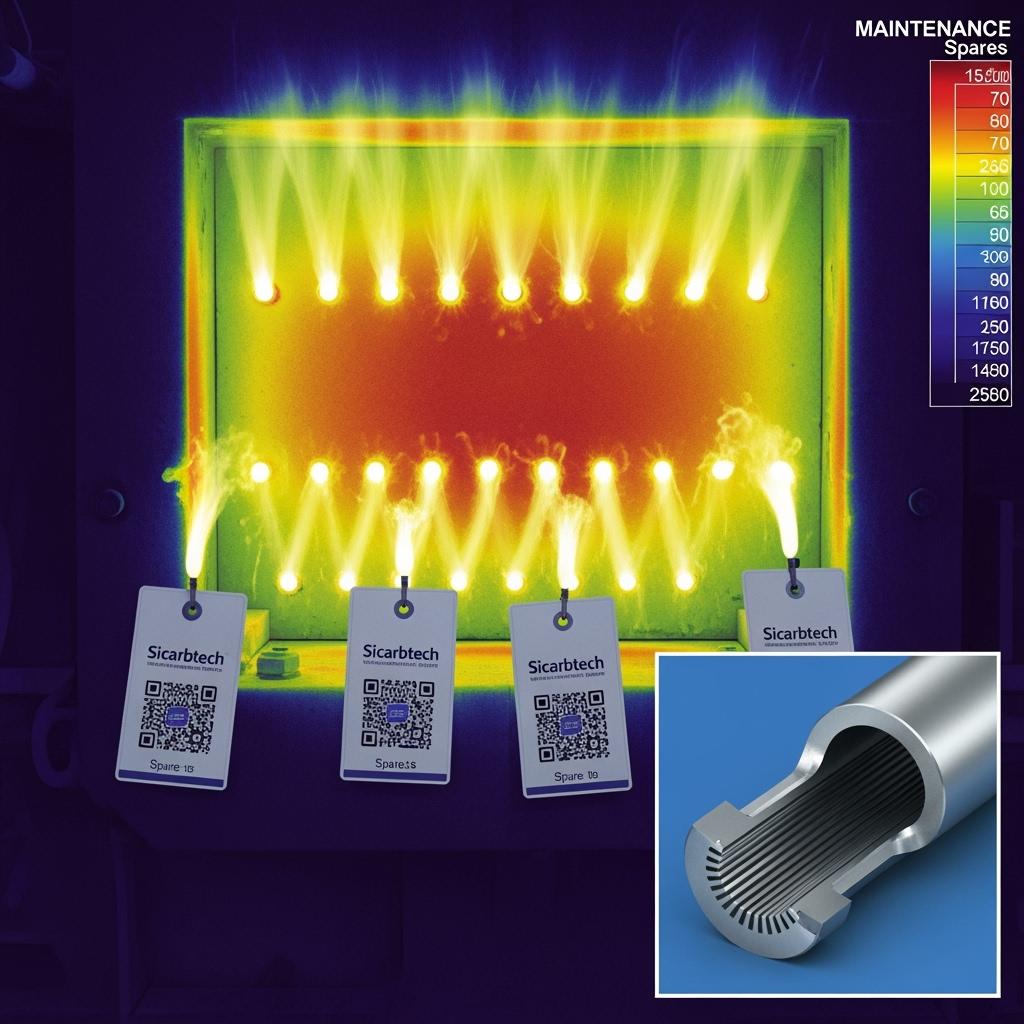
In Bursa, a Tier-1 automotive supplier replaced heavy steel fixtures with R‑SiC lattice designs and SSiC wear sleeves at contact points inside a paint-curing oven. Thermal inertia fell, allowing lower setpoints and faster ramps. Over two quarters, cycle time decreased by 6–8% and coating thickness variation tightened, reducing rework by 21%. The PPAP dossier included serial-level metrology and process certificates, streamlining approvals.
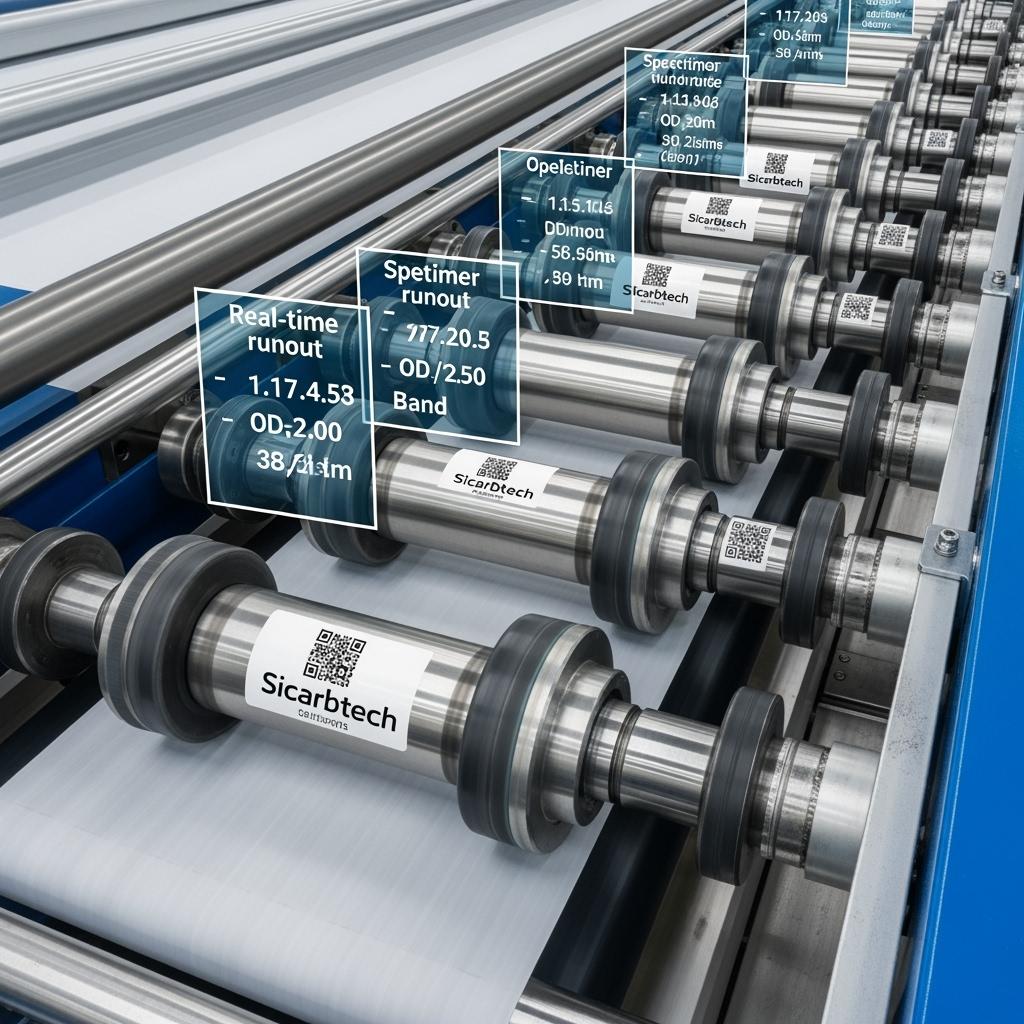
A Denizli textile finisher transitioned from alumina to SSiC precision-ground rollers. Runout stabilized at 0.02–0.05 mm across long spans, and roller-related fabric artifacts dropped by 28%. Changeouts halved within six months, and ISO 9001 audits flagged fewer corrective actions due to serialized inspection data and stable SPC charts.
Zalety techniczne i korzyści z wdrożenia z lokalną zgodnością
SiC’s covalent lattice gives Turkish manufacturers three decisive advantages. First, dimensional stability under rapid thermal cycling preserves tolerances that underpin process capability in seals, rollers, nozzles, and fixtures. Second, high thermal conductivity spreads heat, enabling lower setpoints and shorter ramps, which is pivotal under tariff pressure. Third, chemical and oxidation resistance extends maintenance intervals despite corrosive gases and aggressive chemistries, improving safety and uptime.
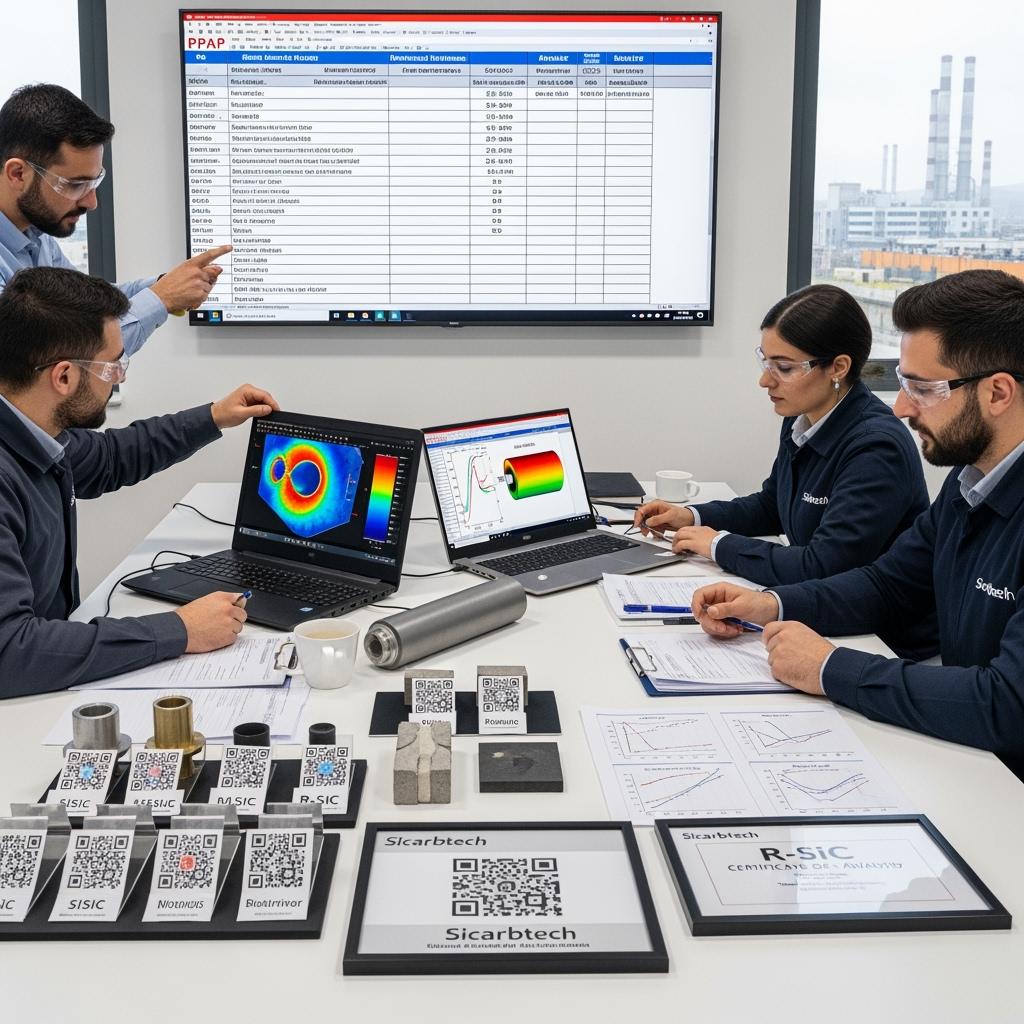
Sicarbtech converts these material strengths into compliant implementations. We deliver EN-referenced data sheets, ISO 9001 and ISO 14001 documentation support, and CE-related inputs where SiC integrates into machinery. Automotive-linked programs receive PPAP-ready evidence aligned with IATF 16949, including serial-level metrology for thickness, flatness, roughness, porosity, and density. As Ece Tanrıverdi, a compliance auditor, comments, “What accelerates audits is not claims but coherence—specs, results, and serials that tell the same story end to end.” (Source: Quality and Compliance Briefing, 2024)
Custom Manufacturing and Technology Transfer Services by Sicarbtech
Sicarbtech’s advantage is a complete capability stack—advanced R&D, proprietary grade manufacturing, and a turnkey path to localize capacity in Turkey when strategic value is clear.
Our R&D, anchored by the Chinese Academy of Sciences (Weifang) Innovation Park, maintains controlled process windows for R‑SiC, SSiC, RBSiC, and SiSiC. We tune powder chemistries and particle-size distributions; operate contamination-safe milling and dispersion; and select forming routes—cold isostatic pressing, slip casting, extrusion, and additive green-body strategies—according to geometry, tolerance needs, and duty cycle. Debinding and sintering cycles are engineered for density, grain size, and residual silicon control. Precision finishing employs diamond grinding, lapping, and polishing to deliver sub‑micron Ra on seal faces and tight flatness/parallelism on critical planes.
For Turkish partners seeking resilience and speed, we offer complete technology transfer packages: process know‑how manuals, equipment specifications (lined mixers, classifiers, isostatic presses, clean kilns, handling fixtures), and metrology suites covering thickness, flatness, roundness, roughness, density, and porosity. Structured training programs cover operators, process engineers, maintenance, and QA. Our factory establishment services progress from feasibility studies based on Turkish demand through layout and utilities design, HSE planning to local regulation, vendor selection, installation supervision, pilot runs, MSA, and full commissioning.
Quality is built in from day one. We implement SPC on PSD, moisture, density, porosity, and critical dimensional/surface metrics, and we structure documentation for seamless ERP/MES integration and fast audits. Automotive interfaces receive PPAP/IATF-ready records. Post‑launch, our engineers remain engaged in kiln profile tuning, yield improvement, downtime root‑cause analysis, and preventive maintenance planning. This turnkey approach—validated in collaborations with 19+ enterprises—compresses time‑to‑quality, de‑risks capex, and establishes resilient local supply.
Engineering Data and Grade Selection for Turkish Duty Cycles
SiC Grades and Application Fit for Industrial Equipment
| Grau de SiC | Stankder (g/cm³) | Open Porosity (%) | Nerzh plegañ (MPa) | Condutividade térmica (W/m-K) | Typical Turkish Applications | Engineering Notes |
|---|---|---|---|---|---|---|
| SSiC (sintered) | 3.10–3.20 | <0.5 | 350–450 | 100–160 | Mechanical seals, precision rollers, pump/valve internals | Highest polishability and corrosion resistance |
| SiSiC (Si‑infiltrated) | 2.95–3.05 | 1–2 | 270–360 | 70–130 | Burner nozzles, furnace elements, HX plates | Strong thermal shock and creep resistance |
| RBSiC (reaction‑bonded) | 2.95–3.05 | 1–3 | 250–350 | 60–120 | Launders, complex nozzles, structural supports | Cost‑effective shape freedom and durability |
| R‑SiC (recrystallized) | 2.60–2.75 | 10–15 (closed) | 120–200 | 30–50 | Lattice fixtures, radiant tubes, lightweight shelves | Lowest thermal mass; fast ramp/cool-down |
Green vs Black Silicon Carbide for Media and Additives
Comparative Properties for Industrial Use in Turkey
| Atributo | Black SiC (≈98–99% SiC) | Green SiC (≈99+% SiC) | Practical Implication |
|---|---|---|---|
| Kaleter (Mohs) | ~9.2 | ~9.4–9.5 | Green cuts sharper; black is tougher and more economical |
| Particle morphology | Blocky, durable | Sharper, more friable | Black for heavy grinding/additive roles; green for precision finishing |
| Thermal conductivity (W/m·K) | 120–150 | 120–160 | Both dissipate heat well; choose based on finish and cost targets |
| Achosion defnydd nodweddiadol | Additives, blasting, coarse grinding | Fine grinding, lapping/polishing | Match to quality targets and budget constraints |
Lifecycle Economics and Energy Impact in 2025
Cost, Uptime, and Energy Outcomes with Engineered SiC
| Faktor | Conventional (Alumina/Steel) | Sicarbtech Custom SiC | Outcome in Turkey |
|---|---|---|---|
| Upfront price (TRY) | Izeloc'h | Uheloc'h | Premium offset by energy and uptime gains |
| Replacement frequency | Alta | 2–4× lower | Fewer rush imports; lower FX risk |
| Energy per unit output | Baseline–higher | Lower via heat uniformity and low mass | Tariff‑sensitive savings |
| Downtime and maintenance | Frequent/unplanned | Planned and less frequent | Protects export schedules |
| Audit workload | Cięższy | Lighter via serial evidence | Faster ISO/IATF/CE acceptance |
| Typical payback | N/A | 6–18 months | Fastest in heat‑intensive duty |
Oportunidades futuras de mercado e tendências para 2025
Three forces will expand SiC adoption across Turkey. First, decarbonization and energy costs will reward materials that enable lower setpoints, faster ramps, and stable heat flow—areas where SiC’s conductivity and low CTE deliver immediate value. Second, export-facing supply chains will insist on suppliers who provide EN-referenced, serial-level evidence that shortens ISO/CE/IATF reviews; documentation-first engineering becomes table stakes. Third, resilience will favor localization; vendor-managed inventory and technology transfer reduce FX and logistics volatility.
Beyond these themes, hybrid architectures will proliferate: SSiC at high-wear precision interfaces, SiSiC or RBSiC bodies for hot-zone durability, and R‑SiC fixtures to cut thermal mass. Digital twins for burners, launders, rollers, and fixtures will become routine, allowing simulation-led optimization before first article. As a European advanced ceramics brief observed, “Evidence-backed reliability and system efficiency are overtaking piece price as core procurement KPIs.” (Source: Public industry roadmap summaries, 2024). Sicarbtech’s co-engineered, documentation-rich, and localization-ready model aligns precisely with this shift.
Perguntas frequentes
What certifications and documentation does Sicarbtech provide for Turkish audits?
We deliver EN-referenced property data, ISO 9001 and ISO 14001 documentation support, and CE-related inputs for equipment integration. Automotive-linked programs receive PPAP-ready packages aligned with IATF 16949, all serialized for rapid traceability.
How fast can you supply custom SiC components in Turkey?
Established geometries typically ship in 4–8 weeks; complex assemblies or polished seals may require 8–12 weeks. We can set up vendor-managed inventory and local safety stock for critical spares.
Which SiC grade is optimal for high-speed textile rollers?
SSiC offers superior strength, corrosion resistance, and polishability. We confirm fit with FEA/DFM and provide serialized metrology—runout, roundness, and surface finish—for audit acceptance.
How does R‑SiC reduce energy use in ovens and furnaces?
R‑SiC’s low thermal mass shortens ramp and cool-down times, while its shock tolerance resists cracking under rapid cycling. Plants often record 10–20% energy reduction after tuning thermal profiles.
Do you support localization of SiC manufacturing in Turkey?
Yes. We offer full technology transfer—process know‑how, equipment specs, operator/QA training, pilot runs, and commissioning—plus quality systems aligned with TS EN/ISO and IATF expectations.
How do you ensure consistency and traceability?
We run SPC on powder PSD, density, porosity, sintering profiles, and finishing parameters. Every batch or part ships with serialized certificates covering dimensional and material metrics.
Can your data integrate with our ERP/MES and PPAP workflows?
Absolutely. Certificates and serial/batch data are provided in standard digital formats, enabling automated receiving, maintenance tracking, and PPAP/ISO audit trails.
What local standards and regulations should we consider?
Expect TS EN and ISO frameworks, IATF 16949 for automotive supply chains, CE considerations for integrated equipment, and environmental reporting under national rules informed by EU guidance.
How do Sicarbtech solutions compare with lower-cost alternatives?
Our strength is system-level engineering plus documentation depth and localization capability, producing fewer excursions, shorter audits, and lower lifecycle cost—validated in work with 19+ enterprises.
Do you offer prototyping and iterative design?
Yes. We conduct pilot builds with iterative FEA/CFD feedback, validate tolerances and finishes, and scale to serial production with control plans aligned to your SPC thresholds.
Fazendo a escolha certa para suas operações
The right silicon carbide solution is not simply the strongest part; it is the one that stabilizes your process with evidence. When grade selection, geometry, and thermal regime are co-engineered, lines run closer to design intent, audits become faster, and kWh per unit declines. Sicarbtech’s role is to convert your constraints—ramp rates, chemistries, takt time, and audit scope—into engineered SiC components that deliver measurable ROI and, where strategic, into localized capability that de‑risks cost and supply.
Obtenha consultoria especializada e soluções personalizadas
Bring us your duty cycles, failure modes, and quality objectives. Sicarbtech will recommend the optimal SiC grade and geometry, simulate performance, model ROI in TRY under current tariffs, define validation and inspection plans, and, if beneficial, outline a technology transfer roadmap to establish local capability in Turkey.
Contact Sicarbtech:
- E-mail: [email protected]
- Telefone/WhatsApp: +86 133 6536 0038
Metadados do artigo
Last updated: 2025-09-26
Next scheduled update: 2025-12-16 (quarterly review aligned with Turkey energy tariff changes, EU compliance updates, and new Sicarbtech case studies)
Content freshness indicators: integrates 2025 Turkish market outlook; localized EN/ISO/CE and IATF references; updated grade benchmarks for R‑SiC, SSiC, SiSiC, and RBSiC; new Turkish case results; expanded guidance on technology transfer and factory establishment.

About the Author: Sicarb Tech
We provide clear and reliable insights into silicon carbide materials, component manufacturing, application technologies, and global market trends. Our content reflects industry expertise, practical experience, and a commitment to helping readers understand the evolving SiC landscape.

Customizable SiC
You May Also Interest
-
![]()
Substraturi SiC: Cheia progreselor dispozitivelor electronice
Substratos de SiC: Chave para os avanços dos dispositivos eletrônicos Introdução: O papel central dos substratos de SiC No cenário em rápida evolução das aplicações industriais de alto desempenho, a ciência dos materiais desempenha um papel fundamental. Entre os materiais avançados, o carbeto de silício (SiC) se destaca, principalmente na forma de substratos de SiC. Esses substratos não são apenas camadas de base; eles são facilitadores essenciais…
-
![]()
Inovação em SiC por meio de links de pesquisa universitária
Inovação em SiC por meio de links de pesquisa universitária No cenário em rápida evolução dos materiais avançados, o carbeto de silício (SiC) personalizado se destaca como um verdadeiro divisor de águas. Suas propriedades inigualáveis o tornam indispensável em um espectro de aplicações industriais exigentes, desde a vanguarda da fabricação de semicondutores até os ambientes extremos da indústria aeroespacial e da energia nuclear. Mas o que…
-
![]()
Plăci SiC de generație următoare pentru excelența în electronică de putere
Wafers de SiC de última geração para excelência em eletrônica de potência Introdução: O papel fundamental das pastilhas de SiC na eletrônica de potência moderna A busca incessante por maior eficiência, maior densidade de potência e desempenho superior em sistemas eletrônicos de potência destacou o carbeto de silício (SiC) como um material transformador. Os wafers de SiC, os substratos fundamentais para dispositivos de potência baseados em SiC, estão no centro…