How Turkish Manufacturers Benefit from Custom SiC Solutions | Sicarbtech 2025 Pillar Page
Haalbare toleranties en maatnauwkeurigheid:
Sicarbtech is the Silicon Carbide Solutions Expert trusted by Turkish textile, automotive, and steel manufacturers to engineer durable, audit-ready silicon carbide components that perform under harsh thermal and chemical conditions. Operating from Weifang City—China’s silicon carbide manufacturing hub—and as a member of the Chinese Academy of Sciences (Weifang) Innovation Park, our team brings more than 10 years of customization experience across R-SiC, SSiC, RBSiC, and SiSiC. In 2025, as Turkey balances energy volatility, EU-aligned compliance, and export-grade quality requirements, custom SiC solutions have shifted from a niche upgrade to a process performance strategy.
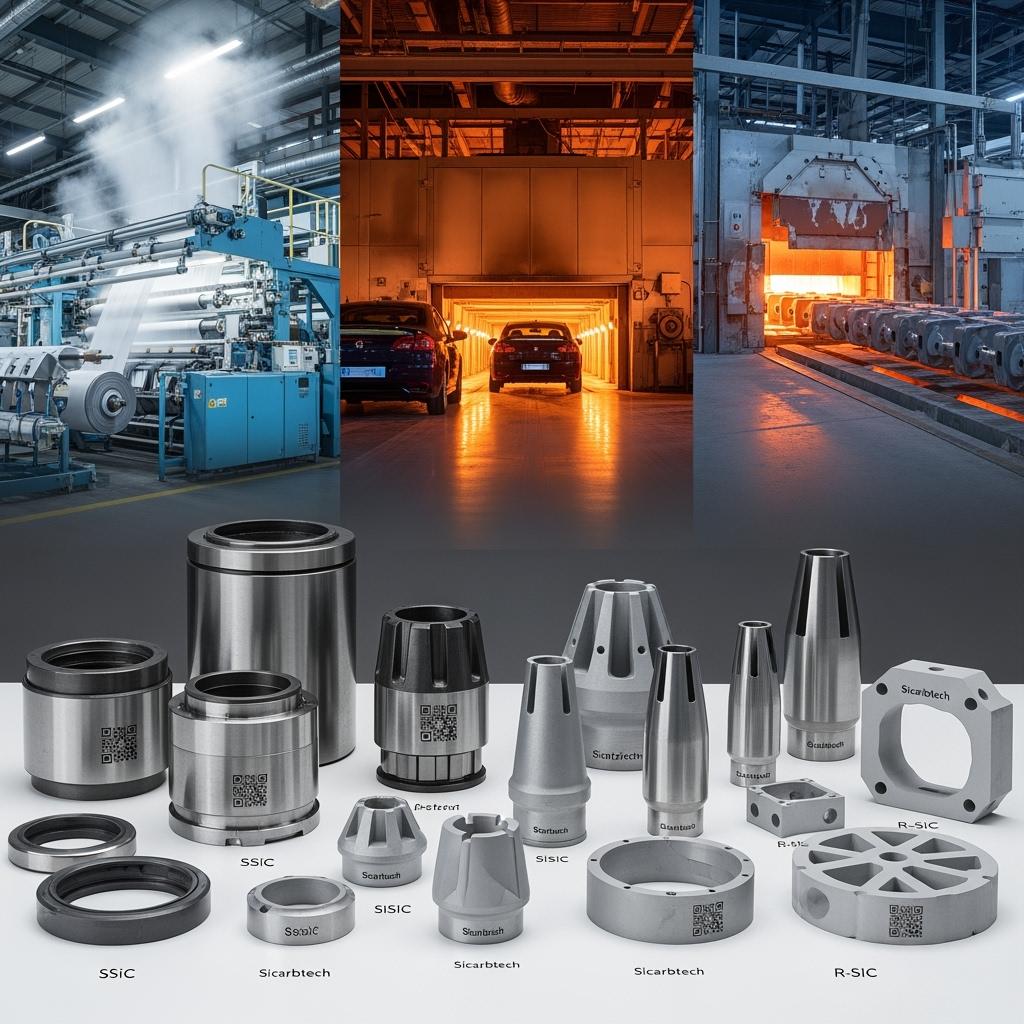
Executive Summary: Custom Silicon Carbide in Turkey’s 2025 Operating Reality
The 2025 manufacturing outlook in Turkey is defined by tighter tolerances, higher energy costs, and stricter audit scrutiny. Textile hubs in Denizli and Gaziantep are fine-tuning finishing lines to reduce fabric defects and chemical-driven stoppages. Automotive clusters in Bursa and Kocaeli are scaling EV-related programs while maintaining IATF 16949 discipline and PPAP rigor. Staal producers across Marmara and Iskenderun are optimizing thermal profiles in furnaces that see relentless cycling. In this environment, custom silicon carbide components—when co-engineered with the process—improve uptime, stabilize energy consumption, and simplify audits.
SSiC offers near-theoretical density and superior corrosion resistance for seals, rollers, and pump internals. SiSiC and RBSiC enable complex burner and furnace geometries with excellent thermal shock and creep performance. R-SiC delivers the lowest thermal mass and outstanding shock tolerance for rapid-ramp ovens and fixtures. Furthermore, Sicarbtech’s technology transfer and factory establishment services give Turkish partners a credible path to localize critical SiC capabilities, reducing FX exposure and lead-time risk. As Dr. Ayşe Erdem, an industrial materials advisor, notes, “When SiC is engineered into the system, you don’t just get longer life—you get steadier processes that use less energy and pass audits with fewer findings.” (Source: Regional industry workshop notes, 2024)
Industry Challenges and Pain Points for Turkish Manufacturers
The common thread across Turkish textile, automotive, and steel operations is the cost of variability. On textile finishing lines, rollers, guides, and spray nozzles operate in corrosive chemistries and face abrasive fiber particulates. Conventional alumina rollers or coated metals roughen, warp, and accumulate deposits. Minute runout changes cascade into visible artifacts—streaks, shading, and patterning—that force rework and re-dyes. The financial impact is multi-layered: idle labor, energy to reheat lines, expedited logistics to preserve export windows, and quality records that trigger corrective actions under ISO 9001 and ISO 14001.
Automotive plants add precision and documentation pressure. Fixtures, seals, and pump components made from heat-resistant steels often creep or shift under repeated thermal cycles, gradually eroding process capability indices. Small drifts require containment plans and PPAP updates to satisfy IATF 16949, adding administrative load to maintenance downtime. Moreover, currency fluctuations complicate budgeting when short-life spares are frequently imported, turning reliability issues into financial volatility in TRY terms.
Steel operations contend with the harshest mix of stresses. Burner nozzles, skid buttons, and furnace internals face flame impingement, oxidation, and slag corrosion. Conventional ceramics spall; alloys oxidize and deform. Each unplanned changeout interrupts campaigns, elevates safety risks, and undermines performance reporting to the Ministry of Environment, Urbanization and Climate Change. Plants aligning to EN materials references and EU-influenced best practices increasingly require evidence that materials hold geometry and properties over time—not just at installation.
Local market conditions amplify these challenges. Energy tariffs magnify the penalty for overfiring, long ramps, and uneven thermal profiles. Logistics variability turns a missing nozzle into days of lost throughput. Buyers need more than parts; they need engineering support, traceability that stands up to audits, and supply strategies—vendor-managed inventory, local stocking, and, where justified, technology transfer—that stabilize lead times. As Prof. Mehmet Yalçın, a metallurgical auditor, summarizes, “In 2025, inconsistency is taxed three times—by energy, by quality, and by compliance. The cheapest component on paper often proves the most expensive in practice.” (Source: Istanbul Industrial Forum, 2024)
Advanced Silicon Carbide Solutions Portfolio Co-Engineered by Sicarbtech
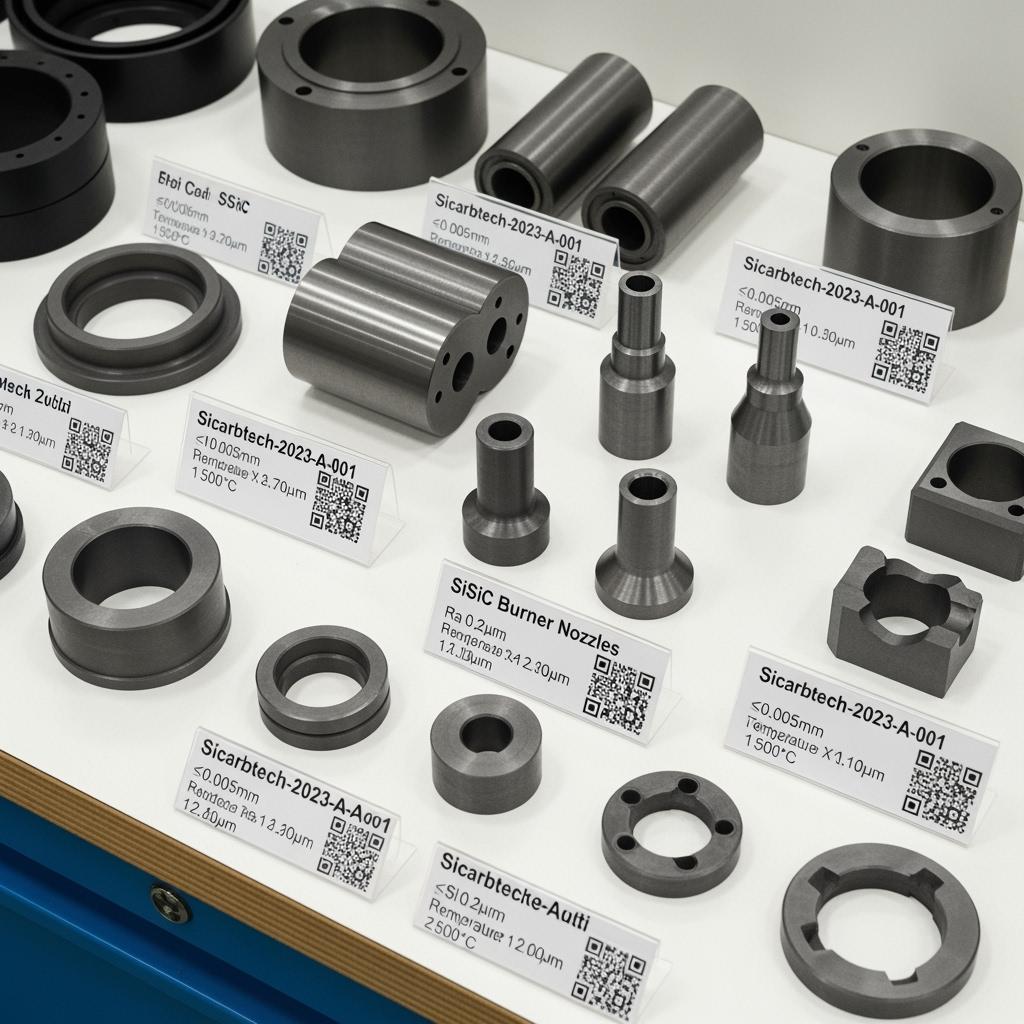
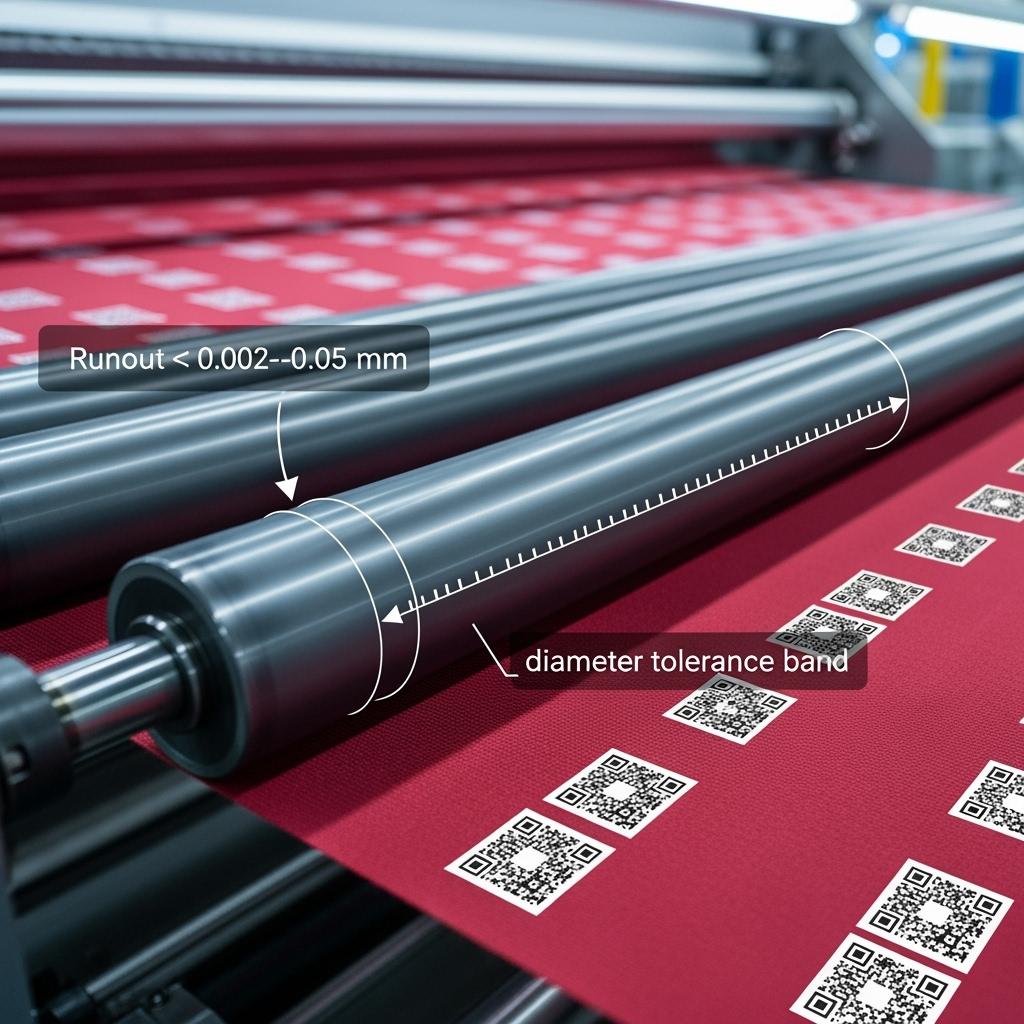
Sicarbtech’s portfolio addresses these pain points with custom SiC solutions that are engineered to the duty cycle and delivered with audit-ready documentation. In textile finishing, SSiC guide and spreader rollers are precision-ground to maintain low runout across long spans, protecting fabric surfaces and stabilizing tension at high speeds. Bore tolerances and bearing seats are lapped for repeatable installation, while surface finishes are matched to fabric and dyestuff behaviors. In corrosive spray and jet systems, SiSiC and RBSiC nozzles preserve flow geometry across rapid heat-up and cool-down, minimizing overspray and ensuring uniform application.
Automotive lines benefit from SSiC mechanical seals and pump components that hold geometry through repeated thermal cycling, protecting paint and sealing tolerances. R-SiC kiln furniture and lightweight lattice fixtures reduce thermal mass in paint-curing ovens, improving ramp uniformity and shortening cycle times. In steel furnaces, SiSiC burner nozzles and RBSiC skid elements resist flame impingement, oxidation, and slag, stabilizing heat profiles and extending campaign length.
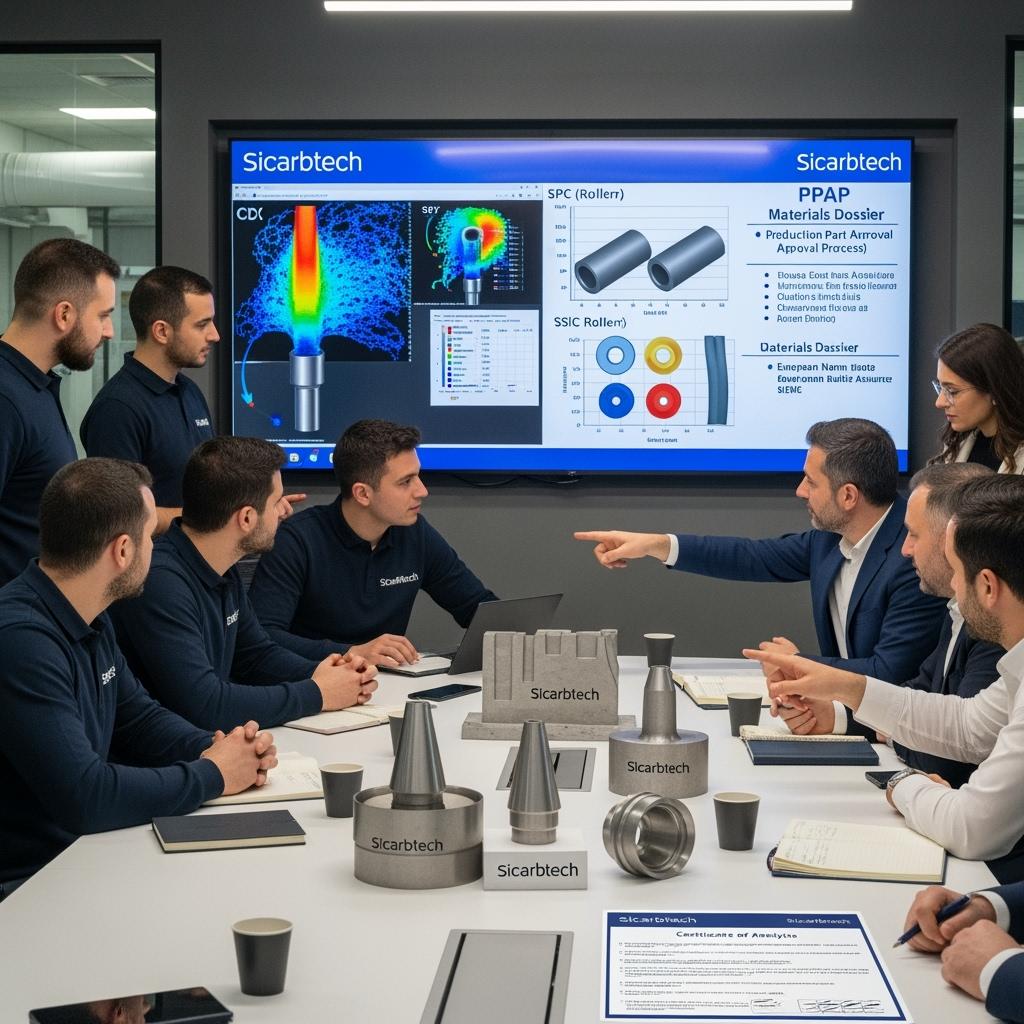
Our application engineering bridges material science and line realities. FEA maps combined thermal and mechanical stresses under real cycles; CFD optimizes burner and nozzle flows to the furnace geometry; and DFM avoids stress concentrators while easing installation. Each delivery includes material certificates, dimensional reports, and EN-referenced property data, aligned to Turkish audits and customer requirements.
Performance Comparison: Custom SiC vs Traditional Materials in Turkish Duty Cycles
Thermal and Mechanical Benchmarks Relevant to Textile, Automotive, and Steel Operations
| Property / Metric | SSiC (sintered) | SiSiC / RBSiC (reaction-bonded) | High-Alumina Ceramic | Heat-Resistant Steel (EN 1.4841) |
|---|---|---|---|---|
| Max service temperature in air (°C) | 1,600–1,700 | 1,350–1,450 | 1,400–1,600 | 1,000–1,100 |
| Thermal conductivity at 25°C (W/m·K) | 100–160 | 60–130 | 20–35 | 15–25 |
| Coefficient of thermal expansion (10⁻⁶/K) | 4.0–4.5 | 4.0–4.8 | 7–8 | 16–18 |
| Flexural strength at RT (MPa) | 350–450 | 250–360 | 150–300 | 200–300 |
| Oxidation/corrosion resistance | Uitstekend | Zeer goed | Goed | Eerlijk |
| Thermische schokbestendigheid | Uitstekend | Zeer goed | Matig | Matig |
| Typical textile roller life (months) | 18–36 | 12–24 | 6–12 | 3–9 |
| Typical burner nozzle life (months) | 12–24 | 9–18 | 6–12 | 3–6 |
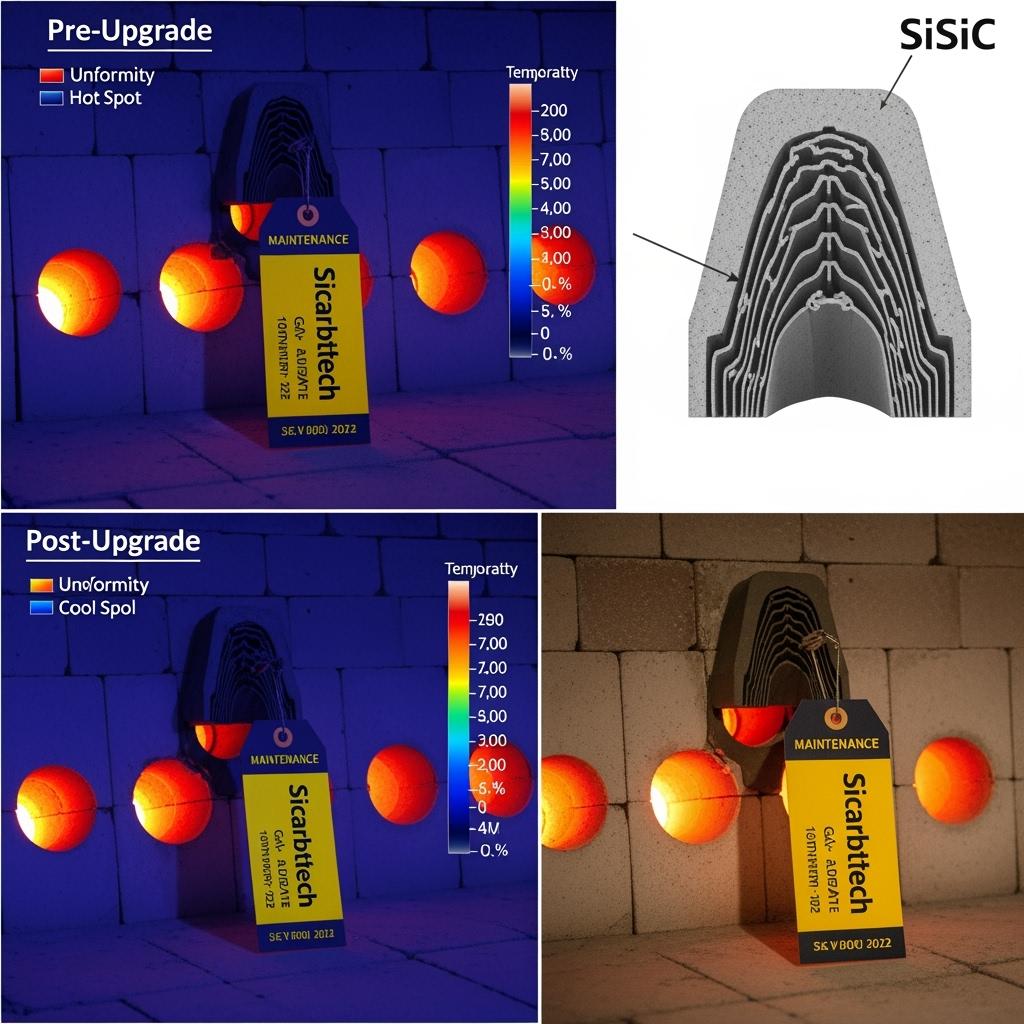
Lower CTE and higher conductivity allow SiC assemblies to run closer to design intent, reducing hot spots and mechanical drift. In Turkey’s energy-cost context, that stability converts into shorter ramps, steadier quality metrics, and fewer maintenance stops.
Real-World Applications and Success Stories from Turkish Plants
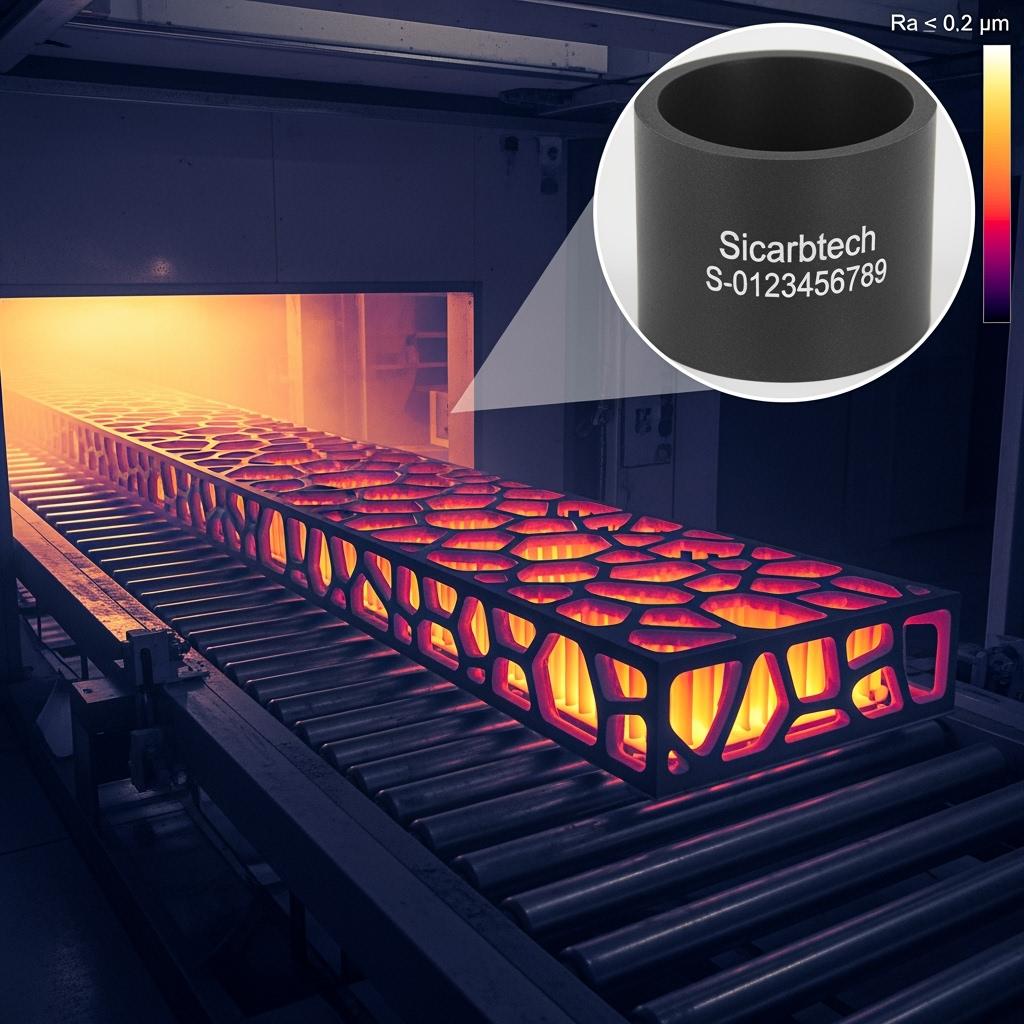
In Bursa, a Tier-1 automotive supplier replaced steel-heavy oven fixtures with R-SiC lattice designs reinforced by SSiC wear sleeves at high-contact points. Thermal mass dropped and heat distribution improved, trimming cycle time by 6–8% while narrowing coating thickness variation. Over two quarters, rework decreased by 21%. Documentation aligned with IATF 16949 simplified PPAP maintenance and auditor reviews.
A textile finisher in Denizli replaced alumina rollers with SSiC precision-ground rollers engineered for low runout and chemical resistance. The plant halved roller changeouts in six months, and roller-induced fabric defects fell by 28%. Faster stabilization after start-up produced energy savings, while serialized metrology data reduced corrective actions flagged during ISO 9001 audits.
A Marmara-region steel annealing line adopted SiSiC burner nozzles and RBSiC skid elements co-designed with CFD to match the furnace geometry. Flame patterns stabilized, nozzle replacement intervals shifted from monthly to quarterly, and energy per ton dropped by about 15–20% after tuning. Thermal shock incidents declined significantly across two campaigns.
Technical Advantages and Implementation Benefits with Turkish Compliance
SiC’s covalent bonding and dense microstructures produce a property set that aligns tightly with manufacturing needs: high thermal conductivity to flatten gradients, low CTE to preserve geometry under rapid cycling, and strong chemical inertness against corrosive chemistries. SSiC excels where precision, strength, and corrosion resistance dominate—mechanical seals, rollers, and pump internals. SiSiC and RBSiC enable complex shapes that hold up under shock and creep—burners, nozzles, and furnace elements. R-SiC delivers minimal thermal mass and robust shock tolerance—lattices, kiln furniture, and rapid-ramp fixtures.
Sicarbtech embeds these advantages within Turkey’s audit and compliance frameworks. We supply EN-referenced property data, support ISO 9001 and ISO 14001 documentation flows, and provide CE-related inputs where SiC parts integrate into machinery. For automotive-linked plants, we align evidence with IATF 16949 and PPAP expectations. As Dr. Ceren Akın, a quality and compliance auditor, notes, “Materials that come with a clean dossier—traceable tests, stable metrology, and clear process controls—shorten audits and reduce findings more than any price concession.” (Source: Quality Systems Briefing, 2024)
Maatwerkproductie en technologieoverdrachtdiensten
Sicarbtech’s competitive advantage is comprehensive: high-performance SiC supply today and the capability to localize production in Turkey when strategic value is clear.
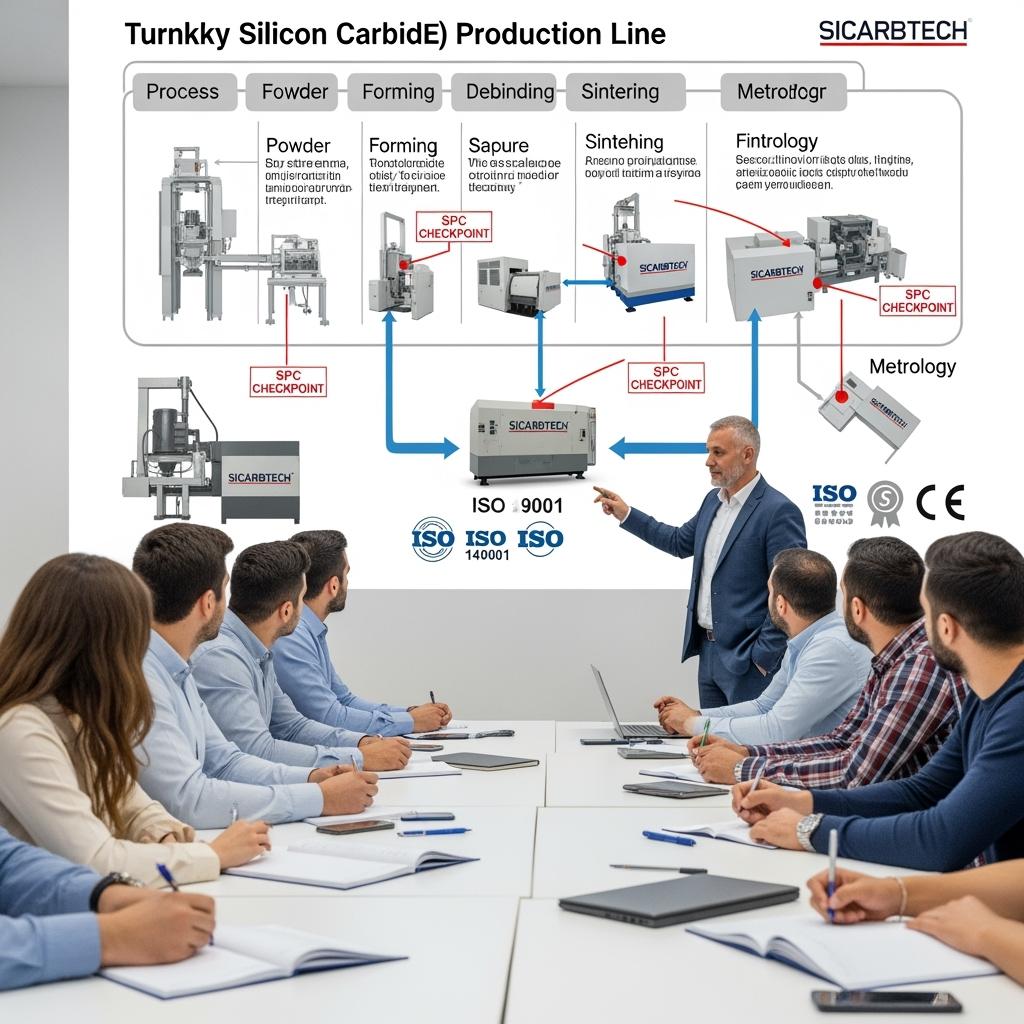
Our advanced R&D—reinforced by the Chinese Academy of Sciences (Weifang) Innovation Park—anchors proprietary process windows for R-SiC, SSiC, RBSiC, and SiSiC. We define powder chemistries and particle-size distributions, enforce contamination-safe dispersion and milling, and select forming routes—cold isostatic pressing, slip casting, extrusion, and additive green-body strategies—based on geometry, tolerances, and duty cycle. Debinding and sintering cycles are tuned to achieve target density, grain size, and residual silicon control. Precision finishing uses diamond grinding and lapping to deliver tight tolerances and surfaces resistant to micro-chipping and abrasion.
For Turkish partners pursuing localization, we deliver complete technology transfer packages. These include process know-how documents, equipment specifications (lined mixers, isostatic presses, clean kilns, handling fixtures), and metrology suites for thickness, flatness, roughness, and roundness. Structured training programs cover operators, process engineers, maintenance, and QA. Our factory establishment services begin with feasibility studies grounded in Turkish textile, automotive, and steel demand; proceed through layout, utilities and HSE planning per local regulations; vendor selection; installation supervision; pilot runs; MSA; and full commissioning.
Quality systems are embedded from day one. We align inspections with TS EN and ISO norms, implement SPC on critical parameters, and structure documentation that maps cleanly to customer audits. Where equipment interfaces with automotive supply chains, we support PPAP and IATF 16949-aligned records. Post-launch, our engineers remain engaged with cycle optimization, kiln profile refinement, yield improvement, downtime analysis, and preventive maintenance planning. This turnkey model—validated through collaborations with 19+ enterprises—compresses time-to-quality, de-risks capex, and builds resilient local supply for critical SiC parts.
Grade Selection and Application Fit for Turkish Operations
Sicarbtech SiC Grades Optimized for Textile, Automotive, and Steel Uses
| SiC-kwaliteit | Dichtheid (g/cm³) | Open Porosity (%) | Buigsterkte (MPa) | Thermische geleidbaarheid (W/m·K) | Typical Turkish Applications | Engineering Notes |
|---|---|---|---|---|---|---|
| SSiC (sintered) | 3.10–3.20 | <0.5 | 350–450 | 100–160 | Mechanical seals, precision textile rollers, pump and valve internals | Highest strength and corrosion resistance; tightest tolerances |
| SiSiC (Si-infiltrated) | 2.95–3.05 | 1–2 | 270–360 | 70–130 | Burner nozzles, furnace components, heat-exchanger plates | Strong shock resistance with good creep stability |
| RBSiC (reaction-bonded) | 2.95–3.05 | 1–3 | 250–350 | 60–120 | Complex nozzles, kiln furniture, structural supports | Excellent shape freedom; cost-effective durability |
| R-SiC (recrystallized) | 2.60–2.75 | 10–15 (closed) | 120–200 | 30–50 | Lattice fixtures, radiant tubes, lightweight kiln furniture | Lowest thermal mass; outstanding shock tolerance |
Total Cost and Energy Impact for Turkish Buyers
Lifecycle Economics and Energy KPIs with SiC Upgrades in 2025
| Factor | Conventional (Alumina/Steel) | Sicarbtech Custom SiC | Outcome in Turkey |
|---|---|---|---|
| Upfront price (TRY) | Lager | Hoger | Premium offset by longer life and energy savings |
| Replacement frequency | Frequent | 2–4× lower | Fewer imports; reduced FX exposure and rush logistics |
| Downtime per failure | Aanzienlijk | Far less frequent | Protects export schedules and delivery SLAs |
| Energy per unit output | Baseline–higher | Lower via uniform heat transfer and reduced mass | Savings amplified by rising tariffs |
| Audit workload | Zwaarder | Lighter (traceable data) | Faster ISO/IATF/CE reviews |
| Typical payback | N.v.t. | 6–18 months | Shortest in severe duty cycles |
Toekomstige marktkansen en trends voor 2025+
Turkey’s manufacturing strategy is converging on three priorities where custom SiC plays a central role. First, energy efficiency and decarbonization targets will reward materials that reduce kWh per unit and stabilize thermal profiles; SiC’s conductivity and low CTE are direct levers. Second, reliability expectations in export supply chains will elevate traceable, EN-referenced materials with PPAP-friendly documentation; Sicarbtech’s serial-level data shortens audits and accelerates approvals. Third, supply-chain resilience will push critical capabilities closer to the line; our technology transfer and local stocking models reduce exposure to FX and logistics shocks.
Moreover, hybrid component architectures—SSiC at wear and precision points combined with SiSiC or RBSiC bodies—are expanding, striking the right balance of cost and life. Digital twins for burners, rollers, and fixtures will become standard, enabling teams to tune flow and heat distribution before the first firing. As an EU ceramics and thermal systems brief framed it, “Procurement is moving from part price to system efficiency and evidence-backed reliability.” (Source: Public industry roadmap summaries, 2024). Sicarbtech’s engineering rigor and localization capability are aligned with this shift.
Veelgestelde vragen
What certifications and documentation does Sicarbtech provide for Turkish audits?
We provide EN-referenced material data, ISO 9001 and ISO 14001-aligned documentation, and CE-related inputs where SiC integrates into machinery. For automotive-linked programs, we support PPAP documentation aligned with IATF 16949 expectations.
How quickly can you deliver customized SiC parts to Turkey?
Typical lead times are 4–8 weeks for established geometries and 8–12 weeks for complex assemblies. We can set up vendor-managed inventory and local safety stock to protect maintenance windows.
Which SiC grade should we choose for high-speed textile rollers?
SSiC is typically preferred for its strength, corrosion resistance, and ability to maintain low runout over long spans. We validate with DFM, FEA, and serialized metrology to confirm performance.
How does SiC reduce energy consumption and cycle time in furnaces and ovens?
High thermal conductivity and geometry stability eliminate hot spots and allow faster ramps. R-SiC’s low mass further shortens cycles. Plants commonly report 10–20% energy reductions after tuning profiles.
What tolerances and finishes can Sicarbtech achieve on precision parts?
For SSiC seals and rollers, Ra ≤ 0.2 µm and tolerances down to ±0.01–0.02 mm on critical features are achievable, subject to geometry. We supply serialized inspection reports.
Can Sicarbtech localize SiC manufacturing in Turkey for strategic parts?
Yes. We deliver complete technology transfer—process know-how, equipment specs, training, pilot runs, and commissioning—plus quality systems aligned with TS EN/ISO and PPAP-ready documentation where relevant.
How do you ensure batch-to-batch consistency and traceability?
We control powder properties, forming parameters, and sintering cycles with SPC. Each batch or part is serialized, and certificates link process conditions to measured properties for rapid audits and root-cause analysis.
Will your SiC components integrate with our ERP/MES and maintenance systems?
Yes. We provide certificates and serial/batch data in standard digital formats, enabling automated receiving, maintenance tracking, and audit trails.
What local standards and regulations should we anticipate during qualification?
Expect TS EN and ISO frameworks, IATF 16949 for automotive supply chains, and CE considerations for equipment integrations. Environmental reporting aligns with national rules informed by EU guidance.
How do you compare with other SiC suppliers in Turkey?
Beyond materials, our edge is application engineering, documentation rigor, and the ability to localize capability through technology transfer—advantages demonstrated in successful programs with 19+ enterprises.
De juiste keuze maken voor uw activiteiten
The right question is not whether silicon carbide is stronger than alumina or steel—it is how a custom SiC component, engineered to your ramps, chemistries, and tolerances, stabilizes your system. That stability is what lowers energy per unit, reduces stoppages, and simplifies audits. Sicarbtech’s role is to translate your constraints—takt time, bath composition, furnace geometry, and compliance targets—into custom SiC solutions with measurable ROI and, when strategic, into localized capability that de-risks supply.
Deskundig advies en oplossingen op maat krijgen
Engage Sicarbtech’s engineers to review your duty cycle, failure modes, and quality targets. We will recommend the optimal grade and geometry, model ROI in TRY, define validation steps, and, if beneficial, outline a technology transfer and factory establishment plan tailored to Turkish conditions.
Contact Sicarbtech:
- Email: [email protected]
- Telefoon/WhatsApp: +86 133 6536 0038
Artikelmetadata
Last updated: 2025-09-26
Next scheduled update: 2025-12-16 (quarterly review aligned with Turkey energy tariff updates, EU compliance changes, and new Sicarbtech case studies)
Content freshness indicators: integrates 2025 Turkish market outlook; localized EN/ISO/CE references; recent textile, automotive, and steel case outcomes; updated technical benchmarks for R-SiC, SSiC, SiSiC, and RBSiC; expanded coverage of technology transfer and local factory establishment.

About the Author: Sicarb Tech
We provide clear and reliable insights into silicon carbide materials, component manufacturing, application technologies, and global market trends. Our content reflects industry expertise, practical experience, and a commitment to helping readers understand the evolving SiC landscape.

Customizable SiC
You May Also Interest
-
![]()
SiC-substraten: De sleutel tot elektronische apparaatvooruitgang
SiC-substraten: de sleutel tot vooruitgang in elektronische apparaten Introductie: De cruciale rol van SiC-substraten In het snel evoluerende landschap van high-performance industriële toepassingen speelt materiaalkunde een cruciale rol. Van geavanceerde materialen onderscheidt siliciumcarbide (SiC) zich, met name in de vorm van SiC-substraten. Deze substraten zijn niet alleen fundamentele lagen; ze zijn cruciale enablers...
-
![]()
SiC-innovatie via universitaire onderzoekslinks
SiC-innovatie via universitaire onderzoekslinks In het snel evoluerende landschap van geavanceerde materialen onderscheidt op maat gemaakt siliciumcarbide (SiC) zich als een echte game-changer. De ongeëvenaarde eigenschappen maken het onmisbaar in een spectrum van veeleisende industriële toepassingen, van de cutting edge van de productie van halfgeleiders tot de extreme omgevingen van de lucht- en ruimtevaart en kernenergie. Maar wat...
-
![]()
Next-Gen SiC-wafers voor uitmuntendheid in vermogenselektronica
Next-Gen SiC Wafers voor Power Electronics Excellence Introductie: De cruciale rol van SiC-wafers in moderne vermogenselektronica De onophoudelijke zoektocht naar hogere efficiëntie, grotere vermogensdichtheid en superieure prestaties in vermogenselektronicasystemen heeft siliciumcarbide (SiC) in de schijnwerpers gezet als een transformerend materiaal. SiC-wafers, de fundamentele substraten voor SiC-gebaseerde vermogensapparatuur, staan centraal in de...