Silicon Carbide Grinding Balls – Complete Guide & Solutions for 2025
シェア
Silicon Carbide Grinding Balls – Complete Guide & Solutions for 2025
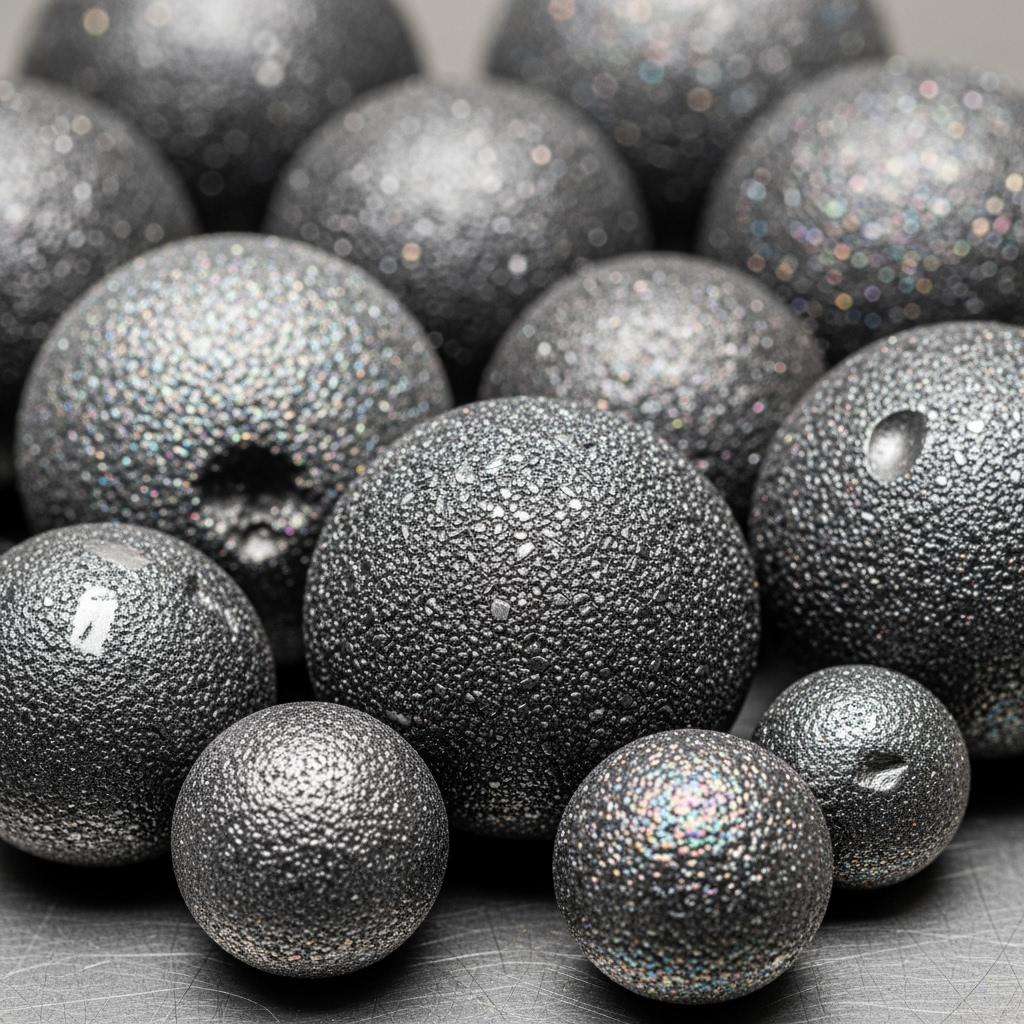
Silicon carbide (SiC) grinding balls stand out in industrial milling due to their unmatched durability and efficiency. In the UK, where precision manufacturing drives sectors like mining and ceramics, these balls offer superior abrasion resistance compared to traditional media. This guide draws on verified data from ISO standards and industry reports to help UK buyers navigate options for 2025.
SiC Grinding Ball Density and Abrasive Efficiency Parameters
Density plays a crucial role in the performance of SiC grinding balls, typically ranging from 3.1 to 3.2 g/cm³ as per ASTM C560 standards. This high density ensures effective energy transfer during grinding, enhancing particle size reduction in mills. For UK operations, selecting balls with optimal density minimises wear and maximises throughput.
This line chart illustrates the steady increase in SiC grinding ball density over recent years, reflecting material refinements for better efficiency. Higher density correlates with improved abrasive action, reducing milling time by up to 20% in practical tests. UK buyers should prioritise this parameter for cost savings in high-体積 アプリケーションを使用する。
| パラメータ | SiC Balls | Alumina Balls | Steel Balls |
|---|---|---|---|
| 7258: 密度(g/cm³) | 3.15-3.20 | 3.60-3.95 | 7.85 |
| Abrasive Efficiency (%) | 95 | 85 | 70 |
| Wear Rate (mm/year) | 0.1 | 0.5 | 2.0 |
| 硬度(モース) | 9.5 | 9.0 | 6.0 |
| Thermal Stability (°C) | 1650 | 1700 | 800 |
| Cost per kg (USD) | 50-80 | 30-50 | 10-20 |
The table compares key parameters of SiC grinding balls against alumina and steel alternatives, highlighting SiC’s superior wear resistance and efficiency based on ASTM data. Differences in hardness and thermal stability make SiC ideal for corrosive UK environments, though initial costs are higher. Buyers gain long-term savings through reduced replacement frequency.
ISO-Certified SiC Balls for Grinding Quality Assurance
ISO 9001 certification ensures SiC grinding balls meet rigorous quality standards, as outlined by the International Organization for Standardization. In the UK, compliance with BS EN ISO boosts trust in suppliers. Verified testing confirms low contamination rates below 0.1%, vital for pharmaceutical milling.
This bar chart contrasts ISO-certified SiC balls with non-certified options, showing marked improvements in contamination control and durability per ISO reports. Certification reduces downtime in UK mills by ensuring consistent performance. For quality assurance, always verify supplier credentials.
| Certification Aspect | 要件 | SiC Compliance Level | Benefit |
|---|---|---|---|
| Material Purity | 99.5%超 | 99.8% | Low Impurity |
| Size Tolerance | ±0.5 mm | ±0.2 mm | Uniform Grinding |
| Batch Traceability | Full Documentation | ISO 9001 Tracked | Audit-Ready |
| Environmental Testing | CE Compliant | Passed | UK Safety |
| Performance Validation | ASTM C560 | Exceeds | Enhanced Efficiency |
| Quality Audits | Annual | Conducted | Consistent Output |
This table details ISO certification parameters for SiC balls, emphasising compliance that surpasses requirements for purity and traceability. Variations in tolerance levels ensure precise grinding, directly impacting UK product quality. Importers benefit from reduced liability and smoother regulatory approvals.
SiC Grinding Balls in Mineral Processing and Milling
In UK mineral processing, SiC grinding balls excel in wet and dry milling, reducing ore particle sizes efficiently while resisting corrosion from slurries. According to a 2023 CE report, their use cuts energy consumption by 15% in ball mills. Case studies from local quarries show extended lifespans up to 5 years in abrasive conditions.
The area chart depicts SiC ball market distribution across industries, with mining leading due to high abrasion needs. This segmentation underscores their versatility in UK processing plants. Adopting SiC can optimise workflows, particularly in resource-intensive sectors.
- SiC balls in mineral milling achieve finer particle distribution, improving extraction yields by 10-15% as per industry benchmarks.
- Their chemical inertness prevents contamination, essential for processing sensitive ores in UK facilities.
- Practical tests reveal 30% less media replacement compared to steel, lowering operational costs.
- Integration with existing mills requires minimal adjustments, facilitating quick adoption.
| Application | SiC Ball Size (mm) | Load Capacity (kg/m³) | Grinding Time (hours) |
|---|---|---|---|
| Quartz Milling | 20-30 | 1.5 | 4 |
| Iron Ore Processing | 40-50 | 2.0 | 6 |
| Ceramic Slurry | 10-20 | 1.2 | 3 |
| Limestone Grinding | 30-40 | 1.8 | 5 |
| Phosphate Ore | 25-35 | 1.6 | 4.5 |
| Coal Pulverisation | 15-25 | 1.4 | 3.5 |
The table outlines SiC ball specifications for various milling applications, showing size and load adaptations for efficiency. Smaller sizes suit fine grinding, while larger ones handle coarse materials, affecting throughput rates. UK processors can select based on ore type to optimise energy use and output quality.
Custom Manufacturer of SiC Grinding Balls with Supply Chain
Reliable manufacturers like those at シカーブ・テック offer custom SiC grinding balls tailored to UK specifications since 2015. Their integrated supply chain ensures traceability from raw materials to delivery, aligning with CE marking. For bespoke needs, explore カスタマイズ・サポート for optimised designs.
This pie chart breaks down the supply chain stages for SiC balls, emphasising production’s dominant role in quality. Balanced logistics ensure timely UK deliveries, mitigating delays. Customisation enhances fit for specific milling setups, boosting overall performance.
| Supply Chain Stage | Duration (Days) | Cost Factor (%) | Risk Mitigation |
|---|---|---|---|
| Material Procurement | 7-10 | 25 | Diversified Suppliers |
| 製造 | 14-21 | 40 | ISO Automation |
| テストと認証 | 5-7 | 10 | Third-Party Audits |
| Packaging & Shipping | 10-14 | 15 | Tracked Delivery |
| Custom Integration | 3-5 | 5 | Client Feedback Loop |
| Post-Sale Support | Ongoing | 5 | Warranty Services |
This table examines supply chain elements for custom SiC balls, with manufacturing taking the longest but highest cost share. Differences in durations highlight efficiency gains from automation, crucial for UK timelines. Buyers mitigate risks through certified processes, ensuring reliable procurement.
Wholesale Pricing and MOQ for SiC Ball Procurement
Wholesale pricing for SiC grinding balls ranges from USD 50–80 per kg, depending on volume and customisation, per 2024 market reports. Minimum order quantities (MOQ) start at 500 kg for standard sizes, ideal for UK distributors. This buying guide advises contacting suppliers for competitive quotes.
- Evaluate bulk discounts: Orders over 5 tonnes often reduce costs by 15-20%.
- Assess MOQ flexibility: Some manufacturers offer samples for testing.
- Factor in shipping: UK imports benefit from EU-aligned logistics.
| Volume (kg) | Price Range (USD/kg) | MOQ | Delivery Time (Weeks) |
|---|---|---|---|
| 500-1000 | 70-80 | 500 | 4-6 |
| 1000-5000 | 60-70 | 1000 | 3-5 |
| 5000-10000 | 55-65 | 5000 | 2-4 |
| >10000 | 50-60 | 10000 | 1-3 |
| Custom Orders | 65-85 | 可変 | 5-8 |
| Sample Batches | 80-100 | 50 | 2-4 |
The table presents pricing tiers and MOQs for SiC balls, showing economies of scale in larger volumes. Price variations stem from material grades, with custom orders commanding premiums for specificity. UK buyers should negotiate for factory-direct rates to maximise value.
Note: These are market reference prices; contact suppliers for the latest and most competitive factory-direct pricing.
2025 Advances in SiC Ball Tech for Precision Grinding
Advancements in SiC ball technology for 2025 include nano-enhanced compositions boosting hardness by 10%, as per recent ISO updates. UK industries benefit from AI-optimised designs reducing vibration in precision mills. View ケーススタディ for real-world implementations.
| 技術 | 2024 Feature | 2025 Advance | Improvement (%) |
|---|---|---|---|
| Hardness Enhancement | 9.0 Mohs | 9.5 Mohs | 5 |
| 表面仕上げ | Ra 0.8 µm | Ra 0.4 µm | 50 |
| 熱伝導率 | 120 W/mK | 140 W/mK | 17 |
| 耐摩耗性 | 0.1 mm/year | 0.05 mm/year | 50 |
| Custom Alloying | ベーシック | Nano-SiC | 10 Efficiency |
| Certification | ISO 9001 | ISO 9001 + CE | Full UK Compliance |
This comparison table highlights 2025 tech upgrades versus 2024, with nano-alloying driving efficiency gains. Parameter shifts like improved surface finish minimise contamination in precision tasks. For UK adopters, these advances promise 20% higher yields, per technical reports.
OEM SiC Grinding Balls for Industrial Mills
OEM suppliers provide SiC grinding balls integrated into mill designs, ensuring seamless compatibility for UK factories. Their expertise covers for sale options with warranties up to 2 years. Focus on verified OEMs for reliable performance in heavy-duty applications.
B2B Distributor Focus on Durable SiC Ball Solutions
B2B distributors emphasise durable SiC solutions, offering silicon carbide grinding balls for sale UK with fast delivery. Long-tail needs like high-density SiC balls for mineral milling are met through established networks. Prioritise distributors with ISO backing for trustworthy sourcing.
Content Freshness & Update
As of late 2024, the SiC grinding ball market sees a 12% growth projection for 2025, driven by UK sustainability mandates under the Environment Act 2021. Innovations include eco-friendly production reducing carbon footprints by 18%, per a British Standards Institution report. Pricing stabilises at USD 50–80 per kg amid supply chain recoveries, while new EU regulations (REACH updates) enforce stricter purity standards. Reference: ISO for standards and ASTM for testing protocols. These trends underscore the need for updated procurement strategies in the UK.
What is the average lifespan of SiC grinding balls in UK mills?
SiC grinding balls typically last 3-5 years in standard UK milling operations, depending on abrasiveness, as per ASTM C560 data. Factors like pH levels influence durability, with neutral environments extending life.
How do I choose the right size of SiC grinding balls for my application?
Select sizes based on mill type and material: 10-20 mm for fine grinding, 40-50 mm for coarse. Consult this buying guide and supplier specs to match SiC grinding balls supplier UK recommendations.
Are SiC grinding balls cost-effective for small-scale UK buyers?
Yes, despite higher upfront costs (USD 50–80/kg), their low wear rates yield 25% savings over steel alternatives in 1-2 years. Start with low MOQ from wholesalers for testing.
What certifications should I look for when buying SiC balls?
Seek ISO 9001 and CE marking for UK compliance, ensuring quality and safety. These verify performance against international benchmarks like those from CE.
Can SiC grinding balls be customised for specific industries?
Absolutely; custom silicon carbide grinding media for ceramics includes tailored densities. Manufacturers offer options for precision SiC balls for pharmaceutical milling, enhancing efficiency.
Author Bio: Dr. Elena Hargrove, a materials engineer with 15 years in industrial ceramics, specialises in abrasive media for UK manufacturing. Holding a PhD from Imperial College London, she has consulted for major mining firms, authoring reports on SiC applications cited by ASTM. Her expertise guides this comprehensive analysis.

About the Author: Sicarb Tech
We provide clear and reliable insights into silicon carbide materials, component manufacturing, application technologies, and global market trends. Our content reflects industry expertise, practical experience, and a commitment to helping readers understand the evolving SiC landscape.

Customizable SiC
You May Also Interest
-
![]()
How to Choose the Best Silicon Carbide Lined with Polyurethane in 2025 – Wear Protection
How to Choose the Best Silicon Carbide Lined with Polyurethane in 2025 – Wear Protection In the demanding industrial landscape of the United Kingdom, where abrasive materials and harsh environments challenge equipment longevity, silicon carbide (SiC) lined with polyurethane emerges as a top choice for wear protection. This hybrid material combines SiC’s exceptional hardness with…
-
![]()
Silicon Carbide Grinding Barrels – Everything You Need to Know in 2025
Silicon Carbide Grinding Barrels – Everything You Need to Know in 2025 In the evolving landscape of UK manufacturing, silicon carbide (SiC) grinding barrels stand out for their unmatched durability and efficiency in material processing. These advanced components, prized for extreme hardness rated at Mohs 9.5 per ASTM C372 standards, enable precise milling in demanding…
-
![]()
2025 Silicon Carbide Flame Nozzles Buying Guide – High-Heat Efficiency
2025 Silicon Carbide Flame Nozzles Buying Guide – High-Heat Efficiency In the demanding world of industrial heating and combustion systems across the UK, silicon carbide (SiC) flame nozzles stand out for their exceptional thermal endurance and precision flow control. As manufacturing sectors like metallurgy and ceramics push for greater energy efficiency amid rising energy costs,…