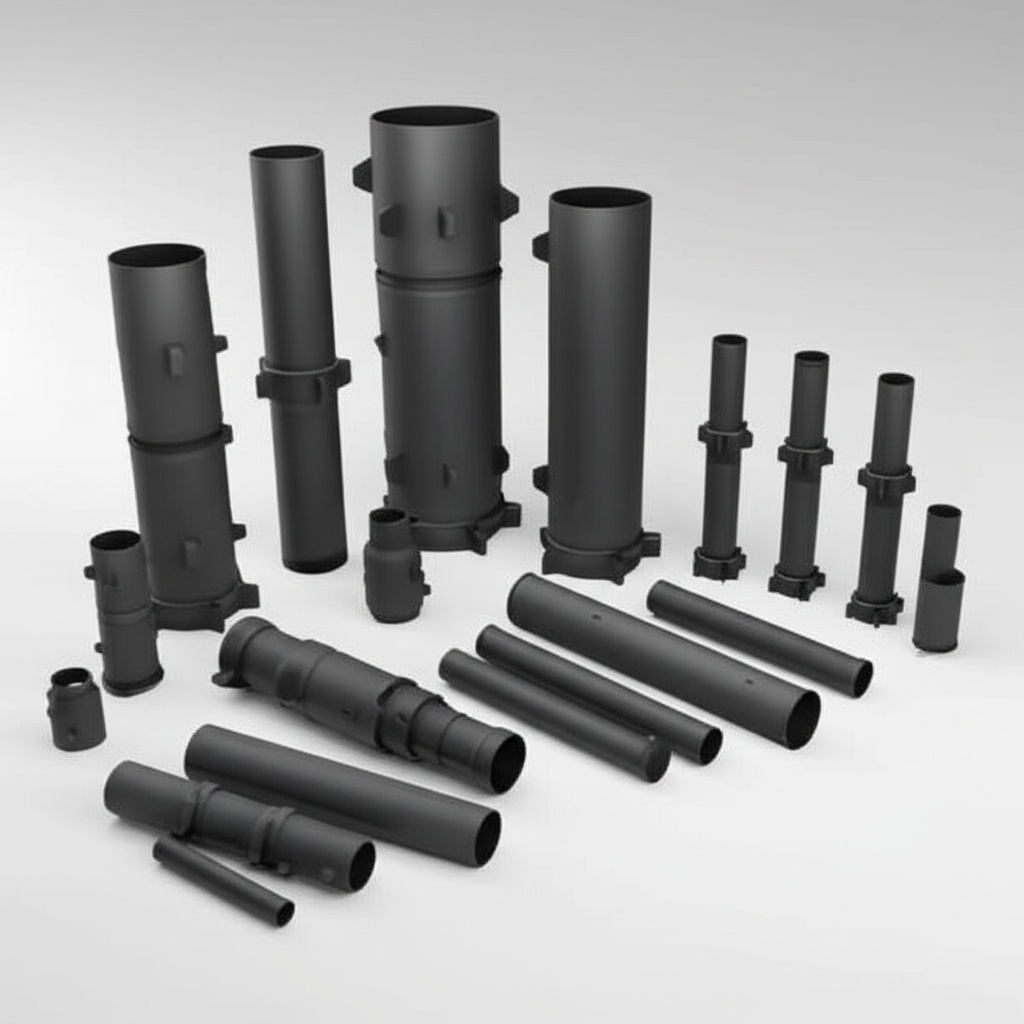
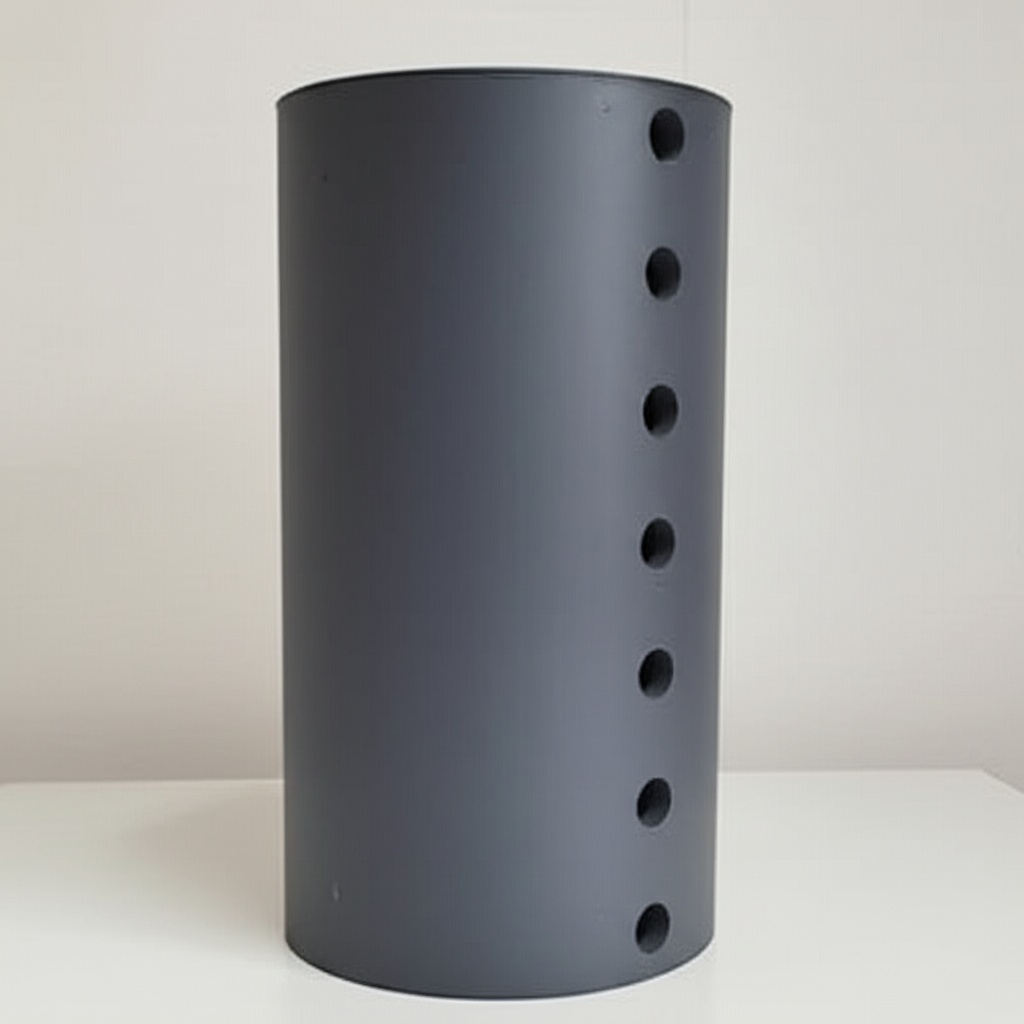
Top Silicon Carbide Products for Your Needs
Share
Top Silicon Carbide Products for Your Needs
Introduction – What are custom silicon carbide products and why are they essential in high-performance industrial applications?
Custom silicon carbide (SiC) products are advanced ceramic components engineered from silicon and carbon, tailored to meet specific and demanding operational requirements. Unlike standard, off-the-shelf parts, custom SiC products are designed and manufactured to precise geometries, compositions, and performance characteristics, making them indispensable in a multitude of high-performance industrial applications. Their unique combination of properties, including exceptional hardness, high thermal conductivity, excellent thermal shock resistance, chemical inertness, and superior wear resistance, positions them as critical materials in environments where traditional materials falter.
Industries ranging from semiconductor manufacturing and aerospace to chemical processing and renewable energy rely on custom SiC components for their ability to withstand extreme temperatures, corrosive media, and high mechanical stress. As operational demands intensify and the quest for efficiency and longevity in industrial processes continues, the need for materials like silicon carbide, particularly in custom-designed forms, becomes increasingly vital. These products are not just components; they are enabling technologies that push the boundaries of what’s possible in modern engineering and manufacturing.
Main Applications – Explore how SiC is used across industries such as semiconductors, aerospace, high-temperature furnaces, and more.
The versatility of silicon carbide allows its application across a wide spectrum of industries, each leveraging its unique properties for critical functions. Here’s a look at some key sectors and their reliance on SiC components:
- Semiconductor Manufacturing: SiC is crucial for wafer handling equipment (chucks, rings, arms), CMP rings, process chamber components, and heating elements due to its high purity, thermal stability, stiffness, and resistance to plasma erosion.
- Automotive: Used in high-performance brake discs, components for electric vehicle (EV) power electronics (inverters, converters), and wear-resistant parts in engines and drivetrains. SiC power devices offer higher efficiency and power density.
- Aerospace: Employed in rocket nozzles, turbine components, mirrors for optical systems, and lightweight structural components due to its high strength-to-weight ratio, thermal shock resistance, and stability at extreme temperatures.
- Power Electronics: SiC diodes and MOSFETs are enabling smaller, faster, and more efficient power conversion systems, crucial for data centers, industrial drives, and EV chargers.
- Renewable Energy: In solar energy systems, SiC inverters improve efficiency. In wind turbines, SiC components can be found in power conditioning systems.
- Metallurgy and High-Temperature Furnaces: Used for kiln furniture (beams, rollers, plates, setters), thermocouple protection tubes, crucibles, and burner nozzles due to its exceptional high-temperature strength, thermal conductivity, and resistance to oxidation and chemical attack.
- Defense: Applications include armor (personnel and vehicle), components for missile guidance systems, and high-performance optics.
- Chemical Processing: Utilized for pump seals, valve components, heat exchangers, and reactor linings where resistance to corrosive chemicals, high temperatures, and wear is paramount.
- LED Manufacturing: SiC substrates are used for growing GaN layers for high-brightness LEDs, offering good lattice matching and thermal conductivity.
- Industrial Machinery: Bearings, mechanical seals, nozzles for abrasive media, and wear liners benefit from SiC’s hardness and wear resistance.
- Telecommunications: Components in high-frequency power amplifiers and filters, benefiting from SiC’s thermal management capabilities.
- Oil and Gas: Downhole tools, valve components, and wear parts exposed to abrasive and corrosive environments.
- Medical Devices: Biocompatible SiC coatings for implants, precision components for diagnostic equipment, and laser mirrors.
- Rail Transportation: Power electronics for traction systems, improving efficiency and reducing system size.
- Nuclear Energy: Considered for fuel cladding and structural components in next-generation reactors due to its radiation tolerance and high-temperature stability.
Why Choose Custom Silicon Carbide? – Discuss the benefits of customization, including thermal resistance, wear resistance, and chemical inertness.
Opting for custom silicon carbide products offers significant advantages over standard materials or off-the-shelf ceramic components, particularly when applications demand peak performance and reliability under extreme conditions. The primary benefit of customization lies in the ability to tailor the material properties and component geometry to the exact needs of a specific application.
Key benefits of custom SiC include:
- Optimized Thermal Performance: Customization allows for the selection of SiC grades and designs that maximize thermal conductivity (for heat dissipation) or thermal insulation where needed. Parts can be designed to withstand specific thermal cycling conditions and extreme temperatures (often exceeding 1400°C, with some grades performing up to 1800°C or higher). This tailored thermal resistance ensures operational stability and longevity.
- Superior Wear Resistance: Silicon carbide is one of the hardest commercially available materials, second only to diamond. Custom SiC components can be designed with geometries and surface finishes that maximize resistance to abrasive wear, erosion, and sliding wear. This is crucial for applications like nozzles, seals, bearings, and grinding media, significantly extending service life and reducing downtime.
- Exceptional Chemical Inertness: SiC exhibits outstanding resistance to a wide range of acids, alkalis, and molten salts, even at elevated temperatures. Customization allows for the selection of high-purity SiC grades (like sintered SiC) that minimize a_0 contamination and ensure integrity in corrosive chemical environments, vital for chemical processing, semiconductor manufacturing, and metallurgical applications.
- High Strength and Stiffness: SiC maintains its high mechanical strength and stiffness (Young’s Modulus) at elevated temperatures, unlike most metals. Custom designs can optimize structural integrity, ensuring components do not deform or fail under high mechanical loads or vibrations.
- Dimensional Stability: Custom SiC parts offer excellent dimensional stability over a wide temperature range due to their low coefficient of thermal expansion. This is critical for precision applications where tight tolerances must be maintained during operation.
- Tailored Electrical Properties: While generally a semiconductor, the electrical conductivity of SiC can be controlled through doping and processing. Custom SiC components can be designed as insulators, conductors (e.g., for heating elements), or semiconductors for electronic devices.
- Complex Geometries: Advanced manufacturing techniques allow for the production of complex custom SiC shapes that would be difficult or impossible to achieve with other materials or methods. This enables optimized designs for flow, heat transfer, or structural integration.
- Application-Specific Solutions: Customization means the component is engineered for a single purpose, ensuring it perfectly fits the operational envelope and interfaces seamlessly with other parts of the system. This can lead to improved overall system efficiency and reliability.
By choosing custom silicon carbide, engineers and procurement managers can move beyond the limitations of standard parts, achieving enhanced performance, extended service life, and often, reduced total cost of ownership for their critical systems.
Recommended SiC Grades and Compositions – Introduce common types like reaction-bonded, sintered, and nitride-bonded SiC, and their respective properties.
Silicon carbide is not a single material but a family of ceramics, each with distinct properties derived from its manufacturing process and microstructure. Choosing the right grade is critical for optimizing performance in a specific application. Here are some common types of SiC:
| SiC Grade | Abbreviation | Key Characteristics | Typical Properties | Common Applications |
|---|---|---|---|---|
| Reaction-Bonded Silicon Carbide | RBSiC (or SiSiC) | Contains free silicon (typically 8-15%), good thermal conductivity, excellent wear and corrosion resistance, relatively easy to form complex shapes, cost-effective for larger components. | Density: ~3.02-3.10 g/cm³ Porosity: Very low (<1%) Flexural Strength: 250-450 MPa Max. Use Temperature: ~1350-1380°C (due to silicon melting point) Thermal Conductivity: 80-150 W/mK |
Kiln furniture, wear liners, nozzles, pump components, mechanical seals, heat exchangers. |
| Sintered Silicon Carbide | SSiC | High purity (typically >98% SiC), no free silicon, excellent high-temperature strength, superior corrosion and oxidation resistance, good thermal shock resistance. Can be sub-divided into fine-grain (alpha-SSiC) and coarse-grain (beta-SSiC). | Density: ~3.10-3.15 g/cm³ Porosity: Very low (<1%) Flexural Strength: 400-550 MPa Max. Use Temperature: ~1600-1800°C Thermal Conductivity: 80-120 W/mK |
Semiconductor process components, chemical pump parts, bearings, high-temperature furnace parts, ballistic armor, mechanical seals in highly corrosive environments. |
| Nitride-Bonded Silicon Carbide | NBSiC | SiC grains bonded by a silicon nitride (Si₃N₄) phase. Good thermal shock resistance, moderate strength, good oxidation resistance, good value for certain applications. | Density: ~2.6-2.7 g/cm³ Porosity: ~10-15% (can be sealed) Flexural Strength: 80-150 MPa Max. Use Temperature: ~1400-1500°C Thermal Conductivity: 15-25 W/mK |
Kiln furniture (especially for larger spans), thermocouple sheaths, furnace linings, non-ferrous metal contact applications. |
| Recrystallized Silicon Carbide | RSiC | High purity SiC grains bonded to each other at very high temperatures. Excellent thermal shock resistance, high thermal conductivity, good strength at very high temperatures, typically porous unless coated/sealed. | Density: ~2.5-2.7 g/cm³ Porosity: ~12-20% Flexural Strength: 50-100 MPa (increases at high temp) Max. Use Temperature: ~1650°C (higher in non-oxidizing atm.) Thermal Conductivity: 20-40 W/mK |
Kiln furniture (beams, plates), radiant tubes, burner nozzles, high-temperature setters. |
| Chemically Vapor Deposited Silicon Carbide | CVD SiC | Extremely high purity (>99.999%), theoretically dense, exceptionally smooth surfaces possible, excellent chemical and erosion resistance. Typically produced as coatings or thin, free-standing parts. | Density: ~3.21 g/cm³ Porosity: Nil Flexural Strength: 400-600 MPa Max. Use Temperature: ~1800°C (can be higher) Thermal Conductivity: 150-300 W/mK |
Semiconductor components (susceptors, domes, rings), optical mirrors, high-purity chemical processing equipment, protective coatings. |
| Silicon Carbide Whiskers/Fibers Reinforced Composites | SiC_w/SiC, SiC_f/SiC | Enhanced fracture toughness compared to monolithic SiC. SiC whiskers or fibers embedded in a SiC matrix. | Properties vary widely based on reinforcement and matrix. Generally improved toughness and damage tolerance. | Aerospace components, high-performance cutting tools, advanced heat engine parts. (More specialized and higher cost) |
The choice of SiC grade depends heavily on the specific operating conditions, including temperature, chemical environment, mechanical loads, and cost considerations. Consulting with an experienced SiC product supplier is crucial for selecting the optimal grade and design for your application.
Design Considerations for SiC Products – Offer insights on designing for manufacturability, geometry limits, wall thickness, and stress points.
Designing components with silicon carbide requires a different approach than with metals or plastics due to its inherent hardness and brittleness. Careful consideration of design for manufacturability (DfM) is essential to achieve functional, reliable, and cost-effective SiC parts. Early collaboration with your SiC supplier, such as Sicarb Tech, can provide invaluable insights into optimizing designs for SiC production.
Key design considerations include:
- Simplicity in Geometry: While complex shapes are possible, simpler geometries generally lead to lower manufacturing costs and reduced risk of defects. Avoid unnecessarily intricate features.
- Minimize sharp internal corners and edges; use generous radii (e.g., R ≥ 1-2mm where possible) to reduce stress concentrations.
- Opt for uniform wall thicknesses to prevent warping or cracking during sintering and firing. Abrupt changes in thickness can create stress points.
- Wall Thickness:
- Minimum Wall Thickness: This depends on the SiC grade, overall part size, and manufacturing process. For pressed and sintered parts, it might be a few millimeters. For slip-cast or extruded parts, thinner walls might be achievable but require careful handling.
- Maximum Wall Thickness: Very thick sections can be challenging to sinter uniformly and may lead to internal stresses or defects. Discuss limits with your supplier.
- Tolerances: SiC is hard and thus expensive to machine post-sintering.
- Design for “as-fired” tolerances where possible. Typical as-fired tolerances might be ±1% to ±2% of the dimension.
- Specify tighter tolerances only where absolutely necessary, as this will involve diamond grinding, increasing cost and lead time.
- Holes and Apertures:
- Aspect ratios (depth-to-diameter) for holes should be kept reasonable. Deep, small-diameter holes are difficult to form and inspect.
- Spacing between holes and from holes to edges should be sufficient to maintain structural integrity (e.g., at least 2-3 times the hole diameter).
- Managing Brittleness:
- Design to put SiC components under compressive loads rather than tensile or bending loads whenever possible. SiC is much stronger in compression.
- Avoid impact loads or incorporate design features to mitigate them if impacts are unavoidable.
- Consider stress analysis (e.g., FEA) for complex parts or high-stress applications to identify and mitigate high-stress regions.
- Joining and Assembly:
- If SiC needs to be joined to other materials (especially metals with different thermal expansion coefficients), the joint design is critical. Brazing, shrink-fitting, or mechanical clamping are common methods.
- Design features like flanges, steps, or grooves can facilitate assembly.
- Surface Features:
- Threads in SiC are possible but are typically coarse and expensive to produce. Consider metal inserts or alternative fastening methods.
- Flatness and parallelism requirements should be clearly defined if critical, as achieving high precision adds cost.
- Manufacturing Process Influence: The intended manufacturing process (e.g., dry pressing, isopressing, slip casting, extrusion, reaction bonding, sintering) will influence design possibilities. For example, extrusion is suitable for long, uniform cross-sections, while slip casting can produce more complex hollow shapes. Discussing your application with a knowledgeable supplier will help align the design with the most appropriate and cost-effective manufacturing route.
Engaging with experts who understand the nuances of SiC materials and manufacturing, like the team at Sicarb Tech known for their comprehensive customizing support, early in the design phase can significantly improve the outcome of your custom SiC project.
Tolerance, Surface Finish & Dimensional Accuracy – Explain achievable tolerances, surface finish options, and precision capabilities.
The achievable tolerances, surface finish, and dimensional accuracy of silicon carbide components are critical factors in their performance, especially in precision applications. These aspects are highly dependent on the SiC grade, the manufacturing process (forming and sintering), and the extent of post-sintering machining.
Dimensional Tolerances:
- As-Fired Tolerances: Components produced without post-sintering machining typically have dimensional tolerances in the range of ±0.5% to ±2% of the dimension. This variation arises from shrinkage during drying and sintering, which can be influenced by part geometry, batch consistency, and firing conditions. For many applications, especially larger structural parts or kiln furniture, as-fired tolerances are acceptable and more cost-effective.
- Ground Tolerances: For applications requiring higher precision, SiC components must be machined after sintering using diamond grinding tools.
- Standard ground tolerances can typically achieve ±0.025 mm to ±0.05 mm (±0.001″ to ±0.002″).
- Precision grinding can achieve tighter tolerances, potentially down to ±0.005 mm to ±0.01 mm (±0.0002″ to ±0.0004″) for critical dimensions on smaller parts.
- Achieving very tight tolerances significantly increases machining time and cost.
- Lapped/Polished Tolerances: For ultra-precision applications, such as semiconductor wafer chucks or optical components, lapping and polishing can achieve even tighter dimensional and geometric tolerances (e.g., flatness, parallelism) often in the micrometer or sub-micrometer range.
Surface Finish:
The surface finish (roughness) of SiC parts is also a key parameter:
- As-Fired Surface: The surface roughness (Ra) of as-fired SiC can range from approximately 1 µm to 10 µm (40 µin to 400 µin), depending on the SiC grade, forming method, and grain size. Reaction-bonded SiC often has a smoother as-formed surface than sintered SiC.
- Ground Surface: Diamond grinding can significantly improve surface finish.
- Typical ground finishes range from Ra 0.4 µm to 0.8 µm (16 µin to 32 µin).
- Fine grinding can achieve Ra 0.2 µm to 0.4 µm (8 µin to 16 µin).
- Lapped/Polished Surface: Lapping and polishing processes are used to achieve very smooth, often mirror-like surfaces.
- Lapped surfaces can reach Ra 0.05 µm to 0.2 µm (2 µin to 8 µin).
- Polished surfaces can achieve Ra < 0.025 µm (< 1 µin), essential for optical applications or where minimal friction and wear are required. CVD SiC can inherently achieve very smooth surfaces.
It’s important to specify only the level of precision and surface finish that is functionally required, as each incremental improvement in these areas adds to the manufacturing cost. For instance, a seal face might require a lapped finish, while a structural beam for a furnace may be perfectly adequate with an as-fired finish.
Dimensional Accuracy & Geometric Tolerances:
Beyond linear dimensions and surface roughness, geometric tolerances such as flatness, parallelism, perpendicularity, roundness, and cylindricity are often critical.
- As-fired parts will have wider geometric tolerances.
- Grinding and lapping operations are necessary to achieve tight geometric controls. For example, flatness specifications for large SiC chuck tables in semiconductor processing can be in the range of a few micrometers over several hundred millimeters.
Suppliers with advanced machining and metrology capabilities are essential for producing SiC components that meet stringent dimensional and surface finish requirements. Clear communication of these requirements on engineering drawings, using standardized GD&T (Geometric Dimensioning and Tolerancing), is crucial.
Post-Processing Needs – Discuss common steps such as grinding, lapping, sealing, or coating to enhance performance and durability.
Many silicon carbide components require post-processing steps after the initial forming and sintering stages to meet specific application requirements for dimensional accuracy, surface characteristics, or enhanced properties. These operations add value but also contribute to the final cost and lead time.
Common post-processing needs include:
- Grinding: This is the most common machining process for hard ceramics like SiC.
- Purpose: To achieve tight dimensional tolerances, specific geometric features (flats, slots, chamfers), and improved surface finish compared to as-fired parts.
- Method: Utilizes diamond grinding wheels due to SiC’s extreme hardness. Various grinding techniques include surface grinding, cylindrical grinding, and centerless grinding.
- Considerations: Grinding is a slow and costly process. Design should minimize the amount of material to be removed.
- Lapping and Polishing:
- Purpose: To achieve ultra-smooth surfaces (low Ra), high flatness, and parallelism, often required for seal faces, bearings, optical components, and semiconductor equipment.
- Method: Lapping uses abrasive slurries (often diamond) between the SiC part and a flat lap plate. Polishing uses finer abrasives and specialized pads to achieve mirror-like finishes.
- Considerations: These are precision, time-consuming processes reserved for applications demanding the highest surface quality.
- Sealing: Some grades of SiC, like Nitride-Bonded SiC (NBSiC) or Recrystallized SiC (RSiC), have inherent porosity.
- Purpose: To reduce or eliminate porosity, improving resistance to chemical attack, preventing gas or liquid permeation, and sometimes increasing strength.
- Method: Porous SiC can be impregnated with glass, resin, or other ceramic materials. Surface glazes can also be applied.
- Considerations: The sealant must be compatible with the operating environment (temperature, chemicals). Sealing may affect the maximum use temperature or other properties.
- Coating:
- Purpose: To impart specific surface properties not inherent to the bulk SiC material, such as enhanced corrosion resistance to specific chemicals, improved wear resistance, tailored electrical properties, or biocompatibility.
- Method: Various coating techniques can be used, including Chemical Vapor Deposition (CVD) for high-purity SiC or other ceramic coatings (e.g., AlN, TiN), Physical Vapor Deposition (PVD), and plasma spray. For instance, a CVD SiC coating can be applied to graphite to protect it in semiconductor process chambers.
- Considerations: Coating adhesion, thermal expansion mismatch between coating and substrate, and coating integrity under operational stress are critical.
- Cleaning:
- Purpose: To remove contaminants from manufacturing, machining, or handling, especially critical for high-purity applications like semiconductor and medical devices.
- Method: May involve ultrasonic cleaning, specialized chemical baths, and deionized water rinses, often performed in a cleanroom environment.
- Edge Chamfering/Radiusing:
- Purpose: To remove sharp edges which can be stress concentrators and prone to chipping in brittle materials like SiC. Improves handling safety and durability.
- Method: Can be done during grinding or as a separate light machining step.
- Laser Machining:
- Purpose: For creating small, precise features like micro-holes, complex patterns, or for scribing/dicing, especially on thinner SiC components.
- Method: Uses high-power lasers to ablate material.
- Considerations: Can create a heat-affected zone; may be slower for bulk material removal compared to grinding but offers unique capabilities for micro-feature generation.
The selection of appropriate post-processing steps should be a collaborative effort between the end-user and the SiC component manufacturer to ensure that the final product meets all performance, quality, and cost targets. Discussing these needs early in the project lifecycle is highly recommended.
Common Challenges and How to Overcome Them – Highlight issues such as brittleness, machining complexity, or thermal shock, and how to mitigate them.
While silicon carbide offers exceptional properties, working with this advanced ceramic also presents certain challenges. Understanding these challenges and employing appropriate mitigation strategies is key to successfully implementing SiC components.
1. Brittleness and Low Fracture Toughness:
- Challenge: SiC, like most ceramics, is inherently brittle. It has a low fracture toughness, meaning it is susceptible to catastrophic failure if a crack initiates and propagates, particularly under tensile or impact loads.
- Mitigation Strategies:
- Design Optimization: Design components to minimize stress concentrations (e.g., use fillets and radii instead of sharp corners). Ensure loads are primarily compressive. Perform Finite Element Analysis (FEA) to identify and reduce high-stress areas.
- Material Selection: Some SiC grades or composites (e.g., SiC fiber-reinforced SiC) offer slightly improved toughness, though this often comes at a higher cost or with trade-offs in other properties.
- Handling and Assembly: Implement careful handling procedures. Design assembly fixtures to avoid point loads or excessive clamping forces.
- Proof Testing: For critical applications, components can be proof-tested to a stress level higher than the expected service stress to weed out parts with critical flaws.
2. Machining Complexity and Cost:
- Challenge: The extreme hardness of SiC makes it difficult and expensive to machine. Conventional machining tools are ineffective; diamond tooling is required. Machining processes are slow and tool wear is significant.
- Mitigation Strategies:
- Near-Net Shape Forming: Utilize manufacturing processes (e.g., precision pressing, slip casting, injection molding) that produce parts as close as possible to the final desired shape (“near-net shape”), minimizing the amount of material to be removed by machining.
- Design for Manufacturability (DfM): Simplify designs where possible. Specify tight tolerances and fine surface finishes only where absolutely necessary.
- Advanced Machining Techniques: Explore options like Electrical Discharge Machining (EDM) for conductive SiC grades or laser machining for specific features, though these also have their own complexities and costs.
- Supplier Expertise: Partner with experienced SiC manufacturers who have specialized equipment and expertise in machining advanced ceramics.Sicarb Tech, for example, leverages extensive experience to optimize machining processes, which you can explore through their successful case studies.

About the Author: Sicarb Tech
We provide clear and reliable insights into silicon carbide materials, component manufacturing, application technologies, and global market trends. Our content reflects industry expertise, practical experience, and a commitment to helping readers understand the evolving SiC landscape.

Customizable SiC
You May Also Interest
-
Precision SiC Rings for Reliable Mechanical Seals
Precision SiC Rings for Reliable Mechanical Seals In the demanding world of industrial applications, the reliability of every component is paramount. Mechanical seals play a critical role in preventing leakage, containing pressure, and excluding contaminants in rotating equipment. At the heart of these seals, the choice of material for seal faces is crucial for performance…
-
![]()
Key SiC Exporters in Asia for International Trade
Key SiC Exporters in Asia for International Trade In the rapidly evolving landscape of advanced materials, silicon carbide (SiC) stands out as a material of unparalleled performance. Its exceptional properties make it indispensable across a spectrum of demanding industrial applications. For businesses seeking reliable and high-quality silicon carbide products, understanding the key players and regions…
-
![]()
SiC Substrates: Key to Electronic Device Advances
SiC Substrates: Key to Electronic Device Advances Introduction: The Pivotal Role of SiC Substrates In the rapidly evolving landscape of high-performance industrial applications, materials science plays a crucial role. Among advanced materials, silicon carbide (SiC) stands out, particularly in the form of SiC substrates. These substrates are not merely foundational layers; they are critical enablers…