Conjuntos de puentes rectificadores industriales de carburo de silicio con baja THD y alta eficiencia para cargas pesadas
Compartir
Visión general del producto y relevancia para el mercado en 2025
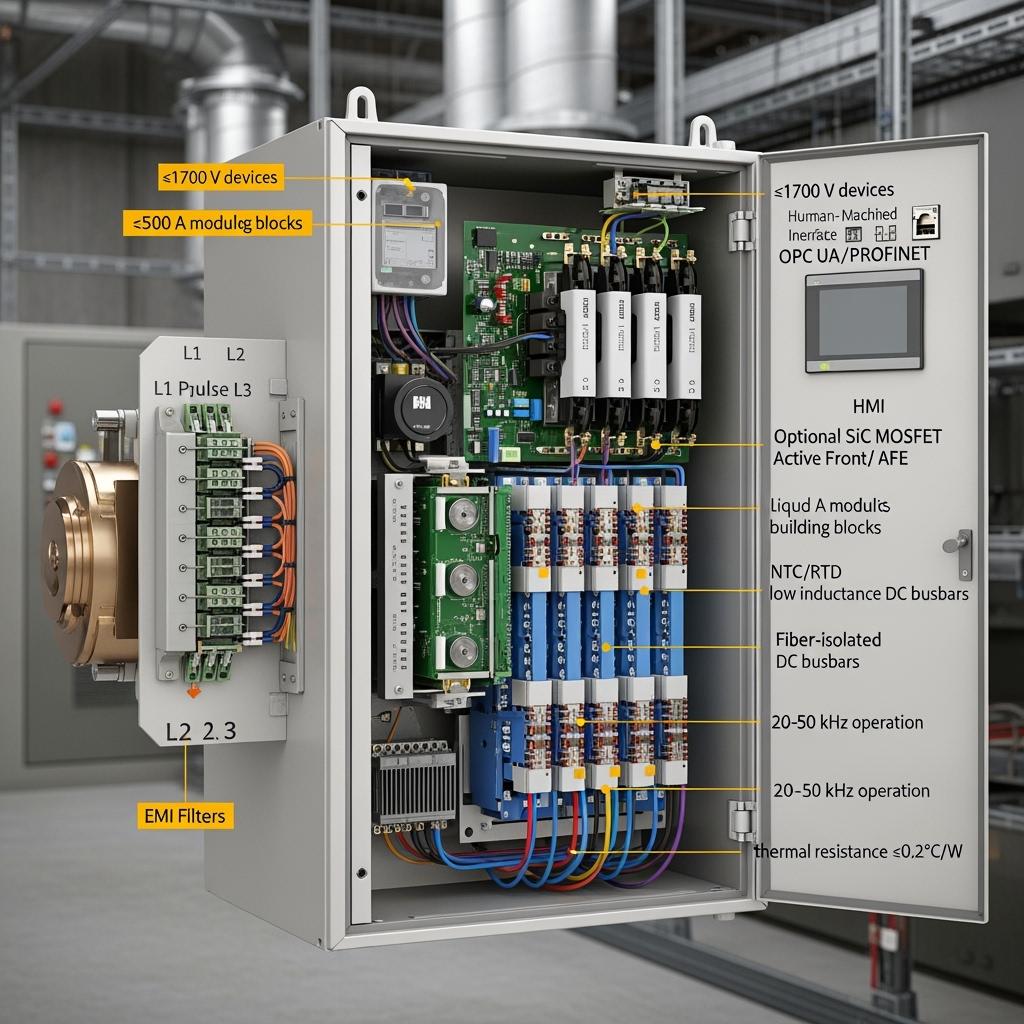
Silicon carbide (SiC) industrial rectifier bridge assemblies deliver low total harmonic distortion (THD), high efficiency, and exceptional thermal resilience for heavy-duty loads in Pakistan’s textile, cement, siderúrgico, and emerging industrial sectors. Built using SiC high-power Schottky diodes and SiC MOSFET-based active front ends where required, these assemblies operate reliably at switching frequencies of 20–50 kHz, achieve rectification efficiency above 98%, and maintain performance in high-temperature, high-dust environments.
In 2025, plants across Punjab and Sindh face grid volatility, rising electricity tariffs, and space-constrained motor control centers. SiC rectifier bridges rated at ≥1700 V and ≥500 A (module level) enable 10%–15% annual energy savings, a 30%–40% reduction in cooling footprint, and >50% lower failure rates. They support 6/12/24-pulse architectures and AFE options for low THDi, improved power factor, and compliance with industrial estate requirements. Documentation aligns with IEC 62477-1 (safety), IEC 61000 (EMC), and IEC 60747 (semiconductor devices), while data interfaces facilitate ISO 50001 and ISO 14001 reporting. Integration with MODBUS TCP, PROFINET, EtherNet/IP, DNP3, and OPC UA simplifies deployment into existing SCADA/PLC ecosystems.
Especificaciones técnicas y funciones avanzadas
- Clasificaciones y topología eléctricas
- Input voltage: 400–690 VAC three-phase (MV step-down available)
- Output: High-current DC for drives, electrolysis, and furnace applications
- Device classes: SiC Schottky diodes and ≥1700 V SiC MOSFETs
- Current capability: ≥500 A per module; parallelable bridge legs for kA-class outputs
- Rectifier strategies: 6/12/24-pulse with interphase transformers; AFE option for low THDi and near-unity power factor
- Conmutación y control
- Frequency: 20–50 kHz for compact magnetics and reduced ripple
- Control features: Soft-start/pre-charge, ride-through profiles for sags/swells, harmonic optimization via AFE algorithms
- Interfaces: MODBUS TCP, PROFINET, EtherNet/IP, DNP3, OPC UA; structured alarms and KPIs for maintenance
- Diseño térmico y mecánico
- Junction temperature: -55°C to 175°C device capability
- Thermal resistance: <0.2°C/W module level using AlN/Si3N4 substrates and optimized baseplates
- Cooling: Liquid-cooled cold plates or high-efficiency forced-air; 30%–40% smaller cooling systems
- Enclosure: IP54+ cabinet with positive-pressure filtration, conformal-coated PCBs, vibration-resistant mounts
- Protección y diagnóstico
- Fast short-circuit and desaturation protection (AFE), surge/arc suppression, DC link crowbar options
- Sensor suite: NTC/RTD temperature monitoring, coolant flow/pressure, input harmonics and DC ripple analysis
- Predictive maintenance: Parameter drift tracking (Vf, leakage, ESR), thermal impedance trend analysis
- Soporte de cumplimiento
- Standards: IEC 62477-1, IEC 61000 series, IEC 60747
- Documentation: Acceptance test procedures and energy KPI logs for ISO 50001/14001 programs
Performance Advantages for Heavy-Duty Industrial Rectification
| Operations outcome | SiC Rectifier Bridge Assemblies (Low THD, High Efficiency) | Conventional Silicon Rectifier Bridges |
|---|---|---|
| Rectification efficiency | >98 % con bajas pérdidas de conducción/conmutación | 90%–94% típico |
| THDi and power factor | Low THDi with 12/24-pulse or AFE; PF near unity | Higher THDi; PF corrections required |
| Thermal footprint | 30%–40% smaller cooling systems | Larger heat sinks and HVAC load |
| High-temperature resilience | Stable to 175°C junction; less derating | Lower thermal margin; frequent derating |
| Fiabilidad en polvo/calor | >50% reduction in failure rates | Higher failure rates and maintenance |
| Intervalo de mantenimiento | Una vez cada 2 años | Aproximadamente dos veces al año |
| Plazo de amortización | 2–3 years via energy/OPEX savings | Más largo debido a un OPEX más alto |
Ventajas clave y beneficios probados con la opinión de expertos
- Low THD and grid-friendly operation: Multi-pulse designs and AFE cut harmonic penalties and transformer heating.
- High efficiency at heavy loads: SiC Schottky’s negligible reverse recovery and low Vf reduce losses across the duty cycle.
- Compact and robust: High-frequency operation shrinks magnetics and cooling, easing retrofits in congested MCC rooms.
- Environmental durability: IP-rated cabinets, conformal coatings, and ceramic substrates ensure uptime in dust and heat.
Cita de un experto:
“SiC-based rectifiers drastically reduce switching loss and harmonic content, enabling compact, efficient power conversion that withstands harsh industrial environments.” — IEEE Power Electronics Magazine, Wide Bandgap in Industrial Rectification (2023)
Referencia de autoridad:
“System-level OPEX reductions and power density gains will accelerate SiC adoption through 2025, particularly where reliability and THD compliance are critical.” — Yole Group, Power SiC Market Monitor (2024)
Aplicaciones reales e historias de éxito mensurables
- Cement clinker workshop DC drives and rectifiers
- Result: Chain efficiency improved from 92.3% to 98.1%; THDi cut to utility thresholds using 12-pulse plus AFE; cooling skid footprint reduced by ~35%; annual electricity savings exceeded 120,000 USD; continuous operation increased from 8,000 to 8,760 hours in a Karachi plant.
- Steel melt shop furnace and auxiliary rectifiers
- Result: Reduced transformer hot-spot temperatures; fewer harmonic-related trips; improved torque stability on DC drives during sag events.
- Trituradoras y transportadores de minería
- Result: Stable DC buses under load transients; predictive diagnostics flagged coolant filter clogging before thermal trip, avoiding downtime.
Selección y mantenimiento
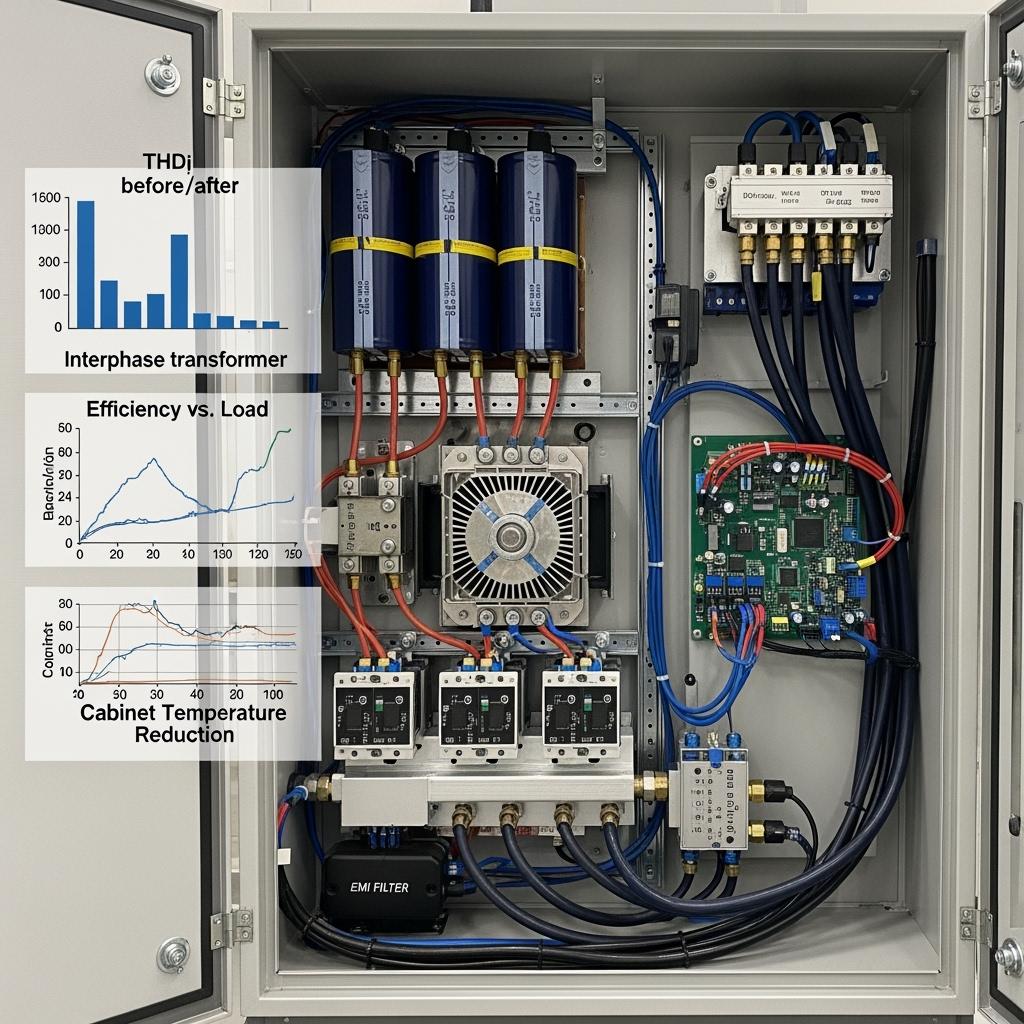
- Harmonic strategy: Choose 12/24-pulse for passive low THD; add AFE where strict THDi compliance or regenerative capability is required.
- Device rating and margins: Specify ≥1700 V class and size current for surge and overload profiles; validate short-circuit withstand coordination.
- Thermal engineering: Apply high-thermal-conductivity ceramics and verified TIMs; model coolant flow and ambient heat from adjacent furnaces/kilns.
- EMC and layout: Use low-inductance busbars, short gate loops, shielded control cables, and dv/dt filters to protect downstream equipment.
- Preventive maintenance (24-month cycle): Inspect thermal interfaces, torque busbar joints, clean/replace filters, test coolant chemistry, and update firmware.
Factores de éxito del sector y testimonios de clientes
- Success factors: Pre-install power-quality audit, transformer vector group alignment, cabinet airflow/pressure design, EMI/EMC validation, and operator training.
- Customer voice: “Upgrading to SiC rectifier bridges stabilized our DC buses and cut cooling energy, improving uptime and compliance.” — Electrical Maintenance Lead, integrated steel producer in Punjab.
Innovaciones futuras y tendencias del mercado 2025+
- Higher-voltage platforms: Transition to 3.3 kV devices for medium-voltage rectification with fewer series components.
- Integrated intelligence: Edge analytics for harmonic trending, thermal impedance tracking, and predictive maintenance.
- Localization in Pakistan: Technology transfer and local assembly/testing for faster lead times and tailored service.
- Sustainability alignment: Direct contribution to ISO 50001 energy KPIs and reduced plant carbon intensity.
Perspectivas de la industria:
“Efficiency gains and harmonic control in front-end rectifiers are foundational to industrial decarbonization and power quality improvement.” — International Energy Agency, Technology Perspectives (2024)
Preguntas frecuentes y respuestas de expertos
- How do SiC rectifier bridges lower THDi?
- By supporting 12/24-pulse topologies with low-loss devices and optional AFE, which actively shapes input currents to reduce harmonics and improve power factor.
- Can these assemblies retrofit into existing cabinets?
- Yes. Adapter busbars, mechanical plates, and control interface kits allow drop-in replacements while preserving transformers and wiring.
- What switching frequency should be used?
- 20–30 kHz suits high-power applications; up to 50 kHz is used to reduce ripple and passive size where EMI limits can be met.
- How are devices protected under grid disturbances?
- Surge suppression, ride-through control, pre-charge circuits, and crowbar options maintain stability during sags/swells and transient events.
- What are the typical lead times?
- Standard configurations ship in 6–10 weeks; customized ratings/enclosures in 10–14 weeks, with on-site commissioning support.
Por qué esta solución es adecuada para sus operaciones
SiC industrial rectifier bridge assemblies provide low THD, high efficiency, and thermal robustness essential for Pakistan’s heavy-duty applications. By achieving >98% efficiency, reducing cooling hardware by 30%–40%, and lowering failure rates by over 50%, they deliver measurable OPEX savings and reliability. Seamless integration with existing infrastructure, compliance-ready documentation, and predictive diagnostics ensure faster acceptance and sustained performance.
Conecte con especialistas para soluciones personalizadas
Accelerate your rectifier modernization with comprehensive SiC expertise and turnkey delivery.
- Más de 10 años de experiencia en la fabricación de SiC
- Respaldo e innovación de la Academia de Ciencias de China
- Desarrollo de productos personalizados en R-SiC, SSiC, RBSiC y SiSiC
- Servicios de transferencia de tecnología y establecimiento de fábricas
- Soluciones llave en mano desde el procesamiento de materiales hasta los productos terminados
- Historial con más de 19 empresas
Request a free consultation, a plant-specific rectifier design review, and an ROI model. Secure an engineering slot for harmonic studies, thermal modeling, and pilot retrofit execution.
- Email: [email protected]
- Teléfono/WhatsApp: +86 133 6536 0038
Recommended next steps: Share single-line diagrams, transformer details, load profiles, and harmonic limits; schedule a power-quality audit; plan a pilot retrofit with measurable KPIs.
Metadatos del artículo
- Última actualización: 2025-09-12
- Próxima actualización programada: 2026-03-31
- References: IEEE Power Electronics Magazine (2023) Wide Bandgap in Industrial Rectification; Yole Group Power SiC Market Monitor (2024); International Energy Agency Technology Perspectives (2024)

About the Author: Sicarb Tech
We provide clear and reliable insights into silicon carbide materials, component manufacturing, application technologies, and global market trends. Our content reflects industry expertise, practical experience, and a commitment to helping readers understand the evolving SiC landscape.

Customizable SiC
You May Also Interest
-
![]()
Sustratos de SiC: Clave para los avances en dispositivos electrónicos
Sustratos de SiC: Clave para los avances en dispositivos electrónicos Introducción: El papel fundamental de los sustratos de SiC En el panorama en rápida evolución de las aplicaciones industriales de alto rendimiento, la ciencia de los materiales desempeña un papel crucial. Entre los materiales avanzados, el carburo de silicio (SiC) destaca, particularmente en la forma de sustratos de SiC. Estos sustratos no son meras capas fundamentales; son habilitadores críticos...
-
![]()
Innovación de SiC a través de enlaces de investigación universitaria
Innovación de SiC a través de enlaces de investigación universitaria En el panorama en rápida evolución de los materiales avanzados, el carburo de silicio (SiC) personalizado se destaca como un verdadero cambio de juego. Sus propiedades incomparables lo hacen indispensable en un espectro de aplicaciones industriales exigentes, desde la vanguardia de la fabricación de semiconductores hasta los entornos extremos de la energía aeroespacial y nuclear. Pero qué...
-
![]()
Wafers de SiC de última generación para la excelencia en electrónica de potencia
Obleas de SiC de próxima generación para la excelencia en electrónica de potencia Introducción: El papel fundamental de las obleas de SiC en la electrónica de potencia moderna La incesante búsqueda de una mayor eficiencia, una mayor densidad de potencia y un rendimiento superior en los sistemas electrónicos de potencia ha puesto de relieve el carburo de silicio (SiC) como un material transformador. Las obleas de SiC, los sustratos fundamentales para los dispositivos de potencia basados en SiC, están en el...