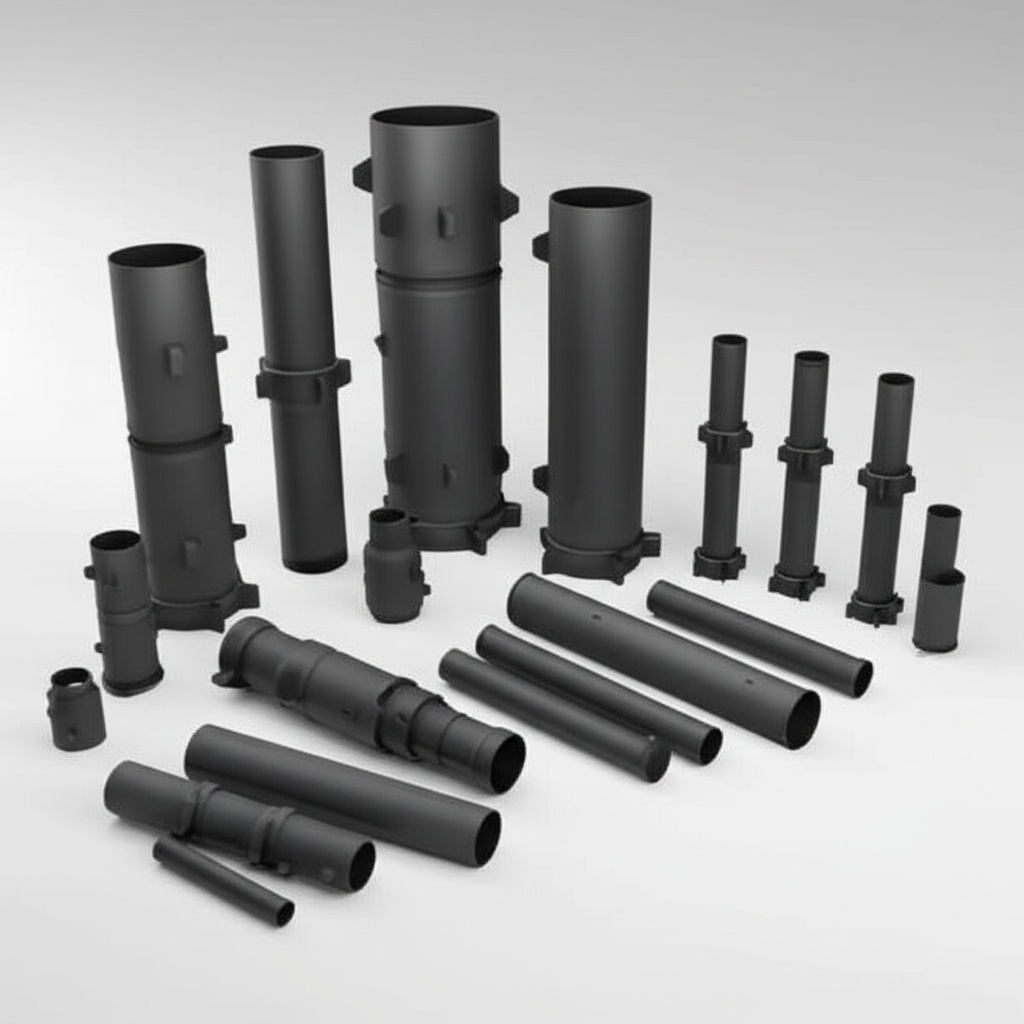
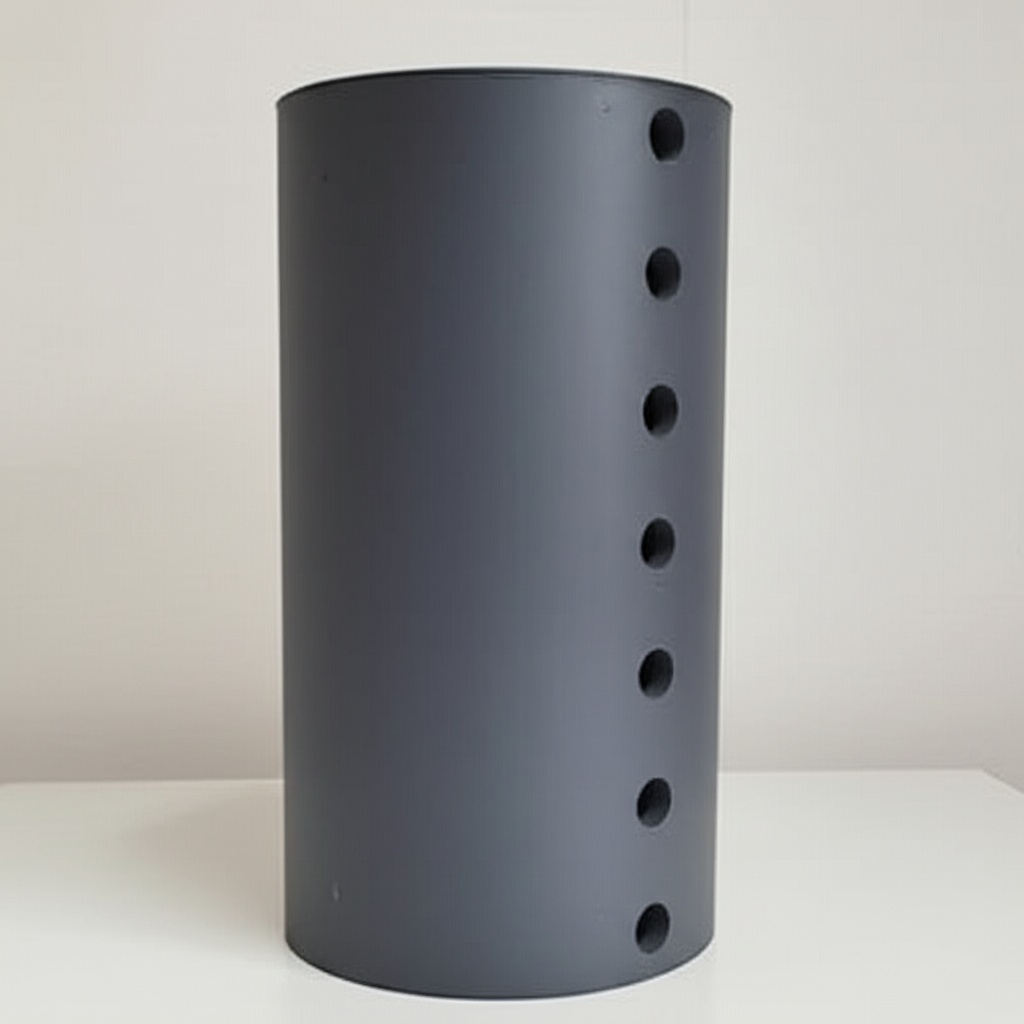
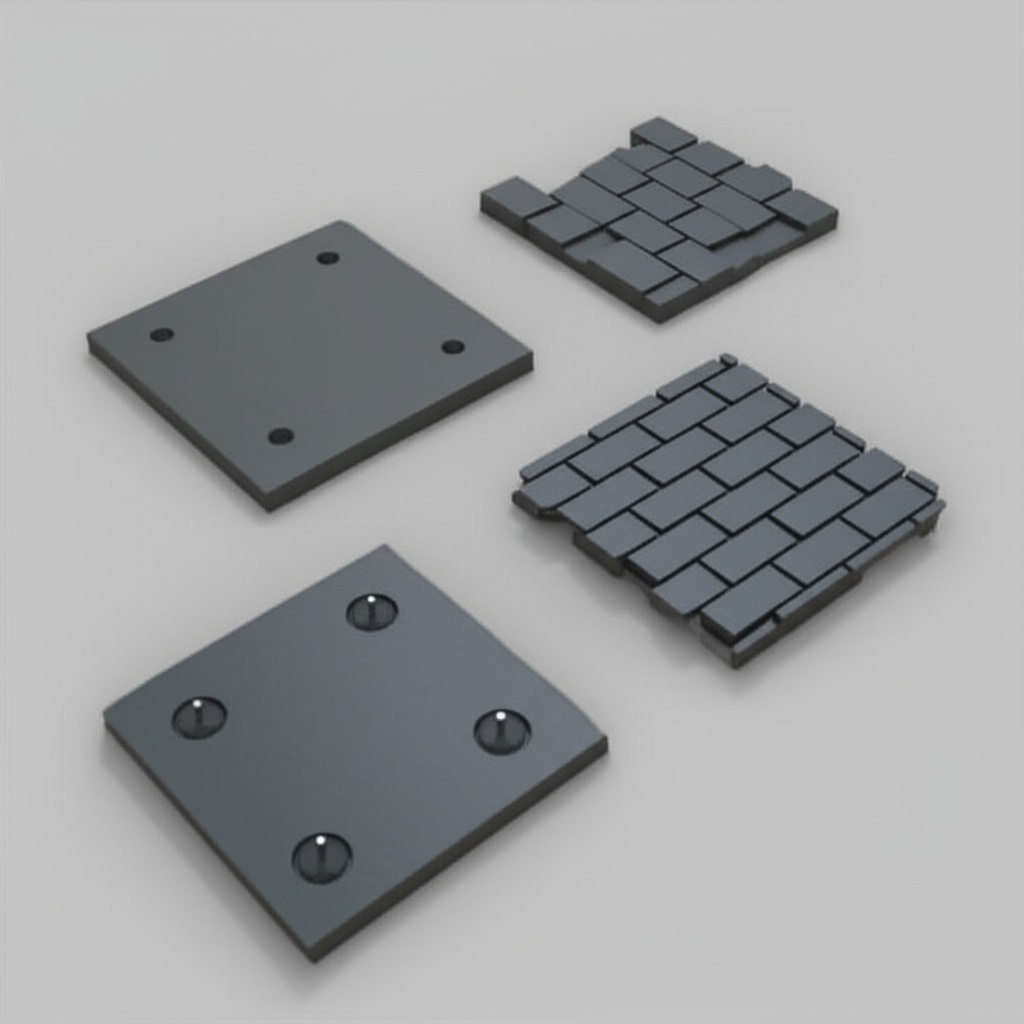
Silicon Carbide: The Key to Industrial Innovation
Share
Silicon Carbide: The Key to Industrial Innovation
In the relentless pursuit of efficiency, durability, and performance, advanced materials are paramount. Among these, silicon carbide (SiC) stands out as a revolutionary material, unlocking new possibilities across a multitude of demanding industrial applications. Custom silicon carbide products, tailored to specific operational needs, are increasingly becoming the cornerstone of innovation, offering unparalleled advantages where conventional materials fall short. This blog post delves into the world of custom SiC, exploring its applications, benefits, design considerations, and how to partner with the right supplier for your critical components.
What are Custom Silicon Carbide Products and Why Are They Essential?
Silicon carbide is a synthetic compound of silicon and carbon, renowned for its exceptional hardness, high thermal conductivity, excellent corrosion resistance, and superior strength at elevated temperatures. While standard SiC components serve many purposes, custom silicon carbide products are engineered parts designed and manufactured to precise specifications for unique, high-performance industrial applications. This customization can involve intricate geometries, specific surface finishes, tight tolerances, or unique compositions to optimize performance in challenging environments.
The essential nature of custom SiC stems from its ability to solve complex engineering problems that off-the-shelf solutions cannot address. Industries facing extreme temperatures, abrasive conditions, chemical attacks, or requiring high stiffness and low weight find that tailored SiC components can significantly enhance process efficiency, extend equipment lifespan, and reduce operational costs. From intricate semiconductor processing parts to robust wear components in industrial machinery, custom SiC is driving innovation and reliability.
Main Applications of Silicon Carbide Across Industries
The versatility of silicon carbide allows its application across a wide spectrum of industries. Its unique combination of properties makes it indispensable in environments where other materials would degrade rapidly. Here’s a look at some key sectors leveraging SiC components:
- Semiconductor Manufacturing: Wafer handling components (chucks, rings, pins), process chamber components, CMP rings, and susceptors benefit from SiC’s thermal stability, chemical inertness, and stiffness.
- Power Electronics: SiC is used in high-power, high-frequency devices like MOSFETs, Schottky diodes, and power modules for electric vehicles, renewable energy inverters, and industrial motor drives, due to its high breakdown voltage, thermal conductivity, and switching speed.
- Aerospace & Defense: Lightweight mirrors for telescopes, armor plating, rocket nozzles, and components for hypersonic vehicles utilize SiC’s high strength-to-weight ratio, thermal shock resistance, and wear resistance.
- High-Temperature Processing & Metallurgy: Furnace components (beams, rollers, tubes, burner nozzles), kiln furniture, crucibles, and thermocouple protection tubes are made from SiC for its exceptional high-temperature strength and resistance to thermal shock and chemical attack.
- Automotive: Beyond power electronics, SiC is explored for brake discs, diesel particulate filters, and wear-resistant components in engines due to its durability and thermal properties.
- Chemical Processing: Pump seals, valve components, bearings, and heat exchangers in corrosive chemical environments benefit from SiC’s outstanding chemical inertness and wear resistance.
- LED Manufacturing: Susceptors and crucibles for LED crystal growth rely on SiC’s high purity and thermal stability.
- Industrial Machinery: Wear parts such as mechanical seals, bearings, nozzles for abrasive blasting, and components for material handling systems use SiC for its extreme hardness and wear resistance.
- Renewable Energy: Inverters for solar and wind power systems utilize SiC power devices for higher efficiency and power density.
- Oil and Gas: Components for downhole tools, valves, and pumps in harsh environments leverage SiC’s corrosion and wear resistance.
- Medical Devices: Biocompatible SiC coatings and components are being researched for implants and surgical tools.
- Nuclear Energy: SiC is considered for fuel cladding and structural components in next-generation reactors due to its radiation resistance and high-temperature stability.
- Rail Transportation: SiC power modules are increasingly used in traction converters for improved energy efficiency and reduced system size.
- Telecommunications: Substrates and heat sinks for high-frequency devices benefit from SiC’s thermal and electrical properties.
Why Choose Custom Silicon Carbide? The Unmatched Benefits
Opting for custom silicon carbide components over standard materials or even standard SiC parts offers a strategic advantage for businesses aiming for peak performance and longevity in their equipment and processes. The benefits of customization are multi-faceted:
- Optimized Performance: Customization allows for designs that precisely match the application’s demands, maximizing efficiency. For instance, a specifically shaped SiC heat exchanger can achieve superior thermal transfer compared to a generic design.
- Enhanced Thermal Resistance & Management: SiC boasts exceptional thermal conductivity (often exceeding 150 W/mK, and for some grades much higher) and stability up to very high temperatures (typically 1400°C to 1800°C, depending on the grade and atmosphere). Custom parts can be designed to optimize heat dissipation or retention as needed.
- Superior Wear and Abrasion Resistance: With a Mohs hardness second only to diamond (around 9-9.5), SiC components offer extraordinary resistance to wear, erosion, and abrasion. Custom designs can incorporate thicker wear surfaces or specific geometries to further prolong life in abrasive slurries or high-velocity particle flows.
- Exceptional Chemical Inertness: SiC is highly resistant to virtually all acids, alkalis, and molten salts, even at elevated temperatures. Custom SiC parts ensure integrity and prevent contamination in corrosive chemical environments, crucial for industries like chemical processing and semiconductor manufacturing.
- High Strength and Stiffness: Silicon carbide maintains its mechanical strength at high temperatures and exhibits high elastic modulus (Young’s modulus typically >400 GPa). This allows for the design of lightweight yet rigid structures that can withstand significant mechanical loads without deformation.
- Tailored Electrical Properties: While often an electrical insulator, SiC can be doped to behave as a semiconductor. This allows for custom SiC components in electronic applications where specific resistivity or conductivity profiles are required.
- Complex Geometries and Precision: Advanced manufacturing techniques enable the production of custom SiC parts with intricate shapes and tight tolerances, allowing for integration into complex assemblies and systems.
- Reduced Downtime and Maintenance Costs: The extended lifespan and reliability of custom SiC components translate directly into less frequent replacements, reduced maintenance schedules, and minimized operational downtime.
- Improved Process Yields: In applications like semiconductor manufacturing, the purity, stability, and precision of custom SiC components can lead to higher process yields and better-quality end products.
By investing in custom silicon carbide solutions, companies can achieve a competitive edge through enhanced operational capabilities and reduced total cost of ownership.
Recommended SiC Grades and Compositions for Industrial Applications
Silicon carbide is not a one-size-fits-all material. Various manufacturing processes result in different grades of SiC, each with a unique set of properties tailored for specific applications. Understanding these grades is crucial for selecting the optimal material.
| SiC Grade | Key Characteristics | Typical Applications | Manufacturing Process |
|---|---|---|---|
| Reaction-Bonded Silicon Carbide (RBSiC or SiSiC) | Excellent wear and corrosion resistance, high thermal conductivity, good mechanical strength, relatively complex shapes possible, moderate cost. Contains some free silicon (typically 8-15%). Max service temperature around 1350-1380°C. | Kiln furniture (beams, rollers, nozzles), wear-resistant linings, pump components, mechanical seals, heat exchangers. | A porous carbon preform is infiltrated with molten silicon. The silicon reacts with the carbon to form SiC, bonding the existing SiC grains. |
| Sintered Silicon Carbide (SSiC) | Very high purity (typically >98-99% SiC), superior strength at high temperatures (up to 1600-1800°C), excellent corrosion and wear resistance, good thermal shock resistance. Can be electrically conductive or resistive depending on additives. | High-performance mechanical seals, bearings, semiconductor process components (etch rings, chucks), armor, heat exchanger tubes in highly corrosive environments, rocket nozzles. | Fine SiC powder is mixed with sintering aids (e.g., boron, carbon) and densified at high temperatures (2000-2200°C) under pressure (Pressureless Sintered – PLS) or without external pressure (Solid State Sintered – SSS). |
| Nitride-Bonded Silicon Carbide (NBSiC) | Good thermal shock resistance, good mechanical strength, resistant to molten metals (especially aluminum). Forms a silicon nitride bond phase. | Kiln furniture, components for non-ferrous metal foundries (e.g., thermocouple sheaths, riser tubes), furnace linings. | SiC grains are bonded by a silicon nitride (Si3N4) phase, formed by nitriding silicon metal mixed with SiC grains at elevated temperatures. |
| Recrystallized Silicon Carbide (RSiC) | High purity, excellent thermal shock resistance, high porosity (10-20%), good strength at very high temperatures (up to 1650°C). | Kiln furniture (plates, setters, posts), radiant heater tubes, diffusion tubes. | SiC grains are packed and fired at very high temperatures (above 2200°C), causing them to bond and recrystallize without shrinkage. |
| Chemical Vapor Deposited Silicon Carbide (CVD-SiC) | Extremely high purity (often >99.999%), theoretically dense, excellent corrosion resistance, smooth surfaces. Can be produced as coatings or bulk material. | Semiconductor process equipment (susceptors, domes, tubes), optical components (mirrors), protective coatings on graphite or other SiC grades. | Gaseous silicon and carbon precursors react at high temperatures to deposit a layer of SiC onto a substrate. |
| Silicon Carbide Matrix Composites (SiC-CMC) | Enhanced fracture toughness compared to monolithic SiC, lightweight, high strength. Often SiC fibers in a SiC matrix. | Aerospace components (turbine engine hot section parts), high-performance braking systems. | Various methods including chemical vapor infiltration (CVI), polymer infiltration and pyrolysis (PIP), melt infiltration (MI). |
The choice of SiC grade depends heavily on the specific operating conditions, including temperature, chemical environment, mechanical stress, and required component lifespan. Consulting with material experts is vital for making the right selection.
Design Considerations for Custom SiC Products
Designing components with silicon carbide requires careful consideration of its unique material properties, particularly its hardness and brittleness. Effective design for manufacturability (DfM) is key to achieving functional, reliable, and cost-effective custom SiC products.
- Geometry and Complexity:
- While advanced forming techniques allow for complex shapes, simpler geometries are generally more cost-effective to produce and machine.
- Avoid sharp internal corners and abrupt changes in cross-section; incorporate generous radii (e.g., minimum 0.5mm to 1mm, or larger if possible) to reduce stress concentrations.
- Consider the limitations of green machining (machining before final sintering) versus hard machining (after sintering). Green machining allows for more complex features but with less precision than final hard grinding.
- Wall Thickness and Aspect Ratios:
- Maintain uniform wall thicknesses where possible to prevent warping or cracking during sintering. Recommended minimum wall thickness often depends on the overall size and grade, but typically ranges from 2mm to 5mm for robust parts.
- High aspect ratios (length-to-diameter or length-to-thickness) can be challenging to manufacture and may require specialized support during firing. Discuss limitations with your supplier.
- Tolerance Capabilities:
- As-sintered tolerances are typically looser (e.g., ±0.5% to ±2% of dimension). Tighter tolerances require post-sintering grinding and machining, which adds to the cost.
- Specify critical dimensions and tolerances clearly on drawings. Understand the achievable precision for different features (diameters, flatness, parallelism).
- Stress Points and Load Conditions:
- SiC is strong in compression but weaker in tension and has low fracture toughness. Designs should aim to keep SiC components under compressive loads where possible.
- Analyze potential stress concentrators and design to mitigate them. Finite Element Analysis (FEA) can be invaluable for optimizing designs of critical SiC components.
- Joining and Assembly:
- Consider how SiC parts will be assembled with other components. Differential thermal expansion can be an issue if SiC is rigidly joined to metals.
- Brazing, shrink-fitting, or mechanical clamping are common joining methods. The design should accommodate the chosen joining technique.
- Surface Finish Requirements:
- Specify the required surface finish (Ra value). As-fired surfaces are rougher than ground or lapped/polished surfaces. Smoother finishes often require additional processing steps.
- Material Grade Selection:
- The choice of SiC grade (RBSiC, SSiC, etc.) will influence design parameters due to differences in shrinkage, machinability, and mechanical properties. This should be an early consideration in the design process.
Early collaboration with your SiC supplier’s engineering team can help optimize the design for manufacturability, performance, and cost.
Tolerance, Surface Finish & Dimensional Accuracy in SiC Components
Achieving precise dimensional accuracy, tight tolerances, and specific surface finishes are critical for the functionality of many custom silicon carbide components, especially in high-tech applications like semiconductor processing, precision optics, and mechanical seals. The inherent hardness of SiC makes machining a specialized and often costly process, so understanding what is achievable is key.
Tolerances:
- As-Sintered Tolerances: Components directly from the sintering furnace without further machining typically have tolerances in the range of ±0.5% to ±2% of the dimension. This is suitable for applications where high precision is not the primary concern, such as some kiln furniture.
- Ground Tolerances: Diamond grinding is the most common method for achieving tighter tolerances on SiC parts.
- Linear dimensions: Tolerances of ±0.01 mm to ±0.05 mm (±0.0004″ to ±0.002″) are commonly achievable. For highly critical dimensions, even tighter tolerances down to ±0.002 mm to ±0.005 mm (±0.00008″ to ±0.0002″) can be attained with specialized processes, but this significantly increases cost.
- Parallelism and Flatness: For ground surfaces, parallelism and flatness of 0.005 mm to 0.025 mm (0.0002″ to 0.001″) per 25mm are typical. Larger surfaces may have proportionally larger deviations unless specifically lapped.
Surface Finish:
- As-Sintered Finish: The surface roughness (Ra) of as-sintered parts can vary significantly depending on the SiC grade and manufacturing process, typically ranging from Ra 1.6 µm to Ra 12.5 µm (63 µin to 492 µin).
- Ground Finish: Diamond grinding can achieve surface finishes typically in the range of Ra 0.2 µm to Ra 0.8 µm (8 µin to 32 µin). Finer grinding operations can achieve smoother finishes.
- Lapped and Polished Finish: For applications requiring ultra-smooth and flat surfaces (e.g., mechanical seals, mirrors, wafer chucks), lapping and polishing processes are employed.
- Lapped surfaces can achieve Ra <0.1 µm (<4 µin) and superior flatness.
- Polished surfaces can achieve optical quality finishes with Ra <0.025 µm (<1 µin) or even down to angstrom levels for specialized optics.
Dimensional Accuracy:
Dimensional accuracy is a combination of achieving the nominal dimensions and the allowed tolerances. It’s crucial to clearly define critical dimensions and their required precision on engineering drawings. Factors influencing final dimensional accuracy include:
- The SiC grade and its sintering behavior (shrinkage).
- The complexity of the part geometry.
- The capabilities of the forming and machining equipment.
- The skill of the operators.
- The metrology equipment used for inspection.
Achieving high precision in SiC components demands advanced machining technologies, sophisticated metrology, and a deep understanding of the material’s behavior. It’s essential to discuss specific tolerance and surface finish requirements with your SiC supplier early in the design phase to ensure feasibility and manage costs effectively.
Post-Processing Needs for Enhanced SiC Performance
While as-sintered or machined silicon carbide components are suitable for many applications, certain post-processing treatments can further enhance their performance, durability, or functionality for specific demanding environments. These steps are typically applied after the primary shaping and firing processes.
- Grinding and Lapping: As discussed previously, these are crucial for achieving tight dimensional tolerances and specific surface finishes. Diamond grinding is standard for shaping and sizing, while lapping creates ultra-flat and smooth surfaces essential for sealing applications or optical components.
- Polishing: For applications requiring extremely smooth, mirror-like surfaces (e.g., semiconductor wafer chucks, optical mirrors), polishing follows lapping. This minimizes surface defects and can improve wear resistance or optical reflectivity.
- Cleaning: Thorough cleaning is essential, especially for high-purity applications like semiconductor processing or medical devices. This may involve ultrasonic cleaning, chemical etching, or specialized solvent cleaning to remove any contaminants from machining or handling.
- Edge Chamfering/Radiusing: Sharp edges on brittle materials like SiC can be prone to chipping. Edge treatments like chamfering or radiusing can improve handling safety and reduce the risk of crack initiation.
- Annealing: In some cases, a post-sintering or post-machining annealing step might be used to relieve internal stresses, potentially improving mechanical strength or thermal shock resistance. This is more common for complex geometries or heavily machined parts.
- Sealing/Impregnation: For porous grades of SiC (like some RBSiC or RSiC), or to improve the impermeability of even dense SiC for very aggressive chemical environments, sealing or impregnation might be performed. This can involve:
- Glass infiltration: Filling surface porosity with a glass phase.
- Resin impregnation: Using polymers to seal porosity, typically for lower temperature applications.
- CVD SiC coating: Applying a thin, dense layer of high-purity CVD SiC can seal porosity and dramatically improve corrosion resistance.
- Coatings: Beyond sealing, various coatings can be applied to SiC surfaces to impart specific properties:
- CVD SiC or Diamond-Like Carbon (DLC): For enhanced wear resistance or chemical purity.
- Metallic coatings: For brazing or electrical contact points.
- Specialty ceramic coatings: For tailored emissivity or catalytic activity.
- Laser Machining/Drilling: For creating very fine features, small holes, or complex patterns that are difficult with conventional grinding, laser ablation can be used, though it needs careful control to manage thermal effects.
- Joining/Brazing Preparations: If the SiC component is to be joined to another material (metal or ceramic), specific surface preparations like metallization might be required to ensure a strong braze joint.
The necessity and type of post-processing depend heavily on the final application requirements. Each step adds to the cost and lead time, so it’s important to specify only those treatments that provide a tangible performance benefit for the intended use.
Common Challenges in Using SiC and How to Overcome Them
While silicon carbide offers a remarkable array of benefits, its unique properties also present certain challenges in design, manufacturing, and application. Understanding these challenges and adopting appropriate strategies is crucial for successful implementation.
- Brittleness and Low Fracture Toughness:
- Challenge: SiC is a brittle ceramic, meaning it can fracture suddenly without significant plastic deformation when subjected to impact or high tensile stresses. Its fracture toughness is lower than metals.
- Mitigation:
- Design components to minimize tensile stresses and stress concentrations (use fillets, avoid sharp corners).
- Consider toughened SiC grades like SiC matrix composites (SiC-CMC) for applications requiring higher damage tolerance, although these are more expensive.
- Implement careful handling procedures during assembly and maintenance.
- Employ protective designs, such as encasing SiC parts or using compliant layers to absorb impact energy.
- Perform Finite Element Analysis (FEA) to identify high-stress regions and optimize designs.
- Machining Complexity and Cost:
- Challenge: Due to its extreme hardness, SiC can only be effectively machined using diamond tooling. This makes machining slow, expensive, and requires specialized equipment and expertise.
- Mitigation:
- Design for manufacturability: Minimize the amount of material to be removed by hard machining. Utilize near-net-shape forming processes where possible.
- Specify tolerances and surface finishes only as tight as absolutely necessary. Over-specification significantly increases costs.
- Explore green machining (machining the SiC preform before final sintering) for complex features, followed by minimal hard grinding for critical dimensions.
- Partner with suppliers experienced in SiC machining.
- Thermal Shock Sensitivity:
- Challenge: While SiC has good thermal shock resistance compared to many other ceramics (due to high thermal conductivity and strength), rapid and extreme temperature changes can still induce fractures, especially in larger or complex parts.
- Mitigation:
- Select SiC grades with optimized thermal shock resistance (e.g., RSiC, some NBSiC grades, or SSiC with controlled grain size).
- Design for uniform heating and cooling. Avoid abrupt changes in thickness that can lead to differential thermal expansion.
- Control heating and cooling rates in operational processes where feasible.
- Joining SiC to Other Materials:
- Challenge: The significant difference in coefficient of thermal expansion (CTE) between SiC and most metals can create high stresses at joints upon thermal cycling, leading to joint failure.
- Mitigation:
- Use graded transition layers or compliant interlayers (e.g., ductile metals like copper or specialized alloys) in brazed joints.
- Employ mechanical joining methods (clamping, shrink fitting) that can accommodate some differential expansion.
- Design joints to minimize stress or select joining partners with closer CTE matches if possible.
- Active brazing alloys are often required for strong SiC-metal joints.
- Cost:
- Challenge: Raw material costs for high-purity SiC powders and the specialized manufacturing and machining processes make SiC components generally more expensive than those made from conventional metals or lower-grade ceramics.
- Mitigation:
- Focus on the total cost of ownership: The extended lifespan, reduced downtime, and improved process efficiency of SiC components often justify the higher initial investment.
- Optimize design for material usage and manufacturability.
- Ensure the selected SiC grade is appropriate for the application; over-engineering with a higher-grade SiC than necessary increases cost.
- Work with suppliers who have efficient production processes.
Addressing these challenges through careful design, material selection, and collaboration with knowledgeable suppliers enables industries to fully harness the exceptional capabilities of silicon carbide.
How to Choose the Right SiC Supplier: A Strategic Partnership
Selecting the right silicon carbide supplier is a critical decision that can significantly impact the quality, performance, and cost-effectiveness of your custom SiC components. It’s not just about finding a manufacturer; it’s about establishing a strategic partnership with a provider who possesses deep technical expertise and a commitment to quality.
Key factors to consider when evaluating a SiC supplier:
- Technical Expertise and Experience:
- Does the supplier have a proven track record in manufacturing SiC components for your specific industry or application?
- Do they possess in-depth knowledge of various SiC grades, their properties, and manufacturing processes?
- Can they provide engineering support for design optimization and material selection?
- Customization Capabilities:
- Are they equipped to handle complex geometries, tight tolerances, and specific surface finish requirements?
- Do they offer a range of SiC grades and forming methods (pressing, slip casting, extrusion, injection molding) to suit diverse needs?
- Can they support from prototype development to high-volume production?
- Quality Management Systems:
- Is the supplier ISO 9001 certified or compliant with other relevant industry quality standards?
- Do they have robust quality control processes, including material inspection, in-process checks, and final product verification using advanced metrology?
- Can they provide material certifications and inspection reports?
- Manufacturing Facilities and Technology:
- Do they have modern manufacturing equipment for forming, sintering, and precision machining (diamond grinding, lapping, polishing)?
- What is their capacity and ability to scale production?
- Material Sourcing and Purity:
- Where do they source their SiC powders? Can they ensure consistency and high purity if required for your application?
- Research and Development Capabilities:
- Does the supplier invest in R&D to improve materials, processes, and develop new SiC solutions? This can be an indicator of a forward-thinking partner.
- Communication and Support:
- Is the supplier responsive and easy to communicate with? Do they provide clear and timely updates?
- Do they offer post-sales technical support?
- Location and Supply Chain Reliability:
- Consider their geographical location in relation to your op
- Consider their geographical location in relation to your op

About the Author: Sicarb Tech
We provide clear and reliable insights into silicon carbide materials, component manufacturing, application technologies, and global market trends. Our content reflects industry expertise, practical experience, and a commitment to helping readers understand the evolving SiC landscape.

Customizable SiC
You May Also Interest
-
![]()
Key SiC Exporters in Asia for International Trade
Key SiC Exporters in Asia for International Trade In the rapidly evolving landscape of advanced materials, silicon carbide (SiC) stands out as a material of unparalleled performance. Its exceptional properties make it indispensable across a spectrum of demanding industrial applications. For businesses seeking reliable and high-quality silicon carbide products, understanding the key players and regions…
-
![]()
SiC Substrates: Key to Electronic Device Advances
SiC Substrates: Key to Electronic Device Advances Introduction: The Pivotal Role of SiC Substrates In the rapidly evolving landscape of high-performance industrial applications, materials science plays a crucial role. Among advanced materials, silicon carbide (SiC) stands out, particularly in the form of SiC substrates. These substrates are not merely foundational layers; they are critical enablers…
-
![]()
SiC Innovation via University Research Links
SiC Innovation via University Research Links In the rapidly evolving landscape of advanced materials, custom silicon carbide (SiC) stands out as a true game-changer. Its unparalleled properties make it indispensable across a spectrum of demanding industrial applications, from the cutting edge of semiconductor manufacturing to the extreme environments of aerospace and nuclear energy. But what…