Silicon Carbide Additive Manufacturing Machines: Revolutionizing High-Performance Component Production
Share
The landscape of industrial manufacturing is perpetually evolving, driven by the relentless pursuit of materials and processes that offer superior performance, intricate geometries, and enhanced efficiency. Silicon Carbide (SiC), a technical ceramic renowned for its exceptional hardness, thermal conductivity, and resistance to wear and corrosion, has long been a material of choice for demanding applications. Traditionally, shaping SiC into complex components has been a challenging and costly endeavour. However, the advent of Silicon Carbide Additive Manufacturing Machines is revolutionizing this paradigm, unlocking new possibilities for producing custom SiC components with unprecedented design freedom and speed. This technology is rapidly gaining traction among engineers, procurement managers, and technical buyers in sectors like semiconductors, high-temperature processing, aerospace, energy, and industrial manufacturing, who seek high-performance ceramic parts tailored to their specific needs.
The integration of SiC AM technology into industrial workflows signifies a major leap forward. It addresses the limitations of conventional ceramic forming techniques, which often involve expensive tooling, lengthy lead times, and restrictions on geometric complexity. For businesses looking to procure wholesale SiC parts or develop OEM SiC components, understanding the capabilities and nuances of SiC additive manufacturing is becoming increasingly crucial. This article delves into the intricacies of SiC additive manufacturing machines, exploring their operational principles, the advantages they offer, suitable material grades, critical design considerations, and the challenges that need to be navigated, while also guiding you on selecting the right manufacturing partner.
Unveiling SiC Additive Manufacturing: A New Frontier for Technical Ceramics
Silicon Carbide (SiC) additive manufacturing, often referred to as SiC 3D printing, is a transformative process that builds SiC components layer by layer directly from a digital model. Unlike subtractive manufacturing methods that remove material from a larger block, additive manufacturing constructs parts by adding material only where it is needed. This approach is particularly beneficial for a material like SiC, which is notoriously difficult and expensive to machine using traditional techniques due to its extreme hardness.
At its core, SiC additive manufacturing involves specialized machines that utilize various technologies to process SiC-based materials, typically in powder form or as part of a slurry or filament. These machines translate a Computer-Aided Design (CAD) file into a physical object by selectively fusing or binding the SiC material layer by layer. The process allows for the creation of highly complex geometries, internal channels, and intricate features that would be impossible or prohibitively expensive to achieve with conventional methods. This capability is paramount for industries requiring high-performance ceramic parts with optimized designs for specific functional requirements, such as lightweight structures or components with enhanced thermal management capabilities. The ability to produce custom silicon carbide components on demand without the need for molds or extensive tooling dramatically reduces lead times and facilitates rapid prototyping, enabling faster innovation cycles and quicker market entry for new products.
Key Technologies and Processes in SiC Additive Manufacturing Machines
Several distinct additive manufacturing technologies are being adapted and optimized for processing silicon carbide. Each method offers unique advantages and is suited to different types of SiC materials and final part requirements. Understanding these SiC AM technology variations is crucial for selecting the appropriate process for a given application.
- Binder Jetting: This is currently one of the most prominent methods for SiC additive manufacturing. In binder jetting, a liquid binding agent is selectively deposited onto a thin layer of SiC powder. The printhead jets the binder precisely where needed, joining the powder particles together. Layer by layer, the part is built within the powder bed. After printing, the “green” part is carefully removed from the unbound powder (which can often be recycled, promoting waste-free production) and then undergoes post-processing steps. These typically include debinding (to remove the binder) and sintering at high temperatures to densify the SiC and achieve its final properties. Some processes may involve a silicon infiltration step, where molten silicon reacts with carbon (either from the binder residue or added carbon) to form additional SiC, resulting in a dense Reaction-Bonded Silicon Carbide (RBSC) or Silicon Infiltrated Silicon Carbide (SiSiC) part. According to Concr3de, their binder jetting process involves an engineered SiC powder and a particle-free, water-based binder, followed by drying and a pyrolysis heat treatment (Source: Concr3de).
- Selective Laser Sintering (SLS) / Selective Laser Melting (SLM): While more common for metals and polymers, SLS/SLM techniques are being explored for ceramics like SiC. In this process, a high-power laser selectively scans and fuses regions of a powder bed. For SiC, direct sintering with a laser is challenging due to its high melting point and thermal properties. Often, SiC powders are mixed with sintering aids or a polymer binder that is burned out in subsequent steps. Research is ongoing to develop direct SLS/SLM of SiC for producing dense parts. Elsevier mentions that with SLS, it’s possible to achieve 87% relative density in a single stage for SiC-based composite ceramics (Source: Elsevier).
- Stereolithography (SLA) and Digital Light Processing (DLP): These methods use photopolymerization to create parts. For ceramics, the process involves a slurry composed of SiC powder dispersed in a UV-curable resin. A light source (laser for SLA, projector for DLP) selectively cures the resin layer by layer, binding the SiC particles within the cured polymer matrix. After printing, the green part undergoes debinding to remove the polymer and sintering to densify the ceramic. This method can achieve very high resolution and smooth surface finishes. Steinbach AG utilizes Lithography-based Ceramic Manufacturing (LCM), a type of stereolithography, for producing technical 3D ceramics like alumina and zirconium oxide, noting the potential for SiC as well (Source: Steinbach AG).
- Direct Ink Writing (DIW) / Robocasting: In DIW, a viscous ceramic paste or ink (SiC particles mixed with a binder and solvent) is extruded through a fine nozzle to build structures layer by layer. The rheological properties of the ink are critical to ensure that the deposited filaments retain their shape. After printing, the parts are dried, debound, and sintered. DIW allows for good control over the material composition and microstructure.
- Fused Deposition Modeling (FDM) for Ceramics: This involves extruding a filament made of SiC powder mixed with a thermoplastic binder. The part is built layer by layer, and then, similar to other methods, it undergoes debinding and sintering to remove the binder and densify the ceramic. NASA has explored powder-loaded filaments for 3D printing SiC-based ceramics (Source: NASA NTRS).
The choice of technology depends on factors like the desired part density, surface finish, geometric complexity, production volume, and the specific type of SiC material being used. Post-processing, particularly sintering and sometimes infiltration, is a critical stage for nearly all SiC AM techniques to achieve the desired mechanical and thermal properties.
| Technology | Material Form | Resolution | Post-Processing Needs | Key Advantages |
|---|---|---|---|---|
| Binder Jetting | Powder | Moderate | Debinding, Sintering, Infiltration (optional) | Speed, Material recyclability, Scalability |
| SLS / SLM | Powder | Moderate | Sintering, Stress relief | Potential for dense parts, Complex geometries |
| SLA / DLP | Photopolymer Slurry | High | Debinding, Sintering | High resolution, Smooth surface, Intricate details |
| Direct Ink Writing | Viscous Paste/Ink | Moderate | Drying, Debinding, Sintering | Material versatility, Control over microstructure |
| FDM (Ceramic) | Filament | Low-Moderate | Debinding, Sintering | Lower cost equipment (potentially) |
These technologies are paving the way for industrial 3D printing SiC, offering significant advancements over traditional ceramic processing.
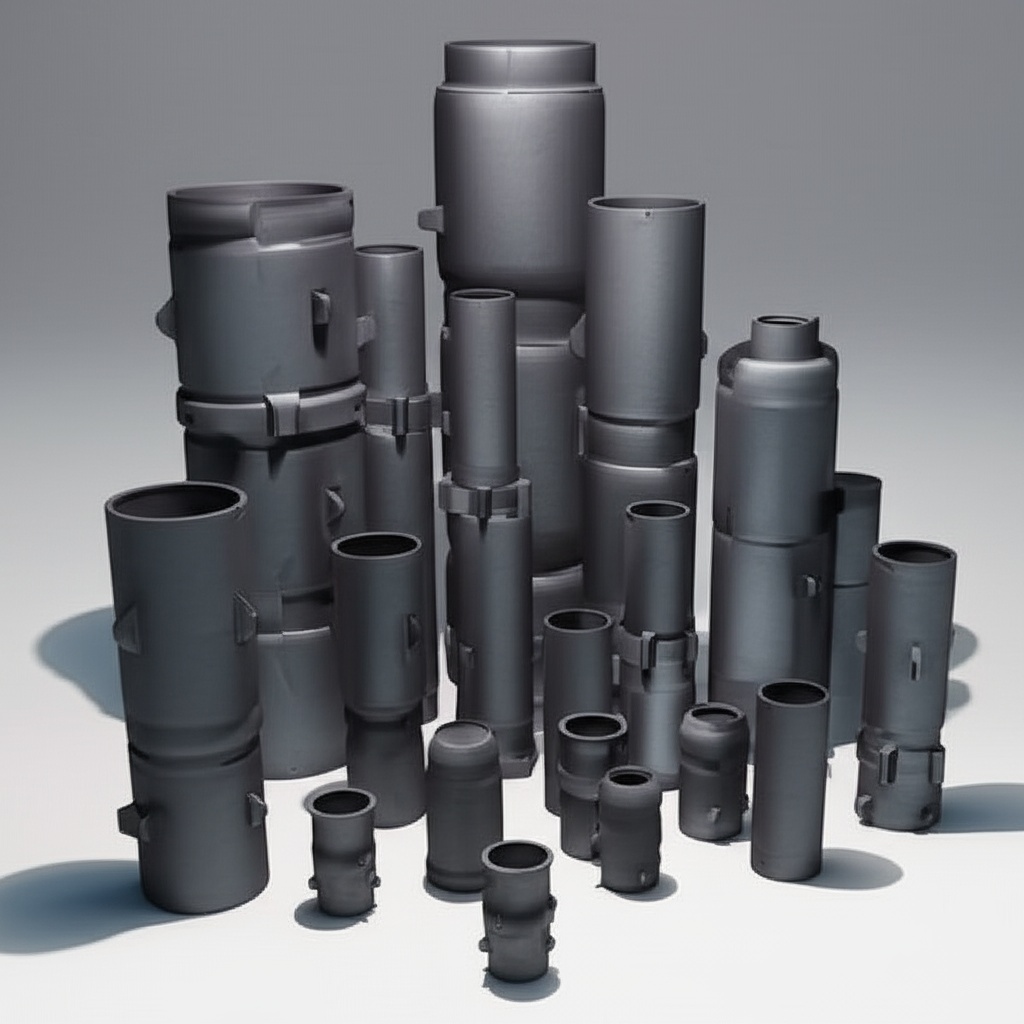
Advantages of Using SiC Additive Manufacturing for Custom Components
The adoption of Silicon Carbide Additive Manufacturing Machines brings a multitude of benefits, particularly for industries requiring custom SiC components with high performance and complex designs. These advantages are compelling for wholesale buyers, technical procurement professionals, OEMs, and distributors looking for an edge in their respective markets.
- Unprecedented Design Freedom: This is arguably the most significant advantage. AM allows for the creation of highly complex geometries, including internal cooling channels, lattice structures for lightweighting, and organically shaped parts that are impossible or prohibitively expensive to produce using traditional subtractive or formative methods. This enables engineers to design parts optimized for function rather than being constrained by manufacturing limitations. CDG 3D Tech highlights that binder jetting unlocks complex geometries and allows for the creation of personalized items like body armor (Source: CDG 3D Tech).
- Rapid Prototyping and Reduced Lead Times: AM significantly accelerates the product development cycle. Prototypes of SiC rapid prototyping can be produced in days rather than weeks or months, allowing for faster design iterations and validation. This speed extends to small series production, as AM eliminates the need for creating expensive molds or tooling. Concr3de mentions high-speed production and reduced lead times as a key advantage of their SiC binder jetting (Source: Concr3de).
- Cost-Effectiveness for Small to Medium Batches and Customization: While the raw material cost for high-quality SiC can be significant, AM can be more cost-effective for low to medium volume production runs of complex parts. The elimination of tooling costs makes it economical to produce customized, one-off parts or small series. This is crucial for applications requiring OEM SiC components tailored to specific equipment. SGL Carbon notes that AM can produce complex geometries quickly and economically, accelerating product development (Source: SGL Carbon).
- Material Efficiency and Waste Reduction: Additive manufacturing is inherently a more sustainable process as it only uses the material necessary to build the part, layer by layer. In processes like binder jetting, unused powder can often be recycled and reused, minimizing waste. This contrasts sharply with subtractive methods where a significant portion of the initial material block can become scrap. CDG 3D Tech emphasizes waste-free production with their binder jetting, where unbound powder is fully recyclable (Source: CDG 3D Tech).
- Part Consolidation: Complex assemblies that traditionally consist of multiple components can often be redesigned and printed as a single, integrated part. This reduces assembly time and costs, improves structural integrity by eliminating joints (potential weak points), and can lead to lighter and more efficient designs.
- Enhanced Functional Performance: The design freedom offered by AM allows for the incorporation of features that enhance performance. For example, intricate cooling channels can improve thermal management in high-temperature applications, or optimized internal structures can increase strength-to-weight ratios. This is vital for high-performance ceramic parts in aerospace or energy sectors.
- On-Demand Manufacturing: AM enables a shift towards on-demand manufacturing, reducing the need for large inventories. Parts can be produced as and when they are needed, streamlining the supply chain and allowing for easier management of spare parts for industrial applications SiC AM.
These advantages collectively make SiC additive manufacturing a compelling proposition for a wide range of industries seeking to leverage the exceptional properties of silicon carbide in highly customized and complex components. For businesses seeking a reliable partner in leveraging these benefits, Sicarb Tech offers extensive expertise in SiC materials and processing technologies. Situated in Weifang City, the hub of China’s silicon carbide customizable parts manufacturing, SicSino has been instrumental in advancing SiC production technology since 2015. Our connection with the Chinese Academy of Sciences National Technology Transfer Center ensures access to cutting-edge research and a robust talent pool, enabling us to support diverse customization needs.
Suitable Silicon Carbide Materials for Additive Manufacturing Processes
The success of SiC additive manufacturing heavily relies on the quality and characteristics of the silicon carbide feedstock. Not all SiC powders or formulations are equally suited for every AM process. The choice of material depends on the specific AM technology, the desired final properties of the component, and the intended application.
Generally, SiC powders used in AM need to have specific attributes:
- Particle Size and Distribution: A controlled particle size distribution (PSD) is crucial for achieving good flowability in powder bed systems (like binder jetting and SLS) and for ensuring high packing density, which contributes to better densification during sintering. Finer powders can lead to higher resolution and smoother surfaces but may present challenges in handling and flow.
- Purity: High purity SiC (often >98%) is generally preferred for applications demanding optimal thermal, mechanical, or electrical properties. Impurities can negatively affect sintering behaviour and performance at high temperatures. AM-Material.com notes purity levels for SiC powder ranging from 90% to 99.999% (Source: am-material.com).
- Morphology: The shape of the SiC particles can influence powder packing and flow. Spherical or near-spherical particles often exhibit better flowability.
- Sinterability: The inherent sinterability of the SiC powder is critical. Some SiC powders may require sintering aids (e.g., boron, carbon, alumina, yttria) to achieve high densities at lower sintering temperatures, as pure SiC is difficult to sinter due to its strong covalent bonds.
Common types of SiC used or being developed for additive manufacturing include:
- Alpha-Silicon Carbide (α-SiC): This is the most common polymorph, known for its stability at high temperatures. It’s often used in structural and high-temperature applications.
- Beta-Silicon Carbide (β-SiC): This cubic polymorph can transform into α-SiC at high temperatures. β-SiC powders are sometimes preferred for their higher reactivity, which can aid in sintering. OSTI.GOV mentions the formation of β-phase SiC in joined interfaces during reaction bonding of AM SiC preforms (Source: OSTI.GOV).
- Reaction-Bonded Silicon Carbide (RBSC) / Silicon Infiltrated Silicon Carbide (SiSiC): These are effectively composites. AM processes like binder jetting can produce a porous SiC preform (often with added carbon). This preform is then infiltrated with molten silicon. The silicon reacts with the carbon to form new SiC, which bonds the original SiC particles. The final material typically contains some residual free silicon, which can limit its use at very high temperatures (above 1350−1400∘C) but offers excellent wear resistance and good thermal conductivity. SGL Carbon’s SICAPRINT® Si is an example of a 3D printed SiC refined by liquid silicon infiltration (Source: SGL Carbon).
- Sintered Silicon Carbide (SSC): This refers to SiC parts that are densified purely through sintering, often with the aid of sintering additives like boron and carbon. Achieving near-full density can require very high temperatures (>2000∘C). AM processes aim to create green parts that can be effectively sintered to high densities. Direct Sintered SiC (often referred to as SSiC) offers superior high-temperature performance and chemical resistance compared to RBSC due to the absence of free silicon.
- Precursor-Derived SiC: Some AM approaches use pre-ceramic polymers (e.g., polycarbosilanes) that can be formed into the desired shape and then pyrolyzed to convert them into SiC. This route can produce SiC with specific microstructures or SiC-based composites.
The development of SiC materials specifically tailored for additive manufacturing is an active area of research. This includes optimizing powder characteristics, developing new binder formulations for binder jetting and SLA/DLP, and creating SiC filaments for FDM that yield high-quality sintered parts.Sicarb Tech, with its deep understanding of material science backed by the Chinese Academy of Sciences, is at the forefront of developing and supplying high-quality SiC materials suitable for both traditional and advanced manufacturing processes, including those relevant to additive manufacturing. We offer a range of SiC grades and can assist in selecting or developing materials for your specific AM applications.
| SiC Material Type | Key Characteristics | Common AM Routes | Typical Applications |
|---|---|---|---|
| α-SiC | High-temperature stability, hardness | Binder Jetting, SLS, DIW | Structural components, Kiln furniture, Wear parts |
| β-SiC | Higher reactivity (aids sintering) | Binder Jetting, Precursor | Research, Specialized electronic/optical components |
| RBSC / SiSiC | Near-zero shrinkage during infiltration, good wear resistance, high thermal conductivity | Binder Jetting + Infiltration | Wear components, Seals, Nozzles, Heat exchangers |
| Sintered SiC (SSiC) | Excellent high-temp strength, corrosion resistance | Binder Jetting, SLS, SLA, DIW | Chemical processing, Semiconductor equipment, Burner tubes |
| Precursor-Derived SiC | Tailorable microstructure, composites | SLA, DIW, Polymer Jetting | Fibers, Coatings, Micro-components |
Understanding these material nuances is critical for any technical buyer or engineer considering SiC AM.
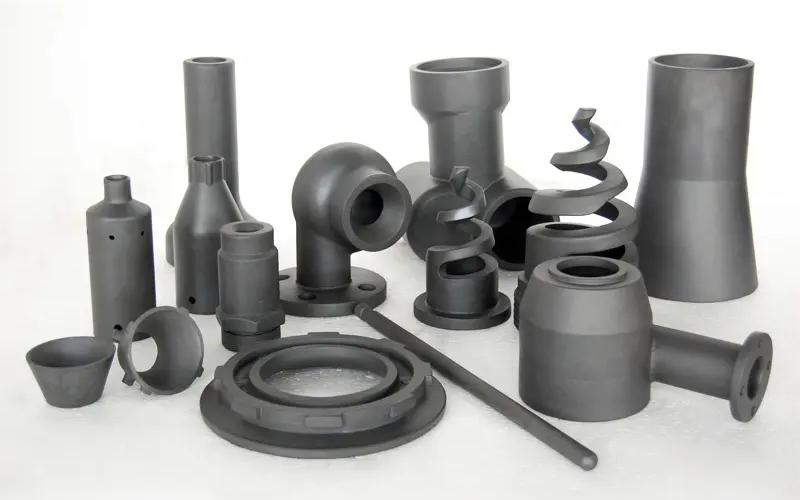
Design Principles and Optimization for SiC Additive Manufacturing
While SiC additive manufacturing machines offer remarkable design freedom, creating successful and functional SiC components requires adherence to specific design principles and optimization strategies. These considerations are crucial for ensuring manufacturability, structural integrity, and optimal performance of the final custom SiC components. Ignoring these can lead to print failures, compromised part properties, or unnecessarily high costs.
Key Design Considerations for SiC AM:
- Minimum Feature Size and Wall Thickness: Each AM process and machine has limitations on the smallest features (e.g., holes, struts) and thinnest walls it can reliably produce. For SiC, 3Dcarbide suggests a minimum feature size of at least 1 mm and wall thicknesses typically between 1-20 mm for their CVI process (Source: 3Dcarbide). Designing below these thresholds can lead to fragile features or print failures.
- Overhangs and Support Structures: Steep overhangs and unsupported horizontal features can be problematic. While some AM processes (like binder jetting) are self-supporting as the part is encased in powder, others may require dedicated support structures. These supports must be removed in post-processing, which can be challenging and time-consuming for hard SiC. Designing parts to be self-supporting or minimizing the need for supports is highly recommended.
- Internal Channels and Cavities: AM excels at creating internal channels for applications like cooling or fluid flow. However, designers must consider how these channels will be cleared of residual powder (in powder bed systems) or resin (in slurry-based systems) and whether their dimensions allow for effective cleaning and, if necessary, infiltration or coating.
- Shrinkage and Distortion during Sintering: Most SiC AM parts (except potentially some RBSC processes which can have near-zero shrinkage during infiltration) undergo significant shrinkage during the high-temperature sintering stage (can be 15-25% linearly). This shrinkage must be accurately predicted and compensated for in the initial design (scaling up the green part). Non-uniform shrinkage can also lead to distortion or cracking, so designs should aim for relatively uniform wall thicknesses and avoid very thick sections adjacent to thin sections.
- Aspect Ratios: Very high aspect ratios (e.g., long, thin pins or walls) can be prone to warping or fracture during handling, debinding, or sintering. Incorporating fillets, ribs, or optimizing orientation can mitigate these risks.
- Surface Finish: The as-printed surface finish varies by AM technology. Binder jetting and SLS might produce rougher surfaces, while SLA/DLP can achieve smoother finishes. If a very smooth surface is required (e.g., for sealing surfaces or optical components), post-processing steps like grinding, lapping, or polishing will be necessary. The design should allow for material removal during these finishing operations if needed.
- Tolerances: Achievable tolerances depend on the AM process, machine calibration, material, and part size. While AM is improving, it may not always match the ultra-high precision of traditional machining for ceramics without post-processing. Designers should specify critical tolerances and discuss achievable limits with the AM service provider. 3Dcarbide notes part tolerances of <0.1 mm to <0.2 mm depending on the specific process variant (Source: 3Dcarbide).
- Stress Concentrations: Sharp internal corners can act as stress concentrators, potentially leading to crack initiation in brittle ceramics like SiC. Incorporating fillets and radii at corners can significantly improve the mechanical integrity of the part.
- Part Orientation: The orientation of the part during the build process can affect its mechanical properties (due to anisotropy in some AM processes), surface finish on different faces, and the need for support structures. Optimizing build orientation is a key step in print preparation.
- Material-Specific Constraints: Different SiC grades (e.g., RBSC vs. SSiC) have different processing requirements and final properties. For instance, if a part is to be silicon infiltrated (RBSC), the design must allow for silicon to reach all porous areas.
Optimization Strategies:
- Lightweighting: Utilize lattice structures or topology optimization to reduce material usage and part weight without compromising structural integrity. This is especially valuable for aerospace and automotive applications.
- Functional Integration: Combine multiple parts into a single, complex component to reduce assembly and improve reliability.
- Design for Additive Manufacturing (DfAM): This is a holistic approach where engineers design parts specifically leveraging the strengths of AM technology from the outset, rather than simply adapting designs meant for conventional manufacturing.
By working closely with experienced SiC AM providers like Sicarb Tech, companies can ensure their designs are optimized for successful additive manufacturing. SicSino’s team, backed by the technological prowess of the Chinese Academy of Sciences, provides comprehensive customizing support, including material selection, process optimization, design guidance, and measurement and evaluation technologies. This integrated approach helps clients achieve higher-quality, cost-competitive custom silicon carbide components.
Overcoming Challenges in SiC Additive Manufacturing
While Silicon Carbide Additive Manufacturing Machines offer transformative potential, the technology is not without its challenges. Silicon carbide itself is an inherently difficult material to process due to its high hardness, high melting point, strong covalent bonding, and brittleness. These material characteristics translate into specific hurdles that need to be addressed in the AM workflow.
- Achieving Full Densification: Obtaining fully dense SiC parts (approaching 100% theoretical density) is crucial for optimal mechanical strength, thermal conductivity, and hermeticity. However, SiC’s low self-diffusivity and high melting point (around 2730∘C) make it difficult to sinter to full density without extremely high temperatures or the use of sintering aids. Residual porosity can act as stress concentrators and degrade material properties.
- Mitigation: Optimization of powder characteristics (particle size, purity), use of effective sintering aids (e.g., boron, carbon, yttria, alumina), advanced sintering techniques (e.g., Spark Plasma Sintering (SPS), microwave sintering, pressure-assisted sintering), and post-infiltration processes (like Liquid Silicon Infiltration for RBSC) are employed. GGS Ceramic highlights that the strong Si-C bonds require extreme temperatures for densification, leading to challenges like grain growth and residual porosity (Source: GGS Ceramic).
- Brittleness and Fracture Toughness: SiC is a brittle ceramic with relatively low fracture toughness. This means it is susceptible to cracking under tensile stress or impact, especially if flaws (like pores or inclusions) are present. This brittleness can also pose challenges during post-processing, such as support removal or machining.
- Mitigation: Careful design to minimize stress concentrations (e.g., using fillets), controlling microstructure during sintering to limit grain growth, incorporating toughening mechanisms (e.g., creating SiC matrix composites with fibers or whiskers, though this adds complexity to AM), and careful handling and post-processing are essential. GGS Ceramic mentions that adding phases or coatings can enhance fracture resistance (Source: GGS Ceramic).
- Machining Complexity of Green and Sintered Parts: While AM reduces the need for extensive machining, some features or tight tolerances may still require post-machining. Green SiC parts (before sintering) are fragile, and sintered SiC is extremely hard, requiring diamond tooling and specialized machining techniques, which can be costly and time-consuming.
- Mitigation: Designing parts to be as net-shape as possible to minimize post-machining. If machining is unavoidable, it should be planned for in the design phase (e.g., leaving extra material). Laser-assisted machining and other advanced techniques are being explored for hard ceramics.
- Control of Microstructure and Purity: The final microstructure (grain size, porosity, phase distribution) and purity of the AM SiC part significantly influence its properties. Unwanted phases or impurities introduced from binders, sintering aids, or the AM process itself can be detrimental.
- Mitigation: Strict control over raw material quality, binder composition, debinding processes (to ensure complete binder removal without contamination), and sintering atmospheres. GGS Ceramic notes the challenge of controlling impurities and the need for microstructural control to balance toughness and hardness (Source: GGS Ceramic).
- Thermal Stress and Cracking during Processing: The high temperatures involved in sintering and cooling can induce thermal stresses, especially in parts with complex geometries or varying thicknesses, potentially leading to warping or cracking. SiC’s relatively high thermal expansion coefficient (compared to some other ceramics) can exacerbate this.
- Mitigation: Careful control of heating and cooling rates during sintering, designing for uniform wall thicknesses, and potentially using simulation tools to predict and mitigate thermal stresses.
- Cost and Scalability: While AM can be cost-effective for complex, low-volume parts, the specialized equipment, high-purity SiC powders, and energy-intensive post-processing can make it expensive for high-volume production compared to traditional methods for simpler shapes. Scaling up production while maintaining quality and consistency is an ongoing development area.
- Mitigation: Continuous improvement in AM machine speed and efficiency, development of lower-cost SiC powders suitable for AM, and optimization of post-processing steps. SmarTech Analysis, as reported by Digital Engineering 247, notes that SiC powder is relatively affordable compared to other advanced ceramics, offering an interesting value proposition for AM, though the overall market for SiC material in AM is expected to remain relatively small in the near term (Source: Digital Engineering 247).
- Reproducibility and Quality Control: Ensuring consistent part quality and properties from build to build and machine to machine is critical for industrial adoption. This requires robust process control, in-situ monitoring capabilities, and standardized testing procedures for AM SiC parts.
- Mitigation: Implementation of rigorous quality management systems, development of in-process monitoring tools (e.g., thermal imaging, layer-wise imaging), and comprehensive post-build characterization (density, mechanical testing, NDT).
Sicarb Tech understands these challenges intimately. Leveraging our position in Weifang City, China’s SiC manufacturing hub, and our close ties with the Chinese Academy of Sciences, we have developed robust processes and expertise to mitigate these issues. We assist our clients from material selection through to final component evaluation, ensuring that the custom SiC components meet the demanding specifications of their applications. Our focus on technology transfer and process optimization enables us to provide high-quality, cost-competitive solutions.
Choosing the Right SiC Additive Manufacturing Partner and Equipment
Selecting the appropriate partner or investing in the right Silicon Carbide Additive Manufacturing Machine is a critical decision for businesses aiming to leverage this advanced technology. The choice will significantly impact the quality of custom SiC components, development timelines, and overall project costs. Whether you are looking for a service provider for wholesale SiC parts or considering in-house SiC AM technology adoption, several factors must be carefully evaluated.
Key Considerations When Choosing an SiC AM Service Provider:
- Technical Expertise and Experience: Does the supplier have a proven track record with SiC and other technical ceramics? Assess their understanding of SiC material science, AM process intricacies, and post-processing requirements. Look for case studies or examples of similar projects they have completed.
- Range of SiC Materials Offered: A good supplier should offer various SiC grades (e.g., RBSC, SSiC) and have the capability to process them effectively using AM. They should also be able to advise on the best material for your specific application’s thermal, mechanical, and chemical resistance needs.
- Available AM Technologies: Different AM technologies (Binder Jetting, SLA, etc.) are suited for different types of parts and requirements. A supplier with access to multiple technologies can offer more flexible and optimized solutions.
- Design for Additive Manufacturing (DfAM) Support: The ideal partner will offer DfAM expertise, helping you optimize your designs for AM to maximize performance, reduce costs, and ensure manufacturability. This includes advice on feature sizes, wall thicknesses, support structures, and shrinkage compensation.
- Post-Processing Capabilities: Sintering, infiltration, grinding, lapping, and polishing are often essential post-processing steps for SiC AM parts. Ensure the supplier has these capabilities in-house or through trusted partners to achieve the required tolerances, surface finish, and material properties.
- Quality Control and Certification: What quality management systems (e.g., ISO 9001) does the supplier have in place? Inquire about their procedures for material testing, process monitoring, and final part inspection and characterization (e.g., density measurement, dimensional accuracy, mechanical testing).
- Scalability and Lead Times: Can the supplier handle your required production volumes, from prototypes to small or medium series production? Discuss their typical lead times and capacity.
- Cost-Effectiveness: While cost is a factor, it shouldn’t be the sole determinant. Evaluate the overall value proposition, considering expertise, quality, reliability, and support. Request detailed quotes that break down material, printing, and post-processing costs.
- Location and Logistics: For some projects, proximity and ease of logistics can be important factors.
For companies considering in-house SiC AM equipment, additional factors include:
- Machine Cost and Throughput: The initial investment in SiC AM machines can be substantial. Evaluate the machine’s purchase price, operational costs (materials, energy, maintenance), and its production speed or throughput.
- Ease of Use and Training: Consider the complexity of operating the machine and the level of training required for personnel.
- Material Compatibility: Ensure the machine is compatible with the specific SiC powders or slurries you intend to use. Some machines may be optimized for proprietary materials.
- Supplier Support and Maintenance: Assess the equipment manufacturer’s reputation for customer support, service, and availability of spare parts.
Why Sicarb Tech is Your Trusted Partner:
Located in Weifang City, the heart of China’s silicon carbide industry, Sicarb Tech stands out as a premier partner for custom silicon carbide products. Our deep roots in the region, combined with our role in advancing SiC production technology since 2015, give us unparalleled insight and access to a robust supply chain.
- Strong Backing: As part of the Chinese Academy of Sciences (Weifang) Innovation Park and collaborating closely with the National Technology Transfer Center of the Chinese Academy of Sciences , SicSino leverages the formidable scientific and technological capabilities and talent pool of the Chinese Academy of Sciences. This ensures our clients benefit from cutting-edge material science and process innovations.
- Comprehensive Expertise: We possess a domestic top-tier professional team specializing in the customized production of SiC products. Our expertise spans material science, process development, design optimization, measurement, and evaluation technologies, covering the entire journey from raw materials to finished high-performance ceramic parts.
- Customization and Quality: We excel in meeting diverse customization needs, offering higher-quality, cost-competitive customized silicon carbide components from China. Our support has benefited over 10 local enterprises, helping them achieve technological advancements.
- Technology Transfer and Turnkey Projects: Beyond component supply, SicSino is committed to empowering global partners. If you aim to establish your own specialized SiC products manufacturing plant, we offer comprehensive technology transfer for professional SiC production. This includes a full range of turnkey project services: factory design, procurement of specialized equipment, installation and commissioning, and trial production, ensuring a reliable and effective investment.
Choosing the right partner is paramount. With Sicarb Tech, you gain more than a supplier; you gain a collaborator dedicated to your success in the demanding world of technical ceramics.
| Evaluation Criterion | Importance for Service Provider | Importance for In-House Equipment | SicSino Strength |
|---|---|---|---|
| Technical Expertise (SiC AM) | Very High | Very High (for operating team) | Deep expertise via Chinese Academy of Sciences, extensive experience in SiC production technologies. |
| Material Range & Guidance | Very High | High | Access to diverse SiC grades from Weifang hub, material development capabilities. |
| DfAM Support | Very High | High (for design team) | Integrated design support as part of customization services. |
| Post-Processing Capabilities | Very High | High (in-house or outsourced) | Comprehensive understanding of finishing requirements for SiC parts. |
| Quality Control | Very High | Very High | Rigorous quality assurance, measurement, and evaluation technologies. |
| Cost & Lead Time | High | High | Cost-competitive solutions from China’s SiC hub, optimized processes for efficiency. |
| Technology Transfer | N/A | N/A (unless buying from a tech provider) | Unique offering for clients wanting to establish their own SiC production lines (turnkey projects). |
| Supplier Reliability | Very High | Very High | Backed by national-level innovation park and Chinese Academy of Sciences, ensuring reliable supply and technological support. |
This table helps illustrate the critical factors and how a partner like SicSino can address them, whether you are procuring parts or exploring deeper technological collaborations.
Frequently Asked Questions (FAQ)
Q1: What are the primary advantages of using additive manufacturing for silicon carbide components over traditional methods? A1: The main advantages of SiC additive manufacturing include unparalleled design freedom for creating complex geometries (like internal channels or lattice structures), rapid prototyping which significantly reduces development lead times, and cost-effectiveness for small to medium batches and highly customized parts due to the elimination of tooling. Additionally, AM promotes material efficiency by reducing waste, allows for part consolidation (reducing assembly needs), and can enable the production of high-performance ceramic parts with enhanced functionalities. This is a significant step up from traditional methods that often struggle with complex SiC designs and involve lengthy, expensive machining processes.
Q2: What are the most common SiC materials used in additive manufacturing, and how do they differ? A2: Several types of silicon carbide are used or being developed for AM. Key examples include: * Reaction-Bonded Silicon Carbide (RBSC or SiSiC): Produced by infiltrating a porous SiC preform (often made via binder jetting) with molten silicon. It offers good wear resistance and thermal conductivity with near-zero shrinkage during infiltration but has a temperature limit due to free silicon (around 1350−1400∘C). * Sintered Silicon Carbide (SSiC): Densified purely through high-temperature sintering, often with aids. SSiC boasts excellent high-temperature strength (above 1600∘C) and superior chemical resistance due to the absence of free silicon. Achieving high density can be more challenging. * Alpha (α-SiC) and Beta (β-SiC) powders: These are polymorphs of SiC. α-SiC is generally more stable at high temperatures, while β-SiC can sometimes offer better sinterability. The choice depends on the application’s specific requirements for temperature resistance, mechanical strength, thermal properties, and chemical inertness.Sicarb Tech can help select or develop the optimal SiC formulation for your custom SiC components.
Q3: What are the typical tolerances and surface finishes achievable with SiC additive manufacturing? A3: Achievable tolerances and surface finishes in SiC AM technology vary significantly depending on the specific AM process (e.g., binder jetting, SLA), the machine used, particle size of the SiC powder, and post-processing steps. * Tolerances: As-printed tolerances might range from ±0.1 mm to ±0.5 mm or a percentage of the dimension (e.g., ±0.2%). Tighter tolerances, comparable to traditional ceramic machining (e.g., down to microns), can be achieved through post-processing steps like grinding, lapping, or diamond machining. * Surface Finish (Ra): As-printed surfaces can range from relatively rough (e.g., Ra 5−25 µm for powder bed systems) to smoother (Ra 1−5 µm for vat polymerization systems). Highly polished surfaces (Ra<0.1 µm) for applications like mirrors or seals require extensive post-processing. It’s crucial to discuss your specific dimensional and surface finish requirements with your SiC AM provider, like SicSino, to understand what is achievable and what post-processing will be necessary.
Q4: How does Sicarb Tech support businesses looking to implement custom SiC components via advanced manufacturing, potentially including additive manufacturing principles? A4: Sicarb Tech, leveraging its base in Weifang, the hub of China’s SiC industry, and its strong affiliation with the Chinese Academy of Sciences , offers comprehensive support. While direct SiC AM machine manufacturing isn’t our primary focus, our expertise in custom silicon carbide products is highly relevant. We provide: * Material Expertise: Guidance on optimal SiC grades and compositions for demanding applications, including those that could benefit from AM’s design freedom. * Custom Design & Manufacturing: We assist in designing and producing complex SiC components, utilizing advanced forming and sintering techniques that achieve results often sought through AM. Our deep knowledge of SiC processing allows us to create intricate parts that meet stringent specifications. * Technology Transfer: For businesses wishing to establish their own SiC production capabilities, SicSino offers turnkey project solutions, including factory design, equipment procurement (which could involve AM-related technologies if viable), installation, and training. This empowers clients with state-of-the-art SiC manufacturing technology. * Supply Chain & Quality Assurance: We ensure reliable supply of high-quality SiC materials and components, backed by robust quality control and the technological strength of Chinese Academy of Sciences. Our goal is to provide clients with higher-quality, cost-competitive customized silicon carbide components and to facilitate technological advancement in SiC manufacturing.
Conclusion: Embracing the Future with SiC Additive Manufacturing
The emergence of Silicon Carbide Additive Manufacturing Machines represents a pivotal development for industries reliant on high-performance materials. This technology unshackles engineers from the constraints of traditional manufacturing, paving the way for innovative designs, accelerated product development, and the creation of custom SiC components with superior functionality. From aerospace and defense to energy, semiconductors, and chemical processing, the ability to 3D print SiC parts with complex geometries, internal features, and tailored properties is a game-changer.
While challenges in material processing, densification, and cost optimization remain, ongoing advancements in SiC AM technology, materials science, and machine capabilities are rapidly addressing these hurdles. The benefits – design freedom, rapid prototyping, reduced waste, and the potential for on-demand manufacturing of intricate technical ceramics – are too compelling to ignore.
For procurement managers, engineers, and OEMs, understanding and strategically adopting SiC additive manufacturing can provide a significant competitive advantage. Partnering with knowledgeable and experienced suppliers is key to navigating this evolving landscape. Sicarb Tech, with its profound expertise rooted in Weifang City – China’s SiC heartland – and its strong backing from the Chinese Academy of Sciences, is exceptionally positioned to support your journey. Whether you require complex customized silicon carbide components or seek to establish your own advanced SiC manufacturing capabilities through technology transfer, SicSino offers a reliable, high-quality, and technologically advanced pathway. By embracing innovations like SiC additive manufacturing, industries can unlock new levels of performance, efficiency, and ingenuity in the world’s most demanding applications.

About the Author: Sicarb Tech
We provide clear and reliable insights into silicon carbide materials, component manufacturing, application technologies, and global market trends. Our content reflects industry expertise, practical experience, and a commitment to helping readers understand the evolving SiC landscape.

Customizable SiC
You May Also Interest
-
![]()
SiC Support Beams for Furnace Structural Integrity
SiC Support Beams for Furnace Structural Integrity In demanding industrial environments, particularly those involving extreme temperatures and corrosive atmospheres, the structural integrity of equipment is paramount. For high-temperature furnaces, kilns, and other thermal processing systems, the choice of internal support structures dictates operational longevity, efficiency, and safety. This is where custom silicon carbide (SiC) support…
-
![]()
The Unseen Hero: How Silicon Carbide Revolutionizes Laser Cutting Systems
Laser cutting technology has become indispensable across a multitude of industries, from intricate electronics manufacturing to heavy industrial fabrication. The demand for higher precision, faster processing speeds, and unwavering reliability in laser cutting systems is perpetually on the rise. While the laser source itself often garners the most attention, the materials used to construct critical…
-
![]()
SiC Insulators: Electrical Safety Spare Parts
SiC Insulators: Electrical Safety Spare Parts for Demanding Environments Introduction: The Critical Role of SiC Insulators in Modern Industry In today’s rapidly evolving industrial landscape, the demand for materials that can withstand extreme conditions while ensuring electrical integrity is paramount. Silicon carbide (SiC) stands out as a superior choice, particularly for SiC insulators. These essential…