SiC: The Future Material for AI Hardware
Share
SiC: The Future Material for AI Hardware
The rapid evolution of Artificial Intelligence (AI) demands groundbreaking materials that can withstand extreme operational conditions and enable unprecedented performance. Traditional materials often fall short in managing the intense heat, high power densities, and electrical demands of advanced AI hardware. This is where silicon carbide (SiC) emerges as a game-changer. As a leading technical ceramics material, SiC offers a unique combination of properties that make it indispensable for the next generation of AI accelerators, high-performance computing, and efficient power management in AI systems.
Why Custom Silicon Carbide for AI Hardware?
AI hardware, from powerful GPUs to specialized ASICs and neuromorphic chips, requires materials that can handle exceptional thermal loads and ensure stable electrical performance. Custom silicon carbide products provide solutions that off-the-shelf materials simply cannot. Its superior thermal conductivity, high breakdown voltage, and excellent mechanical strength allow for more compact, efficient, and reliable AI systems. For engineers, procurement managers, and technical buyers across industries like semiconductors, power electronics, and data centers, understanding the advantages of custom SiC is crucial for staying ahead in the AI revolution.
SiC: Applications in AI Hardware & Beyond
Silicon carbide’s versatile properties make it suitable for a wide array of high-demand applications, particularly within the burgeoning field of AI hardware. Its impact extends across various sectors, demonstrating its critical role in advanced technological development.
- Semiconductor Manufacturing: SiC is vital for high-power semiconductor devices, including power MOSFETs and diodes used in AI power supplies, contributing to higher efficiency and reduced energy loss. It’s also utilized in wafer processing equipment and components due to its extreme purity and resistance to chemical corrosion.
- AI Hardware Components: In AI accelerators, SiC can be found in heat sinks, substrate materials, and power delivery modules, facilitating efficient thermal management and stable power supply to critical processing units. Its high thermal conductivity allows for effective dissipation of the significant heat generated by AI chips, preventing performance throttling.
- Power Electronics: SiC power modules are crucial for converting and managing power in AI data centers, electric vehicles that utilize AI for autonomous driving, and industrial power supplies. These modules offer higher switching frequencies, lower losses, and operate at higher temperatures than silicon-based alternatives.
- Aerospace & Defense: For AI systems deployed in aerospace and defense, SiC’s lightweight, high-strength, and high-temperature resistance make it ideal for sensors, communication systems, and robust computing platforms that must operate in harsh environments.
- Renewable Energy: AI-driven smart grids and energy management systems benefit from SiC’s efficiency in inverters and converters for solar and wind power, enabling more reliable and sustainable energy solutions that feed into AI infrastructure.
- Medical Devices: Precision medical equipment incorporating AI often requires compact and reliable power supplies, where SiC offers significant advantages in miniaturization and efficiency.
Advantages of Custom Silicon Carbide
Choosing custom silicon carbide components offers distinct benefits that are critical for pushing the boundaries of AI hardware and other advanced applications:
- Superior Thermal Management: SiC boasts exceptional thermal conductivity, far surpassing traditional silicon. This allows for more effective heat dissipation, crucial for preventing performance degradation and extending the lifespan of high-density AI chips.
- High Breakdown Voltage: Its high dielectric strength enables SiC devices to handle higher voltages with thinner layers, leading to smaller, more efficient power electronic components for AI systems.
- Excellent Chemical Inertness: SiC is highly resistant to chemical attack, making it ideal for use in corrosive environments often found in semiconductor processing and chemical manufacturing, ensuring longevity and reliability.
- Exceptional Wear Resistance: Its inherent hardness makes SiC incredibly resistant to abrasion and erosion, extending the operational life of components in high-wear applications, including industrial machinery and precision robotics used in AI-driven automation.
- Lightweight & High Strength: SiC’s high strength-to-weight ratio is invaluable for aerospace and defense applications where weight reduction is critical without compromising structural integrity.
- Customization for Optimal Performance: The ability to custom-design SiC components ensures that specific geometric, thermal, and electrical requirements of complex AI hardware can be met precisely, maximizing performance and integration efficiency.
Recommended SiC Grades and Compositions
The performance characteristics of silicon carbide can be tailored by varying its composition and manufacturing process. Understanding the different grades is essential for selecting the optimal material for specific AI hardware applications.
| SiC Grade/Type | Key Properties | Typical Applications in AI Hardware & Industries |
|---|---|---|
| Reaction-Bonded SiC (RBSC) | High thermal conductivity, excellent strength, good oxidation resistance, low porosity. | Heat sinks for AI processors, power modules, furnace components for semiconductor manufacturing, mechanical seals, wear parts. |
| Sintered Alpha SiC (SSiC) | Extremely high hardness, superior corrosion and wear resistance, high purity, good thermal shock resistance. | Precision components for semiconductor processing equipment, bearings, nozzles, pump parts, armor, components in harsh chemical environments. |
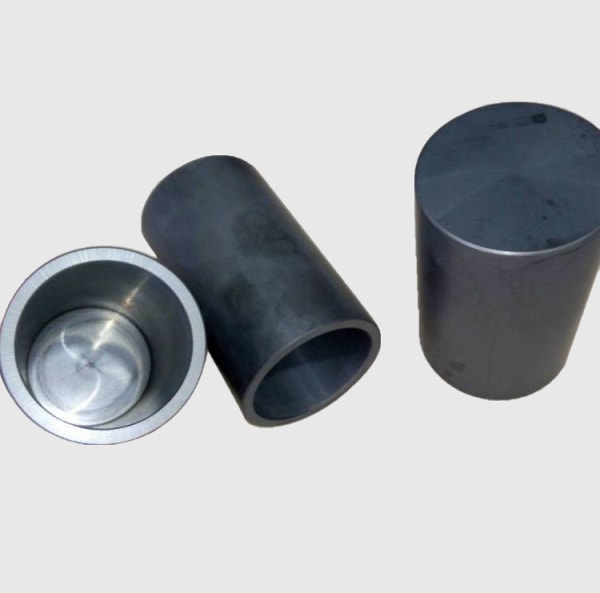
| Nitride-Bonded SiC (NBSC) | Good strength, thermal shock resistance, excellent resistance to molten metals and slag. | Crucibles, kiln furniture, blast furnace linings, components in metallurgical processes relevant to AI hardware manufacturing. |
| Chemical Vapor Deposition SiC (CVD SiC) | Ultra-high purity, isotropic properties, theoretical density, excellent surface finish. | High-precision optical components, susceptors for epitaxial growth in semiconductor manufacturing, mirror blanks for space telescopes. |
Design Considerations for SiC Products
Designing with silicon carbide requires careful attention to its unique material properties to ensure manufacturability and optimal performance. For complex AI hardware components, meticulous design is paramount.
- Geometry Limits: SiC is a hard and brittle material, so sharp corners and abrupt changes in cross-section should be avoided to minimize stress concentrations. Smooth transitions and generous radii are preferred.
- Wall Thickness: Uniform wall thicknesses are generally recommended to facilitate even heating and cooling during manufacturing processes, reducing the risk of warpage or cracking.
- Stress Points: Identify potential stress points during operation and design to distribute loads evenly. Finite Element Analysis (FEA) is often employed to simulate performance and optimize designs.
- Tolerances: While SiC can be machined to high precision, overly tight tolerances can significantly increase manufacturing costs. Balance precision requirements with cost-effectiveness.
- Assembly Methods: Consider how the SiC component will be integrated into the larger AI hardware assembly. This might involve brazing, adhesive bonding, or mechanical fastening, each with its own design implications.
Tolerance, Surface Finish & Dimensional Accuracy
Achieving the required dimensional accuracy and surface finish for custom SiC components is crucial for their performance, especially in precision AI hardware. Modern machining capabilities allow for remarkable precision.
- Achievable Tolerances: Depending on the size and complexity of the part, tolerances can typically be held within $pm0.025$ mm to $pm0.050$ mm for standard machining. For ultra-precision applications, grinding and lapping can achieve even tighter tolerances.
- Surface Finish Options: Surface finishes can range from rough, as-sintered surfaces to highly polished, mirror-like finishes. The required surface finish is dictated by the application – for instance, components interacting with fluids or requiring low friction will demand finer finishes.
- Precision Capabilities: Advanced grinding, lapping, and polishing techniques enable the production of SiC components with exceptional flatness, parallelism, and perpendicularity, vital for stacking components in AI chip packages or creating precise alignment features.
Post-Processing Needs for SiC Components
After initial forming and sintering, many silicon carbide components undergo additional post-processing steps to achieve their final specifications and enhance performance.
- Grinding: Precision grinding is commonly used to achieve tight dimensional tolerances, improve surface finish, and remove any material irregularities.
- Lapping: Lapping is a fine abrasive machining process used to achieve very flat surfaces and extremely tight dimensional control, often crucial for sealing applications or interfaces in AI hardware.
- Polishing: Polishing can achieve mirror-like surface finishes, reducing friction and enhancing optical properties for specific applications.
- Sealing/Coating: In certain environments, SiC components may benefit from specialized coatings or impregnation to enhance chemical resistance, reduce porosity, or modify surface properties.
Common Challenges and How to Overcome Them
While silicon carbide offers immense advantages, working with this advanced material presents unique challenges that experienced manufacturers are adept at overcoming.
- Brittleness: SiC is a hard but brittle material, making it susceptible to chipping or cracking if mishandled or subjected to sudden impacts. Careful design to avoid stress concentrations and precise machining techniques are crucial.
- Machining Complexity: Its extreme hardness makes SiC difficult and expensive to machine, requiring specialized diamond grinding tools and techniques. This complexity contributes to the overall cost but ensures the necessary precision.
- Thermal Shock: While generally good, extreme and rapid temperature changes can still induce thermal stress in SiC. Proper design and controlled heating/cooling rates during manufacturing and operation are key.
- Cost: The raw material and manufacturing processes for SiC are generally more expensive than traditional materials. However, the extended lifespan, superior performance, and energy efficiency often result in a lower total cost of ownership.
How to Choose the Right SiC Supplier
Selecting a reliable supplier for custom silicon carbide products is a critical decision that directly impacts the success of your AI hardware projects. Look for a partner with proven expertise and comprehensive capabilities.
- Technical Capabilities: Evaluate the supplier’s engineering team, R&D capabilities, and their ability to provide design assistance. Do they have experience with complex geometries and demanding specifications?
- Material Options: Ensure they offer a wide range of SiC grades and compositions to meet your specific application requirements.
- Manufacturing Processes: Inquire about their manufacturing facilities, quality control procedures, and ability to handle both small prototypes and large-scale production runs.
- Certifications and Quality Assurance: Look for certifications like ISO 9001 and robust quality control systems to ensure consistent product quality.
- Industry Experience: A supplier with a strong track record in your specific industry (e.g., semiconductors, aerospace, power electronics) will better understand your unique needs.
Here at Sicarb Tech, we pride ourselves on being a premier partner for custom silicon carbide solutions. As you are aware, the hub of China’s silicon carbide customizable parts manufacturing is situated in Weifang City of China. Now the region has been home to over 40 silicon carbide production enterprises of various sizes, collectively accounting for more than 80% of the nation’s total silicon carbide output. We, Sicarb Tech, have been introducing and implementing silicon carbide production technology since 2015, assisting the local enterprises in achieving large-scale production and technological advancements in product processes. We have been a witness to the emergence and ongoing development of the local silicon carbide industry.
We possess a domestic top-tier professional team specializing in customized production of silicon carbide products. Under our support, 381+ local enterprises have benefited from our technologies. We possess a wide array of technologies, such as material, process, design, measurement & evaluation technologies, along with the integrated process from materials to products. This enables us to meet diverse customization needs. We can offer you higher-quality, cost-competitive customized silicon carbide components in China. Discover our success stories and customization capabilities.
Cost Drivers and Lead Time Considerations
The cost and lead time for custom silicon carbide products are influenced by several factors that procurement managers and technical buyers should be aware of.
Cost Factors:
- Material Grade: Different SiC grades have varying raw material costs and processing complexities. For example, high-purity CVD SiC is typically more expensive than reaction-bonded SiC.
- Part Complexity: Intricate geometries, tight tolerances, and fine surface finishes require more specialized machining and longer processing times, increasing costs.
- Volume: As with most manufactured goods, higher production volumes generally lead to lower per-unit costs due to economies of scale.
- Post-Processing: Additional steps like lapping, polishing, or special coatings add to the overall cost.
Lead Time Considerations:
- Design Complexity: Complex designs require more engineering time for optimization and programming of machining equipment.
- Material Availability: While SiC raw materials are generally available, specialized grades or large volumes might have longer procurement times.
- Manufacturing Process: The specific manufacturing process (e.g., reaction bonding, sintering) and post-processing steps dictate the overall production timeline.
- Supplier Workload: The supplier’s current production queue can impact lead times. It’s always advisable to communicate your project timeline early.
We are also committed to assisting you in establishing a specialized factory. If you need to build a professional silicon carbide products manufacturing plant in your country, Sicarb Tech can provide you with the technology transfer for professional silicon carbide production, along with a full-range of services (turnkey project) including factory design, procurement of specialized equipment, installation and commissioning, and trial production. This enables you to own a professional silicon carbide products manufacturing plant while ensuring a more effective investment, reliable technology transformation, and guaranteed input-output ratio.
Frequently Asked Questions (FAQ)
- Q1: What are the primary benefits of using SiC over silicon in AI hardware?
- A1: SiC offers superior thermal conductivity, higher breakdown voltage, and lower switching losses compared to silicon. These properties enable AI hardware to operate at higher power densities and temperatures, leading to more compact, efficient, and reliable systems.
- Q2: Is SiC compatible with existing semiconductor manufacturing processes?
- A2: While SiC processing requires specialized equipment and expertise due to its hardness and high melting point, many fundamental semiconductor manufacturing techniques can be adapted. Advanced SiC foundries are increasingly integrating these processes.
- Q3: How durable are custom SiC components in harsh environments?
- A3: Custom SiC components are exceptionally durable. They exhibit excellent resistance to high temperatures, aggressive chemicals, and abrasive wear, making them ideal for demanding applications in aerospace, chemical processing, and high-temperature furnaces, ensuring longevity even in challenging conditions.
- Q4: Can Sicarb Tech assist with custom SiC component design?
- A4: Absolutely. Our professional team specializes in customized production and possesses a wide array of technologies, including material science, process engineering, and design. We offer comprehensive support from initial concept to final product, ensuring optimal design for manufacturability and performance. Learn more about our customizing support.
- Q5: What industries benefit most from custom silicon carbide in AI applications?
- A5: Industries such as semiconductor manufacturing, power electronics, data centers, automotive (for electric vehicles with AI features), aerospace, and defense benefit significantly from custom SiC due to its ability to handle high power, high temperatures, and provide superior reliability for AI hardware.
Conclusion: SiC – Powering the AI Revolution
The relentless pursuit of higher performance and efficiency in AI hardware necessitates a fundamental shift in material science. Custom silicon carbide products are not merely an alternative; they are the future. Their unparalleled thermal, electrical, and mechanical properties make them indispensable for developing the next generation of AI accelerators, power management systems, and robust computing platforms. For industries spanning semiconductors, automotive, aerospace, and beyond, embracing custom SiC solutions is key to unlocking new levels of innovation and maintaining a competitive edge. Partnering with a knowledgeable and capable silicon carbide supplier like Sicarb Tech ensures access to the expertise, technology, and reliable supply needed to transform your AI hardware vision into reality.

About the Author: Sicarb Tech
We provide clear and reliable insights into silicon carbide materials, component manufacturing, application technologies, and global market trends. Our content reflects industry expertise, practical experience, and a commitment to helping readers understand the evolving SiC landscape.

Customizable SiC
You May Also Interest
-
![]()
Silicon Carbide for Valves: Unlocking Unparalleled Performance in Demanding Applications
In the relentless pursuit of operational excellence and enhanced durability, industries are increasingly turning to advanced materials that can withstand extreme conditions. For valve applications, where reliability and longevity are paramount, custom silicon carbide (SiC) products have emerged as a game-changing solution. This technical ceramic offers an exceptional combination of properties that traditional valve materials…
-
![]()
Your SiC Design Lab Partnership for Success
Your SiC Design Lab Partnership for Success In the relentless pursuit of performance, efficiency, and durability across demanding industrial landscapes, the materials chosen for critical components play a pivotal role. Among these, custom silicon carbide (SiC) products stand out as a revolutionary solution, offering unparalleled properties for extreme environments. From the microscopic precision of semiconductor…
-
![]()
Revolutionizing Thermal Management: The Power of Silicon Carbide in Modern Heat Exchangers
In the relentless pursuit of efficiency, durability, and performance, industries are increasingly turning to advanced materials that can withstand extreme operational demands. When it comes to thermal management, particularly in corrosive and high-temperature environments, silicon carbide (SiC) heat exchangers have emerged as a transformative technology. These components are not just incremental improvements; they represent a…