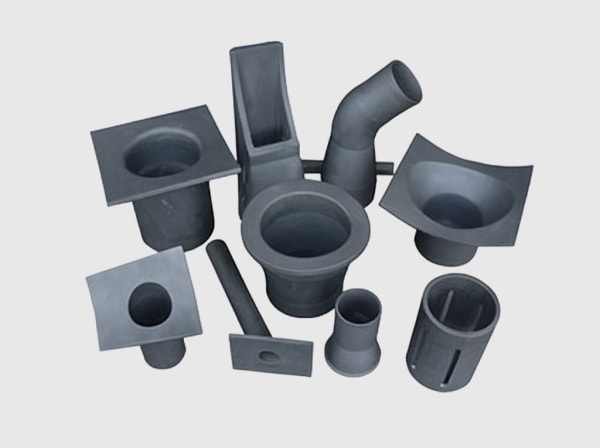
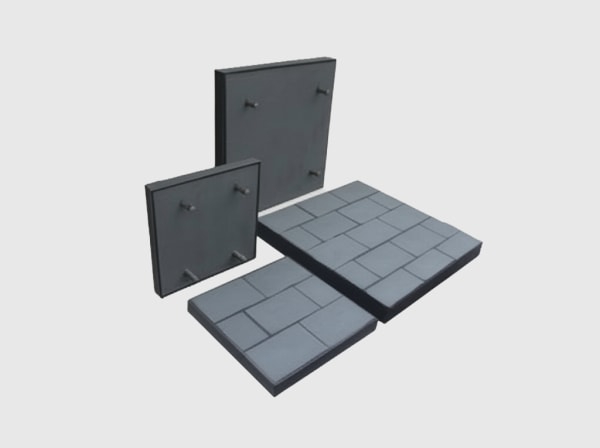
SiC Spray Nozzles: Coating Consumable Solutions
Share
SiC Spray Nozzles: Coating Consumable Solutions
In the relentless pursuit of efficiency, durability, and precision across critical industrial sectors, the demand for advanced materials that can withstand extreme conditions is paramount. Among these, silicon carbide (SiC) stands out as a material of choice, particularly for applications requiring superior wear resistance, chemical inertness, and thermal stability. This is especially true for silicon carbide spray nozzles, which serve as vital coating consumable solutions in a myriad of high-performance processes.
This blog post will delve into the world of custom silicon carbide spray nozzles, exploring their indispensable role in industries ranging from semiconductor manufacturing to aerospace, and from power electronics to chemical processing. We’ll examine the benefits of customization, key design considerations, and how to choose a reliable supplier for these critical components. For technical buyers, engineers, and procurement managers, understanding the nuances of SiC technology is key to unlocking new levels of operational excellence.
Applications of SiC Spray Nozzles
Silicon carbide spray nozzles are not just components; they are performance enablers in environments where conventional materials fail. Their unique properties make them ideal for a wide array of demanding applications across diverse industries:
- Semiconductor Manufacturing: For etching, cleaning, and coating processes where chemical resistance to corrosive media and precision spray patterns are critical.
- Automotive Industry: In surface treatment, engine component cooling, and emission control systems requiring high temperature and wear resistance.
- Aerospace Components: For thermal barrier coatings, engine cooling, and precise fuel injection in extreme temperature and pressure conditions.
- Power Electronics Manufacturing: In the production of SiC wafers and devices, where ultra-pure and precise spraying of slurries and chemicals is essential.
- Renewable Energy (Solar & Wind): For coating applications on solar panels, turbine blade erosion protection, and specialized cooling systems.
- Metallurgy: In atomization processes, quench cooling, and precise application of lubricants or coolants in hot rolling mills.
- Defense Contractors: For ballistic protection coatings, high-temperature engine components, and specialized fluid delivery systems in harsh environments.
- Chemical Processing Companies: Handling corrosive acids, alkalis, and abrasive slurries in reaction vessels, scrubbers, and industrial dryers.
- LED Manufacturers: In the deposition of thin films and phosphors, where uniform and contamination-free spraying is crucial.
- Industrial Equipment Manufacturers: For parts in sandblasting equipment, high-pressure cleaning systems, and precise lubricant application.
- Telecommunications Companies: In the manufacturing of optical fibers and specialized electronic components requiring precise material deposition.
- Oil and Gas Companies: For drilling fluid nozzles, erosion-resistant components in hydraulic fracturing, and wellhead equipment.
- Medical Device Manufacturers: In sterile processing and precision coating of implants and instruments where purity and wear resistance are critical.
- Rail Transportation Companies: For brake systems, engine components, and anti-corrosion coatings exposed to harsh operating conditions.
- Nuclear Energy Companies: For reactor cooling systems, waste treatment, and critical components requiring extreme radiation and corrosion resistance.
Advantages of Custom SiC Spray Nozzles
Opting for custom silicon carbide spray nozzles offers significant advantages over off-the-shelf solutions, particularly when addressing highly specific industrial challenges. These benefits stem from SiC’s inherent properties, enhanced by tailored design and manufacturing:
- Exceptional Wear Resistance: SiC is one of the hardest materials known, providing superior resistance to abrasion and erosion, extending nozzle lifespan significantly in abrasive media applications.
- Outstanding Chemical Inertness: It exhibits excellent resistance to a wide range of corrosive chemicals, including strong acids, alkalis, and solvents, ensuring purity and preventing contamination in sensitive processes.
- High Thermal Stability: SiC maintains its mechanical properties at elevated temperatures, making it ideal for high-temperature spraying and processing environments.
- Superior Hardness and Stiffness: These properties contribute to dimensional stability and precise spray patterns, even under high pressures and extreme conditions.
- Lower Thermal Expansion: Minimizes thermal stress and cracking, leading to greater durability and reliability in thermal cycling applications.
- Customization for Optimal Performance: Tailored designs ensure precise flow rates, spray angles, and droplet sizes, optimizing process efficiency and material usage. This level of precision is often critical for achieving desired product quality and reducing waste in advanced manufacturing.
Recommended SiC Grades and Compositions
The performance of a silicon carbide spray nozzle is highly dependent on the specific grade and composition of the SiC used. Different manufacturing processes yield distinct material properties, making the selection crucial for optimal application performance. Here’s a brief overview:
| SiC Grade/Type | Key Properties | Typical Applications for Nozzles |
|---|---|---|
| Reaction-Bonded SiC (RBSiC) | High hardness, excellent wear resistance, good thermal shock resistance, fine-grained structure. Cost-effective for larger geometries. | Abrasive blasting, high-pressure cleaning, slurry atomization, chemical processing. |
| Sintered Alpha SiC (SSiC) | Extremely high hardness, superior corrosion resistance, high strength, excellent thermal conductivity, finer grain structure. | Semiconductor etching, high-purity chemical spraying, precision coating, high-temperature fluid delivery. |
| Nitride-Bonded SiC (NBSiC) | Good mechanical strength, reasonable thermal shock resistance, often used for components requiring complex shapes. | General industrial spraying, furnace components, wear plates. |
| Recrystallized SiC (ReSiC) | High purity, excellent thermal shock resistance, minimal outgassing. | Applications requiring very high purity and minimal contamination, such as semiconductor processing. |
Design Considerations for SiC Products
Designing custom silicon carbide spray nozzles requires a deep understanding of both material science and application-specific demands. Key design considerations include:
- Geometry and Wall Thickness: SiC is hard and brittle, so sharp corners and sudden changes in cross-section should be avoided to prevent stress concentrations. Uniform wall thickness is preferred for consistent cooling and reduced internal stresses during manufacturing and operation.
- Flow Dynamics: Designing the internal channels to optimize flow, minimize pressure drop, and achieve desired spray patterns (e.g., full cone, hollow cone, flat fan) is critical. This involves careful consideration of orifice size, swirl chamber design, and exit angles.
- Mounting and Sealing: How the nozzle will be integrated into the larger system is vital. This includes considering threads, flanges, or other mounting features, along with appropriate sealing mechanisms to prevent leaks under pressure.
- Surface Finish Requirements: The desired surface roughness can impact spray quality and prevent particle adhesion in critical applications.
- Thermal Management: For high-temperature applications, understanding heat transfer within the nozzle and its impact on material integrity is crucial.
- Stress Points: Identifying potential stress concentration areas, especially where the nozzle connects to other components or experiences significant pressure changes, is essential for robust design.
Tolerance, Surface Finish & Dimensional Accuracy
Achieving tight tolerances and specific surface finishes is paramount for high-performance SiC spray nozzles. These factors directly impact spray pattern accuracy, flow rate consistency, and resistance to clogging and wear:
- Achievable Tolerances: While SiC is extremely hard, advanced machining techniques allow for very tight tolerances, often in the micron range, especially for critical features like the orifice and internal channels.
- Surface Finish Options: Depending on the application, surfaces can be ground, lapped, or polished to achieve specific roughness (Ra) values. A finer surface finish can improve flow characteristics, reduce friction, and prevent particle build-up.
- Dimensional Accuracy: High precision ensures consistent spray performance across multiple nozzles, which is vital in applications requiring uniform coverage or precise material deposition.
Post-Processing Needs for SiC Nozzles
While SiC is an inherently robust material, certain post-processing steps can further enhance the performance and durability of spray nozzles:
- Grinding and Lapping: These processes are often used to achieve tight dimensional tolerances and superior surface finishes, crucial for optimizing flow characteristics and preventing clogging.
- Sealing: For certain applications, particularly those involving corrosive liquids or high pressures, impregnating or coating the SiC with a compatible sealant can further enhance its chemical resistance and prevent permeation.
- Coating: While SiC itself is highly resistant, specialized coatings (e.g., diamond-like carbon, specialized polymers) can be applied to further enhance specific properties like friction reduction or non-stick surfaces, though this is less common for spray nozzles than other SiC products.
- Inspection and Quality Control: Rigorous post-processing inspection, including dimensional checks, flow testing, and visual inspection for defects, is essential to ensure that each nozzle meets the required performance specifications.
Common Challenges and How to Overcome Them
Despite its superior properties, working with silicon carbide presents certain challenges. A reputable supplier will have strategies to mitigate these:
- Brittleness: SiC is inherently brittle, making it susceptible to chipping or cracking under impact or excessive tensile stress.
- Overcoming: Careful design to avoid stress concentrations, robust handling procedures, and appropriate mounting techniques are crucial.
- Machining Complexity: Its extreme hardness makes SiC difficult and expensive to machine, requiring specialized tools and techniques.
- Overcoming: Advanced diamond grinding, laser machining, and ultrasonic machining are employed, adding to the cost but ensuring precision.
- Thermal Shock: While generally good, extreme and rapid temperature changes can still induce thermal shock in certain SiC grades.
- Overcoming: Designing for gradual temperature transitions or selecting SiC grades with superior thermal shock resistance (e.g., RBSiC, ReSiC) can help.
- Cost: Custom SiC components can have a higher upfront cost compared to traditional materials.
- Overcoming: Emphasize the total cost of ownership (TCO), highlighting extended lifespan, reduced downtime, and improved process efficiency that justify the initial investment.
How to Choose the Right SiC Supplier
Selecting the right partner for your custom silicon carbide spray nozzles is a critical decision. Look for a supplier that demonstrates:
- Technical Expertise: A deep understanding of SiC material science, manufacturing processes, and application engineering. They should be able to advise on the best SiC grade and design for your specific needs.
- Advanced Manufacturing Capabilities: Access to state-of-the-art machining equipment (diamond grinding, laser, ultrasonic) and quality control processes.
- Material Options: A diverse portfolio of SiC grades (RBSiC, SSiC, NBSiC, ReSiC) to match various application requirements.
- Quality Certifications: Adherence to international quality standards (e.g., ISO 9001) and robust internal quality assurance protocols.
- Customization Support: A willingness and capability to work closely with you from concept to final product, offering design optimization and prototyping services.
- Reliability and Track Record: Proven success with other industrial clients and a strong reputation for on-time delivery and consistent product quality.
Here in the hub of China’s silicon carbide customizable parts factories, particularly in Weifang City, a unique ecosystem of expertise has flourished. This region is home to over 40 silicon carbide production enterprises, collectively accounting for more than 80% of the nation’s total SiC output. This concentration of manufacturing power provides a distinct advantage for sourcing high-quality, cost-competitive custom SiC components.
This unique backing provides a bridge for the integration and commercialization of scientific and technological achievements, ensuring more reliable quality and supply assurance within China. Sicarb Tech possesses a domestic top-tier professional team specializing in customized production of silicon carbide products. Their expertise extends across material, process, design, measurement, and evaluation technologies, offering an integrated approach from raw materials to finished products. Under their support, over 360 local enterprises have benefited from their technologies. This extensive experience enables them to meet diverse customization needs and offer you higher-quality, cost-competitive customized silicon carbide components in China. Furthermore, if you are looking to establish a professional silicon carbide products manufacturing plant in your country, Sicarb Tech can provide comprehensive technology transfer services (turnkey project), including factory design, procurement of specialized equipment, installation and commissioning, and trial production, ensuring an effective investment with guaranteed input-output ratio. Learn more about their technology transfer solutions.
Cost Drivers and Lead Time Considerations
Understanding the factors influencing the cost and lead time of custom SiC spray nozzles is essential for effective procurement and project planning:
- Material Grade: Sintered SiC (SSiC) and Recrystallized SiC (ReSiC) typically command higher prices due to their superior properties and more complex manufacturing processes compared to Reaction-Bonded SiC (RBSiC).
- Design Complexity: Intricate geometries, very tight tolerances, and highly specialized internal features increase manufacturing difficulty and, consequently, cost.
- Volume: As with most custom manufactured goods, larger order volumes generally lead to lower per-unit costs due as fixed setup costs are amortized over more parts.
- Surface Finish Requirements: Achieving very fine surface finishes or precise dimensional accuracy often requires additional machining and inspection steps, impacting both cost and lead time.
- Post-Processing: Any additional treatments like specialized coatings or sealing will add to the overall cost and production time.
- Lead Time: This can vary significantly based on design complexity, material availability, current production schedules, and the supplier’s capacity. Prototyping may add to the initial lead time but can save significant time and cost in the long run by ensuring the design is correct before full-scale production.
Frequently Asked Questions (FAQ)
- Q1: How do custom SiC spray nozzles compare to traditional ceramic nozzles in terms of lifespan?
- A1: Custom SiC spray nozzles typically offer significantly longer lifespans than traditional ceramic nozzles (like alumina or zirconia) due to SiC’s superior hardness, wear resistance, and chemical inertness. In abrasive or corrosive environments, SiC nozzles can outlast conventional options by factors of 5 to 10 or more, leading to substantial cost savings from reduced downtime and replacement frequency. For a look at successful implementations, check out our cases studies.
- Q2: Can silicon carbide spray nozzles be used with highly corrosive chemicals?
- A2: Yes, silicon carbide exhibits exceptional chemical inertness to a wide range of corrosive media, including strong acids (hydrofluoric acid, sulfuric acid), alkalis, and many organic solvents. This makes SiC spray nozzles ideal for chemical processing, semiconductor manufacturing, and other industries where chemical compatibility is critical.
- Q3: What design information is critical when requesting a quote for custom SiC spray nozzles?
- A3: To ensure an accurate quote and efficient production, provide detailed CAD drawings (2D and 3D), specifications for material grade (e.g., RBSiC, SSiC), required spray pattern and flow rate, operating pressure and temperature, details of the fluid being sprayed (including abrasiveness or corrosiveness), desired tolerances, surface finish requirements, and estimated annual volume. You can reach out to us directly via our contact page.
Conclusion
Custom silicon carbide spray nozzles represent a pinnacle of engineering for demanding industrial applications. Their unparalleled resistance to wear, chemical corrosion, and extreme temperatures makes them an indispensable solution for optimizing performance, extending equipment lifespan, and reducing operational costs across critical sectors like semiconductors, aerospace, power electronics, and chemical processing. By understanding the distinct advantages of custom SiC, key design considerations, and the importance of selecting a knowledgeable supplier, engineers and procurement managers can make informed decisions that drive efficiency and innovation. Investing in high-quality SiC spray nozzles is not just a purchase; it’s a strategic move towards superior reliability and long-term value in your most challenging operations. For more information, please visit our website.

About the Author: Sicarb Tech
We provide clear and reliable insights into silicon carbide materials, component manufacturing, application technologies, and global market trends. Our content reflects industry expertise, practical experience, and a commitment to helping readers understand the evolving SiC landscape.

Customizable SiC
You May Also Interest
-
![]()
Mastering Precision: The Essential Guide to Silicon Carbide Molding Machines for Industrial Excellence
The demand for high-performance materials capable of withstanding extreme industrial environments has never been greater. Silicon carbide (SiC) has emerged as a frontrunner, prized for its exceptional hardness, thermal conductivity, and resistance to wear and corrosion. However, harnessing these properties effectively in manufactured components hinges on the sophistication of production technologies, particularly silicon carbide molding…
-
SiC Foam Filters for Effective Particulate Capture
SiC Foam Filters for Effective Particulate Capture In demanding industrial environments, achieving optimal particulate capture is crucial for operational efficiency, product quality, and environmental compliance. Traditional filtration materials often fall short in extreme conditions, leading to frequent replacements, downtime, and compromised performance. This is where silicon carbide (SiC) foam filters emerge as a transformative solution….
-
![]()
Mastering Precision and Durability: A Guide to Silicon Carbide Extrusion Equipment
Silicon carbide (SiC) stands as a cornerstone material in high-performance industrial applications, prized for its exceptional hardness, thermal conductivity, and resistance to wear and chemical attack. For manufacturers aiming to produce complex SiC components like tubes, rods, and custom profiles with consistent quality and precision, silicon carbide extrusion equipment is indispensable. This advanced machinery is…