Revolutionizing High-Temperature Operations: The Power of Custom Silicon Carbide in Industrial Furnaces
Share
Introduction: The Indispensable Role of Custom Silicon Carbide in Modern Industrial Furnaces
Industrial furnaces are the workhorses of numerous high-temperature processes, from metal heat treatment and ceramics firing to chemical synthesis and waste incineration. The efficiency, reliability, and longevity of these furnaces heavily depend on the materials used in their construction, particularly for components exposed to extreme temperatures, corrosive atmospheres, and severe thermal cycling. While traditional refractories have served their purpose, the relentless drive for higher performance, greater energy efficiency, and longer service life has paved the way for advanced technical ceramics, with custom silicon carbide (SiC) emerging as a frontrunner.
Silicon carbide is a synthetic compound of silicon and carbon, renowned for its exceptional hardness, high thermal conductivity, excellent resistance to wear and corrosion, and superior strength at elevated temperatures. Custom SiC products for industrial furnaces are components specifically engineered and manufactured to meet the unique demands of a particular furnace design and application. This bespoke approach ensures optimal performance, something off-the-shelf solutions often cannot guarantee. In high-performance industrial applications, where even marginal improvements in efficiency or component lifespan can translate to significant cost savings and productivity gains, the adoption of custom silicon carbide is not just a preference but a strategic imperative. These components are essential for pushing the boundaries of what’s possible in thermal processing, enabling industries to operate hotter, faster, and for longer durations with greater control and reliability. For procurement managers and technical buyers in sectors like semiconductor manufacturing, aerospace, and heavy industry, understanding the value proposition of custom SiC is key to maintaining a competitive edge.
Key Applications of Silicon Carbide in High-Temperature Industrial Furnaces
The versatility and outstanding properties of silicon carbide make it suitable for a wide array of critical components within industrial furnaces. Its ability to withstand harsh conditions where other materials falter has led to its widespread adoption in various forms. High-temperature SiC furnace parts are integral to achieving optimal thermal processing environments.
Some of the primary applications include:
- Heating Elements: SiC heating elements (e.g., rods, spirals, U-shaped, W-shaped) are favored for their ability to operate at very high temperatures (often exceeding 1600∘C), providing rapid and uniform heating. Their high electrical resistivity and thermal conductivity ensure efficient energy conversion.
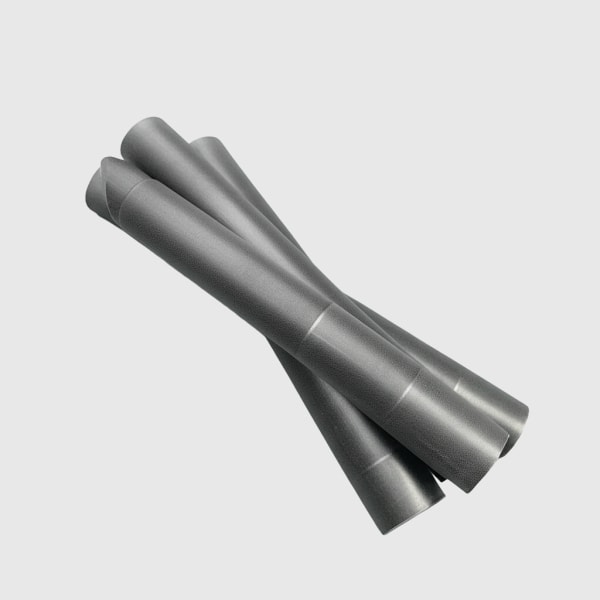
- Radiant Tubes: In indirectly heated furnaces, SiC radiant tubes offer excellent thermal conductivity for efficient heat transfer to the furnace chamber while protecting the workload from combustion byproducts. They are particularly useful in controlled atmosphere furnaces for processes like carburizing and nitriding.
- Beams, Rollers, and Supports: The exceptional hot strength and creep resistance of SiC make it ideal for structural components like SiC beams and rollers for heat treatment furnaces. These components support heavy loads at extreme temperatures without significant deformation, ensuring the integrity of the furnace structure and the processed materials. This includes kiln cars and support structures within large industrial kilns.
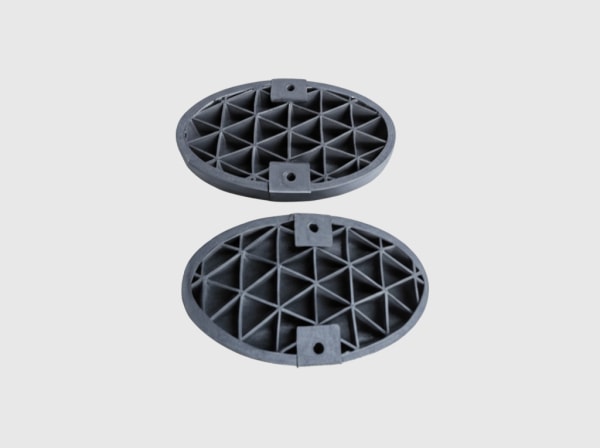
- Kiln Furniture: This broad category includes setters, plates, posts, and saggers used to support and separate products during firing. SiC kiln furniture offers advantages like thinner cross-sections (reducing thermal mass), excellent thermal shock resistance, and long life, leading to increased furnace capacity and energy savings.
- Liners and Protection Tubes: SiC liners protect furnace walls from corrosive environments and wear. SiC thermocouple protection tubes shield temperature sensors from harsh chemical and thermal conditions, ensuring accurate temperature measurement and control.
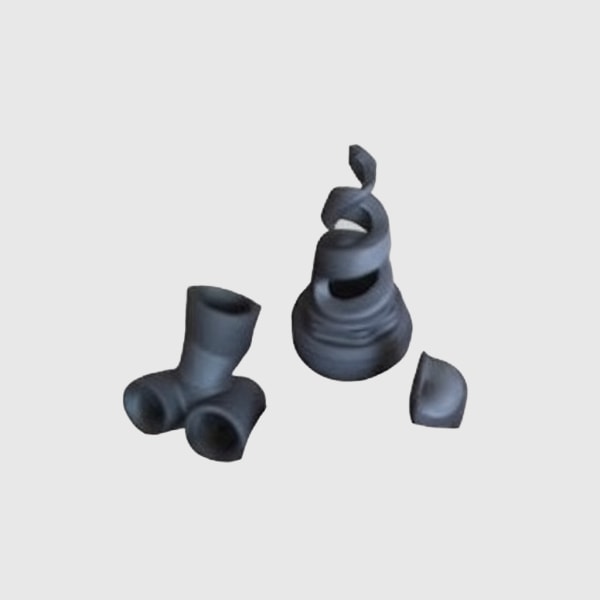
- Nozzles and Burner Components: The wear and erosion resistance of SiC, coupled with its thermal stability, makes it an excellent material for burner nozzles, flame tubes, and other combustion system components, extending their operational life and maintaining combustion efficiency.
- Crucibles and Muffles: For applications involving melting or processing highly reactive materials, SiC crucibles and muffles provide excellent chemical inertness and thermal stability.
The demand for these industrial furnace components is driven by the need for higher process temperatures, improved energy efficiency, and reduced maintenance downtime across industries such as metallurgy, ceramics, glass manufacturing, and chemical processing.
Why Custom Silicon Carbide is the Superior Choice for Furnace Components
Opting for custom-designed silicon carbide components over standard or alternative materials offers a multitude of advantages, directly impacting furnace performance, operational costs, and product quality. The unique combination of properties inherent to SiC, when tailored to specific furnace conditions, delivers unparalleled benefits. For businesses looking to procure custom SiC for furnaces, understanding these advantages is crucial for making informed investment decisions.
Key benefits include:
- Exceptional Thermal Resistance and Stability: Silicon carbide maintains its mechanical strength and structural integrity at extremely high temperatures (often up to 1600∘C or higher, depending on the grade). Unlike many metals that soften or ceramics that may creep, SiC components resist sagging, warping, and degradation, ensuring long operational life even under continuous high-heat conditions. This makes high-temperature SiC furnace parts indispensable.
- Superior Thermal Shock Resistance: Industrial furnaces often undergo rapid temperature changes during heating and cooling cycles. SiC’s low thermal expansion coefficient and high thermal conductivity give it excellent resistance to thermal shock, preventing cracking and failure where other ceramics might fracture. This is particularly important for SiC kiln furniture and heating elements that experience frequent cycling.
- High Thermal Conductivity: Good thermal conductivity ensures efficient and uniform heat distribution within the furnace. For SiC heating elements and radiant tubes, this translates to faster heat-up times, better temperature uniformity within the processing chamber, and reduced energy consumption.
- Outstanding Wear and Abrasion Resistance: SiC is one of the hardest commercially available materials, second only to diamond. This makes SiC components highly resistant to abrasive wear from particulate matter in flue gases or from contact with processed materials, extending the life of liners, nozzles, and rollers.
- Excellent Chemical Inertness and Corrosion Resistance: Silicon carbide exhibits remarkable resistance to a wide range of corrosive agents, including acids, alkalis, molten salts, and aggressive gases, even at high temperatures. This property is vital for furnace components exposed to chemical fumes, molten metals (e.g., aluminum, zinc), or reactive atmospheres, preventing contamination and material degradation.
- Energy Efficiency: The ability to operate at higher temperatures with better heat transfer, combined with the potential for designing lighter-weight components (e.g., thin-walled kiln furniture), can lead to significant energy savings. Faster cycle times and reduced thermal mass contribute to lower fuel or electricity consumption per unit of product processed.
- Customization for Optimal Performance: The key advantage of custom silicon carbide is the ability to tailor the material grade, design, and geometry to the precise requirements of the application. This ensures that the component performs optimally, maximizing its lifespan and the overall efficiency of the furnace. This is a core strength of specialized suppliers like Sicarb Tech, who can leverage their deep understanding of SiC technology to provide bespoke solutions.
These benefits collectively translate to lower maintenance costs, reduced downtime, improved product quality, and enhanced overall productivity for industries relying on high-temperature furnace operations.
Selecting the Right Silicon Carbide Grade for Your Furnace Application
Not all silicon carbide is created equal. Different manufacturing processes result in various SiC grades with distinct properties, making the selection of the appropriate grade critical for optimal performance and longevity in a specific furnace application. Procurement professionals and engineers should consider factors such as maximum operating temperature, atmosphere, mechanical load, and potential for chemical attack when choosing. Leading suppliers, including those in the Weifang City hub like Sicarb Tech, offer a range of grades and the expertise to guide selection.
Here are some common types of silicon carbide and their typical characteristics relevant to industrial furnaces:
| SiC Grade | Key Manufacturing Process | Key Properties for Furnace Applications | Typical Furnace Applications |
|---|---|---|---|
| Reaction-Bonded SiC (RBSiC or SiSiC) | Infiltration of molten silicon into a porous SiC + carbon preform. | Good mechanical strength, excellent wear resistance, high thermal conductivity, good thermal shock resistance, moderate high-temperature strength (limited by free silicon, typically up to 1350−1380∘C). Relatively complex shapes possible. | Beams, rollers, nozzles, radiant tubes, kiln furniture (plates, setters), wear liners, thermocouple protection tubes in applications where extreme temperatures (above 1380∘C) are not the primary concern. |
| Sintered SiC (SSiC) | Sintering of fine SiC powder at high temperatures (often >2000∘C), usually without a binder (Pressureless Sintered – SSiC) or with pressure (Hot Pressed – HPSiC, Hot Isostatic Pressed – HIPSiC). | Very high purity, excellent high-temperature strength (up to 1600−1750∘C or higher), superior corrosion resistance (especially to acids), good wear resistance, high thermal conductivity. Typically denser and less porous than RBSiC. | Heating elements, high-performance kiln furniture, components for semiconductor processing furnaces, bearings, seals, and applications requiring extreme chemical and thermal resistance. Demanding high-temperature SiC furnace parts. |
| Nitride-Bonded SiC (NBSiC) | SiC grains bonded by a silicon nitride (Si3N4) phase. | Excellent thermal shock resistance, good mechanical strength, good refractory properties, high emissivity. More cost-effective for certain complex shapes than SSiC. Operating temperatures typically up to 1400−1550∘C. | Kiln furniture (batts, shelves, posts), burner nozzles, components for non-ferrous metal contact, areas requiring exceptional thermal cycling stability. Often used in industrial heating applications. |
| Recrystallized SiC (RSiC) | SiC grains are bonded to each other through a high-temperature recrystallization process, forming a self-bonded structure. | High porosity, excellent thermal shock resistance, good strength at very high temperatures (up to 1650∘C or higher), lightweight. | Kiln furniture (especially thin-walled setters and plates for fast firing cycles), radiant burner tubes, specialized heating elements where porosity is acceptable or beneficial. |
| Oxide-Bonded SiC (OBSiC) | SiC grains bonded by an oxide phase. | Lower cost, good thermal shock resistance, moderate strength. Maximum use temperature is generally lower than other SiC types. | Lower temperature kiln furniture, refractory bricks, and applications where cost is a primary driver and extreme performance is not required. |
Critical Design and Manufacturing Considerations for Custom SiC Furnace Parts
Developing custom silicon carbide components for industrial furnaces is a complex process that requires careful consideration of numerous factors beyond just material selection. Effective design and manufacturing are crucial to ensure the parts function reliably under demanding operational conditions. Collaborating with an experienced supplier like Sicarb Tech, which possesses extensive design and process technology expertise, can be invaluable.
Key considerations include:
- Designing for Manufacturability (DfM):
- Geometry Limits: SiC is a hard and brittle material, which imposes limitations on the complexity of shapes that can be economically produced. While techniques like slip casting, extrusion, and injection molding allow for intricate designs, features like very sharp internal corners, extremely thin walls adjacent to thick sections, or undercuts can be challenging and costly. Early consultation with the SiC manufacturer is vital to optimize the design for the chosen manufacturing process (e.g., reaction bonding, sintering).
- Wall Thickness: Uniform wall thickness is generally preferred to minimize internal stresses during firing and in service. Minimum and maximum achievable wall thicknesses vary by SiC grade and manufacturing method.
- Draft Angles: For molded parts, appropriate draft angles are necessary for easy removal from the mold.
- Thermal Management:
- Thermal Expansion: While SiC has a relatively low coefficient of thermal expansion, it must still be accounted for, especially when SiC components are interfaced with other materials (e.g., metallic supports or furnace shells). Differential expansion can induce stress and lead to failure if not properly managed through design (e.g., expansion joints, flexible supports).
- Thermal Gradients: Steep thermal gradients across a SiC component can cause internal stresses. Designs should aim to minimize these gradients where possible, or the material grade must be selected to withstand them (e.g., NBSiC or RSiC for high thermal shock resistance).
- Mechanical Load and Stress Points:
- Load-Bearing Capacity: The design must ensure that components like beams, rollers, and supports can withstand the mechanical loads at operating temperatures. The hot modulus of rupture (HMOR) of the chosen SiC grade is a critical parameter.
- Stress Concentrations: Sharp corners, notches, and abrupt changes in cross-section can act as stress concentrators, potentially leading to crack initiation. Designs should incorporate generous radii and smooth transitions to distribute stress more evenly. Finite Element Analysis (FEA) is often used to identify and mitigate high-stress areas in complex custom SiC furnace components.
- Atmosphere and Chemical Interaction:
- The furnace atmosphere (oxidizing, reducing, vacuum, presence of specific chemicals) will influence the choice of SiC grade and may necessitate protective coatings or specific surface finishes. For example, SSiC offers superior resistance in highly corrosive environments.
- Joining and Assembly:
- If SiC parts need to be assembled into larger structures or joined to other materials, the joining method (e.g., ceramic brazing, mechanical fastening) must be carefully considered, accounting for thermal expansion differences and the strength of the joint at operating temperature.
- Tolerances and Finishing:
- The achievable dimensional tolerances depend on the SiC grade, manufacturing process, and part size. Tighter tolerances often require post-sintering machining (grinding), which can significantly increase costs. It’s crucial to specify only the necessary tolerances for functionality.
Achievable Tolerances, Surface Finish, and Post-Processing for SiC Furnace Components
The precision and surface characteristics of silicon carbide components are critical for their performance in industrial furnaces, influencing factors like fit, heat transfer, flow dynamics, and resistance to chemical attack. Understanding the achievable tolerances, available surface finishes, and necessary post-processing steps is essential for engineers designing and specifying custom SiC furnace parts.
Dimensional Tolerances:
The achievable dimensional tolerances for SiC components depend heavily on several factors:
- SiC Grade: Different grades (RBSiC, SSiC, NBSiC) have different shrinkage rates and behaviors during processing.
- Manufacturing Process:
- As-Sintered/As-Fired: Parts directly from the kiln without machining will have wider tolerances. Typical as-sintered tolerances might range from ±0.5% to ±2% of the dimension, or a minimum fixed tolerance (e.g., ±0.5 mm), whichever is greater. Complex shapes or larger parts tend to have looser tolerances.
- Machined (Ground/Lapped): For applications requiring high precision, SiC components can be diamond ground, lapped, or polished after sintering. This allows for much tighter tolerances, often in the range of ±0.01 mm to ±0.1 mm, depending on the specific dimension and feature. However, machining SiC is a costly and time-consuming process due to its extreme hardness.
- Part Size and Complexity: Larger and more complex parts are generally more challenging to control dimensionally during sintering.
Surface Finish:
The surface finish of SiC components can be tailored to the application:
- As-Fired Surface: The surface of a component directly after sintering will have a finish characteristic of the manufacturing process and mold materials. This is often suitable for general kiln furniture or structural supports where a highly smooth surface is not critical. Surface roughness (Ra) might be in the range of 1 μm to 10 μm or higher.
- Ground Surface: Grinding can achieve a smoother surface, typically with Ra values from 0.4 μm to 1.6 μm. This is often required for parts needing better sealing, more precise mating surfaces, or improved wear characteristics.
- Lapped/Polished Surface: For applications requiring extremely smooth and flat surfaces (e.g., some semiconductor processing components, mechanical seals, or specialized optical applications, though less common for general furnace parts), lapping and polishing can achieve Ra values below 0.1 μm.
Post-Processing Needs for Enhanced Furnace Performance:
Besides dimensional machining and surface finishing, other post-processing steps may be employed:
- Grinding: As mentioned, this is the most common post-processing step for achieving tight tolerances and specific profiles on SiC components such as SiC beams and rollers for heat treatment furnaces.
- Lapping and Polishing: Used for achieving very smooth, flat surfaces, critical for certain specialized applications.
- Cleaning: Thorough cleaning to remove any contaminants from manufacturing or machining.
- Sealing/Impregnation: For certain porous SiC grades (like some RSiC or lower-density RBSiC), sealing the porosity might be necessary to improve resistance to gas or liquid penetration or to enhance oxidation resistance. This can involve applying a ceramic glaze or other sealant.
- Coating: Application of specialized coatings (e.g., alumina, zirconia, or other ceramic materials) can sometimes be used to further enhance specific properties like chemical resistance to particular agents, alter emissivity, or provide electrical insulation.
- Edge Chamfering/Radiusing: To remove sharp edges, which can be prone to chipping in brittle materials like SiC, and to improve handling safety.
The choice of post-processing steps should be driven by the functional requirements of the technical ceramics for furnace construction and a cost-benefit analysis, as each step adds to the final component cost. Sicarb Tech, with its comprehensive process technologies, can advise on and implement the necessary post-processing to ensure optimal performance and durability of custom SiC parts.
Navigating Common Challenges in SiC Furnace Applications and Effective Solutions
While silicon carbide offers numerous advantages for industrial furnace components, engineers and procurement managers should be aware of potential challenges associated with its use. Understanding these challenges and implementing effective mitigation strategies, often with the support of experienced suppliers, is key to maximizing the benefits of SiC.
Common Challenges:
- Brittleness and Sensitivity to Impact:
- Challenge: SiC is a ceramic material and is inherently brittle, meaning it has low fracture toughness compared to metals. This can make components susceptible to damage from mechanical shock, impact, or localized overstressing during installation, maintenance, or operation.
- Solutions:
- Careful Handling and Installation: Implement proper procedures for handling, installation, and maintenance to avoid impact loads.
- Design for Brittleness: Incorporate generous radii, avoid sharp corners, and design support structures to minimize stress concentrations. Consider a systems approach to component design, ensuring compatibility with surrounding structures.
- Material Grade Selection: Some SiC grades (e.g., NBSiC, RSiC) offer better thermal shock resistance which can sometimes correlate with improved toughness in certain scenarios.
- Protective Measures: In some cases, designing protective guards or enclosures can prevent accidental impact.
- Machining Complexity and Cost:
- Challenge: Due to its extreme hardness, machining SiC (grinding, lapping) to achieve tight tolerances or complex shapes is a slow and expensive process requiring specialized diamond tooling.
- Solutions:
- Design for Net-Shape or Near-Net-Shape Manufacturing: Optimize the design to minimize the need for post-sintering machining. Utilize manufacturing processes like casting or molding that can produce parts closer to the final desired shape.
- Specify Tolerances Wisely: Only specify tight tolerances where absolutely necessary for function.
- Collaborate with Supplier: Work closely with experienced SiC manufacturers like Sicarb Tech who have optimized machining processes and can advise on design modifications to reduce machining costs.
- Oxidation at Very High Temperatures in Specific Atmospheres:
- Challenge: While generally resistant to oxidation due to the formation of a protective silica (SiO2) layer, SiC can experience active oxidation or degradation in certain atmospheres (e.g., high water vapor content, reducing atmospheres at very high temperatures) or if the protective layer is compromised. This can limit the maximum service temperature or lifespan.
- Solutions:
- Appropriate Grade Selection: Sintered SiC (SSiC) generally offers better oxidation resistance than RBSiC (due to the presence of free silicon in RBSiC).
- Atmosphere Control: Maintain furnace atmospheres within recommended limits for the specific SiC grade.
- Protective Coatings: In some instances, specialized coatings can enhance oxidation resistance, though this adds complexity and cost.
- Supplier Consultation: Discuss the specific furnace atmosphere and temperature profile with the supplier to select the most durable material.
- Thermal Expansion Mismatch and Joining:
- Challenge: When SiC components are joined to metallic structures or other ceramics with different coefficients of thermal expansion (CTE), thermal cycling can induce significant stresses at the joints, potentially leading to failure.
- Solutions:
- Flexible Joint Design: Employ designs that accommodate differential thermal expansion, such as using fibrous ceramic gaskets, expansion bellows, or sliding joints.
- Graded Material Transitions: In some advanced applications, functionally graded materials can be used to transition between materials with different CTEs.
- Specialized Brazing/Joining Techniques: Use brazing alloys or joining methods specifically developed for ceramic-to-metal or ceramic-to-ceramic joints that can accommodate some stress.
- Component Design: Design the SiC component itself to minimize stress at interfaces.
- Cost Considerations:
- Challenge: Custom SiC components can have a higher initial purchase price compared to conventional refractories or some metallic alloys.
- Solutions:
- Total Cost of Ownership (TCO) Analysis: Evaluate the TCO, considering factors like longer service life, reduced maintenance, improved energy efficiency, and increased productivity. The higher initial cost of SiC is often offset by these long-term benefits.
- Optimize Design and Grade: Work with the supplier to select the most cost-effective SiC grade and design that meets the performance requirements without over-engineering.
- Volume and Standardization: Where possible, standardizing component designs or ordering in larger volumes can help reduce per-unit costs.
Partnering with a knowledgeable supplier like Sicarb Tech is crucial for overcoming these challenges. With their foundation in the extensive SiC production hub of Weifang City and the backing of the Chinese Academy of Sciences, they offer not just products but also comprehensive technical support, from material selection and design optimization to troubleshooting operational issues. Their commitment to quality and integrated process technologies ensures that clients receive reliable and cost-effective solutions for their custom silicon carbide furnace component needs.
Frequently Asked Questions (FAQ) about Silicon Carbide in Industrial Furnaces
- What are the primary advantages of using silicon carbide components in industrial furnaces compared to traditional refractories like alumina or mullite? Silicon carbide generally offers superior performance in several key areas compared to many traditional refractories. Key advantages include:
- Higher Thermal Conductivity: SiC transfers heat more efficiently, leading to better temperature uniformity and potentially faster heating/cooling cycles.
- Excellent Thermal Shock Resistance: SiC can withstand rapid temperature changes much better than many conventional ceramics, reducing the likelihood of cracking.
- Superior Hot Strength and Creep Resistance: SiC maintains its strength and shape at very high temperatures, allowing for thinner and lighter designs (e.g., kiln furniture) and greater load-bearing capacity.
- High Wear and Abrasion Resistance: SiC is extremely hard, making it ideal for applications with abrasive conditions.
- Good Chemical Resistance: SiC is resistant to many corrosive chemicals and molten metals. While traditional refractories have their place, especially in lower-demand applications or where cost is the primary driver, custom SiC is often the preferred choice for critical high-temperature, high-stress, or corrosive furnace environments where longevity and performance are paramount.
- How does the choice of SiC grade (e.g., RBSiC, SSiC, NBSiC) impact the performance and cost of furnace components? The choice of SiC grade has a significant impact:
- Performance:
- RBSiC (SiSiC): Good all-around properties, excellent wear resistance, but typically limited by its free silicon content to temperatures around 1350−1380∘C.
- SSiC: Offers the highest temperature capability (often up to 1600−1750∘C), superior corrosion resistance, and high purity. Ideal for the most demanding applications.
- NBSiC: Known for its exceptional thermal shock resistance and good strength, often a cost-effective choice for complex shapes and applications with severe thermal cycling.
- Cost:
- Generally, SSiC is the most expensive due to the high processing temperatures and purity requirements.
- RBSiC and NBSiC are often more cost-effective, with the best choice depending on the specific balance of properties needed and the complexity of the part. Selecting the right grade involves balancing the required performance characteristics (temperature, strength, corrosion resistance, thermal shock) against the budget. Consulting with experts like those at Sicarb Tech, who understand the nuances of each grade and its suitability for specific industrial heating applications, is crucial for making an optimized choice.
- Performance:
- When considering custom silicon carbide furnace parts, what information should I provide to a supplier like Sicarb Tech to get an accurate quote and the best possible component? To ensure an accurate quotation and a component optimized for your needs, provide as much detailed information as possible, including:
- Detailed Drawings or CAD Models: Including all dimensions, critical tolerances, and surface finish requirements.
- Operating Conditions:
- Maximum and typical operating temperatures.
- Rate of temperature change (heating/cooling rates).
- Furnace atmosphere (e.g., air, nitrogen, hydrogen, vacuum, presence of specific gases or vapors, humidity levels).
- Mechanical loads (static and dynamic) that the component will experience.
- Any contact with molten metals, slags, or other corrosive/erosive media.
- Application Description: Clearly explain how and where the component will be used within the furnace.
- Current Material (if replacing an existing part): What material is currently being used, and what are the reasons for seeking an alternative or replacement?
- Expected Lifespan/Performance Requirements: Any specific targets for component life or performance metrics.
- Quantity Required: Both for initial order and potential future needs.
- Material Preference (if any): If you have a specific SiC grade in mind, or if you are open to recommendations. The more comprehensive the information, the better Sicarb Tech can leverage their expertise in material science, process technology, and design to deliver high-quality, cost-effective OEM SiC furnace parts tailored to your furnace’s demanding environment. Their location in Weifang City, the hub of China’s silicon carbide customizable parts manufacturing, combined with their association with the Chinese Academy of Sciences, positions them uniquely to meet diverse customization needs.
Conclusion: Elevating Industrial Heating with Custom Silicon Carbide
In the demanding landscape of modern industrial thermal processing, the pursuit of higher efficiencies, extended component lifespans, and enhanced product quality is relentless. Custom silicon carbide has unequivocally established itself as a cornerstone material in achieving these objectives for industrial furnaces. Its remarkable combination of high-temperature strength, superior thermal conductivity, exceptional wear and corrosion resistance, and excellent thermal shock capabilities makes it the material of choice for a vast array of critical furnace components, from heating elements and radiant tubes to complex kiln furniture and robust structural beams.
Choosing custom SiC components is an investment in reliability and long-term operational excellence. The ability to tailor the material grade, design intricacies, and manufacturing processes to the specific rigors of an application ensures that each part delivers optimal performance, outlasting conventional materials and contributing significantly to reduced downtime and lower total cost of ownership. For engineers and procurement professionals in industries ranging from semiconductor and aerospace to metallurgy and ceramics, partnering with a knowledgeable and capable supplier is paramount.
Sicarb Tech, strategically positioned in Weifang City, the heart of China’s silicon carbide innovation, and strengthened by its affiliation with the prestigious Chinese Academy of Sciences, embodies such a partner. Their deep expertise in SiC material science, advanced manufacturing technologies, and custom design, coupled with a commitment to quality, ensures that clients receive components that not only meet but exceed the challenges of their high-temperature environments. Whether you require bespoke high-temperature SiC furnace parts or seek to leverage advanced technical ceramics for furnace construction, Sicarb Tech offers a pathway to enhanced performance and a more competitive edge in your industrial heating operations. Moreover, their unique capability to provide technology transfer for establishing specialized SiC production facilities globally presents an unparalleled opportunity for businesses aiming to integrate this critical technology into their own manufacturing ecosystems.

About the Author: Sicarb Tech
We provide clear and reliable insights into silicon carbide materials, component manufacturing, application technologies, and global market trends. Our content reflects industry expertise, practical experience, and a commitment to helping readers understand the evolving SiC landscape.

Customizable SiC
You May Also Interest
-
![]()
Silicon Carbide: Revolutionizing Efficiency and Reliability in Solar Energy Systems
The global push towards renewable energy sources has placed solar power at the forefront of sustainable energy solutions. As solar technology rapidly evolves, the demand for materials that can withstand extreme conditions, enhance efficiency, and ensure long-term reliability is paramount. Custom silicon carbide (SiC) products are emerging as critical enablers in this transition, offering unparalleled…
-
![]()
Explore a Leading SiC Innovation Center Today
Explore a Leading SiC Innovation Center Today In the demanding world of advanced industrial applications, the choice of materials can make or break a project. For sectors pushing the boundaries of performance, from semiconductor manufacturing to aerospace and renewable energy, custom silicon carbide (SiC) stands out as an indispensable material. Its exceptional properties – including…
-
![]()
SiC Powering 5G Application Success & Reliability
SiC Powering 5G Application Success & Reliability The global rollout of 5G technology is rapidly transforming industries, demanding unprecedented levels of performance, efficiency, and reliability from electronic components. At the heart of this revolution, custom silicon carbide (SiC) products are emerging as a critical enabler, providing the foundational materials necessary to meet the rigorous demands…