Mastering Material Excellence: A Deep Dive into Silicon Carbide Sintering Equipment
Share
In the realm of advanced materials, silicon carbide (SiC) stands out for its exceptional properties, making it indispensable across a multitude of high-performance industrial applications. From the demanding environments of semiconductor manufacturing to the extreme temperatures of aerospace and industrial furnaces, SiC components deliver unparalleled durability, thermal conductivity, and resistance to wear and corrosion. However, the journey to achieving these superior characteristics is intricate, with the sintering process and the specialized silicon carbide sintering equipment playing a pivotal role. This blog post delves into the critical aspects of SiC sintering equipment, exploring its types, operational considerations, and the importance of selecting the right technology and supplier to unlock the full potential of this remarkable technical ceramic. For businesses looking for custom silicon carbide products or aiming to establish robust SiC production technology, understanding this equipment is paramount.
Introduction to Silicon Carbide Sintering Equipment: Powering Advanced Ceramics Production
Silicon carbide, a synthetically produced crystalline compound of silicon and carbon, is renowned for its hardness, high thermal conductivity, low thermal expansion, and resistance to acids and wear. These attributes make it a preferred material for components that must withstand severe operating conditions. However, raw SiC powder, even when formed into a desired shape (a “green body”), lacks the strength and density required for most applications. This is where sintering comes in.
Sintering is a thermal treatment process that applies heat (and sometimes pressure) to a powder compact to transform it into a dense, coherent solid body. For silicon carbide, this process is particularly challenging due to its strong covalent bonds, which make it difficult to densify without very high temperatures (often exceeding 2000∘C) or the use of sintering aids. Silicon carbide sintering equipment, therefore, refers to the specialized industrial furnaces and associated systems designed to achieve these demanding conditions with precision and control.
The importance of this equipment cannot be overstated. It is the cornerstone of advanced ceramics manufacturing, enabling the production of high-quality, reliable SiC components such as:
- Semiconductor processing equipment parts (e.g., wafer chucks, etching components, focus rings)
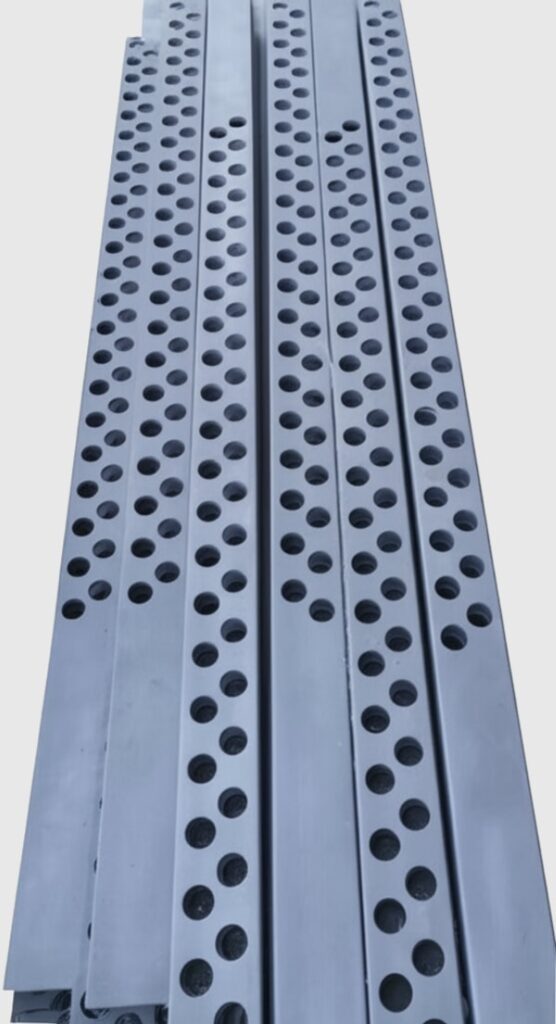
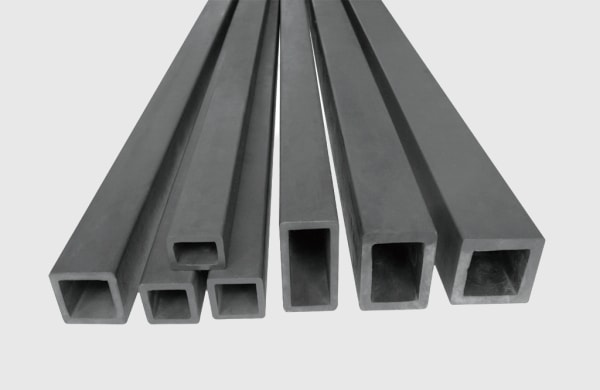
- High-temperature furnace components (e.g., beams, rollers, burner nozzles, radiant tubes)
- Aerospace components (e.g., rocket nozzles, mirrors for space telescopes)
- Energy sector ceramics (e.g., heat exchanger tubes, components for nuclear applications)
- Wear-resistant parts for industrial manufacturing (e.g., mechanical seals, pump components, blast nozzles)
Companies seeking OEM SiC parts or wholesale SiC components rely on manufacturers with cutting-edge sintering capabilities. Sicarb Tech, strategically located in Weifang City – the hub of China’s silicon carbide customizable parts manufacturing – has been instrumental in advancing SiC production technology since 2015. Leveraging the scientific prowess of the Chinese Academy of Sciences, SicSino not only provides high-quality custom SiC components but also offers comprehensive technology transfer services, empowering businesses worldwide. Our understanding of the nuances of SiC materials and their processing allows us to support local enterprises in Weifang, which collectively account for over 80% of China’s SiC output, and to offer this expertise to a global clientele.
The Critical Role of Sintering in Silicon Carbide Manufacturing: Achieving Optimal Properties
The sintering process is the linchpin in transforming loosely packed SiC powders into robust, high-density ceramic parts with tailored microstructures and, consequently, optimized physical and mechanical properties. Without effective sintering, SiC components would remain porous, mechanically weak, and unsuitable for the demanding applications where their unique characteristics are most valued. The primary goals of sintering silicon carbide are:
- Densification: Reducing porosity and increasing the overall density of the material, often approaching its theoretical maximum. Higher density typically correlates with improved mechanical strength, hardness, and thermal conductivity.
- Grain Growth Control: Managing the size and distribution of SiC grains during the high-temperature process. While some grain growth is inherent to sintering, excessive growth can be detrimental to mechanical properties like fracture toughness.
- Microstructural Homogeneity: Ensuring a uniform microstructure throughout the component, which is crucial for predictable and reliable performance.
- Phase Purity: Maintaining the desired SiC polytype (e.g., alpha-SiC or beta-SiC) and minimizing unwanted secondary phases, especially when sintering aids are used.
Different SiC material grades require distinct sintering approaches. For instance:
- Sintered Silicon Carbide (SSiC): Typically produced by pressureless sintering of fine SiC powder with non-oxide sintering aids (e.g., boron and carbon). This process usually occurs at temperatures between 2000∘C and 2200∘C in an inert atmosphere (like argon). The resulting SSiC exhibits excellent chemical purity, high strength, and superior wear resistance.
- Reaction-Bonded Silicon Carbide (RBSiC or SiSiC): Formed by infiltrating a porous compact of SiC particles and carbon with molten silicon. The silicon reacts with the carbon to form new SiC, which bonds the original particles. This process occurs at lower temperatures (around 1500∘C−1700∘C) than SSiC sintering and results in a dense material with minimal firing shrinkage. However, it contains some residual free silicon (typically 8-15%), which limits its maximum service temperature and chemical resistance in certain environments.
- Recrystallized Silicon Carbide (RSiC): Produced by firing high-purity SiC grains at very high temperatures (often 2300∘C−2500∘C). The SiC grains bond to each other through evaporation-condensation mechanisms, resulting in a porous structure but with excellent thermal shock resistance and high-temperature strength. It’s often used for kiln furniture.
The choice of sintering method and the precision of the silicon carbide sintering equipment directly impact these outcomes. Controlled temperature profiles, atmospheric conditions, and, where applicable, applied pressure are essential. CAS new materials (SicSino), with its deep roots in Weifang’s SiC industry and backing from the Chinese Academy of Sciences National Technology Transfer Center, possesses a domestic top-tier professional team specializing in customized production. Our expertise spans material science, process engineering, and design, enabling us to meet diverse customization needs by optimizing the sintering process for each specific application. This ensures our clients receive higher-quality, cost-competitive customized silicon carbide components.
Types of Silicon Carbide Sintering Furnaces and Their Industrial Applications
The selection of silicon carbide sintering equipment is dictated by the specific type of SiC being produced, the desired final properties, production volume, and economic considerations. Several distinct furnace technologies are employed in the advanced ceramics manufacturing of SiC components.
| Sintering Furnace Type | Description | Typical SiC Grades | Key Advantages | Common Industrial Applications |
|---|---|---|---|---|
| Pressureless Sintering Furnaces | Heat SiC powder compacts to high temperatures (e.g., 2000−2200∘C for SSiC) in a controlled atmosphere (e.g., Argon) without external pressure. Sintering aids are often used. | SSiC, some RSiC | Relatively simpler operation, suitable for complex shapes, cost-effective for high volume. | Kiln furniture, wear parts, mechanical seals, semiconductor components. |
| Gas Pressure Sintering (GPS) Furnaces | Apply high isostatic gas pressure (e.g., Argon or Nitrogen, up to 100 MPa or more) at elevated temperatures (e.g., 1900−2150∘C). Suppresses decomposition and enhances densification. | SSiC, N-SiC | Achieves higher densities, improved mechanical properties, can sinter larger parts. | High-performance wear parts, ballistics armor, cutting tools, components requiring maximum strength. |
| Hot Pressing (HP) Furnaces | Simultaneously apply uniaxial pressure (typically 10-50 MPa) and high temperature to the SiC powder in a die. | SSiC, specialized composites | Very high density, fine grain structure, excellent mechanical properties. | Small, high-precision components, research, specialized wear parts, armor tiles. |
| Hot Isostatic Pressing (HIP) Furnaces | Apply high isostatic gas pressure to an encapsulated SiC part at high temperature. Can be used for post-sintering densification or primary sintering. | SSiC, SiSiC (post) | Eliminates residual porosity, achieves near-theoretical density, uniform properties. | Critical aerospace components, medical implants (though less common for SiC), demanding industrial parts. |
| Spark Plasma Sintering (SPS) / Field Assisted Sintering Technology (FAST) | A pulsed DC current passes through a graphite die containing SiC powder, generating rapid heating via Joule heating and plasma effects. | SSiC, nanocomposites, novel SiC | Very rapid sintering (minutes vs. hours), lower sintering temperatures, retains fine grain sizes. | R&D, advanced materials, small complex parts, functionally graded materials. |
| Reaction Sintering (Infiltration) Furnaces | Used for RBSiC (SiSiC). A porous SiC/Carbon preform is heated (e.g., 1500−1700∘C) in a vacuum or inert atmosphere, allowing molten silicon to infiltrate and react. | RBSiC (SiSiC) | Near-net shaping, lower processing temperatures, good thermal shock resistance. | Large structural components, kiln furniture, wear liners, pump parts, heat exchangers. |
Each of these furnace types requires specific design features regarding heating elements (often graphite or specialized SiC heating elements for very high temperatures), insulation (graphite felt, ceramic fiber), atmosphere control systems (vacuum, inert gas, reactive gas), and pressure application mechanisms.
Sicarb Tech understands the intricacies of these different sintering technologies. While we specialize in the production of custom SiC parts, our deep knowledge base, developed through assisting over 10 local enterprises in Weifang with technological advancements, extends to the equipment and processes themselves. For clients considering establishing their own SiC production technology, SicSino can provide invaluable guidance, including technology transfer for professional silicon carbide production. This can range from advising on the most suitable industrial furnaces for their specific needs to offering a full turnkey project encompassing factory design, procurement of specialized equipment, installation, commissioning, and trial production. This comprehensive approach ensures a more effective investment and reliable technology transformation.
Key Design and Operational Considerations for Silicon Carbide Sintering Equipment
Selecting or operating silicon carbide sintering equipment demands careful attention to numerous design features and operational parameters to ensure consistent product quality, operational safety, and cost-effectiveness. Engineers and technical buyers must evaluate these factors thoroughly.
Key Design Considerations:
- Maximum Operating Temperature and Uniformity: SiC sintering requires very high temperatures. The furnace must be capable of reaching and maintaining these temperatures with excellent uniformity across the working zone. Temperature gradients can lead to differential shrinkage, warping, and inconsistent properties in the sintered parts. Advanced industrial furnaces often employ multiple heating zones and sophisticated control systems.
- Atmosphere Control: The sintering atmosphere is critical. Most SiC sintering is performed in inert atmospheres (e.g., Argon) to prevent oxidation and unwanted reactions. For some processes like Gas Pressure Sintering (GPS), specific gases at high pressures are used. The furnace must have reliable vacuum systems, gas purging capabilities, and precise atmosphere composition control. Leak tightness is paramount.
- Pressure Capabilities (if applicable): For GPS, Hot Pressing, or HIP furnaces, the ability to generate and control high pressures accurately is essential. This involves robust chamber designs, pressure vessels certified to relevant safety standards, and precise pressure regulation systems.
- Heating Elements: The choice of heating elements depends on the maximum temperature and atmosphere. Graphite elements are common for high-temperature vacuum or inert atmosphere furnaces. SiC heating elements are also used, especially in air or oxidizing atmospheres up to certain temperatures, or in specialized designs. Molybdenum or tungsten elements may be used in specific high-vacuum, high-temperature applications. Element lifespan and ease of replacement are important.
- Insulation: Effective thermal insulation is crucial for energy efficiency, temperature uniformity, and protecting the furnace shell. Common materials include graphite felt, ceramic fiberboards, and refractory bricks, chosen based on temperature and atmosphere compatibility.
- Load Capacity and Chamber Size: The furnace’s usable workspace must accommodate the size and quantity of parts to be sintered. This impacts throughput and batch processing capabilities.
- Control System and Automation: Modern SiC sintering furnaces are equipped with PLC or computer-based control systems for precise programming of temperature profiles (ramp rates, hold times, cooling rates), atmosphere conditions, and pressure cycles. Data logging for quality control and process analysis is also a key feature. Automation can improve repeatability and reduce operator intervention.
- Safety Features: Given the high temperatures, pressures, and potentially flammable gases (e.g., if hydrogen is used in debinding), comprehensive safety interlocks, emergency shutdown systems, and over-temperature/over-pressure protection are mandatory. Compliance with relevant safety standards (e.g., CE, UL) is critical.
- Maintenance and Reliability: The design should allow for ease of maintenance, including access to heating elements, thermocouples, and other critical components. Robust construction and high-quality components contribute to overall reliability and uptime.
Operational Best Practices:
- Proper Loading: Ensure even distribution of parts within the furnace to promote uniform heating and gas flow.
- Recipe Development: Optimize sintering cycles (temperature, time, pressure, atmosphere) for specific SiC grades and part geometries.
- Preventive Maintenance: Adhere to a strict maintenance schedule for all furnace components.
- Calibration: Regularly calibrate thermocouples and pressure sensors to ensure accuracy.
- Safety Protocols: Enforce strict safety procedures for operators.
Sicarb Tech not only excels in producing custom silicon carbide parts but also deeply understands the operational intricacies of the underlying SiC production technology. Our experience in Weifang, China’s SiC manufacturing heartland, has provided us with a wealth of practical knowledge that we leverage for our clients, whether they are sourcing components or seeking technology transfer to establish their own advanced ceramics manufacturing facilities.
Optimizing the SiC Sintering Process: Parameters and Best Practices
Achieving high-quality sintered silicon carbide components with desired microstructures and properties hinges on the precise control and optimization of various sintering parameters. This requires a deep understanding of materials science and the capabilities of the silicon carbide sintering equipment. The goal is to produce dense, strong, and dimensionally accurate parts consistently.
Key Sintering Parameters and Their Impact:
- Starting Powder Characteristics:
- Particle Size and Distribution: Finer powders generally have higher surface area and sinter more readily at lower temperatures or shorter times. A narrow particle size distribution is often preferred for uniform densification.
- Purity: Impurities can affect sintering behavior, final phase composition, and properties. High-purity SiC powders are essential for applications like semiconductor components.
- Morphology: Particle shape can influence packing density and green body formation.
- Green Body Formation:
- Forming Method: Pressing (uniaxial, cold isostatic), slip casting, extrusion, or injection molding significantly affects the green density and homogeneity of the powder compact. Higher green density generally leads to less shrinkage and easier sintering.
- Binder Content: Binders and plasticizers, if used, must be completely removed during a carefully controlled debinding stage before high-temperature sintering to avoid defects like cracks or carbon residue.
- Sintering Temperature Profile:
- Heating Rate (Ramp Rate): A controlled ramp rate is crucial, especially during debinding and when passing through phase transformation temperatures. Too rapid heating can cause thermal shock or trap gases.
- Soak Temperature (Maximum Temperature): This is the peak temperature at which densification primarily occurs. It must be carefully selected based on the SiC grade, sintering aids (if any), and desired grain size. For SSiC, this is typically 2000−2200∘C.
- Hold Time (Dwell Time): The duration at the soak temperature. Longer hold times can lead to higher density but also excessive grain growth. Optimization is key.
- Cooling Rate: Controlled cooling is necessary to prevent thermal shock and cracking, especially for large or complex-shaped parts.
- Sintering Atmosphere:
- Composition: Typically inert (Argon, Helium) for SSiC to prevent oxidation. Nitrogen may be used for nitride-bonded SiC or specific SSiC grades. Vacuum can be used in initial stages or for certain processes like reaction sintering.
- Pressure: Atmospheric pressure for pressureless sintering. Elevated pressures (e.g., 1-100 MPa) for Gas Pressure Sintering (GPS) or Hot Isostatic Pressing (HIP) to enhance densification and suppress decomposition.
- Flow Rate: Adequate gas flow can help remove byproducts and ensure atmospheric purity.
- Sintering Aids (for SSiC):
- Type and Amount: Boron (B) and Carbon (C) are common aids for SSiC, promoting densification by modifying surface energies and grain boundary transport. Oxides like Al2O3 and Y2O3 can be used for liquid phase sintering, leading to different microstructures and properties. The amount must be precisely controlled.
Best Practices for Optimization:
- Systematic Experimentation: Use Design of Experiments (DoE) to efficiently study the effects of multiple parameters and their interactions.
- Characterization: Thoroughly characterize raw materials, green bodies, and sintered parts using techniques like XRD (phase analysis), SEM (microstructure), density measurement (Archimedes method), and mechanical testing.
- Iterative Refinement: Continuously refine sintering recipes based on characterization results and performance feedback.
- Process Monitoring: Utilize the data logging capabilities of modern industrial furnaces to track critical parameters for each batch, ensuring consistency and allowing for troubleshooting.
- Supplier Collaboration: Work closely with experienced SiC material suppliers and equipment manufacturers.
Sicarb Tech, backed by the robust scientific and technological capabilities of the Chinese Academy of Sciences , embodies these best practices. Our integrated process, from materials to finished products, involves meticulous control over each step, including sintering. We possess a wide array of technologies—material, process, design, measurement, and evaluation—enabling us to optimize sintering for a diverse range of custom silicon carbide applications and to support the local Weifang enterprises that form the backbone of China’s SiC industry. This deep expertise is also available to international clients seeking to enhance their own SiC production technology.
Table: General Sintering Parameters for Common SiC Grades
| SiC Grade | Typical Sintering Method | Temperature Range (∘C) | Atmosphere | Pressure | Key Sintering Aids | Primary Densification Mechanism |
|---|---|---|---|---|---|---|
| SSiC | Pressureless, GPS, HP, SPS | 1950−2250 | Argon, Vacuum | Atmospheric to >100 MPa (GPS) | B, C, Al2O3,Y2O3 | Solid-state or Liquid Phase Diffusion |
| RBSiC (SiSiC) | Reaction Sintering/Infiltration | 1500−1700 | Vacuum, Argon | Atmospheric | None (uses molten Si) | Reaction & Infiltration |
| RSiC | Pressureless Sintering | 2300−2500 | Argon | Atmospheric | None (high purity SiC) | Evaporation-Condensation (Recrystallization) |
| NBSC (Nitride-Bonded) | Pressureless/Reaction Sintering | 1350−1450 | Nitrogen | Atmospheric | Silicon (reacts with N2) | Nitridation of Silicon |
Note: These are general ranges and can vary significantly based on specific powder characteristics, desired properties, and equipment capabilities.
Advancements and Future Trends in Silicon Carbide Sintering Technology
The field of silicon carbide sintering equipment and processes is continually evolving, driven by the demand for higher performance materials, improved energy efficiency, reduced manufacturing costs, and the enablement of new applications for technical ceramics. Several advancements and future trends are shaping the landscape of advanced ceramics manufacturing.
Current Advancements:
- Microwave Sintering: This technique uses microwave energy to heat the SiC material internally and volumetrically, leading to potentially faster heating rates, lower sintering temperatures, and reduced processing times compared to conventional furnace heating. It can also result in finer, more uniform microstructures. While still maturing for large-scale SiC production, it shows significant promise for energy savings and enhanced properties.
- Hybrid Sintering Techniques: Combining different heating methods or sintering mechanisms is gaining traction. For example, microwave-assisted conventional heating or field-assisted sintering combined with pressure can offer synergistic benefits, overcoming limitations of individual techniques.
- Spark Plasma Sintering (SPS) / Field Assisted Sintering Technology (FAST): As mentioned earlier, SPS/FAST is a relatively newer technique that allows for extremely rapid densification at lower temperatures by applying a pulsed DC current and uniaxial pressure. It’s particularly useful for developing novel SiC composites, functionally graded materials, and retaining nano-scale microstructures. The challenge lies in scaling up for larger components.
- Advanced Atmosphere Control: More sophisticated systems for precise control of gas mixtures, purity levels, and dynamic atmosphere changes during the sintering cycle are being developed. This allows for finer tuning of the sintering chemistry and suppression of unwanted reactions.
- Improved Heating Elements and Insulation: Development of more durable, energy-efficient, and higher-temperature capable heating elements and insulation materials continues. This improves furnace lifespan, reduces energy consumption, and allows for processing of even more refractory SiC formulations.
- In-situ Monitoring and Process Control: Integration of advanced sensors (e.g., optical pyrometers, gas analyzers, acoustic sensors) and real-time feedback control systems is becoming more common. This allows for adaptive process control, where the furnace can adjust parameters on-the-fly to optimize the sintering outcome and detect potential issues early.
Future Trends:
- Industry 4.0 Integration (Smart Furnaces): The application of IoT (Internet of Things), AI (Artificial Intelligence), and machine learning to sintering equipment is a significant trend. “Smart furnaces” will be able to self-optimize sintering cycles based on historical data, predict maintenance needs, and integrate seamlessly into fully automated production lines. This will enhance consistency, reduce defects, and improve overall equipment effectiveness (OEE).
- Additive Manufacturing (3D Printing) of SiC and Subsequent Sintering: While direct 3D printing of dense SiC is challenging, techniques like binder jetting followed by sintering are maturing. This requires specialized sintering cycles and equipment capable of handling complex, near-net-shape green bodies produced by additive manufacturing. The focus will be on achieving high densities and strengths comparable to conventionally processed SiC.
- Development of Novel Sintering Aids and Mechanisms: Research continues into new sintering aids that are more effective, less contaminating, or enable sintering at even lower temperatures. Understanding and exploiting novel densification mechanisms at the atomic and microstructural level will be key.
- Sustainable Sintering Practices: There is a growing emphasis on reducing the environmental footprint of SiC production. This includes developing more energy-efficient sintering furnaces, optimizing cycles to reduce energy consumption per part, and exploring the use of recycled or greener raw materials and sintering aids.
- Flash Sintering: An ultra-rapid sintering technique (seconds to minutes) where a high electric field is applied to a ceramic compact, leading to near-instantaneous densification at relatively low furnace temperatures. While still largely in the research phase for SiC, it holds potential for dramatic reductions in processing time and energy.
Sicarb Tech is committed to staying at the forefront of these advancements. Our collaboration with the Chinese Academy of Sciences and our position within Weifang’s dynamic SiC industrial cluster provide us with unique insights into emerging technologies. We aim to integrate proven innovations into our custom silicon carbide production and to advise our technology transfer clients on future-proofing their SiC production technology investments. This ensures that our partners are well-equipped to meet the evolving demands of industries relying on high-performance SiC components.
Choosing the Right Silicon Carbide Sintering Equipment Supplier: A Buyer’s Guide
Selecting the right supplier for silicon carbide sintering equipment is a critical decision that can significantly impact your manufacturing capabilities, product quality, and overall return on investment. Whether you are an established advanced ceramics manufacturing firm or a company looking to venture into SiC production technology, careful evaluation of potential suppliers is essential.
Here are key criteria to consider when choosing a supplier:
- Technical Expertise and Experience:
- Proven Track Record: Look for suppliers with a demonstrated history of successfully designing, manufacturing, and installing SiC sintering furnaces for applications similar to yours. Request case studies or references.
- Material Knowledge: The supplier should have a deep understanding of silicon carbide materials science, including different grades (SSiC, RBSiC, etc.) and their specific sintering requirements.
- Process Know-How: Expertise in various sintering processes (pressureless, GPS, HP, etc.) and the ability to recommend the optimal technology for your needs are crucial.
- Customization Capabilities:
- Standard equipment may not always fit specific requirements. A good supplier should be willing and able to customize furnace designs, including chamber size, temperature range, atmosphere control, and pressure systems, to meet your unique production goals.
- Equipment Quality and Reliability:
- Component Quality: Inquire about the brands and specifications of critical components like heating elements, power supplies, vacuum pumps, controllers, and sensors.
- Manufacturing Standards: Ensure the equipment is built to high manufacturing standards and complies with relevant industry and safety certifications (e.g., ISO, CE, UL).
- Durability and Lifespan: The furnace should be designed for long-term, reliable operation in an industrial environment.
- After-Sales Support and Service:
- Installation and Commissioning: The supplier should offer comprehensive installation, commissioning, and operator training services.
- Technical Support: Prompt and knowledgeable technical support is vital for troubleshooting and process optimization.
- Spare Parts Availability: Ensure that spare parts are readily available and can be delivered quickly to minimize downtime.
- Warranty Terms: Clearly understand the warranty coverage and terms.
- Innovation and Technology Leadership:
- Choose a supplier that invests in R&D and stays abreast of the latest advancements in sintering technology. This ensures you are investing in equipment that is not only current but also has a path for future upgrades or incorporates forward-thinking features.
- Cost and Lead Time:
- Total Cost of Ownership (TCO): Don’t just focus on the initial purchase price. Consider the TCO, including energy consumption, maintenance costs, spare parts, and potential downtime.
- Lead Time: Understand the supplier’s typical lead times for equipment manufacturing and delivery.
- Supplier Reputation and Stability:
- Research the supplier’s reputation in the industry through reviews, testimonials, and industry contacts.
- Assess the financial stability and longevity of the supplier to ensure long-term support.
Why Consider Sicarb Tech as Your Partner?
While Sicarb Tech is primarily a provider of high-quality custom silicon carbide products and SiC production technology transfer, our deep expertise makes us an invaluable partner even when you are considering equipment sourcing. We understand what makes good sintering equipment because we rely on such technology for our own advanced manufacturing and for the technological upgrades we facilitate for numerous enterprises in Weifang City.
- Deep Process Understanding: Our team, backed by the Chinese Academy of Sciences, has an intimate understanding of the entire SiC production chain, from raw materials to finished components, including the critical sintering stage.
- Technology Transfer Expertise: For clients looking to establish their own SiC production technology, we offer comprehensive turnkey project services. This includes advising on and facilitating the procurement of specialized industrial furnaces tailored to your needs, ensuring you get the right equipment from reliable sources.
- Quality Focus: Our commitment to producing higher-quality, cost-competitive SiC components means we understand the equipment specifications and performance necessary to achieve these standards.
- Bridging the Gap: We can act as a knowledgeable intermediary, leveraging our network and experience within China’s SiC manufacturing hub – which accounts for over 80% of the nation’s SiC output – to help you navigate equipment selection and procurement.
Choosing a supplier is not just about buying a piece of equipment; it’s about forging a long-term partnership. Look for a supplier who can offer not just a machine, but also expertise, support, and a commitment to your success.
Table: Supplier Evaluation Checklist for SiC Sintering Equipment
| Criteria | Key Questions to Ask | Importance |
|---|---|---|
| Technical Expertise | What is your experience with sintering [specific SiC grade]? Can you share case studies? What is your R&D focus? | High |
| Customization | Can you adapt the furnace design to our specific part sizes, throughput, and process requirements? | High |
| Equipment Quality | What materials and brands are used for critical components? What quality control processes are in place? | High |
| Reliability & Durability | What is the expected lifespan of the furnace and key components? What are typical maintenance intervals? | High |
| Temperature & Atmosphere Control | What is the achievable temperature uniformity? What are the atmosphere control capabilities (purity, flow, vacuum)? | High |
| Pressure System (if applicable) | What is the pressure range, accuracy, and certification of the pressure vessel? | High |
| After-Sales Support | What installation, training, and technical support services do you offer? Where are your service centers located? | High |
| Spare Parts | What is the availability and lead time for critical spare parts? | Medium-High |
| Safety Features | Does the equipment comply with [relevant local/international] safety standards? What safety interlocks are included? | High |
| Cost & Lead Time | What is the total cost of ownership? What is the quoted price and delivery schedule? | Medium |
| Innovation | How does your equipment incorporate recent technological advancements (e.g., automation, energy efficiency)? | Medium |
| References & Reputation | Can you provide references from other customers in our industry? | Medium-High |
This structured approach will help you make an informed decision and select a silicon carbide sintering equipment supplier that best aligns with your technical and business objectives.
Frequently Asked Questions (FAQ) about Silicon Carbide Sintering Equipment
Navigating the complexities of silicon carbide sintering equipment can lead to many questions, especially for those new to advanced ceramics manufacturing or looking to upgrade their SiC production technology. Here are some common queries with concise, practical answers:
1. What is the typical lifespan of silicon carbide sintering equipment?
The lifespan of silicon carbide sintering equipment can vary significantly based on several factors, including the quality of construction, the intensity of use, the type of SiC being processed (which affects operating temperatures and atmospheres), and the diligence of preventive maintenance. Generally, a well-maintained industrial furnace from a reputable manufacturer can last for 15 to 20 years or even longer. However, critical components like heating elements, thermocouples, and some insulation materials will have shorter lifespans and require periodic replacement. For instance: * Graphite Heating Elements: Lifespan can range from a few months to several years depending on operating temperature, atmosphere purity, and cycling frequency. * SiC Heating Elements: Can last for several years if operated within their specified limits. * Insulation: May degrade over time, especially with frequent high-temperature cycling, potentially requiring partial or full relining after 5-10 years. Regular inspection and adherence to the manufacturer’s maintenance schedule are crucial for maximizing the equipment’s operational life and ensuring consistent performance.
2. How energy-intensive is the SiC sintering process, and what can be done to improve efficiency?
The SiC sintering process is indeed energy-intensive due to the very high temperatures required (often 1500∘C to over 2200∘C) and potentially long cycle times. Energy consumption is a significant operational cost. Several measures can be taken to improve energy efficiency: * Modern Furnace Design: Newer industrial furnaces often feature improved insulation materials and designs that minimize heat loss. * Efficient Heating Elements: Selecting high-efficiency heating elements and power supply systems. * Optimized Sintering Cycles: Reducing soak times and overall cycle lengths where possible without compromising product quality. This requires thorough process optimization. * Load Optimization: Maximizing the furnace load per cycle (batch processing) can reduce energy consumption per part. * Heat Recovery Systems: In some larger installations, heat recovery systems can be implemented to capture waste heat for other plant processes, though this is less common for specialized ceramic furnaces. * Regular Maintenance: Ensuring seals are intact, insulation is in good condition, and heating elements are performing optimally prevents energy wastage. * Advanced Sintering Techniques: Exploring technologies like microwave sintering or SPS, which can potentially offer significant energy savings for specific applications, though their industrial scalability varies.
Sicarb Tech emphasizes efficient production processes, both in our own manufacturing of custom silicon carbide parts and in the technology transfer solutions we offer. We understand the importance of balancing product quality with operational costs, including energy consumption.
3. Can one type of sintering furnace be used for all grades of silicon carbide (e.g., SSiC, RBSiC, RSiC)?
Generally, no single type of sintering furnace is optimally suited for all grades of silicon carbide due to their distinct processing requirements. * SSiC (Sintered Silicon Carbide): Requires very high temperatures (typically 2000−2200∘C) and a controlled inert atmosphere (e.g., Argon). Pressureless sintering furnaces, Gas Pressure Sintering (GPS) furnaces, or Hot Presses are commonly used. * RBSiC (Reaction-Bonded Silicon Carbide / SiSiC): This process involves the infiltration of molten silicon into a SiC+Carbon preform at moderately high temperatures (around 1500−1700∘C), often under vacuum or an inert atmosphere. The furnace design must accommodate the silicon infiltration process and manage the reactive molten silicon. * RSiC (Recrystallized Silicon Carbide): This requires even higher temperatures than SSiC (often 2300−2500∘C) for the recrystallization process to occur effectively, typically in an inert atmosphere. Furnaces for RSiC need exceptional high-temperature capabilities.
While some versatile research furnaces might handle a broader range of conditions on a small scale, industrial production typically relies on specialized silicon carbide sintering equipment optimized for a specific SiC grade or a narrow range of similar materials. This ensures optimal properties, process control, and cost-effectiveness. When considering setting up SiC production technology, it’s crucial to select furnaces based on the primary SiC grades you intend to manufacture. Sicarb Tech, drawing on its comprehensive expertise and its role within the Weifang SiC manufacturing hub, can provide guidance on selecting the appropriate equipment or even offer turnkey solutions for establishing specialized SiC production lines.
Conclusion: The Indispensable Role of Sintering Equipment in High-Value SiC Production
The journey of silicon carbide from a raw powder to a high-performance component capable of withstanding extreme industrial environments is critically dependent on the sophistication and precision of silicon carbide sintering equipment. As industries increasingly demand materials with superior thermal, mechanical, and chemical resilience, the ability to effectively sinter SiC into complex, reliable shapes becomes ever more vital. From semiconductor processing equipment to aerospace components and high-temperature furnace parts, the quality achieved through optimized sintering directly translates to enhanced performance and longevity in the final application.
Choosing the right type of sintering furnace—be it for pressureless sintering, gas pressure sintering, reaction bonding, or other advanced techniques—along with meticulous control over process parameters, is paramount. This decision impacts not only the material properties of the custom silicon carbide products but also the overall efficiency and cost-effectiveness of the advanced ceramics manufacturing operation.
Sicarb Tech stands as a testament to the importance of this technology. Situated in Weifang City, the epicenter of China’s SiC innovation and production, and backed by the scientific powerhouse of the Chinese Academy of Sciences, we have been at the forefront of advancing SiC production technology. Our expertise not only allows us to deliver superior, cost-competitive customized SiC components to OEMs, wholesale buyers, and technical procurement professionals but also uniquely positions us to assist businesses globally. Whether you are seeking high-quality SiC parts or aiming to establish your own specialized SiC manufacturing plant through our comprehensive technology transfer and turnkey project services, SicSino offers a reliable pathway to excellence. We are committed to leveraging our deep understanding of materials, processes, and equipment to ensure our partners achieve their strategic goals in the demanding world of technical ceramics.

About the Author: Sicarb Tech
We provide clear and reliable insights into silicon carbide materials, component manufacturing, application technologies, and global market trends. Our content reflects industry expertise, practical experience, and a commitment to helping readers understand the evolving SiC landscape.

Customizable SiC
You May Also Interest
-
![]()
Top SiC Grinding Wheels for Professional Shops
Top SiC Grinding Wheels for Professional Shops In the demanding world of industrial manufacturing, precision, durability, and performance are paramount. For professionals working with hard, brittle materials, the choice of abrasive tools is critical. This is where silicon carbide (SiC) grinding wheels stand out, offering unparalleled performance for a wide range of applications. This blog…
-
![]()
Mastering Precision: A Deep Dive into Silicon Carbide Grinding Machines and Their Industrial Significance
In the realm of advanced materials, silicon carbide (SiC) stands out for its exceptional hardness, high thermal conductivity, and superior resistance to wear and corrosion. These properties make it an indispensable material across a multitude of high-performance industrial applications, from semiconductor manufacturing to aerospace engineering. However, the very characteristics that make SiC so valuable also…
-
![]()
SiC Sandpaper for Achieving Flawless Finishes
SiC Sandpaper for Achieving Flawless Finishes In the demanding world of industrial manufacturing, achieving precise surface finishes is paramount. From the intricate components in semiconductors to the robust parts in aerospace engines, the quality of a surface directly impacts performance, durability, and operational efficiency. This is where silicon carbide (SiC) sandpaper emerges as an indispensable…