Black Silicon Carbide: The Robust Material Powering High-Demand Industries
Share
In the realm of advanced materials, black silicon carbide (SiC) stands out for its exceptional hardness, thermal conductivity, and wear resistance. These properties make it an indispensable material for a wide array of high-performance industrial applications. From the aggressive environments of abrasive manufacturing to the demanding conditions within metallurgical processes and high-temperature furnaces, custom black silicon carbide products offer solutions where conventional materials fall short. As industries continually push the boundaries of performance and efficiency, the demand for reliable, high-quality technical ceramics like black SiC is ever-increasing.
For engineers, procurement managers, and technical buyers in sectors such as semiconductors, aerospace, energy, and heavy industrial manufacturing, understanding the nuances of black silicon carbide is crucial for making informed decisions. This blog post delves into the world of black SiC, exploring its applications, advantages, material grades, design considerations, and the factors that influence its selection and procurement. We will also highlight how partnering with a knowledgeable supplier like Sicarb Tech, situated in the heart of China’s SiC manufacturing hub, can provide a competitive edge.
Key Industrial Applications of Black Silicon Carbide
Black silicon carbide’s unique combination of physical and chemical properties makes it a versatile material across numerous industrial sectors. Its applications often involve extreme conditions, such as high temperatures, abrasive environments, or the need for high wear resistance. Here’s a closer look at where custom SiC parts made from black silicon carbide make a significant impact:
- Abrasives and Grinding: This is one of the largest applications for black SiC. Its high hardness (Mohs scale 9.0-9.5) and sharp grain structure make it ideal for grinding wheels, sandpaper, lapping compounds, and blasting media. It is particularly effective for grinding and finishing non-ferrous metals (e.g., aluminum, brass, copper), cast iron, and non-metallic materials like stone, ceramics, and rubber. Wholesale SiC abrasives are a staple for many manufacturing processes.
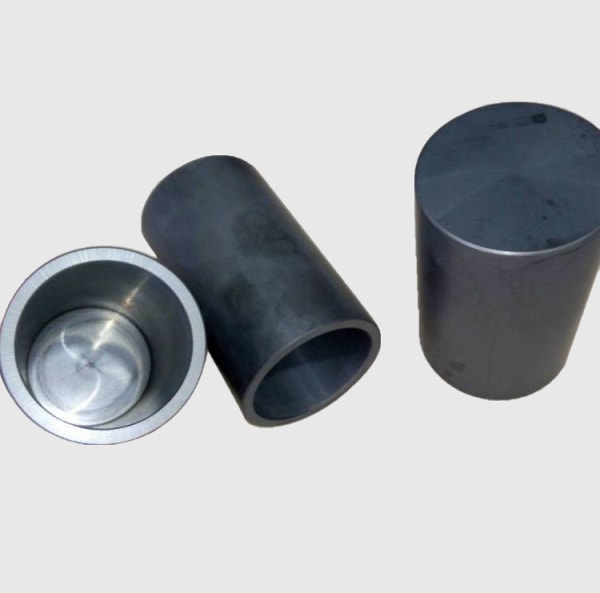
- Refractories and Furnace Components: Black silicon carbide exhibits excellent thermal shock resistance and maintains its strength at very high temperatures (up to 1600circC or higher in non-oxidizing atmospheres). This makes it a preferred material for refractory bricks, kiln furniture (beams, rollers, setters, plates), crucibles, and burner nozzles used in high-temperature furnaces, kilns, and incinerators. High-temperature SiC components ensure longevity and efficiency in these demanding thermal processes.
- Metallurgical Applications: In the iron and steel industry, black SiC is used as a deoxidizer and a source of silicon and carbon. It improves the quality of molten metal and enhances the properties of the final product. Its use can lead to more efficient furnace operations and cost savings. Metallurgical grade silicon carbide is a key additive for foundries and steel mills.
- Wire Sawing: Black SiC slurries are extensively used in the cutting of silicon wafers for the solar and semiconductor industries, as well as for slicing other hard, brittle materials like sapphire and quartz. The abrasive nature of SiC particles enables precise and efficient cutting.
- Wear-Resistant Parts: Due to its exceptional hardness and abrasion resistance, black SiC is used to manufacture components subjected to high wear, such as pump seals, shot blast nozzles, cyclone liners, and wear-resistant linings for pipes and material handling systems. These wear-resistant SiC components significantly extend the service life of equipment operating in abrasive or erosive environments.
- Ceramic Filters: Porous black silicon carbide can be fabricated into diesel particulate filters (DPFs) and other types of filters for molten metal or hot gas filtration, owing to its high-temperature stability and chemical inertness.
- Heating Elements: While specialized grades of SiC are more common for heating elements, black SiC can be found in certain resistance heating applications due to its electrical conductivity at elevated temperatures.
The versatility of black silicon carbide allows for a broad range of product examples, from simple grains and powders to complex custom shapes. Sicarb Tech has extensive experience in providing tailored black SiC solutions for these demanding applications, drawing upon the rich manufacturing ecosystem of Weifang City, the hub of China’s silicon carbide production.
| Industry Sector | Common Black SiC Applications | Key Benefits Provided by Black SiC |
|---|---|---|
| Abrasives Manufacturing | Grinding wheels, sandpaper, blasting media, lapping | High hardness, sharp grain structure, efficient cutting |
| Refractories & Furnaces | Kiln furniture, bricks, crucibles, burner nozzles | High-temperature stability, thermal shock resistance |
| Metallurgy | Deoxidizer, silicon/carbon source in steelmaking | Improved metal quality, furnace efficiency |
| Electronics (Wafering) | Wire sawing of silicon, sapphire, quartz | Precise and efficient slicing of hard materials |
| Mining & Material Handling | Wear liners, pump components, nozzles | Exceptional wear and abrasion resistance |
| Automotive | Diesel Particulate Filters (DPFs) | High-temperature filtration, chemical stability |
Advantages of Utilizing Black Silicon Carbide in Demanding Environments
The decision to specify black silicon carbide for industrial components is driven by its superior performance characteristics, especially when compared to traditional materials like metals or other ceramics. For OEMs and technical procurement professionals, understanding these advantages is key to optimizing product design and operational efficiency. The primary benefits include:
- Exceptional Hardness and Wear Resistance: Black SiC is one of the hardest synthetic materials available, second only to diamond and boron carbide. This extreme hardness translates directly to outstanding wear and abrasion resistance. Components made from black SiC can withstand highly erosive and abrasive environments, leading to longer service life and reduced downtime for maintenance and replacement. This makes it ideal for industrial SiC ceramics in applications like nozzles, liners, and grinding media.
- High-Temperature Stability: Black silicon carbide maintains its mechanical strength and structural integrity at extremely high temperatures. It does not melt at normal pressures but rather dissociates at temperatures above 2500circC. Its practical use limit is often around 1600−1700circC in air, making it suitable for refractory linings, kiln furniture, and components in combustion systems.
- Excellent Thermal Conductivity: Compared to many other ceramic materials, black SiC has a relatively high thermal conductivity. This property allows it to dissipate heat quickly, which is beneficial in applications like heat exchangers or components that experience rapid temperature changes, contributing to its good thermal shock resistance.
- Good Thermal Shock Resistance: The combination of high thermal conductivity, low thermal expansion coefficient, and high strength gives black SiC excellent resistance to thermal shock. This means it can withstand rapid and significant temperature fluctuations without cracking or failing, a critical attribute for furnace components and crucibles.
- Chemical Inertness: Black silicon carbide is highly resistant to chemical attack from most acids, alkalis, and molten salts, even at elevated temperatures. This chemical stability makes it suitable for use in corrosive chemical processing environments and for handling molten metals.
- High Strength-to-Weight Ratio: While dense, SiC components can be designed to offer high strength with a lower weight compared to some metallic alternatives, especially at high temperatures where metals lose significant strength.
- Cost-Effectiveness for Abrasive Applications: While high-purity, engineered SiC components can be more expensive, black silicon carbide used for abrasives and metallurgical purposes is often very cost-effective due to its performance and durability, leading to lower overall operational costs.
These inherent properties make black silicon carbide a go-to material for industries seeking to enhance performance, extend component life, and operate reliably in challenging conditions. Partnering with a supplier like Sicarb Tech ensures that these advantages are fully leveraged through expert material selection and customizing support.
Understanding Black Silicon Carbide: Grades and Production
Black silicon carbide is primarily produced via the Acheson process, which involves the carbothermal reduction of high-purity silica sand (SiO$_2$) with petroleum coke (C) in large electric resistance furnaces at temperatures between 1700circC and 2500circC. Sawdust is often added to increase porosity, allowing gases to escape, and salt (sodium chloride) may be added to remove impurities. The resulting mass of intergrown SiC crystals is then crushed, ground, and screened into various grit sizes.
Unlike engineered or sintered silicon carbides which often involve bonding agents or specific sintering processes to create dense technical ceramic components, “black silicon carbide” typically refers to the raw crystalline material or the abrasive grains derived from it. However, these grains can be further processed and bonded to create various products.
Key Grades and Classifications:
Black silicon carbide is typically graded based on its purity and particle size (grit).
- Abrasive Grade (Black SiC Grit):
- This is the most common form, available in a wide range of grit sizes according to FEPA (Federation of European Producers of Abrasives) or ANSI (American National Standards Institute) standards.
- Purity is typically around 98-99% SiC.
- Used for grinding wheels (vitrified and resin-bonded), coated abrasives (sandpaper), lapping, polishing, and pressure blasting.
- Common Designations: FEPA grits (e.g., F12 to F1200), ANSI grits (e.g., 16 to 1000).
- Metallurgical Grade (Met-SiC):
- Generally contains a lower SiC content, often between 85% and 95%. The remaining content includes unreacted silica, carbon, and other impurities.
- Used as an alloying agent, deoxidizer, and fuel source in the production of iron and steel. It improves casting fluidity and the mechanical properties of the metal.
- Often supplied in briquettes or granular form for ease of addition to furnaces.
- Refractory Grade:
- Selected for its thermal properties and stability. Purity can vary, but typically above 90% SiC.
- Used in the manufacture of refractory bricks, monolithic refractories (castables, ramming mixes), kiln furniture, and other high-temperature structural components.
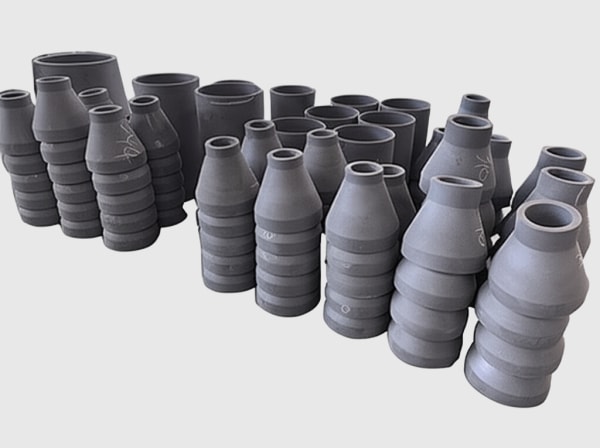
- The SiC grains may be bonded with clay, silicon nitride, or other refractory binders to form shaped products. For example, Reaction Bonded Silicon Carbide (RBSiC), also known as Silicon Infiltrated Silicon Carbide (SiSiC), often uses SiC grains as a primary constituent. While black SiC grains can be a starting material, RBSiC manufacturing involves infiltrating a porous SiC preform with molten silicon. You can explore various RBSiC product examples to see their complex shapes.
It’s important to note that while black SiC grains are a fundamental raw material, the production of dense, engineered SiC components like Sintered Silicon Carbide (SSiC) or Nitride Bonded Silicon Carbide (NBSC) involves more sophisticated ceramic processing techniques. These advanced grades offer enhanced properties but are distinct from the primary black SiC produced in Acheson furnaces.
Sicarb Tech leverages its deep understanding of SiC production, stemming from its role in Weifang, China’s SiC epicenter. Since 2015, we’ve been instrumental in advancing local production technologies, assisting enterprises in achieving large-scale manufacturing and process improvements. Our expertise covers the entire spectrum from raw materials to finished custom SiC parts.
Design and Manufacturing Considerations for Black SiC Components
While black silicon carbide in its loose grain or powder form is widely used, creating structural components or wear parts from it (often by bonding these grains) requires careful design and manufacturing considerations. The inherent properties of SiC, particularly its hardness and brittleness, influence how parts should be designed and fabricated.
Key Design Considerations:
- Brittleness and Fracture Toughness: Silicon carbide is a brittle material, meaning it has low fracture toughness compared to metals. Designs should aim to minimize stress concentrations. This includes:
- Using generous radii on internal and external corners.
- Avoiding sharp edges and sudden changes in cross-section.
- Distributing loads over larger areas to reduce localized stress.
- Complexity of Shapes: While SiC grains can be bonded to form complex shapes, intricate geometries can be challenging and costly to produce, especially with high precision. Simpler designs are generally more economical. However, processes like reaction bonding or slip casting, followed by machining in the “green” or “bisque” state, can achieve relatively complex geometries. Sicarb Tech offers customizing support to help optimize designs for manufacturability.
- Wall Thickness and Aspect Ratios: Minimum achievable wall thickness and feasible aspect ratios depend on the manufacturing process (e.g., pressing, casting, extrusion). Thin walls or high aspect ratios can be prone to warping or cracking during drying and firing.
- Joining and Assembly: Joining SiC components to each other or to other materials can be challenging. Methods include brazing, adhesive bonding, or mechanical fastening. The design should accommodate the chosen joining method and account for differences in thermal expansion if dissimilar materials are used.
- Manufacturing Process Selection: The choice of manufacturing process significantly impacts design possibilities:
- Bonded Abrasives: SiC grains are mixed with a bonding agent (vitrified, resinoid, rubber) and then pressed or molded and fired/cured. Design is often dictated by the standard shapes of grinding wheels or abrasive tools.
- Refractory Shapes: SiC aggregates are mixed with binders (e.g., clays, alumina, silicon nitride formers) and then pressed, cast, or rammed into shape before firing. Designs need to consider shrinkage during firing.
- Reaction-Bonded Silicon Carbide (RBSiC/SiSiC): A porous preform of SiC grains and carbon is infiltrated with molten silicon. This process can produce near-net-shape parts with good dimensional control. RBSiC components are known for their high density and strength.
- While less common for “black SiC” as a primary descriptor, it’s worth noting that advanced SiC types like Sintered Silicon Carbide (SSiC) involve sintering pure SiC powders at very high temperatures, leading to high-purity, fine-grained components.
Manufacturing Process Overview for Bonded Black SiC Products:
- Raw Material Preparation: Black SiC grains of the desired grit size and purity are selected. Binders and other additives are prepared.
- Mixing: SiC grains are thoroughly mixed with the chosen binder system.
- Forming: The mixture is formed into the desired shape using methods such as:
- Pressing (uniaxial, isostatic)
- Slip Casting
- Extrusion
- Injection Molding (for very complex, smaller parts, often with finer SiC powders)
- Drying: Green parts are carefully dried to remove moisture before firing.
- Firing/Sintering/Reaction Bonding: Parts are subjected to high temperatures to develop the bond between SiC grains and achieve the desired properties. The specifics depend heavily on the type of SiC product (e.g., vitrified bond for grinding wheels, silicon infiltration for RBSiC).
- Finishing: Fired parts may undergo grinding, lapping, or polishing to meet dimensional and surface finish requirements.
Sicarb Tech possesses a domestic top-tier professional team specializing in customized production of silicon carbide products. With our support, over 10 local enterprises have benefited from our technologies, enabling us to tackle diverse customization needs effectively.
Achieving Precision: Tolerances, Surface Finish, and Post-Processing for Black SiC
For components made from black silicon carbide, especially those used in precision applications or as structural parts, achieving tight tolerances, specific surface finishes, and understanding post-processing needs are critical. The extreme hardness of SiC makes machining and finishing challenging and often costly, but it is essential for meeting performance requirements.
Tolerances:
The achievable tolerances for SiC components depend heavily on the manufacturing method (e.g., pressing and sintering, reaction bonding, hot pressing) and the extent of post-firing machining.
- As-Fired Tolerances: For parts that are used without significant post-firing machining (e.g., some refractory bricks or simpler bonded abrasive shapes), tolerances are generally looser, typically in the range of pm1 to pm2 of the dimension, or even wider for very large components. Shrinkage during firing is a major factor.
- Machined Tolerances: For precision applications, SiC components are typically machined after firing using diamond grinding, lapping, or ultrasonic machining. With these methods, much tighter tolerances can be achieved.
- Grinding: Tolerances of pm0.025textmm to pm0.05textmm (pm0.001″ to pm0.002″) are common.
- Lapping/Polishing: For very flat or smooth surfaces, tolerances can reach pm0.0025textmm (pm0.0001″) or better for flatness and parallelism.
It’s important for designers to specify only the necessary tolerances, as overly tight tolerances significantly increase manufacturing costs. Sicarb Tech can provide guidance on achievable tolerances for specific designs and manufacturing routes, ensuring a balance between precision and cost-effectiveness. Explore some of our product examples to see the precision we can achieve.
Surface Finish:
The surface finish of SiC components can also be tailored to the application:
- As-Fired Surface: The surface finish of an as-fired component is typically rougher and depends on the grain size of the SiC used and the mold surface. Ra values (average roughness) can be in the range of 1textµm to 10textµm or higher.
- Ground Surface: Diamond grinding can achieve surface finishes with Ra values typically between 0.2textµm and 0.8textµm.
- Lapped/Polished Surface: For applications requiring very smooth surfaces (e.g., seals, bearings, semiconductor processing components), lapping and polishing can achieve Ra values below 0.05textµm, sometimes even down to optical quality finishes.
Post-Processing Needs:
Besides dimensional grinding and surface finishing, other post-processing steps might be necessary for black SiC based components:
- Cleaning: Removing contaminants, machining fluids, or loose particles.
- Edge Chamfering/Radiusing: To remove sharp edges, reducing the risk of chipping and improving handling safety.
- Annealing: In some cases, an annealing step might be used to relieve internal stresses induced during machining, although this is less common for black SiC components compared to some other ceramics.
- Coatings: While SiC itself is very resistant, coatings (e.g., CVD SiC, diamond-like carbon) can be applied to further enhance specific properties like lubricity or to modify surface energy. However, this is more typical for high-purity engineered SiC grades rather than general black SiC applications.
- Sealing: For porous SiC materials (e.g., some refractory grades or certain types of reaction-bonded SiC with residual porosity), sealing might be required to reduce permeability if they are to be used in applications requiring gas or liquid tightness.
The team at Sicarb Tech provides comprehensive customizing support, including advice on the most appropriate finishing and post-processing techniques to meet your application’s specific demands.
| Finishing Process | Typical Achievable Tolerance | Typical Surface Finish (Ra) | Common Applications |
|---|---|---|---|
| As-Fired | pm1−2 of dimension | 1−10textµm (or higher) | Refractory bricks, some kiln furniture |
| Diamond Grinding | pm0.025−0.05textmm | 0.2−0.8textµm | Most machined SiC parts, structural components |
| Lapping / Polishing | pm0.0025textmm (flatness) | $\< 0.05 \\text{ µm}$ | Seals, bearings, optical components (high-purity) |
| Ultrasonic Machining | Varies, good for complex features | Varies | Small, intricate features, holes |

Navigating Challenges in Black Silicon Carbide Implementation
While black silicon carbide offers numerous advantages, its inherent material properties also present certain challenges in design, manufacturing, and application. Understanding these potential hurdles is crucial for successful implementation and for selecting the right supplier who can help mitigate them.
Common Challenges:
- Brittleness and Low Fracture Toughness:
- Challenge: SiC is a ceramic material and is inherently brittle. It can fracture suddenly under impact or high tensile stress without significant plastic deformation. This requires careful design to avoid stress concentrations (sharp corners, notches) and consideration of potential impact loads.
- Mitigation:
- Design components with generous radii and chamfers.
- Ensure uniform load distribution.
- Consider composite structures or reinforcement where impact is a concern.
- Work with experienced suppliers like Sicarb Tech who understand ceramic design principles and can advise on robust geometries. Our customizing support is key here.
- Machining Complexity and Cost:
- Challenge: Due to its extreme hardness, machining fired silicon carbide is difficult, time-consuming, and expensive. It requires specialized diamond tooling and rigid machinery.
- Mitigation:
- Design for near-net-shape manufacturing to minimize post-firing machining.
- Specify tolerances and surface finishes that are truly necessary for the application.
- Utilize machining expertise from specialized SiC manufacturers. Sicarb Tech collaborates with facilities possessing advanced machining capabilities.
- Thermal Shock Sensitivity (Under Extreme Conditions):
- Challenge: While SiC generally has good thermal shock resistance, very rapid or extreme temperature gradients can still lead to cracking, especially in complex shapes or larger components with uneven cross-sections.
- Mitigation:
- Design for uniform heating and cooling where possible.
- Select appropriate SiC grades (e.g., reaction-bonded SiC often has excellent thermal shock resistance due to its composite nature).
- Control ramp rates in heating and cooling cycles.
- Joining to Other Materials:
- Challenge: Joining SiC to metals or other ceramics can be difficult due to differences in thermal expansion coefficients, which can lead to high stresses at the interface during temperature changes.
- Mitigation:
- Use specialized joining techniques like active metal brazing, diffusion bonding, or specially formulated adhesives.
- Incorporate compliant interlayers or design mechanical joints that accommodate differential expansion.
- Cost of Raw Material and Processing (for Engineered Components):
- Challenge: While black SiC grit for abrasives is relatively economical, the production of high-purity, dense SiC components (like SSiC or some RBSiC parts) involves energy-intensive processes and specialized equipment, making these components more expensive than many metals or lower-grade ceramics.
- Mitigation:
- Carefully evaluate if the high performance of SiC justifies the cost for the specific application.
- Optimize component design for material efficiency.
- Source from manufacturers with efficient production processes. Weifang’s SiC cluster, where Sicarb Tech is based, benefits from economies of scale and specialized expertise, contributing to competitive cost and lead time considerations.
- Quality Control and Consistency:
- Challenge: Ensuring consistent material properties and dimensional accuracy can be challenging with ceramic manufacturing. Variations in raw materials or processing parameters can affect the final product.
- Mitigation:
- Partner with reputable suppliers who have robust quality management systems (e.g., ISO certification).
- Clearly define specifications and testing requirements.
- Sicarb Tech leverages its connection with the Chinese Academy of Sciences National Technology Transfer Center to ensure access to advanced measurement and evaluation technologies, promoting reliable quality and supply assurance.
By acknowledging these challenges and working with experienced partners, users can successfully harness the exceptional properties of black silicon carbide for their demanding applications. Our cases demonstrate how we’ve helped clients overcome these hurdles.
How to Choose the Right Black SiC Supplier
Selecting the right supplier for your black silicon carbide products, whether it’s raw abrasive grains, metallurgical additives, or custom-engineered components, is a critical decision that can significantly impact your product quality, operational efficiency, and overall costs. Given the specialized nature of SiC, here are key factors to consider when evaluating potential technical ceramics suppliers or custom SiC parts manufacturers:
- Technical Expertise and Material Knowledge:
- What to look for: A deep understanding of silicon carbide’s various grades (black, green, RBSiC, SSiC, etc.), their properties, and appropriate applications. The supplier should be able to provide technical guidance on material selection, design optimization, and potential limitations.
- Why it matters: The performance of your SiC component heavily relies on choosing the correct grade and designing it appropriately. An expert supplier can save you from costly errors and ensure optimal performance.Sicarb Tech, backed by the robust scientific and technological capabilities of the Chinese Academy of Sciences , offers unparalleled technical expertise.
- Manufacturing Capabilities and Customization:
- What to look for: Assess their range of manufacturing processes (e.g., pressing, slip casting, extrusion, reaction bonding, sintering, precision machining). Can they produce the complexity and scale of components you need? Do they offer comprehensive customizing support?
- Why it matters: Each manufacturing technique has its strengths and limitations. A supplier with diverse capabilities can offer the most suitable and cost-effective solution for your specific requirements, from simple shapes to intricate product examples.
- Quality Management Systems and Certifications:
- What to look for: Inquire about their quality control procedures, inspection equipment, and any relevant certifications (e.g., ISO 9001). Do they have traceability for their raw materials?
- Why it matters: Consistent quality is paramount for industrial applications. Robust QM systems ensure that products meet agreed-upon specifications, reducing the risk of failures and an unreliable supply. Sicarb Tech emphasizes more reliable quality and supply assurance within China.
- Location and Supply Chain Stability:
- What to look for: Consider the supplier’s location and its impact on logistics, lead times, and communication. A supplier located in a major SiC production hub like Weifang City, China, can offer advantages.
- Why it matters: Weifang is home to over 40 SiC production enterprises, accounting for over 80% of China’s total SiC output.Sicarb Tech has been instrumental in this region since 2015, fostering technological advancements. This ecosystem provides a stable supply chain and access to a wide range of capabilities.
- Experience and Track Record:
- What to look for: Review their years in business, customer testimonials, and case studies relevant to your industry or application.
- Why it matters: Experience often translates to a better understanding of potential challenges and proven solutions. A supplier with a strong track record is more likely to deliver reliable products and services.
- Cost-Effectiveness and Lead Time:
- What to look for: Obtain detailed quotes and realistic lead times. While cost is important, it shouldn’t be the sole factor. Balance price with quality, reliability, and technical support.
- Why it matters: The total cost of ownership, including potential downtime or premature failure from substandard parts, should be considered. Sicarb Tech aims to offer higher-quality, cost-competitive customized SiC components. Contact us for a quote.
- Support for Technology Transfer and Specialized Needs:
- What to look for: If your needs extend to establishing your own SiC production or require highly specialized solutions, does the supplier offer services like technology transfer or joint development?
- Why it matters: For large-scale or strategic initiatives, a partner who can provide comprehensive support, including turnkey project services for factory setup, is invaluable. Sicarb Tech offers technology transfer for professional SiC production, including factory design, equipment procurement, installation, and trial production.
Choosing a supplier like Sicarb Tech means partnering with an organization embedded in China’s SiC industry leadership, with strong backing from the Chinese Academy of Sciences National Technology Transfer Center. We offer not just products, but a comprehensive service ecosystem for your advanced ceramic needs.
Frequently Asked Questions (FAQ) about Black Silicon Carbide
Q1: What is the primary difference between black silicon carbide and green silicon carbide?
A: The main difference lies in their purity and, consequently, some of their properties and applications. Black silicon carbide is typically around 98-99% SiC and is produced from less pure raw materials (petroleum coke and silica). It is generally tougher and more commonly used for grinding harder materials, refractory applications, and metallurgical uses. Green silicon carbide is of higher purity (typically >99% SiC), made from higher purity raw materials. It is harder but more brittle than black SiC. Green SiC is often preferred for precision grinding of very hard materials like cemented carbides, optical glass, and fine ceramics, as well as in applications like wire sawing of silicon wafers where purity is critical. Sicarb Tech can help you select the appropriate type for your specific needs; explore our product examples for more insights.
Q2: Can black silicon carbide components be easily machined?
A: No, machining fired black silicon carbide components is challenging due to its extreme hardness (Mohs 9.0-9.5). Conventional machining tools are ineffective. Specialized techniques such as diamond grinding, lapping, polishing, and sometimes ultrasonic machining are required. This makes machining a costly and time-consuming part of the manufacturing process. Therefore, it’s often advantageous to design parts for near-net-shape production to minimize the need for extensive post-firing machining. Our customizing support team at Sicarb Tech can advise on design for manufacturability to optimize costs.
Q3: What are the typical temperature limits for black silicon carbide in industrial applications?
A: Black silicon carbide maintains its strength and structural integrity at very high temperatures. In oxidizing atmospheres (like air), it can typically be used up to around 1600circC to 1700circC (2912circF to 3092circF). Above these temperatures, oxidation becomes more significant. In inert or reducing atmospheres, it can withstand even higher temperatures, close to its dissociation point of over 2500circC. This makes it an excellent material for high-temperature furnace components, kiln furniture, and refractories. For specific application advice, please contact us.
Q4: How does Sicarb Tech ensure the quality and reliability of its custom black SiC products?
A: Sicarb Tech leverages its strong foundation as part of the Chinese Academy of Sciences (Weifang) Innovation Park and its collaboration with the National Technology Transfer Center of the Chinese Academy of Sciences . This provides us with access to robust scientific and technological capabilities, including advanced material, process, design, measurement, and evaluation technologies. We have a domestic top-tier professional team specializing in customized SiC production and have supported over 10 local enterprises with our technologies. Our comprehensive service ecosystem ensures an integrated process from materials to products, allowing us to meet diverse customization needs while maintaining high quality and cost-competitiveness. We are committed to more reliable quality and supply assurance within China’s premier SiC manufacturing hub. Learn more about us.
Conclusion: Harnessing the Power of Black Silicon Carbide with an Expert Partner
Black silicon carbide, with its formidable hardness, exceptional thermal properties, and robust chemical resistance, remains a cornerstone material for industries facing the most demanding operational environments. From shaping and finishing materials as an abrasive, to enduring extreme temperatures in furnaces, and providing wear-resistant solutions in heavy industry, its utility is vast and critical. The ability to procure custom black SiC parts tailored to specific application needs allows businesses to enhance performance, extend service life, and achieve greater operational efficiencies.
However, unlocking the full potential of black silicon carbide requires more than just recognizing its inherent advantages. It demands careful consideration of material grades, precise design for manufacturability, understanding of finishing and post-processing capabilities, and a strategy to navigate potential challenges like brittleness and machining complexity.
This is where choosing the right supplier becomes paramount. Sicarb Tech, strategically located in Weifang City – the heart of China’s silicon carbide industry – stands as a testament to innovation and quality in SiC production. Our deep-rooted expertise, cultivated since 2015 through assisting local enterprises and leveraging the formidable R&D capabilities of the Chinese Academy of Sciences, positions us uniquely to deliver superior custom silicon carbide solutions. We offer not just components, but a partnership that encompasses technical consultation, design optimization, advanced manufacturing, and even technology transfer for clients looking to establish their own SiC production facilities.
By partnering with Sicarb Tech, you gain access to a reliable supply of high-quality, cost-competitive black silicon carbide products, backed by a team dedicated to your success. We invite engineers, procurement managers, OEMs, and distributors to contact us and explore how our advanced SiC materials and comprehensive support can elevate your industrial applications.

About the Author: Sicarb Tech
We provide clear and reliable insights into silicon carbide materials, component manufacturing, application technologies, and global market trends. Our content reflects industry expertise, practical experience, and a commitment to helping readers understand the evolving SiC landscape.

Customizable SiC
You May Also Interest
-
![]()
Silicon Carbide Composites: The Future of High-Performance Industrial Applications
In the relentless pursuit of materials that can withstand extreme conditions and deliver unparalleled performance, silicon carbide composites (SiC composites) have emerged as a groundbreaking solution across a multitude of demanding industries. These advanced materials, engineered by combining silicon carbide with other elements or reinforcing phases, offer a significant leap forward from traditional monolithic ceramics,…
-
![]()
Consistent Quality SiC for Smooth Production Flow
Consistent Quality SiC for Smooth Production Flow In today’s demanding industrial landscape, the performance and longevity of critical components are paramount. For engineers, procurement managers, and technical buyers across diverse sectors – from semiconductor manufacturing to aerospace and renewable energy – the material choice can make or break a project. This is where custom silicon…
-
![]()
Unlocking Superior Protection and Performance with Silicon Carbide Coatings
In the ever-evolving landscape of industrial technology, the demand for materials that can withstand extreme conditions while delivering enhanced performance is paramount. Among the advanced solutions available, silicon carbide (SiC) coatings have emerged as a cornerstone for protecting and augmenting components across a multitude of high-stakes sectors. These coatings are not merely superficial layers; they…