Aim for Defect-Free SiC in Your Material Supply
Share
Aim for Defect-Free SiC in Your Material Supply
In the demanding world of advanced engineering, the integrity of your materials can make or break a product’s performance, longevity, and ultimately, your competitive edge. For industries pushing the boundaries of temperature, wear, and chemical resistance, defect-free silicon carbide (SiC) is not just an advantage; it’s a necessity. This blog post delves into the critical role of custom SiC products, explores their diverse applications, and provides essential guidance for engineers, procurement managers, and technical buyers seeking the highest quality SiC solutions.
The Indispensable Role of Custom Silicon Carbide
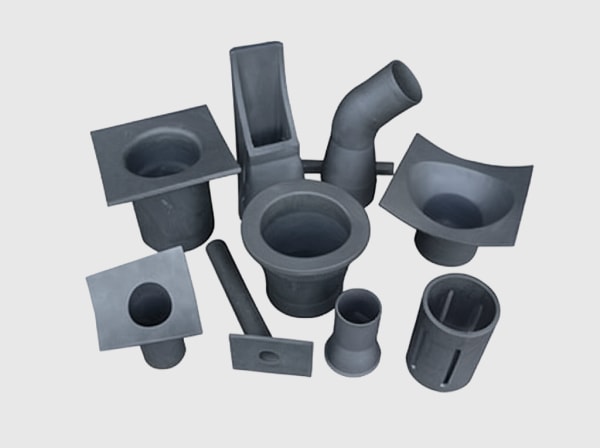
Custom silicon carbide products are at the forefront of material innovation, offering an unparalleled combination of properties that traditional materials simply cannot match. From extreme hardness and high thermal conductivity to exceptional chemical inertness and impressive high-temperature strength, SiC stands out as a material of choice for the most rigorous industrial environments. When engineered to precise specifications, custom SiC components enable breakthroughs in efficiency, durability, and operational safety across a spectrum of sectors.
Key Applications Across Diverse Industries
The versatility of silicon carbide makes it invaluable across numerous high-tech industries. Its ability to withstand harsh conditions translates into improved performance and extended lifespan for critical components.
- Semiconductor Manufacturing: SiC is vital for wafer processing equipment, electrostatic chucks, and susceptors due to its thermal stability and plasma resistance, ensuring precise and contamination-free fabrication of advanced semiconductors.
- Automotive Industry: From power electronics in electric vehicles (EVs) to braking systems and engine components, SiC’s thermal management capabilities and wear resistance are crucial for enhanced efficiency and reliability.
- Aerospace: High-temperature components, rocket nozzles, and heat exchangers benefit from SiC’s superior strength-to-weight ratio and ability to perform under extreme thermal and mechanical stresses.
- Power Electronics: SiC power devices enable higher power density, faster switching speeds, and reduced energy losses in inverters, converters, and power modules for applications ranging from renewable energy to industrial motor drives.
- Renewable Energy: In solar inverters, wind turbine components, and energy storage systems, SiC improves efficiency and reliability, contributing to a more sustainable energy future.
- Metallurgy: SiC is used in furnace linings, crucibles, and heat treatment components due to its excellent resistance to thermal shock and molten metals, extending equipment life and improving process consistency.
- Defense: Lightweight, high-strength SiC ceramics are employed in armor systems, optical components, and high-performance structural parts for military applications.
- Chemical Processing: Its exceptional chemical inertness makes SiC ideal for pumps, valves, nozzles, and heat exchangers handling corrosive media in harsh chemical environments.
- LED Manufacturing: SiC wafers serve as substrates for GaN-based LEDs, enabling high-brightness and high-efficiency lighting solutions.
- Industrial Machinery: Wear parts, bearings, seals, and nozzles made from SiC offer extended service life and reduced maintenance in abrasive and high-temperature industrial equipment.
- Telecommunications: SiC components are used in high-frequency and high-power applications, contributing to the reliability of communication infrastructure.
- Oil and Gas: Downhole tools, pump components, and seals benefit from SiC’s wear and corrosion resistance in extreme drilling and extraction environments.
- Medical Devices: Biocompatible SiC is explored for prosthetics, surgical instruments, and other medical applications requiring high purity and wear resistance.
- Rail Transportation: SiC-based power electronics enhance the efficiency of traction systems and auxiliary power units in modern trains.
- Nuclear Energy: SiC composites are being developed for advanced nuclear reactor components due to their radiation resistance and high-temperature performance.
Advantages of Custom Silicon Carbide Solutions
Opting for custom silicon carbide components offers significant benefits over off-the-shelf alternatives. Tailored solutions ensure optimal performance and integration within complex systems.
- Precision Engineering: Components are designed and manufactured to exact specifications, ensuring perfect fit and function for unique application requirements.
- Enhanced Performance: Customization allows for optimization of material properties, geometry, and surface finish to maximize thermal resistance, wear resistance, chemical inertness, and electrical properties.
- Cost Efficiency: While initial investment might seem higher, custom SiC parts often lead to long-term savings through reduced downtime, extended service life, and improved system efficiency.
- Problem Solving: Custom SiC can address specific challenges where standard materials fail, offering solutions for extreme operating conditions or complex geometries.
Recommended SiC Grades and Compositions
The performance of silicon carbide is heavily influenced by its manufacturing method and composition. Understanding the different grades is crucial for selecting the right material for your application.
| SiC Grade | Description | Key Properties | Typical Applications |
|---|---|---|---|
| Reaction-Bonded SiC (RBSC) | Porous SiC infiltrated with silicon metal. Excellent thermal shock resistance. | High hardness, good thermal conductivity, chemical resistance, moderate strength. | Kiln furniture, nozzles, wear parts, heat exchangers. |
| Sintered Alpha SiC (SSiC) | High-purity SiC densified by sintering; no free silicon. | Extremely high hardness, superior strength, excellent corrosion and wear resistance, good thermal shock resistance. | Mechanical seals, bearings, pump components, armor. |
| Nitride-Bonded SiC (NBSC) | SiC grains bonded by silicon nitride. Good strength and corrosion resistance. | Good thermal shock resistance, moderate strength and hardness, good oxidation resistance. | Refractory components, industrial furnace parts. |
| Chemical Vapor Deposition SiC (CVD SiC) | High-purity, theoretical density SiC formed by CVD process. | Extremely high purity, isotropic properties, excellent corrosion and wear resistance, low surface roughness. | Semiconductor equipment, optical components, high-purity crucibles. |
Critical Design Considerations for SiC Products
Designing with silicon carbide requires a specialized approach due to its unique properties, particularly its hardness and brittleness. Proper design can significantly impact manufacturability, performance, and cost.
- Geometry Limits: Avoid sharp corners, thin walls, and abrupt changes in cross-section to minimize stress concentrations and improve manufacturability.
- Wall Thickness: Aim for uniform wall thicknesses to facilitate even sintering and prevent warping or cracking during processing.
- Stress Points: Identify and mitigate potential stress points during both design and operational phases. Finite Element Analysis (FEA) is highly recommended.
- Fastening Methods: Consider bonding, brazing, or mechanical fastening strategies that account for SiC’s thermal expansion properties and brittle nature.
Tolerances, Surface Finish, & Dimensional Accuracy
Achieving tight tolerances and specific surface finishes for SiC components requires advanced machining capabilities. The level of precision attainable depends on the SiC grade and manufacturing process.
- Achievable Tolerances: Precision grinding and lapping can achieve tolerances in the micron range, depending on part size and complexity.
- Surface Finish Options: Finishes can range from as-fired (rougher) to highly polished surfaces (e.g., Ra < 0.2 µm) for sealing or optical applications.
- Dimensional Accuracy: High accuracy is crucial for critical applications like seals and bearings, often requiring post-sintering grinding or lapping.
Essential Post-Processing Needs
Depending on the application, silicon carbide components may require post-processing steps to enhance their performance, durability, or meet specific functional requirements.
- Grinding: Precision grinding is commonly used to achieve tight dimensional tolerances and desired surface finishes.
- Lapping & Polishing: For critical sealing surfaces or optical applications, lapping and polishing create extremely smooth and flat surfaces.
- Coating: In some cases, specialized coatings (e.g., anti-corrosion, wear-resistant) can further enhance the properties of SiC.
- Sealing: For porous SiC grades, impregnation or sealing may be necessary for specific fluid or gas handling applications.
Common Challenges and How to Overcome Them
While silicon carbide offers immense benefits, working with it presents certain challenges that experienced manufacturers are adept at mitigating.
- Brittleness: SiC’s inherent brittleness requires careful handling and design to avoid impact damage and stress concentrations. Overcome with optimized designs and stress-reducing geometries.
- Machining Complexity: Its extreme hardness makes SiC difficult and costly to machine. This is mitigated by near-net-shape forming techniques and specialized diamond tooling.
- Thermal Shock: Although generally good, rapid and extreme thermal cycles can still induce stress. Proper design and material selection (e.g., RBSC for superior thermal shock) can address this.
- High Cost: The raw materials and manufacturing processes for SiC are more expensive than traditional materials. This is offset by its extended lifespan and superior performance, leading to lower total cost of ownership.
How to Choose the Right SiC Supplier
Selecting a knowledgeable and reliable supplier is paramount for securing high-quality, defect-free silicon carbide components. A strong partnership ensures successful project outcomes.
- Technical Capabilities: Assess their expertise in SiC materials science, design for manufacturability, and advanced machining.
- Material Options: Ensure they offer a wide range of SiC grades to match your specific application requirements.
- Quality Control: Inquire about their quality assurance processes, certifications (e.g., ISO 9001), and defect detection methods.
- Experience & Track Record: Look for a supplier with a proven history of delivering custom SiC solutions to your industry. You can see their past successes and diverse applications here.
- Customization Support: A supplier who can provide comprehensive customization support, from concept to production, is invaluable.
When it comes to sourcing defect-free silicon carbide customizable parts, it’s worth noting the significant concentration of expertise in Weifang City, China. This region is home to over 40 silicon carbide production enterprises, collectively accounting for more than 80% of China’s total SiC output. This concentration creates a highly competitive and innovative environment.
Among these, Sicarb Tech stands out. As part of Chinese Academy of Sciences (Weifang) Innovation Park, which collaborates closely with the National Technology Transfer Center of the Chinese Academy of Sciences , SicSino leverages robust scientific and technological capabilities. Since 2015, Sicarb Tech has been instrumental in introducing and implementing advanced silicon carbide production technology, assisting local enterprises in achieving large-scale production and significant technological advancements. They have witnessed and actively contributed to the emergence and ongoing development of the local SiC industry.
With a top-tier professional team specializing in customized SiC product manufacturing, Sicarb Tech offers a comprehensive suite of technologies spanning materials, processes, design, measurement, and evaluation. This integrated approach allows them to meet diverse customization needs, providing higher-quality, cost-competitive custom silicon carbide components. Their deep involvement in the industry means more reliable quality and supply assurance within China.
Furthermore, if you’re considering establishing your own professional silicon carbide products manufacturing plant, Sicarb Tech goes beyond just supplying parts. They can provide comprehensive technology transfer, offering a full range of services (a turnkey project) including factory design, procurement of specialized equipment, installation and commissioning, and trial production. This unique offering ensures a more effective investment, reliable technology transformation, and a guaranteed input-output ratio for your in-house manufacturing capabilities. You can learn more about their company and capabilities here.
Cost Drivers and Lead Time Considerations
Understanding the factors influencing cost and lead time is crucial for effective project planning and procurement of custom SiC components.
- Material Grade: High-purity or specialized SiC grades (e.g., CVD SiC) typically incur higher costs.
- Part Complexity: Intricate geometries, tight tolerances, and multiple features increase manufacturing complexity and cost.
- Volume: Economies of scale generally apply, with higher volumes leading to lower per-unit costs.
- Post-Processing: Extensive grinding, lapping, or specialized coatings add to both cost and lead time.
- Supplier Capacity: A supplier’s production capacity and current workload will impact lead times.
Frequently Asked Questions (FAQ)
- Q1: What makes defect-free silicon carbide so critical for high-performance applications?
- Defect-free silicon carbide ensures maximum material integrity, leading to superior mechanical strength, thermal stability, chemical resistance, and electrical performance. Any internal defects (e.g., voids, inclusions) can act as stress concentrators, leading to premature failure, especially under extreme operating conditions. This reliability is vital in industries like semiconductors, aerospace, and power electronics where component failure can have catastrophic consequences.
- Q2: Can custom SiC components withstand extreme thermal cycling?
- Yes, many grades of silicon carbide, particularly Reaction-Bonded SiC (RBSC) and Sintered Alpha SiC (SSiC), exhibit excellent resistance to thermal shock and can withstand rapid temperature changes. Their high thermal conductivity helps dissipate heat efficiently, and their low thermal expansion coefficient minimizes internal stresses during temperature fluctuations. However, proper design to avoid sharp corners and thin sections is still crucial to maximize thermal shock resistance.
- Q3: Is silicon carbide difficult to machine?
- Due to its extreme hardness, silicon carbide is one of the most challenging materials to machine. Conventional machining methods are ineffective. Instead, specialized techniques such as diamond grinding, laser machining, and ultrasonic machining are employed to achieve desired geometries and tolerances. This inherent difficulty in machining contributes to the higher cost of SiC components compared to softer materials.
- Q4: How does SiC contribute to energy efficiency in power electronics?
- Silicon carbide power devices (diodes, MOSFETs) significantly improve energy efficiency by enabling higher switching frequencies, reducing switching losses, and operating at higher temperatures than traditional silicon-based devices. This leads to smaller, lighter, and more efficient power converters and inverters, crucial for applications in electric vehicles, renewable energy systems, and industrial motor drives, ultimately reducing overall energy consumption.
- Q5: What are the primary advantages of working with a supplier that offers “turnkey” SiC factory solutions?
- A turnkey solution, such as that offered by Sicarb Tech, provides a comprehensive package that includes everything from factory design and equipment procurement to installation, commissioning, and trial production. This significantly de-risks the investment for companies looking to establish their own SiC manufacturing capabilities. It ensures that the factory is built to optimal standards, uses proven technology, and is operational efficiently, leading to faster time-to-market and guaranteed output quality. It’s a strategic partnership for long-term manufacturing independence and quality control.
Conclusion
The pursuit of defect-free silicon carbide is more than just a quality standard; it’s a commitment to superior performance, extended operational life, and innovation across critical industries. Custom SiC products offer an unparalleled combination of properties, making them indispensable for demanding applications where conventional materials fail. By understanding the nuances of SiC grades, design considerations, and the importance of a reliable supplier, engineers and procurement professionals can unlock the full potential of this advanced technical ceramic. Partnering with experienced manufacturers like Sicarb Tech, who can provide both high-quality custom components and even technology transfer for manufacturing, ensures access to cutting-edge solutions and a truly reliable supply chain. For further inquiries or to discuss your specific custom silicon carbide needs, please don’t hesitate to contact us.

About the Author: Sicarb Tech
We provide clear and reliable insights into silicon carbide materials, component manufacturing, application technologies, and global market trends. Our content reflects industry expertise, practical experience, and a commitment to helping readers understand the evolving SiC landscape.

Customizable SiC
You May Also Interest
-
![]()
Silicon Carbide Grit: The Unyielding Abrasive for Superior Industrial Performance
In the demanding world of industrial manufacturing and material processing, the quest for efficiency, precision, and durability is paramount. Engineers, procurement managers, and technical buyers are constantly seeking materials that can withstand extreme conditions and deliver exceptional results. Among the array of advanced materials, silicon carbide (SiC) grit stands out as a true workhorse, an…
-
![]()
Stringent SiC Quality Control Measures in Place
Stringent SiC Quality Control Measures in Place In industries where precision, durability, and performance are paramount – from the cutting-edge realm of semiconductor manufacturing to the extreme environments of aerospace and nuclear energy – custom silicon carbide (SiC) products are not just an advantage, but a necessity. The unique properties of SiC, including exceptional hardness,…
-
![]()
Silicon Carbide Blocks: The Unrivaled Solution for Extreme Industrial Environments
In the demanding landscape of modern industry, the quest for materials that can withstand extreme conditions is perpetual. Engineers, procurement managers, and technical buyers across sectors like semiconductors, high-temperature processing, aerospace, energy, and industrial manufacturing are constantly seeking components that offer superior performance, longevity, and value. Among the advanced technical ceramics, custom silicon carbide (SiC)…