Discovering Pakistani SiC Products for Export
Share
Discovering Pakistani SiC Products for Export
In the rapidly evolving landscape of advanced materials, silicon carbide (SiC) stands out as a critical component for industries demanding exceptional performance under extreme conditions. From the scorching temperatures of industrial furnaces to the intricate circuits of power electronics, custom SiC products are increasingly becoming the material of choice. This blog post delves into the world of SiC products, with a special focus on the emerging export opportunities from Pakistan, and sheds light on how to secure the highest quality components for your specific needs.
What are Custom Silicon Carbide Products and Why are They Essential?
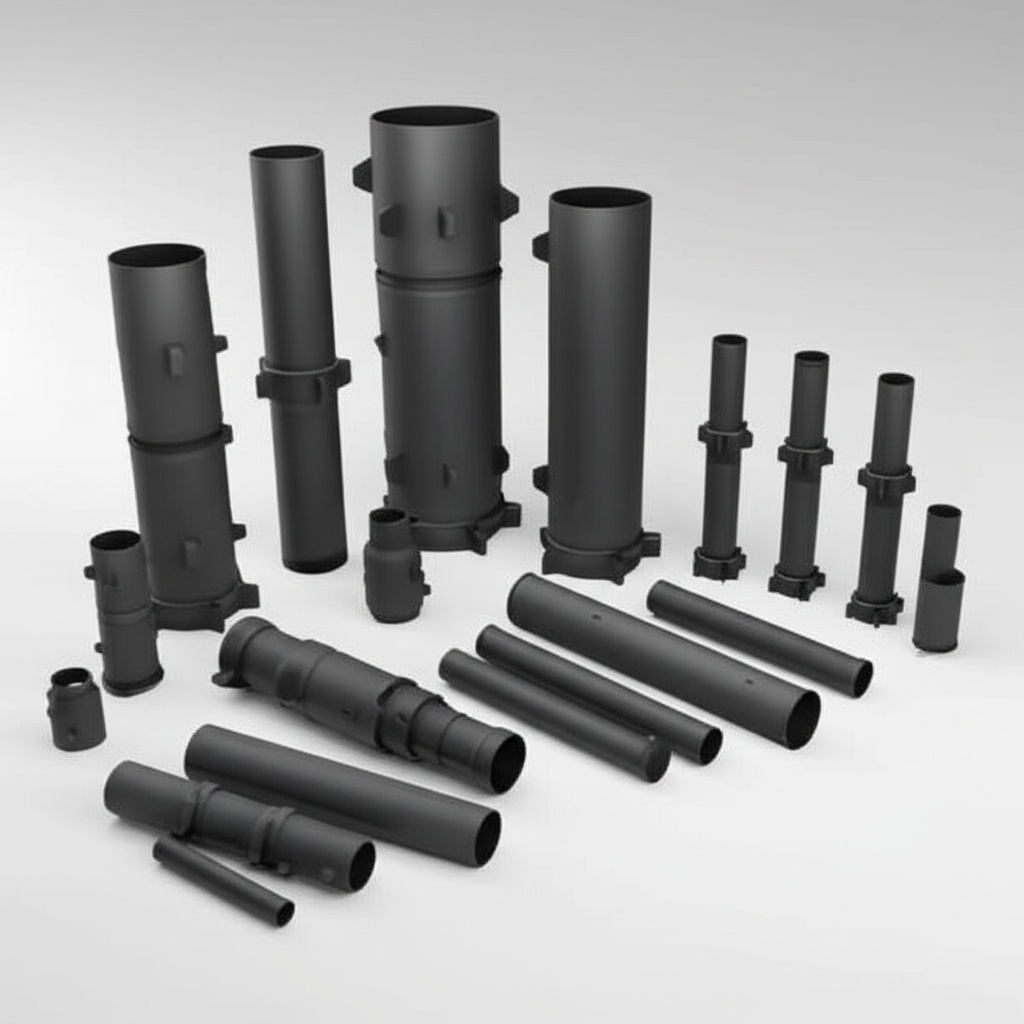
Custom silicon carbide products refer to engineered components manufactured from SiC, a compound of silicon and carbon, known for its superior properties. These include remarkable hardness, high thermal conductivity, excellent wear and corrosion resistance, and stability at extreme temperatures. Unlike standard off-the-shelf components, custom SiC products are tailored to meet precise specifications, geometries, and performance requirements for a diverse range of industrial applications. This customization is essential for optimal integration and performance in critical systems where standard materials simply cannot suffice.
Industries such as semiconductor manufacturing, aerospace, automotive, power electronics, and renewable energy rely heavily on SiC for its ability to withstand harsh environments, improve efficiency, and extend the lifespan of equipment. For engineers, procurement managers, and technical buyers, understanding the nuances of custom SiC is key to unlocking new levels of operational excellence and cost savings.
Main Applications Across Diverse Industries
The versatility of silicon carbide allows it to be utilized in a multitude of high-stakes environments. Here’s a glimpse into its widespread applications:
- Semiconductor Manufacturing: SiC is vital for wafer processing equipment, susceptors, and furnace components due to its high purity and thermal stability. It enables the production of high-performance chips and power devices.
- Automotive Industry: Used in electric vehicle (EV) inverters, on-board chargers, and powertrain components, SiC enhances efficiency, reduces weight, and improves range.
- Aerospace and Defense: Its lightweight, high-strength, and thermal shock resistance make SiC ideal for missile nose cones, engine components, and optical systems.
- Power Electronics: SiC power devices are revolutionizing grids, industrial motor drives, and consumer electronics by offering higher power density, efficiency, and switching frequencies.
- Renewable Energy: Essential for solar inverters and wind turbine converters, SiC components improve energy conversion efficiency and reliability.
- Metallurgy and High-Temperature Processing: SiC is used for furnace linings, kiln furniture, crucibles, and heat exchangers due to its exceptional refractoriness and chemical inertness.
- Chemical Processing: Its corrosion resistance makes it suitable for pump components, valves, and heat exchangers in aggressive chemical environments.
- LED Manufacturing: SiC substrates are used for high-brightness LEDs, enabling superior light output and efficiency.
- Industrial Machinery: Wear parts, bearings, and seals benefit from SiC’s extreme hardness and wear resistance, extending equipment lifespan.
- Telecommunications: SiC components are integrated into high-frequency and high-power communication systems for improved performance.
- Oil and Gas: Downhole tools and drilling equipment utilize SiC for its resistance to abrasion and corrosive fluids.
- Medical Devices: Precision components requiring high biocompatibility and wear resistance, such as surgical tools or prosthetics, can leverage SiC.
- Rail Transportation: SiC-based power electronics improve efficiency and reliability in traction systems for trains.
- Nuclear Energy: High-temperature and radiation-resistant SiC components are being explored for next-generation nuclear reactors.
Why Choose Custom Silicon Carbide?
The decision to opt for custom silicon carbide over standard materials or off-the-shelf components is driven by several critical advantages:
- Superior Thermal Resistance: SiC maintains its strength and integrity at temperatures exceeding 1,500°C, far beyond what many metals or other ceramics can withstand.
- Exceptional Wear Resistance: Its extreme hardness makes SiC highly resistant to abrasion and erosion, significantly extending the lifespan of components in demanding mechanical applications.
- Chemical Inertness: SiC exhibits excellent resistance to most acids, alkalis, and corrosive gases, making it ideal for harsh chemical processing environments.
- High Thermal Conductivity: Crucial for heat dissipation in electronics and thermal management systems, preventing overheating and improving efficiency.
- Low Thermal Expansion: Minimizes stress and cracking due to temperature fluctuations, ensuring dimensional stability.
- High Strength-to-Weight Ratio: Offers robust performance without adding excessive weight, which is particularly beneficial in aerospace and automotive applications.
- Customization for Optimal Performance: Tailored designs ensure perfect fit, form, and function, optimizing performance and reliability for specific operational parameters.
Recommended SiC Grades and Compositions
The performance of SiC products varies depending on their composition and manufacturing process. Understanding the different grades is essential for selecting the right material for your application:
| SiC Grade | Description | Key Properties | Typical Applications |
|---|---|---|---|
| Reaction-Bonded SiC (RBSC) | Porous SiC infiltrated with molten silicon, resulting in a dense, strong material. | High strength, excellent thermal shock resistance, good wear resistance, lower cost. | Kiln furniture, pump seals, mechanical seals, furnace components. |
| Sintered SiC (SSC) | High-purity SiC powders densified at high temperatures without a sintering aid. | High purity, superior corrosion resistance, high strength, excellent creep resistance. | Semiconductor components, chemical pump parts, bearings, high-temperature structural parts. |
| Nitride-Bonded SiC (NBSC) | SiC particles bonded with silicon nitride. | Good thermal shock resistance, excellent hot strength, moderate oxidation resistance. | Refractory linings, nozzles, rollers, wear plates. |
| Siliconized SiC (SiSiC) | Similar to RBSC, with free silicon in the microstructure. | Excellent wear resistance, good thermal conductivity, high hardness. | Wear parts, nozzles, pump components, heat exchangers. |
| Chemical Vapor Deposited (CVD) SiC | Highly pure SiC deposited through a chemical vapor process. | Extremely high purity, isotropic properties, smooth surface finish, high strength. | Wafer carriers, optical components, aerospace applications, extreme purity environments. |
Design Considerations for SiC Products
Designing for manufacturability (DFM) is paramount when working with SiC, given its inherent hardness and brittleness. Careful design can significantly reduce manufacturing costs and lead times while ensuring optimal performance:
- Geometry Limits: Avoid sharp internal corners, as these can be stress concentration points. Recommend generous radii.
- Wall Thickness: Aim for uniform wall thicknesses to prevent warping and cracking during sintering or bonding processes. Avoid very thin sections.
- Stress Points: Identify potential stress points during design and reinforce them or modify the geometry to distribute loads evenly.
- Machinability: SiC is extremely hard; rough shaping is done before sintering, and final precision grinding post-sintering. Design to minimize complex post-sintering machining.
- Tolerances: Understand achievable tolerances for different manufacturing methods (e.g., green machining vs. final grinding).
- Assembly: Consider how the SiC component will integrate with other parts, including fastening methods and thermal expansion differences.
Tolerance, Surface Finish & Dimensional Accuracy
Achieving precise tolerances and specific surface finishes is critical for the functionality of custom SiC components. While SiC is challenging to machine, advanced grinding and lapping techniques allow for high precision:
- Achievable Tolerances: Depending on the size and complexity of the part, tolerances can range from $pm0.05 text{ mm}$ for larger components to $pm0.005 text{ mm}$ for precision-ground surfaces.
- Surface Finish Options: Surface finishes can vary from as-fired (relatively rough) to highly polished (mirror-like) depending on the application. Roughness values ($R_a$) can range from several micrometers down to sub-micrometer levels.
- Dimensional Accuracy: High dimensional accuracy is maintained through controlled manufacturing processes and precision post-processing. Key for mating parts and fluid dynamic applications.
Post-Processing Needs for Enhanced Performance
Even after initial manufacturing, many SiC components undergo further post-processing to optimize their performance and durability:
- Grinding and Lapping: Essential for achieving tight tolerances and smooth surface finishes on critical mating surfaces or bearing points.
- Polishing: Creates ultra-smooth surfaces, crucial for optical applications, semiconductor processing equipment, and components requiring minimal friction.
- Sealing: For porous grades of SiC, sealing might be necessary to prevent fluid ingress or enhance corrosion resistance.
- Coating: Application of specialized coatings can further enhance properties like wear resistance, chemical inertness, or electrical conductivity/insulation.
- Inspection and Testing: Rigorous quality control, including non-destructive testing (NDT) like ultrasonic inspection or X-ray radiography, ensures part integrity and defect detection.
Common Challenges and How to Overcome Them
While SiC offers unparalleled advantages, working with it presents specific challenges:
- Brittleness: SiC is hard but brittle, making it susceptible to chipping or fracture under impact or excessive tensile stress.
- Machining Complexity: Its extreme hardness makes machining difficult and costly. This is mitigated by designing parts that minimize complex post-sintering grinding.
- Thermal Shock (though resistant): While generally excellent, rapid and extreme thermal shocks can still cause issues. Proper material selection and design can alleviate this.
- Cost: SiC products can be more expensive than traditional materials. However, their extended lifespan and superior performance often lead to a lower total cost of ownership.
Overcoming these challenges requires expertise in material science, advanced manufacturing techniques, and collaborative design with a knowledgeable supplier.
How to Choose the Right SiC Supplier
Selecting a reliable supplier for custom silicon carbide products is critical for success. Look for a partner with:
- Technical Capabilities: Expertise in various SiC manufacturing processes (RBSC, SSC, NBSC, CVD), advanced machining capabilities, and in-house testing.
- Material Options: A wide range of SiC grades and compositions to meet diverse application requirements.
- Certifications: Quality management systems (e.g., ISO 9001) and industry-specific certifications where applicable.
- Experience: A proven track record of supplying to your industry with similar applications.
- Customization Support: Ability to provide design assistance, prototyping, and scale-up production.
- Global Reach and Logistics: Especially important when sourcing SiC products for export.
In this context, it’s worth noting the significant advancements in SiC manufacturing originating from China. As you are aware, the hub of China’s silicon carbide customizable parts manufacturing is situated in Weifang City. This region has been home to over 40 silicon carbide production enterprises of various sizes, collectively accounting for more than 80% of the nation’s total silicon carbide output. This concentration of expertise and production capacity ensures competitive pricing and diverse offerings.
We, Sicarb Tech, have been introducing and implementing silicon carbide production technology since 2015, assisting the local enterprises in achieving large-scale production and technological advancements in product processes. We have been a witness to the emergence and ongoing development of the local silicon carbide industry.
Based on the platform of the National Technology Transfer Center of the Chinese Academy of Sciences, Sicarb Tech is an entrepreneurial park that collaborates closely with the National Technology Transfer Center of the Chinese Academy of Sciences. It serves as a national-level innovation and entrepreneurship service platform, integrating innovation, entrepreneurship, technology transfer, venture capital, incubation, acceleration, and scientific and technological services.
Sicarb Tech capitalizes on the robust scientific, technological capabilities and talent pool of the Chinese Academy of Sciences . Backed by the Chinese Academy of Sciences National Technology Transfer Center, it serves as a bridge, facilitating the integration and collaboration of crucial elements in the transfer and commercialization of scientific and technological achievements. Moreover, it has established a comprehensive service ecosystem that spans the entire spectrum of the technology transfer and transformation process. With more reliable quality and supply assurance within China, Sicarb Tech possesses a domestic top-tier professional team specializing in customized production of silicon carbide products. Under our support, 428+ local enterprises have benefited from our technologies. We possess a wide array of technologies, such as material, process, design, measurement & evaluation technologies, along with the integrated process from materials to products. This enables us to meet diverse customization needs. We can offer you higher-quality, cost-competitive customized silicon carbide components in China.
We are also committed to assisting you in establishing a specialized factory. If you need to build a professional silicon carbide products manufacturing plant in your country, Sicarb Tech can provide you with the technology transfer for professional silicon carbide production, along with a full-range of services (turnkey project) including factory design, procurement of specialized equipment, installation and commissioning, and trial production. This enables you to own a professional silicon carbide products manufacturing plant while ensuring a more effective investment, reliable technology transformation, and guaranteed input-output ratio. To learn more or discuss your project, please don’t hesitate to contact us.
Cost Drivers and Lead Time Considerations
The cost and lead time for custom SiC products are influenced by several factors:
- Material Grade: High-purity or specialized grades (e.g., CVD SiC) are generally more expensive.
- Complexity of Design: Intricate geometries, tight tolerances, and complex internal features increase manufacturing difficulty and cost.
- Volume: Economies of scale apply; higher volumes generally lead to lower per-unit costs.
- Post-Processing Requirements: Extensive grinding, lapping, or polishing adds to the overall cost and lead time.
- Lead Time: This varies significantly based on design complexity, raw material availability, production queue, and shipping. Plan for several weeks to months for custom orders.
- Tooling Costs: For new designs, non-recurring engineering (NRE) or tooling costs may apply.
| Factor | Impact on Cost | Impact on Lead Time |
|---|---|---|
| Complex Geometry | High | Longer |
| Tight Tolerances | High | Longer |
| Low Volume | Higher per unit | Variable, potentially longer for tooling |
| Extensive Post-Processing | High | Significantly Longer |
| Specialized Material Grade | High | Potentially Longer |
Frequently Asked Questions (FAQ)
- Q1: What is the typical lifespan of a custom SiC component in high-temperature applications?
- A1: With proper design and material selection, custom SiC components can have a lifespan of many years, significantly outperforming traditional materials, particularly in corrosive and high-temperature environments. Their superior wear and chemical resistance contribute to longevity.
- Q2: Can SiC products be repaired or refurbished?
- A2: While SiC is extremely hard, minor damage or wear on non-critical surfaces might be addressed through grinding or lapping. However, significant damage typically necessitates replacement due to the material’s inherent brittleness and difficulty in joining.
- Q3: How does silicon carbide compare to other advanced ceramics like alumina or zirconia for wear resistance?
- A3: Silicon carbide generally offers superior wear resistance compared to alumina and zirconia, especially in abrasive environments. Its extreme hardness and self-lubricating properties make it an excellent choice for applications requiring high wear and friction resistance, such as mechanical seals and bearings.
Conclusion
Custom silicon carbide products are indispensable for industries pushing the boundaries of performance and durability. Their unparalleled combination of thermal stability, wear resistance, and chemical inertness makes them ideal for the most demanding applications in semiconductors, aerospace, power electronics, and beyond. By understanding the various SiC grades, meticulous design considerations, and the critical role of a knowledgeable supplier, engineers and procurement managers can unlock the full potential of this extraordinary material.
As you explore your options for high-quality SiC products for export, especially from emerging manufacturing hubs, remember that a strategic partnership with an experienced supplier like Sicarb Tech is key to securing reliable, cost-effective, and precisely engineered solutions that meet your most stringent requirements. Invest in custom SiC, and invest in the future of your industrial applications.

About the Author: Sicarb Tech
We provide clear and reliable insights into silicon carbide materials, component manufacturing, application technologies, and global market trends. Our content reflects industry expertise, practical experience, and a commitment to helping readers understand the evolving SiC landscape.

Customizable SiC
You May Also Interest
-
![]()
Key SiC Exporters in Asia for International Trade
Key SiC Exporters in Asia for International Trade In the rapidly evolving landscape of advanced materials, silicon carbide (SiC) stands out as a material of unparalleled performance. Its exceptional properties make it indispensable across a spectrum of demanding industrial applications. For businesses seeking reliable and high-quality silicon carbide products, understanding the key players and regions…
-
![]()
SiC Substrates: Key to Electronic Device Advances
SiC Substrates: Key to Electronic Device Advances Introduction: The Pivotal Role of SiC Substrates In the rapidly evolving landscape of high-performance industrial applications, materials science plays a crucial role. Among advanced materials, silicon carbide (SiC) stands out, particularly in the form of SiC substrates. These substrates are not merely foundational layers; they are critical enablers…
-
![]()
SiC Innovation via University Research Links
SiC Innovation via University Research Links In the rapidly evolving landscape of advanced materials, custom silicon carbide (SiC) stands out as a true game-changer. Its unparalleled properties make it indispensable across a spectrum of demanding industrial applications, from the cutting edge of semiconductor manufacturing to the extreme environments of aerospace and nuclear energy. But what…