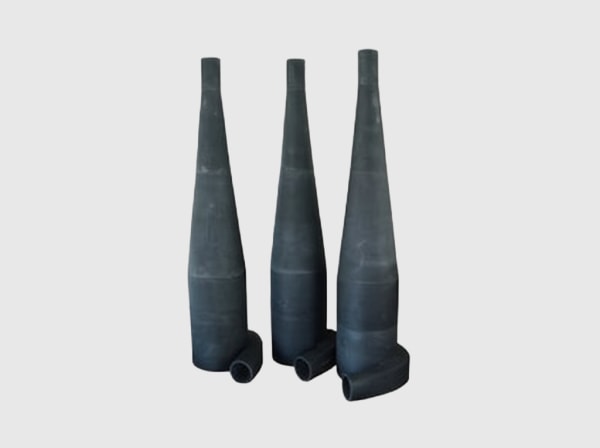
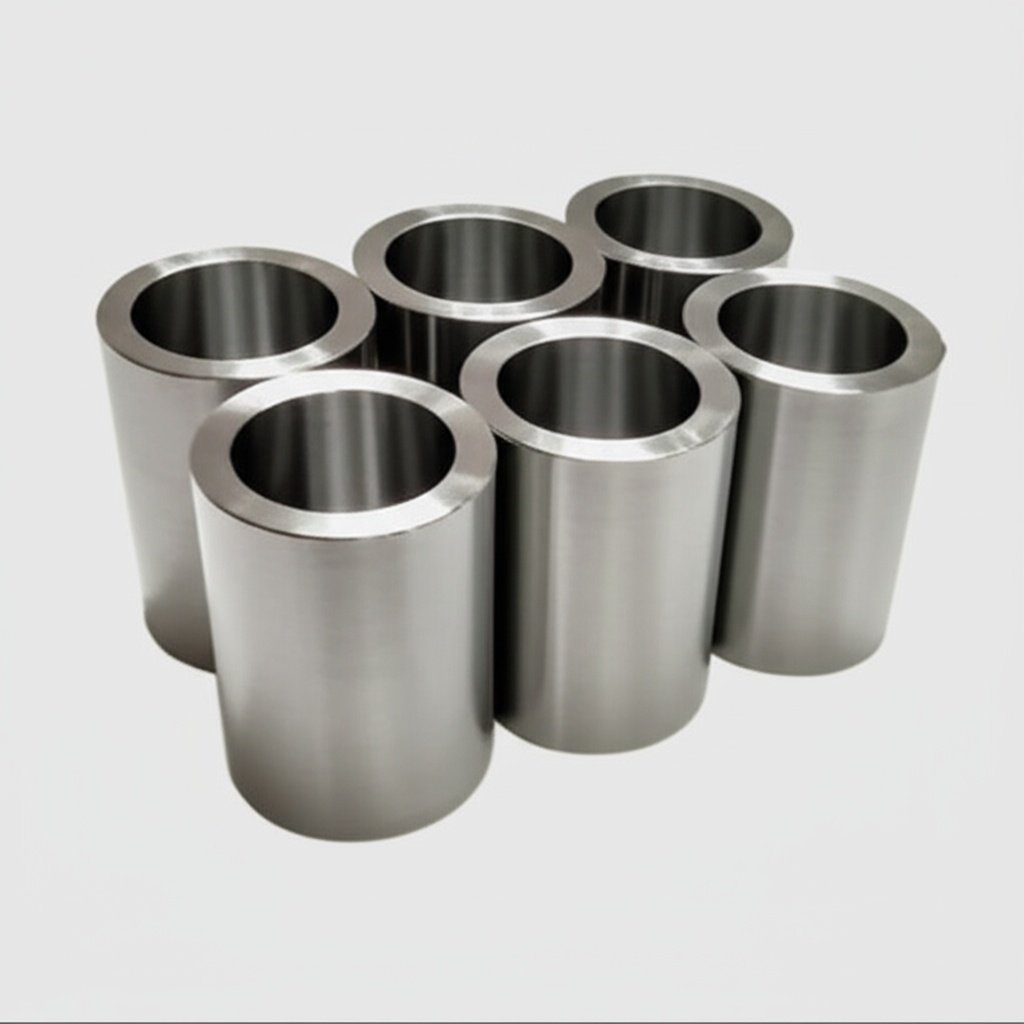
SiC Protection Tubes for Sensor Safety & Longevity
Share
SiC Protection Tubes for Sensor Safety & Longevity
In demanding industrial environments, the longevity and accuracy of critical sensors are paramount. Exposed to extreme temperatures, corrosive chemicals, and abrasive particles, conventional sensor protection often falls short, leading to frequent replacements, costly downtime, and compromised operational integrity. This is where silicon carbide (SiC) protection tubes emerge as an indispensable solution. Engineered for unparalleled performance in the harshest conditions, SiC protection tubes offer superior thermal stability, chemical inertness, and exceptional wear resistance, safeguarding your vital instrumentation and ensuring continuous, reliable operation.
The Unrivaled Strength of Silicon Carbide in Industrial Applications
Silicon carbide is a compound semiconductor material renowned for its extraordinary properties, making it ideal for a vast array of high-performance applications. Its unique atomic structure bestows upon it characteristics that far surpass traditional materials like ceramics and metals in extreme environments. For engineers, procurement managers, and technical buyers across industries, understanding the fundamental advantages of SiC is key to unlocking new levels of efficiency and durability.
- Extreme Temperature Resistance: SiC maintains its mechanical integrity and strength at temperatures exceeding 1,500°C, making it perfect for furnaces, kilns, and other high-temperature processing equipment.
- Exceptional Hardness and Wear Resistance: With a Vickers hardness comparable to diamond, SiC offers outstanding resistance to abrasion and erosion, crucial for protecting sensors in particle-laden or high-velocity fluid flows.
- Superior Chemical Inertness: SiC is highly resistant to attacks from acids, bases, and other aggressive chemicals, ensuring sensor protection in corrosive chemical processing environments.
- High Thermal Conductivity: Despite its high-temperature resistance, SiC also exhibits excellent thermal conductivity, allowing for efficient heat transfer while protecting sensitive components.
- Low Thermal Expansion: Its low coefficient of thermal expansion minimizes thermal shock and ensures dimensional stability even with rapid temperature fluctuations.
Key Industries Benefiting from SiC Protection Tubes
The versatility of silicon carbide protection tubes makes them critical components across a diverse range of industries. Each sector leverages SiC’s unique properties to overcome specific operational challenges and enhance equipment reliability.
| Industry | Application of SiC Protection Tubes | Benefit Provided by SiC |
|---|---|---|
| Semiconductor Manufacturing | Protecting thermocouples and temperature sensors in diffusion furnaces, CVD reactors, and etching equipment. | High purity, resistance to plasma and corrosive gases, excellent thermal stability for precise temperature control. |
| Automotive | Safeguarding exhaust gas temperature sensors, oxygen sensors, and catalytic converter probes. | Extreme temperature resistance, resistance to corrosive exhaust gases, vibration resistance. |
| Aerospace | Protecting sensors in jet engines, rocket nozzles, and high-temperature testing environments. | Lightweight, high strength-to-weight ratio, resistance to extreme temperatures and thermal shock. |
| Power Electronics | Encapsulating temperature sensors in high-power inverters, converters, and EV charging stations. | Excellent thermal management, electrical insulation, high dielectric strength. |
| Renewable Energy | Protecting sensors in solar thermal receivers, concentrated solar power (CSP) systems, and geothermal applications. | High-temperature stability, resistance to molten salts and high-pressure steam. |
| Metallurgical Industry | Protecting thermocouples and level sensors in molten metal furnaces, casting operations, and heat treatment. | Resistance to molten metals, slag, and abrasive materials, long service life in aggressive environments. |
| Defense Contractors | Sensor protection in advanced weapon systems, missile guidance, and high-performance vehicles. | Robustness, resistance to extreme conditions, reliable performance in critical applications. |
| Chemical Processing | Protecting pH sensors, conductivity sensors, and temperature probes in reactors and pipelines. | Superior corrosion resistance to a wide range of aggressive chemicals, preventing contamination. |
| LED Manufacturing | Protecting temperature sensors in MOCVD reactors for LED wafer growth. | High purity, thermal stability, resistance to process gases for consistent wafer quality. |
| Industrial Equipment Manufacturing | General sensor protection in industrial furnaces, boilers, incinerators, and heat exchangers. | Extended sensor lifespan, reduced maintenance, improved process control. |
Advantages of Custom Silicon Carbide Protection Tubes
While standard SiC components offer significant benefits, custom silicon carbide protection tubes provide unparalleled advantages, allowing for precise integration and optimized performance in highly specific applications. This level of customization ensures that every dimension, tolerance, and material property is perfectly matched to your operational demands.
- Tailored Dimensions and Geometries: Customization allows for exact fits, optimizing thermal transfer and protecting sensors effectively regardless of space constraints or complex equipment designs.
- Optimized Material Grades: Different SiC grades (e.g., reaction-bonded, sintered, nitride-bonded) offer varying levels of density, purity, and mechanical properties. Customization ensures the selection of the most suitable grade for specific thermal, chemical, or mechanical stresses.
- Enhanced Performance for Unique Challenges: For environments with extreme abrasive wear, high thermal shock, or specific corrosive agents, custom SiC compositions and surface treatments can significantly extend service life and improve reliability.
- Reduced Installation and Maintenance Costs: A perfectly designed custom part eliminates the need for costly modifications or workarounds, leading to smoother installation and reduced downtime.
- Improved System Efficiency: By ensuring optimal sensor performance, custom SiC tubes contribute to more accurate process control, leading to improved energy efficiency and product quality.
Recommended SiC Grades and Compositions for Protection Tubes
Choosing the right SiC grade is critical for maximizing the performance and lifespan of protection tubes. Each type of silicon carbide boasts distinct properties that make it suitable for specific industrial conditions.
Common SiC Grades:
- Reaction-Bonded Silicon Carbide (RBSC):
- Properties: Excellent thermal shock resistance, high strength, good oxidation resistance, and superior hardness. Contains some free silicon, which can limit use in certain ultra-high purity or halogen-rich environments.
- Applications: Often used for larger, complex geometries and where moderate purity is acceptable. Ideal for kiln furniture, furnace components, and wear parts.
- Sintered Silicon Carbide (SSiC):
- Properties: High purity (typically >98%), excellent corrosion resistance, superior strength and hardness at elevated temperatures, and good thermal conductivity. Free of metallic silicon.
- Applications: Preferred for highly corrosive environments, high-temperature structural components, mechanical seals, and semiconductor processing equipment where purity is critical.
- Nitride-Bonded Silicon Carbide (NBSC):
- Properties: Good strength, thermal shock resistance, and oxidation resistance. Lower density than RBSC or SSiC, making it more cost-effective for certain applications. Contains a nitride bond phase.
- Applications: Often used in molten aluminum contact, kiln furniture, and in areas where lower cost and good overall performance are required.
- Recrystallized Silicon Carbide (ReSiC):
- Properties: Exceptionally high purity, excellent high-temperature strength, and resistance to thermal shock. Very stable at extreme temperatures.
- Applications: Primarily used in semiconductor manufacturing and other ultra-high purity applications where even trace impurities are detrimental.
Design Considerations for SiC Protection Tubes
Effective design is crucial for harnessing the full potential of SiC protection tubes. Given SiC’s inherent hardness and brittleness, thoughtful design minimizes stress concentrations and facilitates manufacturability.
- Wall Thickness: Balancing thermal response time with mechanical robustness. Thinner walls offer faster sensor response but are more fragile; thicker walls provide greater protection at the cost of responsiveness.
- Geometry and Shape: Simple, symmetrical designs are generally preferred. Avoid sharp corners, abrupt changes in cross-section, and re-entrant angles, which can act as stress concentrators and lead to cracking during manufacturing or operation.
- Length and Diameter: These dimensions dictate the protected area and can influence the manufacturing process, particularly for very long or very narrow tubes.
- End Closures: Open-ended, blind-ended, or flanged designs depend on the sensor type and sealing requirements. Consider how the tube will be mounted and sealed within the system.
- Mounting Features: Incorporating threads, flanges, or other attachment points requires careful design to avoid creating weak points. Threaded SiC components require specialized machining and often larger diameters for sufficient strength.
- Thermal Expansion Mismatch: When mating SiC tubes with other materials, consider differences in coefficients of thermal expansion to prevent stresses during temperature cycling.
- Environmental Factors: Design should account for specific corrosive agents, abrasive particles, and the maximum operating temperature and pressure.
Tolerance, Surface Finish & Dimensional Accuracy in SiC Fabrication
Achieving precise tolerances and optimal surface finishes is critical for the performance and fit of SiC protection tubes. Advanced machining techniques are necessary to work with this incredibly hard material.
- Achievable Tolerances: While SiC is hard to machine, advanced diamond grinding techniques allow for very tight tolerances, often down to +/-0.001 inches (0.025 mm) for critical dimensions. The achievable tolerance depends on the part’s size, complexity, and specific grade of SiC.
- Surface Finish Options:
- As-Fired/As-Sintered: The standard finish for many applications, offering good mechanical properties.
- Ground: Improves dimensional accuracy and surface smoothness, often used for sealing surfaces or precise fits.
- Lapped/Polished: Provides an exceptionally smooth, mirror-like finish, critical for applications requiring minimal friction, superior sealing, or high purity (e.g., semiconductor processes).
- Dimensional Accuracy: Highly consistent dimensional accuracy is achievable, ensuring reliable fit-up and predictable performance. For complex geometries, 3D modeling and advanced CAM (Computer-Aided Manufacturing) are essential.
Post-Processing Needs for Enhanced Performance
While SiC is robust, certain post-processing steps can further enhance its performance, longevity, and specific functionality.
- Precision Grinding and Lapping: Essential for achieving tight tolerances, flat sealing surfaces, and specific surface finishes required for optimal sensor fit and sealing.
- Diamond Polishing: For ultra-smooth surfaces, critical in semiconductor applications or where fluid flow and friction must be minimized.
- Coating: In some cases, specialized coatings (e.g., additional SiC layers via CVD, or ceramic coatings) can be applied to enhance specific properties like corrosion resistance in extreme chemical environments or to improve surface purity.
- Sealing: Depending on the application, specific sealing methods might be required, such as brazing SiC to metal flanges, or using high-temperature gaskets.
Common Challenges and How to Overcome Them
Working with silicon carbide presents unique challenges due to its extreme hardness and inherent brittleness. However, experienced manufacturers have developed effective strategies to mitigate these issues.
- Brittleness: SiC is highly resistant to wear and temperature but can be susceptible to chipping or cracking under sudden impact or localized stress.
- Mitigation: Careful design to avoid sharp corners, proper handling procedures, and appropriate mounting techniques that distribute loads evenly.
- Machining Complexity: Its extreme hardness makes SiC incredibly difficult to machine, requiring specialized diamond tooling and advanced techniques.
- Mitigation: Partnering with manufacturers possessing dedicated SiC machining capabilities and expertise, as well as investing in advanced CNC equipment.
- Thermal Shock (though resistant, not immune): While SiC has excellent thermal shock resistance, extreme and rapid temperature gradients can still induce stress.
- Mitigation: Gradual heating/cooling cycles where possible, and designing with consideration for thermal expansion in assemblies with dissimilar materials.
- Cost: The raw materials and specialized manufacturing processes for SiC can result in higher initial costs compared to conventional ceramics or metals.
- Mitigation: Focusing on the long-term cost savings through extended lifespan, reduced downtime, and improved process efficiency, which typically far outweigh the initial investment. Optimized design can also reduce material usage and machining time.
How to Choose the Right SiC Supplier
Selecting the right supplier for your custom silicon carbide protection tubes is a strategic decision that directly impacts the quality, performance, and cost-effectiveness of your components. Look for a partner who offers not just products, but solutions.
Here is the hub of China’s silicon carbide customizable parts factories. As you are aware, the hub of China’s silicon carbide customizable parts manufacturing is situated in Weifang City of China. Now the region has been home to over 40 silicon carbide production enterprises of various sizes, collectively accounting for more than 80% of the nation’s total silicon carbide output.
We, Sicarb Tech, have been introducing and implementing silicon carbide production technology since 2015, assisting the local enterprises in achieving large-scale production and technological advancements in product processes. We have been a witness to the emergence and ongoing development of the local silicon carbide industry.
Based on the platform of the national technology transfer center of the Chinese Academy of Sciences, Sicarb Tech belongs to Chinese Academy of Sciences (Weifang) Innovation Park, an entrepreneurial park that collaborates closely with the National Technology Transfer Center of the Chinese Academy of Sciences. It serves as a national-level innovation and entrepreneurship service platform, integrating innovation, entrepreneurship, technology transfer, venture capital, incubation, acceleration, and scientific and technological services.
Sicarb Tech capitalizes on the robust scientific, technological capabilities and talent pool of the Chinese Academy of Sciences . Backed by the Chinese Academy of Sciences National Technology Transfer Center, it serves as a bridge, facilitating the integration and collaboration of crucial elements in the transfer and commercialization of scientific and technological achievements. Moreover, it has established a comprehensive service ecosystem that spans the entire spectrum of the technology transfer and transformation process. This translates into more reliable quality and supply assurance within China.
Sicarb Tech possesses a domestic top-tier professional team specializing in customized production of silicon carbide products. Under our support, 357+ local enterprises have benefited from our technologies. We possess a wide array of technologies, such as material, process, design, measurement & evaluation technologies, along with the integrated process from materials to products. This enables us to meet diverse customization needs. We can offer you higher-quality, cost-competitive customized silicon carbide components in China.
We are also committed to assisting you in establishing a specialized factory. If you need to build a professional silicon carbide products manufacturing plant in your country, Sicarb Tech can provide you with the technology transfer for professional silicon carbide production, along with a full-range of services (turnkey project) including factory design, procurement of specialized equipment, installation and commissioning, and trial production. This enables you to own a professional silicon carbide products manufacturing plant while ensuring a more effective investment, reliable technology transformation, and guaranteed input-output ratio. Learn more about our technology transfer and support services.
When evaluating potential suppliers, consider the following key factors:
- Technical Expertise: Does the supplier have deep knowledge of SiC material science, design principles, and manufacturing processes? Can they offer design assistance and material recommendations for your specific application?
- Manufacturing Capabilities: Assess their capabilities in advanced machining (diamond grinding, EDM), sintering, and quality control. Do they have the equipment to handle complex geometries and tight tolerances?
- Material Grades Offered: A diverse portfolio of SiC grades (SSiC, RBSC, NBSC, ReSiC) indicates flexibility and the ability to match the right material to your needs.
- Quality Control and Certifications: Look for ISO certifications and robust quality assurance processes. Ask for material certifications and test reports.
- Customization Experience: Proven experience in delivering custom solutions for demanding industrial applications is crucial. Review their case studies and project portfolio.
- Lead Time and Delivery: Understand their typical lead times for custom orders and their ability to meet your production schedules.
- Communication and Support: A responsive and collaborative supplier can make a significant difference in the success of your project.
Cost Drivers and Lead Time Considerations
Understanding the factors that influence the cost and lead time of custom SiC protection tubes is vital for effective project planning and budgeting.
| Cost Driver | Impact on Pricing |
|---|---|
| Material Grade | SSiC and ReSiC are generally more expensive due to higher purity and more complex manufacturing processes. RBSC and NBSC can be more cost-effective. |
| Part Complexity & Geometry | Intricate designs, very thin walls, or complex internal features require more extensive and precise machining, significantly increasing costs. |
| Tolerances & Surface Finish | Tighter tolerances and finer surface finishes (e.g., lapping, polishing) demand more machining time and specialized equipment, adding to the cost. |
| Volume | Economies of scale apply. Higher production volumes typically lead to lower per-unit costs due to reduced setup times and optimized production runs. |
| Post-Processing Needs | Additional steps like special coatings, precision grinding, or complex assembly will increase the overall cost. |
Lead Time Considerations:
- Design and Prototyping: Initial design review, material selection, and prototype production can take several weeks, especially for highly customized components.
- Tooling: If new tooling is required for specific geometries, this will add to the lead time.
- Manufacturing Process: The SiC manufacturing process (sintering, grinding) is time-intensive. Complex parts with intricate machining will naturally have longer lead times.
- Order Volume: Larger orders generally require longer production cycles, but established relationships with suppliers can lead to priority scheduling for repeat orders.
- Supplier Capacity: The current workload and capacity of your chosen supplier will influence delivery times.
Frequently Asked Questions (FAQ)
- Q1: What is the maximum operating temperature for SiC protection tubes?
- A1: Silicon carbide protection tubes can typically operate continuously at temperatures up to 1,600°C (2,912°F), with some specialized grades capable of even higher intermittent temperatures. The specific maximum temperature depends on the SiC grade and environmental conditions.
- Q2: Can SiC protection tubes be used in highly corrosive acid environments?
- A2: Yes, silicon carbide exhibits exceptional chemical inertness and is highly resistant to a wide range of aggressive acids and bases, making it ideal for chemical processing applications. Sintered SiC (SSiC) is particularly well-suited for such environments due to its high purity and dense microstructure.
- Q3: Are custom SiC protection tubes more expensive than standard ceramic tubes?
- A3: The upfront cost of custom SiC protection tubes can be higher than conventional ceramic or metallic tubes. However, their superior performance, extended lifespan in extreme conditions, and reduced downtime often result in a significantly lower total cost of ownership over the product’s lifetime, especially in critical industrial applications. For inquiries, feel free to contact us.
Conclusion: Safeguarding Your Operations with Custom SiC Protection Tubes
In the relentless pursuit of efficiency, reliability, and longevity across demanding industrial sectors, custom silicon carbide protection tubes stand out as a superior solution for safeguarding critical sensor instrumentation. From the high-purity demands of semiconductor manufacturing to the extreme temperatures of aerospace and metallurgy, SiC offers an unparalleled combination of thermal stability, chemical inertness, and wear resistance.
By leveraging the benefits of custom SiC solutions, companies can achieve precise sensor integration, mitigate the risks of harsh operating environments, and significantly extend the lifespan of their valuable equipment. Investing in high-quality, custom-engineered SiC protection tubes is not merely a procurement decision; it is a strategic investment in operational continuity, enhanced performance, and ultimately, a stronger competitive edge in today’s technologically advanced industries.
As a leading supplier of advanced custom silicon carbide products, Sicarb Tech is your trusted partner in navigating the complexities of high-performance ceramic solutions. Our deep expertise, advanced manufacturing capabilities, and commitment to technological innovation ensure that you receive components engineered to meet your exact specifications and exceed your performance expectations. Visit our about us page to learn more about our commitment to innovation and quality.

About the Author: Sicarb Tech
We provide clear and reliable insights into silicon carbide materials, component manufacturing, application technologies, and global market trends. Our content reflects industry expertise, practical experience, and a commitment to helping readers understand the evolving SiC landscape.

Customizable SiC
You May Also Interest
-
![]()
Mastering Material Excellence: A Deep Dive into SiC Sintering Furnaces for High-Performance Industrial Applications
Silicon Carbide (SiC) has emerged as a cornerstone material in industries demanding exceptional performance under extreme conditions. From the heart of semiconductor fabrication units to the demanding environments of aerospace and high-temperature industrial processes, custom SiC components offer unparalleled thermal conductivity, wear resistance, and chemical inertness. However, the journey to achieving these superior properties in…
-
![]()
SiC Thermocouple Tubes for Measurement Accuracy
SiC Thermocouple Tubes for Measurement Accuracy In industries where precision temperature measurement is paramount, such as semiconductor manufacturing, high-temperature processing, and aerospace, the reliability of thermocouple protection tubes is critical. Traditional materials often fall short in extreme conditions, leading to frequent replacements and compromised data. This is where custom silicon carbide (SiC) thermocouple tubes emerge…
-
![]()
Mastering Precision: A Deep Dive into SiC Cutting Machines for High-Performance Industrial Applications
Silicon Carbide (SiC) has emerged as a critical material in numerous high-performance industrial applications due to its exceptional properties, including high hardness, excellent thermal conductivity, and superior resistance to wear and corrosion. However, these very properties make SiC a challenging material to machine. Specialized SiC cutting machines are therefore essential for shaping SiC components with…