ISO Certified SiC for Your Complete Peace of Mind
Share
ISO Certified SiC for Your Complete Peace of Mind
In demanding industrial applications, the integrity and performance of components are paramount. Engineers, procurement managers, and technical buyers across critical sectors like semiconductors, aerospace, power electronics, and industrial manufacturing are constantly seeking materials that offer unparalleled reliability and longevity. This quest frequently leads to silicon carbide (SiC), an advanced technical ceramic renowned for its extraordinary properties. When you choose ISO certified silicon carbide, you’re not just selecting a material; you’re investing in peace of mind, backed by internationally recognized quality standards.
At Sicarb Tech, we understand the critical role that precision-engineered custom silicon carbide products play in your operational success. Our commitment to ISO certification ensures that every component we deliver meets the most stringent quality and performance criteria, empowering your innovations with superior materials.
What are Custom Silicon Carbide Products?
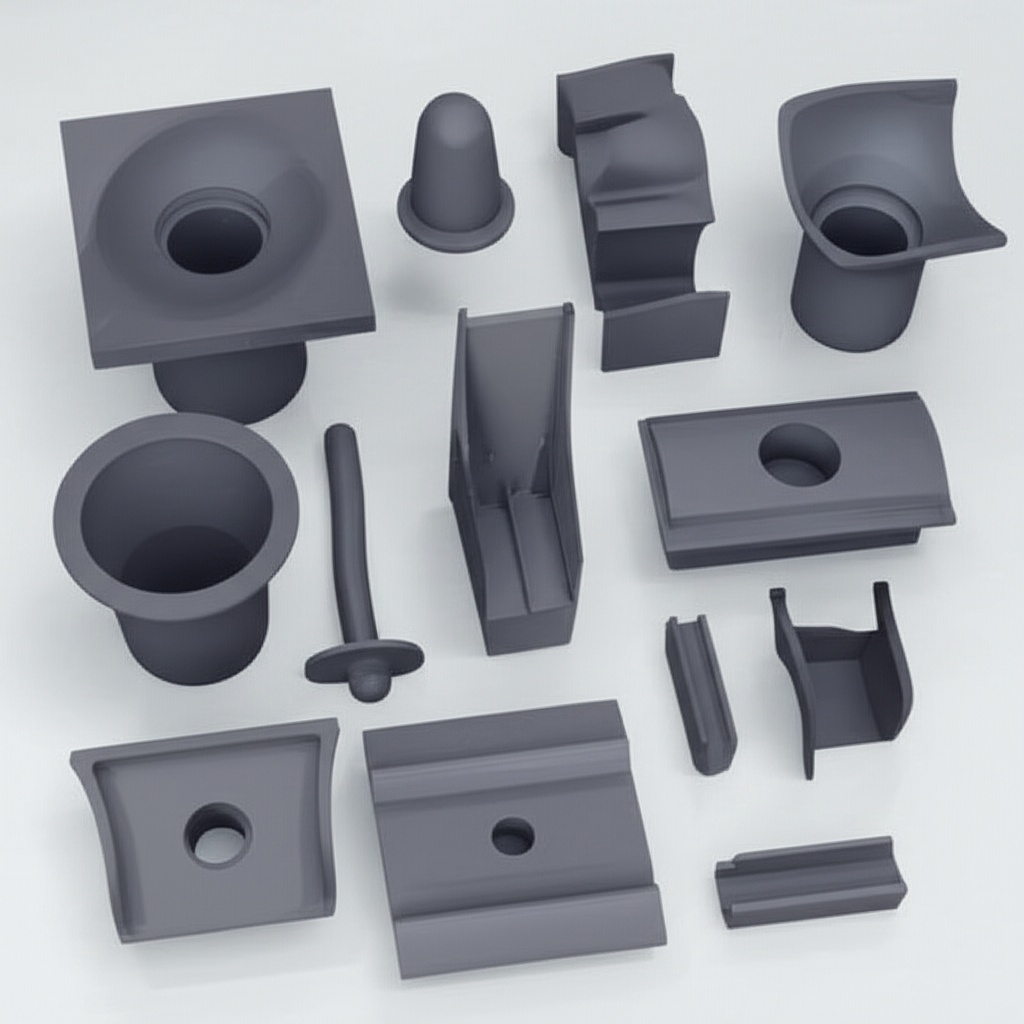
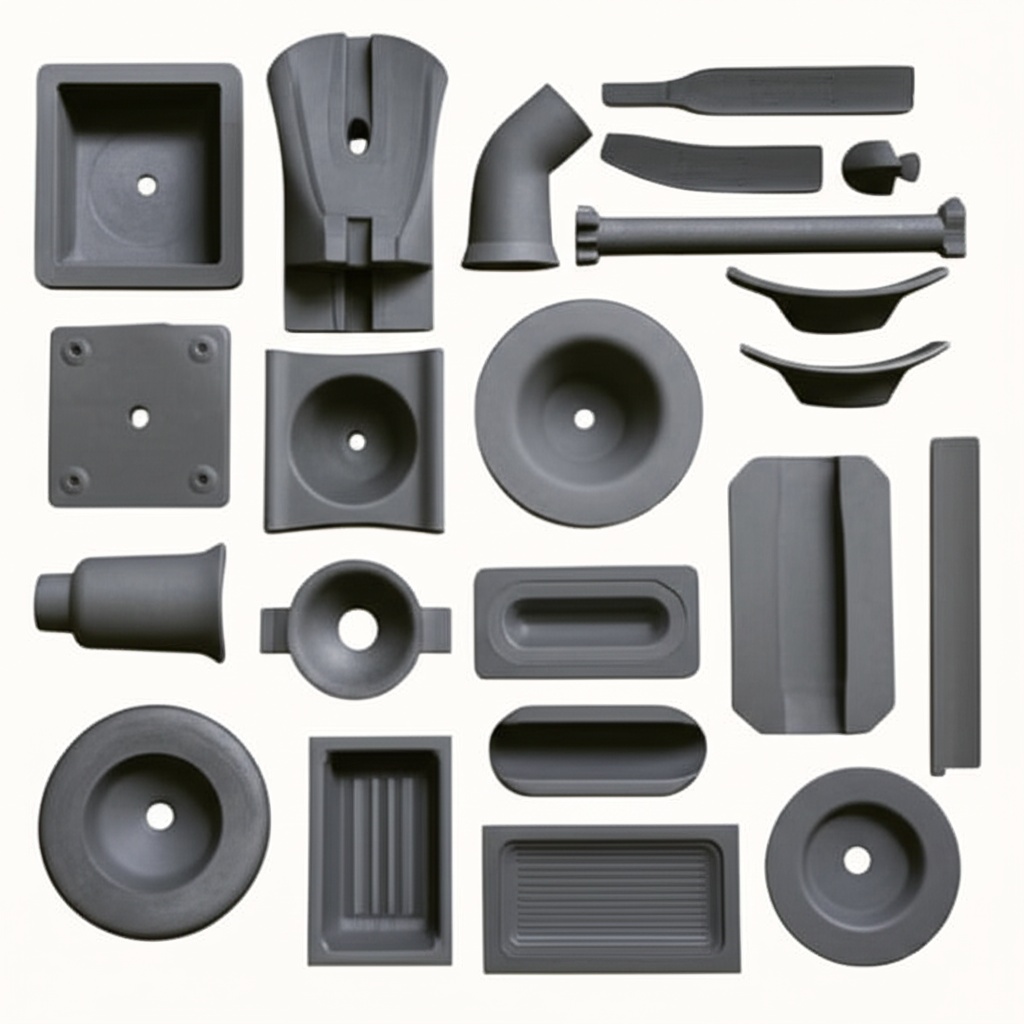
Custom silicon carbide products are high-performance ceramic components tailored to specific industrial requirements. Unlike standard off-the-shelf parts, custom SiC components are designed and manufactured to precise specifications, accounting for unique geometries, tolerances, and application environments. This customization is crucial for optimizing performance in extreme conditions where conventional materials often fail. SiC’s exceptional hardness, stiffness, thermal conductivity, and chemical inertness make it an ideal choice for challenging industrial applications, including those involving high temperatures, abrasive wear, and corrosive chemicals.
A Legacy of Expertise in Silicon Carbide Manufacturing
It’s important to understand the landscape of silicon carbide manufacturing, particularly in China. The hub of China’s silicon carbide customizable parts manufacturing is situated in Weifang City, a region now home to over 40 silicon carbide production enterprises, collectively accounting for more than 80% of the nation’s total silicon carbide output.
We, Sicarb Tech, have been at the forefront of this industrial evolution. Since 2015, we have been instrumental in introducing and implementing advanced silicon carbide production technology, assisting local enterprises in achieving large-scale production and significant technological advancements. We have been a witness to the emergence and ongoing development of this vital industry.
As part of the Chinese Academy of Sciences (Weifang) Innovation Park, an entrepreneurial park that collaborates closely with the National Technology Transfer Center of the Chinese Academy of Sciences , Sicarb Tech operates as a national-level innovation and entrepreneurship service platform. This unique position allows us to leverage the robust scientific, technological capabilities and talent pool of the Chinese Academy of Sciences, serving as a bridge for the integration and commercialization of scientific and technological achievements. This commitment to innovation and quality underpins our ability to offer more reliable quality and supply assurance within China.
Our domestic top-tier professional team specializes in customized production of silicon carbide products. With our support, over 317 local enterprises have benefited from our technologies. We possess a wide array of expertise, including material science, process engineering, design, measurement & evaluation technologies, and integrated processes from raw materials to finished products. This comprehensive capability enables us to meet diverse customization needs, offering you higher-quality, cost-competitive customized silicon carbide components in China. Discover more about our company’s extensive capabilities and history.
Main Applications of Custom SiC Across Industries
The versatility of custom silicon carbide components makes them indispensable across a wide spectrum of industries. Their superior properties translate directly into enhanced performance, increased efficiency, and reduced downtime.
- Semiconductor Manufacturing: SiC is vital for wafer processing equipment, furnace components, susceptors, and various fixtures due to its high purity, thermal stability, and excellent thermal shock resistance. It ensures precise temperature control and minimizes contamination.
- Automotive Companies: In electric vehicles (EVs) and hybrid cars, SiC power electronics are revolutionizing efficiency and power density. Custom SiC parts are also used in braking systems, engine components, and specialized seals for high-temperature resistance and wear resistance.
- Aerospace Companies: For aircraft and spacecraft, lightweight yet robust materials are crucial. SiC is used in high-temperature engine components, nozzles, braking systems, and structural parts where extreme temperatures and mechanical stresses are present.
- Power Electronics Manufacturers: SiC power devices enable higher switching frequencies, lower power losses, and improved thermal management in inverters, converters, and power modules, leading to more efficient and compact designs.
- Renewable Energy Companies: SiC is integral to solar inverters and wind turbine power converters, enhancing efficiency and reliability in energy conversion and grid integration.
- Metallurgical Companies: SiC offers excellent resistance to molten metals and high temperatures, making it ideal for furnace linings, crucibles, thermocouple protection tubes, and rollers in metal processing.
- Defense Contractors: For ballistic protection, lightweight armor, and high-temperature components in missile systems and advanced weaponry, SiC’s superior hardness and strength are critical.
- Chemical Processing Companies: Its exceptional chemical inertness and corrosion resistance make SiC suitable for pump components, valves, nozzles, and heat exchangers in harsh chemical environments.
- LED Manufacturers: SiC substrates are used for growing GaN (gallium nitride) crystals for high-brightness LEDs, offering advantages in thermal management and device performance.
- Industrial Equipment Manufacturers: SiC is used in various wear parts, seals, bearings, nozzles, and abrasive tools for its extreme hardness and wear resistance, extending equipment lifespan and reducing maintenance.
- Telecommunications Companies: SiC is finding applications in high-frequency and high-power radio frequency (RF) devices, enabling more robust and efficient communication systems.
- Oil and Gas Companies: In downhole tools and components exposed to abrasive slurries and corrosive chemicals, SiC provides critical wear and corrosion resistance.
- Medical Device Manufacturers: Biocompatible SiC can be used in certain medical instruments and components requiring high hardness, corrosion resistance, and sterilization capabilities.
- Rail Transportation Companies: SiC power modules are used in traction systems for trains, contributing to greater energy efficiency and reduced maintenance.
- Nuclear Energy Companies: For components requiring extreme radiation resistance, high-temperature stability, and structural integrity in nuclear reactors and fuel processing.
Why Choose Custom Silicon Carbide?
The decision to opt for custom silicon carbide solutions over standard materials or alternative ceramics is driven by a compelling set of advantages that directly impact performance, longevity, and cost-effectiveness in the long run.
- Exceptional Thermal Resistance: SiC maintains its strength and integrity at extremely high temperatures, far beyond the limits of most metals and other ceramics, making it ideal for high-temperature processing equipment.
- Superior Wear Resistance: Its inherent hardness, second only to diamond, provides unparalleled resistance to abrasion and erosion, significantly extending the lifespan of components in harsh environments.
- Outstanding Chemical Inertness: SiC resists attack from a wide range of acids, alkalis, and corrosive gases, making it indispensable in chemical processing and semiconductor fabrication.
- High Thermal Conductivity: Efficiently dissipates heat, critical for thermal management in power electronics and high-power applications, preventing overheating and improving reliability.
- Low Thermal Expansion: Minimizes thermal shock and ensures dimensional stability across wide temperature fluctuations, reducing the risk of cracking or deformation.
- Excellent Mechanical Strength: Offers high flexural strength and stiffness, allowing for thinner, lighter, yet robust component designs.
- Customization for Optimal Fit: Tailored designs ensure perfect integration into existing systems, optimizing performance and eliminating the need for costly modifications or compromises. Explore how we provide comprehensive customizing support for your SiC needs.
Recommended SiC Grades and Compositions
Silicon carbide exists in various forms, each offering distinct properties suitable for different applications. Understanding these SiC grades is crucial for selecting the right material for your specific needs.
| SiC Grade/Type | Key Characteristics | Typical Applications |
|---|---|---|
| Reaction-Bonded Silicon Carbide (RBSiC) | High strength, excellent wear and corrosion resistance, good thermal shock resistance, near net-shape capabilities. Contains free silicon. | Kiln furniture, pump seals, mechanical seals, nozzles, furnace components, armor. |
| Sintered Alpha Silicon Carbide (SSiC) | Extremely high purity, superior hardness, excellent corrosion and oxidation resistance, high strength at elevated temperatures. Fine grain structure. | Semiconductor process equipment, bearings, seals, valves, crucibles, critical aerospace components. |
| Nitride-Bonded Silicon Carbide (NBSiC) | Good strength and thermal shock resistance, lower density, good resistance to molten metals. Nitrogen-bonded. | Refractory components, kiln furniture, blast furnace liners. |
| Recrystallized Silicon Carbide (ReSiC) | Very high purity, excellent thermal shock resistance, good high-temperature strength, porous structure. | Furnace components, kiln furniture, heat exchangers. |
| Siliconized Silicon Carbide (SiSiC) | Excellent wear resistance, good mechanical strength, high thermal conductivity. Contains free silicon. | Wear plates, liners, nozzles, impellers, structural components in high-wear applications. |
Design Considerations for SiC Products
Designing silicon carbide components requires a deep understanding of the material’s properties and manufacturing processes. Early design considerations are critical to ensure manufacturability, optimize performance, and minimize costs.
- Geometry Limits: SiC is a hard and brittle material. Complex geometries with sharp corners, thin walls, or deep narrow features can be challenging to manufacture and prone to stress concentrations.
- Wall Thickness Uniformity: Aim for consistent wall thicknesses to ensure uniform cooling and shrinkage during manufacturing, reducing internal stresses and warpage.
- Stress Points: Identify potential stress concentration points (e.g., sharp internal corners, abrupt changes in cross-section) and incorporate radii to minimize stress risers.
- Tolerances: While SiC can achieve high precision, specifying overly tight tolerances without necessity can significantly increase manufacturing complexity and cost. Understand the achievable tolerances for the chosen SiC grade and manufacturing method.
- Fastening & Joining: Consider how SiC components will be joined or fastened. Due to its hardness, drilling and tapping can be difficult; integration of design features for mechanical fasteners or brazing/bonding solutions should be planned early.
- Volume & Scalability: Design for manufacturing processes that can scale with your anticipated production volumes.
Tolerance, Surface Finish & Dimensional Accuracy
Achieving precise SiC tolerances and surface finishes is essential for optimal component performance, especially in applications requiring sealing, smooth movement, or precise alignment. The achievable precision depends on the SiC grade, manufacturing process (e.g., green machining, hot pressing, grinding), and post-processing steps.
- Dimensional Accuracy: Depending on the complexity and size, general tolerances for SiC components can range from $pm 0.1%$ to $pm 0.5%$ of the dimension, with tighter tolerances achievable through precision grinding.
- Surface Finish Options:
- As-fired/As-sintered: Typically rougher surfaces, suitable for non-critical applications.
- Ground: Achieves a smoother finish and tighter tolerances, often required for mating surfaces.
- Lapped/Polished: Provides the finest surface finishes (e.g., optical flats, sealing surfaces), crucial for applications requiring extreme smoothness or hermetic seals.
- Flatness & Parallelism: Critical for components used in semiconductor equipment or sealing applications. Achievable flatness can be very high, often measured in light bands for highly precise parts.
Post-Processing Needs
While SiC offers inherent advantages, certain SiC post-processing steps may be necessary to enhance performance, durability, or meet specific application requirements.
- Grinding: Precision grinding is commonly used to achieve tighter dimensional tolerances, improved surface finishes, and specific geometries that are difficult to form during initial sintering.
- Lapping & Polishing: Essential for critical sealing surfaces, optical applications, or components requiring extremely low friction or wear.
- Sealing/Impregnation: For porous SiC grades, impregnation with resins or metals can enhance impermeability, mechanical strength, or thermal conductivity.
- Coating: Applying specialized coatings (e.g., pyrolytic graphite, CVD SiC) can further enhance specific properties like corrosion resistance, erosion resistance, or non-stick surfaces, particularly for semiconductor applications.
- Joining & Assembly: Techniques like brazing or mechanical fastening are used to integrate SiC components into larger assemblies.
Common Challenges and How to Overcome Them
Despite its remarkable properties, working with silicon carbide presents certain challenges. Understanding these and knowing how to mitigate them is key to successful application.
- Brittleness: Like most technical ceramics, SiC is brittle and susceptible to fracture under sudden impact or tensile stress.
- Mitigation: Design to minimize tensile stresses and incorporate features that distribute loads evenly. Consider thicker sections or rounded edges in high-stress areas.
- Machining Complexity: SiC’s extreme hardness makes it difficult and costly to machine, especially after sintering.
- Mitigation: Design for near net-shape manufacturing whenever possible. Limit machining to grinding operations for final dimensions and features.
- Thermal Shock (though good resistance): While SiC has good thermal shock resistance, rapid and extreme temperature changes can still cause issues, especially in non-uniform heating/cooling scenarios.
- Mitigation: Ensure gradual heating and cooling cycles where feasible. Design parts with consistent wall thicknesses to minimize thermal gradients.
- Cost: SiC products can be more expensive than conventional materials due to raw material costs and specialized manufacturing processes.
- Mitigation: Focus on total cost of ownership, considering the extended lifespan, reduced maintenance, and improved performance that SiC offers. Optimize design to reduce material waste and manufacturing complexity.
How to Choose the Right SiC Supplier
Selecting the right SiC supplier is a critical decision that impacts product quality, delivery, and overall project success. For reliable and high-quality custom ceramic solutions, consider the following:
- Technical Expertise: A reputable supplier should possess in-depth knowledge of various SiC grades, manufacturing processes, and application engineering. They should be able to provide technical guidance and collaborate on design.
- Material Options: Ensure the supplier offers the specific SiC grades and compositions suitable for your application, including reaction-bonded, sintered, and nitride-bonded SiC.
- Manufacturing Capabilities: Verify their ability to handle complex geometries, tight tolerances, and required surface finishes. Ask about their machining, grinding, lapping, and polishing capabilities.
- Quality Certifications: Look for ISO certified silicon carbide manufacturers, like Sicarb Tech, as this guarantees adherence to international quality management standards, ensuring consistent product quality and traceability.
- Experience and Track Record: A proven track record of successful projects in your industry or similar demanding applications is a strong indicator of reliability. You can view some of our successful custom SiC case studies.
- Customer Support & Communication: Responsive and transparent communication throughout the design, manufacturing, and delivery process is vital.
- Research & Development: A forward-thinking supplier invests in R&D to continuously improve materials and processes, offering cutting-edge solutions.
Cost Drivers and Lead Time Considerations
Understanding the factors that influence the cost of SiC components and their lead times is crucial for effective project planning and budgeting.
- Material Grade: Sintered SiC (SSiC) typically costs more than reaction-bonded SiC (RBSiC) due to higher purity and more complex sintering processes.
- Component Complexity: Intricate geometries, thin walls, tight tolerances, and multiple features significantly increase manufacturing costs due to increased machining time and risk of breakage.
- Volume: Economies of scale apply; higher production volumes generally lead to lower per-unit costs. Prototype and low-volume runs will have higher unit costs.
- Size & Weight: Larger or heavier components require more raw material and longer processing times, contributing to higher costs.
- Surface Finish & Post-Processing: Precision grinding, lapping, and polishing add significant cost due to the specialized equipment and skilled labor required. Coatings or impregnations also add to the overall cost.
- Quality Control & Testing: Rigorous testing and strict quality control measures, while essential for ISO certified SiC, can also influence the final price.
- Lead Time: Lead times are influenced by raw material availability, manufacturing queue, component complexity, and required post-processing. Plan well in advance for custom SiC orders.
Frequently Asked Questions (FAQ)
Q1: What are the primary advantages of SiC over other technical ceramics like alumina or zirconia?
A1: SiC typically offers superior thermal conductivity, higher temperature resistance, and excellent chemical inertness compared to alumina or zirconia. While alumina is generally more cost-effective for less demanding applications, and zirconia excels in fracture toughness, SiC is the preferred choice for extreme environments involving high heat, corrosive chemicals, and abrasive wear where high thermal conductivity is also critical.
Q2: Can silicon carbide components be repaired or refurbished?
A2: Due to SiC’s extreme hardness and chemical inertness, traditional repair methods are challenging. Minor surface damage might be addressed by grinding or polishing, but significant damage usually necessitates replacement. Preventive measures and proper design are crucial for maximizing component lifespan.
Q3: What kind of design data or drawings are needed to request a quote for custom SiC parts?
A3: To provide an accurate quote, suppliers typically require detailed 2D and 3D CAD drawings (e.g., .STEP, .IGES, .DXF formats) specifying dimensions, tolerances, surface finish requirements, and any special features. Information on the intended application, operating temperatures, chemical exposure, and required volume is also highly beneficial. For tailored solutions, feel free to contact us directly for an initial consultation.
Q4: How does Sicarb Tech ensure the quality of its custom SiC products?
A4: At Sicarb Tech, our commitment to quality is underpinned by our ISO certification and our deep integration with the Chinese Academy of Sciences National Technology Transfer Center. We utilize a top-tier professional team, advanced material and process technologies, and a comprehensive quality management system that spans from raw material selection to final product inspection. This ensures that every custom silicon carbide component we produce meets the highest standards of performance and reliability. We are also deeply involved in technology transfer, assisting others in building their own SiC factories with a full range of services, which showcases our deep expertise and commitment to the industry’s advancement. Learn more about our comprehensive technology transfer services.
Q5: Is it possible for Sicarb Tech to help establish a new SiC manufacturing plant?
A5: Yes, absolutely. If you need to build a professional silicon carbide products manufacturing plant in your country, Sicarb Tech can provide you with complete technology transfer for professional silicon carbide production. We offer a full range of services, often referred to as a “turnkey project,” which includes factory design, procurement of specialized equipment, installation and commissioning, and trial production. This comprehensive support enables you to own a professional silicon carbide products manufacturing plant while ensuring a more effective investment, reliable technology transformation, and a guaranteed input-output ratio. This unique offering highlights our profound expertise and dedication to advancing the global SiC industry.
Conclusion
The selection of ISO certified silicon carbide components is a strategic decision for industries operating in demanding environments. By leveraging the unparalleled properties of SiC—its thermal resistance, wear resistance, chemical inertness, and high strength—engineers and procurement specialists can significantly enhance product performance, extend operational lifespans, and ultimately achieve a lower total cost of ownership.
When seeking custom silicon carbide products, partnering with an experienced and certified supplier is paramount. At Sicarb Tech, our deep roots in the hub of China’s SiC manufacturing, coupled with our strategic alignment with the Chinese Academy of Sciences and our ISO certification, position us as a trusted leader in delivering high-quality, cost-competitive, and precisely engineered SiC components. We are committed to empowering your innovations with materials that provide complete peace of mind, ensuring reliability and excellence for your most critical applications. Explore our full range of offerings at casnewmaterials.com.

About the Author: Sicarb Tech
We provide clear and reliable insights into silicon carbide materials, component manufacturing, application technologies, and global market trends. Our content reflects industry expertise, practical experience, and a commitment to helping readers understand the evolving SiC landscape.

Customizable SiC
You May Also Interest
-
![]()
RoHS SiC: Ensuring Environmental Compliance
RoHS SiC: Ensuring Environmental Compliance for High-Performance Applications In today’s rapidly evolving industrial landscape, the demand for materials that offer unparalleled performance, durability, and environmental compliance is paramount. For engineers, procurement managers, and technical buyers across diverse sectors, custom silicon carbide (SiC) products have emerged as a cornerstone of advanced design. Specifically, the adherence to…
-
![]()
REACH Compliant SiC for Broad Market Access
REACH Compliant SiC for Broad Market Access In today’s globalized industrial landscape, the demand for high-performance materials is continuously growing. Among these, silicon carbide (SiC) stands out as a material of choice for its exceptional properties. As industries worldwide increasingly prioritize environmental responsibility and regulatory compliance, the focus on materials that meet stringent standards like…
-
CE Certified SiC for European Market Sales
CE Certified SiC for European Market Sales In today’s highly demanding industrial landscape, the performance of critical components can dictate the success of an entire system. From high-power electronics to extreme-temperature processing, conventional materials often fall short. This is where custom silicon carbide (SiC) products emerge as a game-changer. As a leading material in advanced…