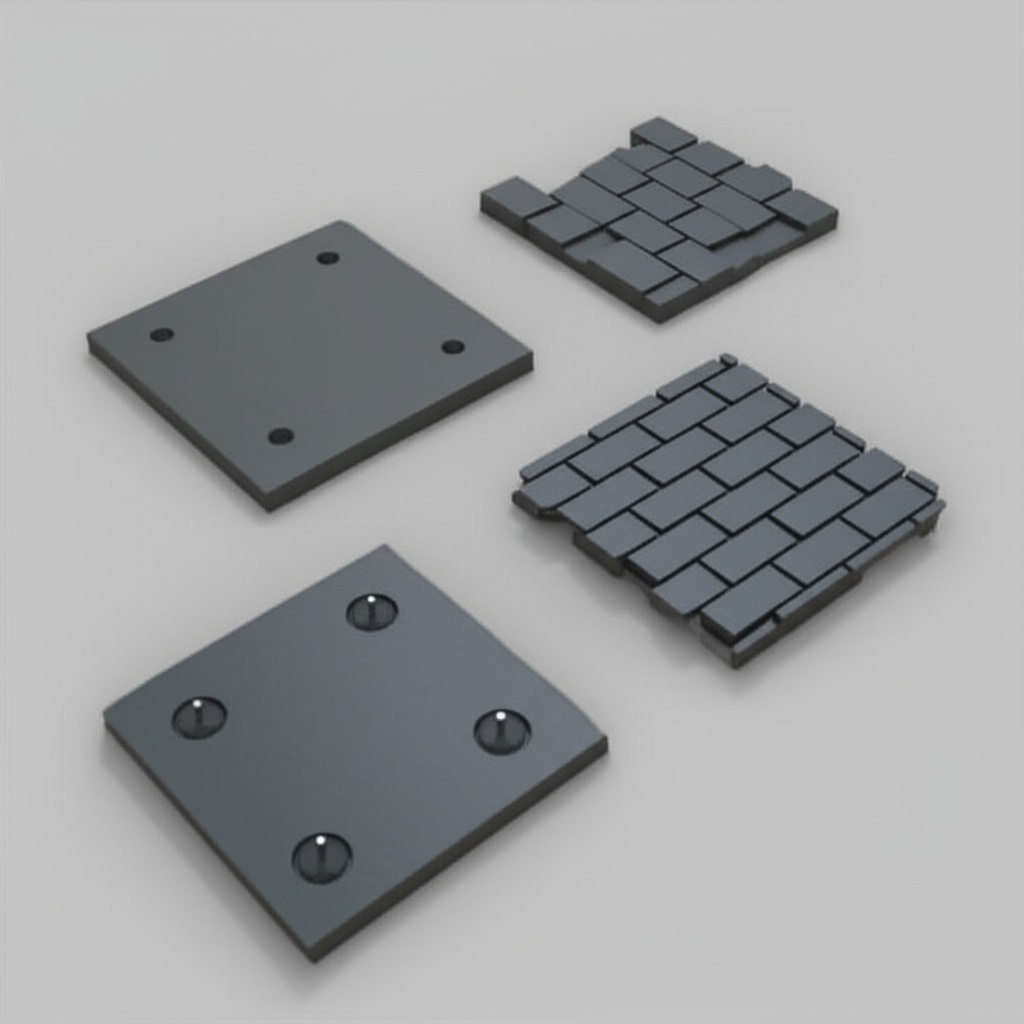
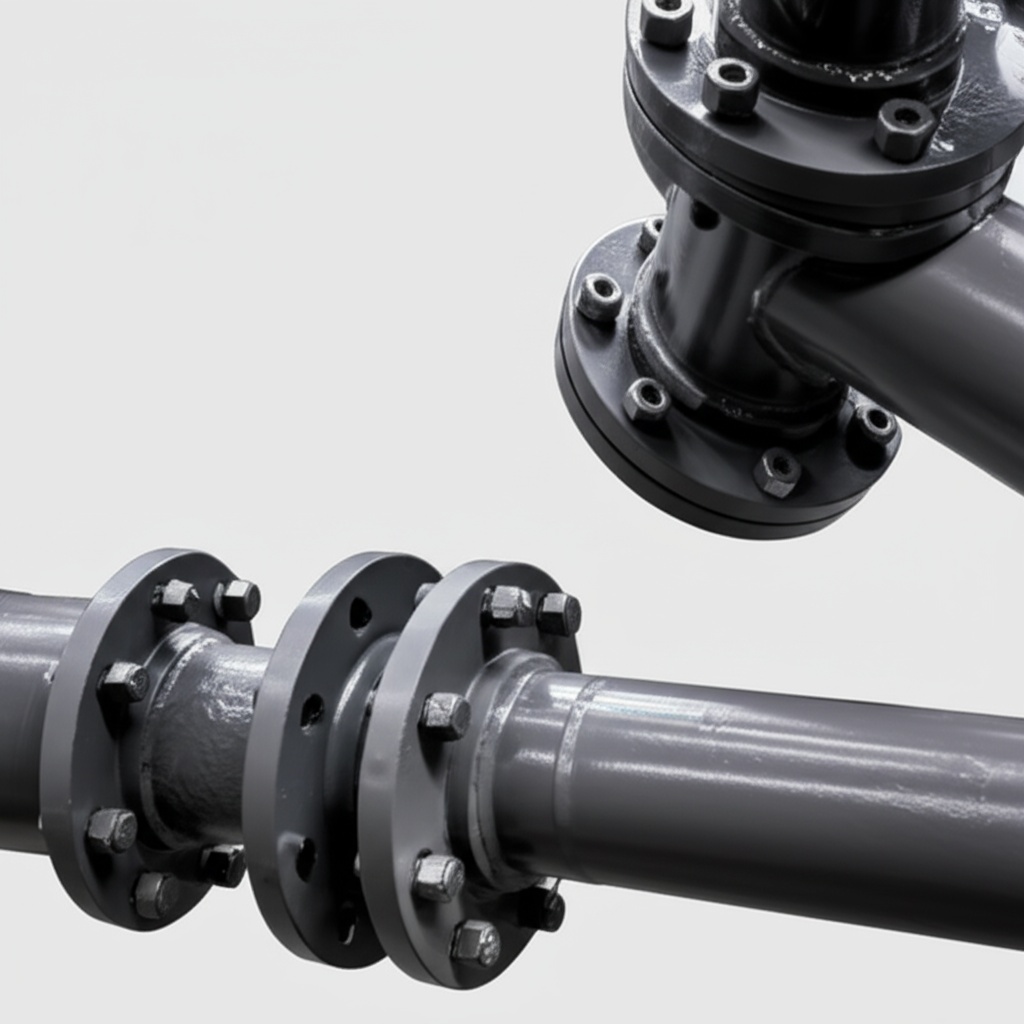
Recrystallized SiC: Superior Quality for Tough Demands
Share
Recrystallized SiC: Superior Quality for Tough Demands
Introduction: The Essential Role of Custom Recrystallized Silicon Carbide
In today’s rapidly advancing industrial landscape, the demand for materials that can withstand extreme conditions is paramount.
Main Applications of Recrystallized SiC Across Industries
The versatility and robustness of
- Semiconductor Manufacturing: RSiC is extensively used for components in wafer processing equipment, such as
LPCVD paddles and boats ,epitaxial reactor components , cantilever rods, and dummy wafers. Its high purity prevents contamination, while its thermal shock resistance and stability at high temperatures (up to 1650°C in controlled atmospheres) ensure process consistency. - High-Temperature Furnaces & Kiln Furniture: For industrial heating applications, RSiC serves as ideal
kiln furniture , including beams, rollers, plates, setters, and supports. Its excellent hot strength, thermal shock resistance, and non-deforming nature at elevated temperatures lead to longer service life and energy savings in firing ceramics, metals, and other materials. - Aerospace and Defense: The lightweight nature, high stiffness, and thermal stability of RSiC make it suitable for aerospace components like mirror substrates for telescopes, structural parts for spacecraft, and components for rocket propulsion systems that experience extreme temperature gradients.
- Power Electronics: While direct SiC is used for semiconductors, RSiC can be employed in manufacturing or testing equipment for power electronic devices due to its thermal management capabilities and electrical resistivity at high temperatures.
- Chemical Processing: Components like
thermocouple protection tubes , heat exchanger tubes, and burner nozzles made from RSiC offer exceptional corrosion resistance against acids and alkalis, even at high temperatures, ensuring longevity and process purity in aggressive chemical environments. - LED Manufacturing: Similar to semiconductor applications, RSiC components are used in MOCVD reactors for susceptor coatings or support structures, where high temperature and purity are critical.
- Metallurgy: In metallurgical operations, RSiC is used for crucibles, molten metal transfer components, and thermocouple sheaths due to its resistance to molten metal attack and high temperatures.
- Renewable Energy: Components in concentrated solar power (CSP) systems or high-temperature fuel cells can benefit from RSiC’s thermal properties.
The breadth of these applications underscores the material’s adaptability and the growing reliance on
Why Choose Custom Recrystallized Silicon Carbide?
Opting for
Key benefits of choosing custom RSiC include:
- Optimized Performance: Custom designs ensure that the RSiC component perfectly fits the application, whether it’s maximizing thermal uniformity in a furnace, ensuring precise alignment in semiconductor equipment, or achieving specific flow characteristics in a chemical reactor.
- Enhanced Thermal Management: RSiC inherently possesses excellent
thermal shock resistance and high thermal conductivity. Customization can further optimize these properties by tailoring geometry for heat dissipation or insulation as required. For instance, specific fin designs or wall thicknesses can be engineered for optimal thermal performance. - Superior Wear and Abrasion Resistance: While RSiC is primarily known for its high-temperature capabilities, its hardness also contributes to good wear resistance. Custom designs can incorporate features that mitigate wear in specific areas, prolonging component life in abrasive environments.
- Exceptional Chemical Inertness: RSiC is highly resistant to most acids and alkalis. Custom components ensure that all surfaces exposed to corrosive media are made from this robust material, preventing premature failure and contamination. This is crucial in
chemical processing equipment and semiconductor manufacturing. - Complex Geometries: Advanced manufacturing techniques allow for the production of complex RSiC shapes that may not be available as standard parts. This opens up new design possibilities for engineers looking to improve system performance or consolidate multiple parts into a single, more reliable component.
- Material Purity: Recrystallized SiC is one of the purest forms of silicon carbide, typically >99.5% SiC. Customization ensures that this purity is maintained and that the component is specifically designed to prevent any potential contamination in sensitive applications like
semiconductor wafer processing . - Integration with Existing Systems: Custom RSiC parts can be designed to seamlessly integrate with existing machinery and equipment, minimizing the need for costly modifications to surrounding systems.
Investing in custom RSiC components translates to improved reliability, longer service life, reduced downtime, and often, a lower total cost of ownership despite potentially higher initial part costs. For businesses seeking a competitive edge through superior material performance,
Understanding Recrystallized SiC: Properties and Advantages
Key Properties of Recrystallized SiC:
- High Purity: Typically > 99.5% SiC. This lack of secondary phases (like silicon, silica, or nitrides found in other SiC types) makes RSiC ideal for applications where contamination is a concern, such as semiconductor processing.
- Exceptional High-Temperature Strength: RSiC maintains its mechanical strength at temperatures up to 1650°C (3000°F) or even higher in non-oxidizing atmospheres. It exhibits minimal creep and deformation under load at these temperatures.
- Excellent Thermal Shock Resistance: Due to its relatively high thermal conductivity (though lower than reaction-bonded or CVD SiC) and moderate coefficient of thermal expansion, RSiC can withstand rapid temperature changes without cracking.
- Good Thermal Conductivity: Facilitates uniform heat distribution, beneficial for kiln furniture and heat exchanger components.
- Chemical Inertness: Highly resistant to acids, alkalis, and molten salts, making it suitable for aggressive chemical environments. It also shows good resistance to oxidation in air up to around 1600°C due to the formation of a passive SiO2 layer.
- Moderate Electrical Resistivity: While SiC is a semiconductor, RSiC typically has high electrical resistivity at room temperature, which decreases with increasing temperature.
- Hardness and Wear Resistance: While not as wear-resistant as some densely sintered SiCs, its high hardness provides good resistance to abrasive wear in many applications.
- Porosity: RSiC typically has a controlled porosity, often in the range of 10-20%. While this can be a disadvantage for applications requiring gas tightness, it contributes to its excellent thermal shock resistance. For applications needing impermeability, coatings or sealants can sometimes be applied.
Advantages Over Other SiC Types and Materials:
Compared to other
| Property/Feature | Recrystallized SiC (RSiC) | Reaction-Bonded SiC (RBSC/SiSiC) | Sintered SiC (SSiC) | Alumina (Al2O3) |
|---|---|---|---|---|
| Max. Use Temperature | Very High (e.g., 1650°C+) | Moderate (limited by free Si, ~1350°C) | Very High (e.g., 1600°C+) | High (e.g., 1700°C, but strength drops) |
| Purity (SiC content) | Excellent (>99.5%) | Good (contains free Si 8-20%) | Excellent (>98%) | N/A (is Al2O3) |
| Thermal Shock Resistance | Excellent | Good to Excellent | Good | Fair to Good |
| Chemical Resistance (Acids/Alkalis) | Excellent | Good (Si phase can be attacked) | Excellent | Good (can be attacked by some) |
| Porosity | Controlled (typically 10-20%) | Very Low / Nil | Very Low / Nil | Low / Nil (dense grades) |
| Cost | Moderate to High | Moderate | High | Low to Moderate |
The primary advantages of RSiC stem from its purity and the direct bonding of SiC grains. This leads to superior high-temperature performance, especially in terms of creep resistance and strength retention, compared to materials with secondary binding phases that might soften or react at elevated temperatures. Its porosity, while a factor to consider, is often a key contributor to its outstanding thermal shock performance. For applications requiring the utmost in temperature capability and purity without the extreme costs of CVD SiC,
Design Considerations for RSiC Products
Designing components with
Key Design Guidelines for RSiC Components:
- Simplicity of Form: While complex shapes are possible, simpler geometries generally lead to easier manufacturing, lower costs, and reduced risk of defects. Avoid overly intricate features unless absolutely necessary.
- Uniform Wall Thickness: Maintaining uniform wall thickness throughout the part helps prevent stress concentrations during firing and thermal cycling, reducing the risk of cracking. Abrupt changes in thickness should be minimized. If variations are necessary, they should be gradual.
- Generous Radii: Sharp internal corners and edges are stress concentrators and can be initiation points for fractures. Incorporate generous radii (e.g., minimum 2-3 times the wall thickness where possible) on all internal and external corners.
- Avoid Sharp External Edges: Similar to internal corners, sharp external edges are prone to chipping during handling, machining, or use. Small chamfers or radii are recommended.
- Hole Design:
- Keep holes away from edges to maintain structural integrity.
- The distance between holes, and from a hole to an edge, should typically be at least 1.5 to 2 times the hole diameter.
- Aspect ratios for holes (depth-to-diameter) should be considered; very deep, small-diameter holes can be challenging to form and machine.
- Tolerance for Shrinkage: RSiC parts undergo significant shrinkage during the high-temperature sintering process. Designers must account for this, and it’s crucial to work closely with the RSiC manufacturer who understands the specific shrinkage rates of their material and process.
- Draft Angles: For pressed or molded parts, slight draft angles (tapers) may be necessary to facilitate removal from molds.
- Support During Firing: Large, flat, or complex parts may require specific design features or considerations for support during the high-temperature firing process to prevent warping or distortion. Discuss these with your supplier.
- Brittleness and Impact Resistance: RSiC is a brittle material with low fracture toughness. Designs should aim to minimize tensile stresses and avoid impact loads. Consider protective housings or design features that shield the RSiC component if impact is a risk.
- Machining Allowances: If tight tolerances or specific surface finishes are required, machining (grinding) will be necessary after firing. Sufficient material must be included in the “as-fired” design to allow for this. Machining RSiC is difficult and costly, so minimize it where possible by designing near-net-shape parts.
- Assembly Considerations: How will the RSiC component be assembled with other parts? Avoid point loads or high clamping forces. Consider using compliant interlayers or appropriate mounting mechanisms. Differential thermal expansion with mating metallic parts must be carefully managed.
Early collaboration with an experienced
Tolerance, Surface Finish & Dimensional Accuracy for RSiC
Achieving precise dimensions and desired surface finishes is critical for the functionality of
As-Fired Tolerances:
RSiC parts are formed (e.g., by slip casting, extrusion, or pressing) and then fired at very high temperatures. During firing, significant shrinkage occurs, which can affect dimensional accuracy.
Typical as-fired dimensional tolerances for RSiC components are generally in the range of
Machined Tolerances:
For applications requiring tighter tolerances than what can be achieved in the as-fired state, RSiC components must undergo post-firing machining, primarily diamond grinding. RSiC is a very hard material (Mohs hardness >9), making machining challenging and costly.
With precision diamond grinding, much tighter tolerances can be achieved:
- Dimensional Tolerances: Down to
±0.01 mm to ±0.05 mm (±0.0004″ to ±0.002″) are often achievable for critical dimensions on smaller parts. For larger or more complex geometries, ±0.1 mm might be more typical. - Flatness and Parallelism: Precision grinding can achieve excellent flatness (e.g., down to a few microns over a specified area) and parallelism, crucial for components like setters, support plates, or mirror substrates.
It’s important to specify tight tolerances only where absolutely necessary, as extensive machining significantly increases the cost and lead time of RSiC components.
Surface Finish:
The surface finish of RSiC parts also varies between the as-fired state and machined surfaces.
- As-Fired Surface Finish: RSiC typically has a somewhat matte, slightly textured surface due to its granular structure and inherent porosity. The typical as-fired surface roughness (Ra) might be in the range of
1.6 to 6.3 µm (63 to 250 µin). This can be suitable for many kiln furniture applications. - Ground Surface Finish: Diamond grinding can produce a much smoother surface. Typical ground surface finishes can range from
Ra 0.2 µm to 0.8 µm (8 to 32 µin). - Lapped and Polished Surfaces: For very demanding applications, such as optical components or some semiconductor equipment parts, RSiC can be lapped and polished to achieve extremely smooth surfaces, with Ra values potentially below
0.05 µm (2 µin). This is a highly specialized and costly process.
Dimensional Accuracy Considerations:
- Specify Critical Dimensions: Clearly indicate which dimensions are critical and require the tightest tolerances. Non-critical dimensions can often be left with as-fired tolerances to save costs.
- Datum Referencing: Use clear datum structures on drawings to ensure unambiguous interpretation of tolerances.
- Consult with Manufacturer: Always discuss tolerance and surface finish requirements with your
RSiC supplier early in the design phase. They can advise on what is achievable and cost-effective for their specific processes. Learn more about our customizing support to see how we can meet your precision requirements.
By understanding these aspects of tolerance, surface finish, and dimensional accuracy, engineers can design RSiC components that meet functional requirements while managing manufacturing complexities and costs effectively. The ability to achieve high precision when needed further solidifies RSiC’s position as a material of choice for
Post-Processing Needs for RSiC Components
Common Post-Processing Techniques for RSiC:
-
Diamond Grinding:
This is the most common post-processing step for RSiC due to its extreme hardness. Diamond grinding is used to:
- Achieve tight dimensional tolerances that cannot be met by as-fired parts.
- Create precise geometric features (e.g., flats, grooves, holes).
- Improve surface finish, removing the inherent roughness of as-fired RSiC.
- Ensure flatness, parallelism, or perpendicularity of surfaces.
Specialized diamond tooling and machinery are required, making this a skilled and potentially costly operation. The amount of material to be removed should be minimized through good initial design (near-net-shape forming).
-
Lapping and Polishing:
For applications demanding exceptionally smooth surfaces and high precision, such as optical mirrors, some semiconductor handling components, or wear surfaces, lapping and polishing may be employed after grinding. These processes use progressively finer abrasive slurries (often diamond-based) to achieve mirror-like finishes and sub-micron surface roughness (Ra).
-
Cleaning:
Thorough cleaning is essential, especially for high-purity applications like semiconductor manufacturing. Cleaning processes remove any contaminants from manufacturing, machining, or handling. This can involve ultrasonic cleaning, deionized water rinses, and specialized chemical cleaning protocols depending on the level of cleanliness required.
-
Annealing/Stress Relieving:
In some cases, particularly after extensive machining, an annealing step might be performed to relieve any internal stresses induced during grinding, although this is less common for RSiC than for some other ceramics or metals. High-temperature firing already imparts significant stress relief.
-
Surface Treatments or Coatings (Less Common for Pure RSiC):
While one of the key advantages of RSiC is its inherent purity and properties without needing coatings, in some specific scenarios, surface treatments might be considered:
- Sealing: Due to RSiC’s typical porosity (10-20%), if gas or liquid impermeability is critical and the inherent porosity is an issue, specialized sealants or impregnation treatments might be applied. However, this can compromise the maximum use temperature or purity. Often, choosing a denser SiC grade like SSiC or CVD SiC is preferred if impermeability is paramount.
- CVD/PVD Coatings: For enhanced wear resistance in specific areas or to modify surface electrical properties, thin coatings (e.g., CVD SiC, diamond-like carbon) could theoretically be applied, though this adds complexity and cost.
It’s important to note that applying coatings often negates some of the primary benefits of using pure RSiC, such as its extreme temperature capability or purity, as the coating becomes the limiting factor.
-
Inspection and Quality Control:
Rigorous inspection is a critical post-processing step. This includes dimensional checks (using CMMs, micrometers, etc.), surface roughness measurements, visual inspection for defects (cracks, chips), and potentially non-destructive testing (NDT) like X-ray or ultrasonic testing for internal flaws in critical components.
The extent and type of post-processing depend heavily on the final application. For basic kiln furniture, minimal post-processing beyond perhaps some light grinding for flatness might be needed. Conversely,
Common Challenges with RSiC and How to Overcome Them
While
Key Challenges:
-
Brittleness and Low Fracture Toughness:
- Challenge: RSiC, like most ceramics, is brittle. It has a low tolerance for impact and can fracture suddenly if subjected to excessive tensile stress or shock loads.
- Mitigation Strategies:
- Design: Incorporate generous radii, avoid sharp corners, and design for compressive rather than tensile loads where possible. Ensure uniform stress distribution.
- Handling: Implement careful handling procedures throughout manufacturing, assembly, and operation to prevent chipping or impact damage.
- System Integration: Use compliant mounting materials or mechanisms to absorb vibrations and accommodate thermal expansion differences when interfacing with other materials (e.g., metals).
- Protective Measures: In environments with high impact risk, consider designing protective enclosures or shields.
-
Machining Complexity and Cost:
- Challenge: The extreme hardness of RSiC makes it difficult and expensive to machine. Diamond grinding is typically required, which is a slow and tool-intensive process.
- Mitigation Strategies:
- Near-Net-Shape Design: Design parts as close to their final shape as possible to minimize the amount of material that needs to be removed by machining.
- Specify Tolerances Wisely: Only apply tight tolerances and fine surface finishes to critical areas where they are functionally necessary.
- Supplier Expertise: Work with suppliers who have extensive experience and specialized equipment for
machining RSiC .
-
Thermal Shock (Under Extreme Conditions):
- Challenge: While RSiC has excellent thermal shock resistance, extremely rapid and severe temperature changes can still lead to failure, especially in larger or complex parts with uneven cross-sections.
- Mitigation Strategies:
- Controlled Heating/Cooling: Implement controlled heating and cooling rates in processes where possible.
- Design for Thermal Management: Ensure designs allow for uniform temperature distribution. Avoid features that create localized hot spots or extreme thermal gradients.
- Material Grade: Ensure the RSiC grade used is optimized for the specific thermal cycling conditions.
-
Porosity:
- Challenge: Standard RSiC has inherent porosity (typically 10-20%), which can be an issue for applications requiring gas or liquid impermeability.
- Mitigation Strategies:
- Application Assessment: Determine if the level of porosity is acceptable for the application. In many high-temperature, open-atmosphere applications (like kiln furniture), porosity is not detrimental and can even be beneficial for thermal shock resistance.
- Alternative Materials: If true impermeability is critical, consider alternative dense SiC grades like Sintered SiC (SSiC) or CVD SiC, or discuss sealing options with the supplier (though this may affect other properties).
-
Cost:
- Challenge: RSiC components can be more expensive than parts made from conventional materials or some other technical ceramics due to raw material purity, high processing temperatures, and machining difficulties.
- Mitigation Strategies:
- Value Engineering: Focus on the total cost of ownership. The longer life, reduced downtime, and improved process efficiency offered by RSiC can offset higher initial costs.
- Design Optimization: Simplify designs and specify tolerances appropriately to reduce manufacturing costs.
- Volume Production: Larger production volumes can sometimes lead to economies of scale.
- Supplier Selection:

About the Author: Sicarb Tech
We provide clear and reliable insights into silicon carbide materials, component manufacturing, application technologies, and global market trends. Our content reflects industry expertise, practical experience, and a commitment to helping readers understand the evolving SiC landscape.

Customizable SiC
You May Also Interest
-
SiC Substrates: Key to Electronic Device Advances
SiC Substrates: Key to Electronic Device Advances Introduction: The Pivotal Role of SiC Substrates In the rapidly evolving landscape of high-performance industrial applications, materials science plays a crucial role. Among advanced materials, silicon carbide (SiC) stands out, particularly in the form of SiC substrates. These substrates are not merely foundational layers; they are critical enablers…
-
![]()
SiC Innovation via University Research Links
SiC Innovation via University Research Links In the rapidly evolving landscape of advanced materials, custom silicon carbide (SiC) stands out as a true game-changer. Its unparalleled properties make it indispensable across a spectrum of demanding industrial applications, from the cutting edge of semiconductor manufacturing to the extreme environments of aerospace and nuclear energy. But what…
-
![]()
Next-Gen SiC Wafers for Power Electronics Excellence
Next-Gen SiC Wafers for Power Electronics Excellence Introduction: The Pivotal Role of SiC Wafers in Modern Power Electronics The relentless pursuit of higher efficiency, increased power density, and superior performance in power electronic systems has spotlighted silicon carbide (SiC) as a transformative material. SiC wafers, the foundational substrates for SiC-based power devices, are at the…